
China Hair Dryer Manufacturing Co., Ltd.
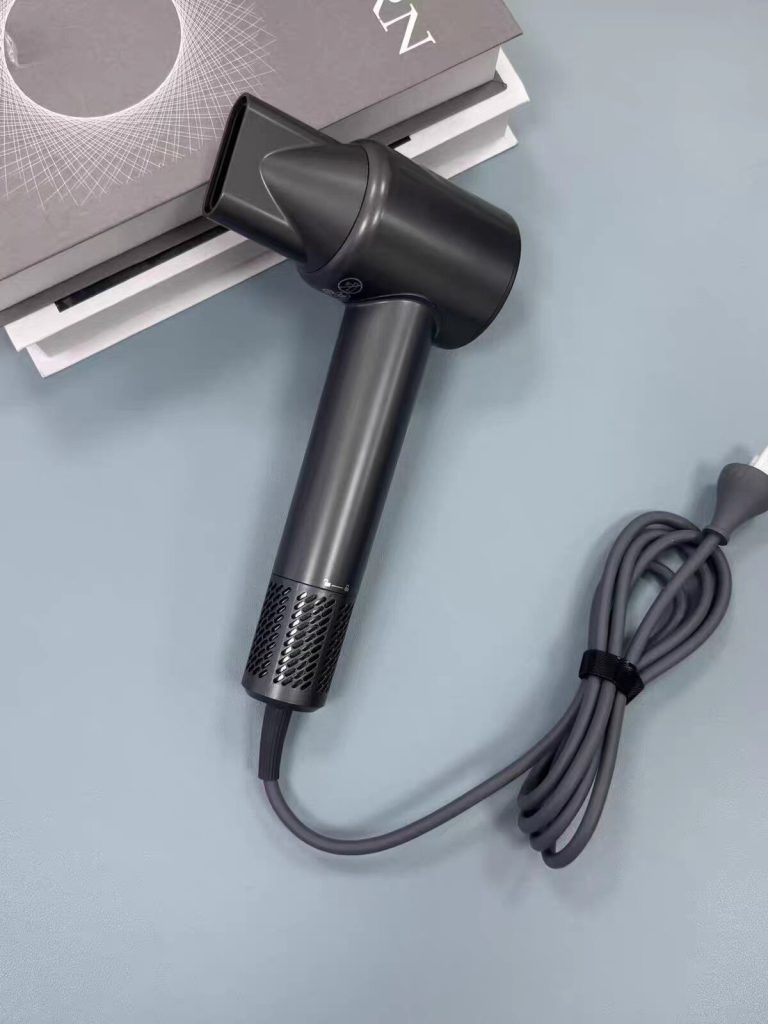
Finding the right hair dryer manufacturer in China is about much more than comparing unit prices. For importers, wholesalers, retailers, salon suppliers, and private-label brands, the manufacturer needs to understand product specifications, electrical requirements, quality control, packaging, customization, and the expectations of the target market.
OEM and ODM hair dryer manufacturing gives brands more flexibility than purchasing a standard product. Depending on the project, buyers can customize the logo, colors, packaging, accessories, electrical configuration, product appearance, and even the internal structure and functions.
China has a well-developed manufacturing supply chain for personal-care appliances. Hair dryer production can involve plastic injection molding, motor manufacturing, heating elements, electronic components, PCB assembly, wiring, final assembly, testing, and packaging. However, not every supplier offering hair dryers has the same manufacturing capabilities.
For this reason, buyers should evaluate the complete manufacturing process before choosing a long-term supplier.
What Is OEM Hair Dryer Manufacturing?
OEM stands for Original Equipment Manufacturer.
In an OEM project, the buyer normally has specific requirements for the product and asks the manufacturer to produce the hair dryer according to those specifications.
An OEM project may include:
-
Custom brand logo
-
Custom product colors
-
Custom packaging
-
Customized accessories
-
Customized power specifications
-
Customized plug
-
Customized cable
-
Customized product labeling
-
Customized user manual
-
Customized product appearance
For example, a retailer may want to launch its own hair dryer brand without building its own manufacturing facility. Instead of selling a generic product with another manufacturer’s branding, the retailer can work with a manufacturer to produce products under its own brand.
The exact level of customization depends on the manufacturer’s engineering and production capabilities.
What Is ODM Hair Dryer Manufacturing?
ODM stands for Original Design Manufacturer.
The difference between OEM and ODM is important when discussing private-label hair dryers.
With ODM manufacturing, the manufacturer may already have an existing product design, engineering solution, mold, or product platform. The buyer can then customize selected elements rather than developing every part of the product from the beginning.
Depending on the project, ODM customization may include:
-
Brand logo
-
Product color
-
Housing finish
-
Packaging
-
Accessories
-
Product functions
-
Button configuration
-
Cable and plug
-
Product specifications
ODM can be useful for businesses that want to launch a product relatively quickly but do not need a completely new hair dryer design.
A completely new product, on the other hand, usually requires more engineering work, development, testing, and investment.
OEM vs. ODM Hair Dryers
The best choice depends on the buyer’s business model.
Requirement |
OEM |
ODM |
|---|---|---|
Existing product platform |
Not necessarily |
Usually |
Custom logo |
Yes |
Yes |
Custom packaging |
Yes |
Yes |
Product appearance |
Can be customized |
Usually customizable |
New mold |
May be required |
May already exist |
Product development |
More extensive |
Usually less extensive |
Development cost |
Potentially higher |
Potentially lower |
Development time |
Usually longer |
Usually shorter |
Suitable for |
Custom brands |
Faster private-label launches |
Neither model is automatically better.
If your business needs a unique product with specific technical requirements, OEM development may be more appropriate.
If your priority is launching a private-label hair dryer without developing a completely new product, ODM may be more practical.
What Can Be Customized?
The amount of customization available depends on the manufacturer and product.
Logo and Branding
The simplest form of customization is usually branding.
A manufacturer may be able to apply a customer’s logo to the product, packaging, user manual, labels, or accessories.
Before production, the buyer should provide the correct logo files and confirm the size, position, printing method, and appearance.
Product Color
Color customization can help a private-label brand maintain a consistent visual identity.
The buyer should confirm whether the requested color is based on a standard color reference, a material color, a painted finish, or another production method.
Color consistency should also be checked during mass production.
Packaging
Packaging is an important part of an OEM hair dryer project.
Possible packaging components include:
-
Retail box
-
Inner packaging
-
Protective inserts
-
Product labels
-
User manual
-
Warranty information
-
Barcode
-
Master carton
Packaging should be designed according to the distribution channel.
A product intended for retail shelves may have different packaging requirements from a product sold through e-commerce or supplied directly to professional salons.
Accessories
Hair dryers can be supplied with different accessories depending on the product.
Common examples include:
-
Concentrator nozzle
-
Diffuser
-
Comb attachment
-
Storage bag
-
Cleaning accessories
Accessories should be confirmed before the quotation because they affect both product cost and packaging dimensions.
Hair Dryer Motor Selection
The motor is one of the most important components to discuss with a manufacturer.
Different motor technologies can provide different combinations of airflow, speed, noise, weight, energy consumption, and service life.
A buyer should not assume that a higher wattage automatically means a better hair dryer.
The actual user experience depends on how the motor, fan, airflow channel, heating system, and control system work together.
When comparing products, ask the manufacturer for information about:
-
Motor type
-
Motor speed
-
Airflow performance
-
Noise level
-
Expected operating life
-
Power consumption
-
Motor protection
-
Replacement availability
For professional salon products, motor durability and long operating periods can be particularly important.
Heating System and Temperature Control
A hair dryer needs to produce heat while maintaining controlled operating temperatures.
The heating system should therefore be evaluated together with the airflow system.
If the heating element produces substantial heat but airflow is insufficient, the outlet temperature may become uncomfortable or the internal components may experience excessive thermal stress.
A properly designed system needs appropriate heating performance, airflow, temperature control, and thermal protection.
Depending on the product, manufacturers may provide different temperature settings and cooling functions.
Buyers should test the actual sample instead of relying only on specifications printed on a quotation sheet.
Voltage and Plug Customization
International buyers need to pay close attention to electrical specifications.
A hair dryer intended for one market may not have the same electrical configuration as a product intended for another market.
Before production, confirm:
-
Rated voltage
-
Frequency
-
Rated power
-
Plug type
-
Cable specification
-
Applicable electrical requirements
-
Product labeling
For an international OEM project, these details should be confirmed before the manufacturer starts mass production.
Changing electrical components after production has begun can create unnecessary costs and delays.
Quality Control for OEM Hair Dryers
Quality control becomes even more important when a buyer develops a private-label product.
The buyer is not only purchasing a product; the buyer is putting its own brand name on the product.
A suitable quality-control process may include inspection of incoming materials, component testing, assembly inspection, functional testing, and final inspection.
Depending on the product design, testing can include:
-
Power consumption
-
Voltage
-
Current
-
Motor operation
-
Heating performance
-
Temperature
-
Airflow
-
Switch operation
-
Cable condition
-
Plug condition
-
Insulation
-
Electrical safety
-
Thermal protection
-
Product appearance
-
Assembly quality
-
Packaging
The exact testing requirements should be determined according to the product design and destination market.
Why Samples Are Important
A product specification sheet cannot tell you everything about the actual product.
Before placing a large OEM or ODM order, buyers should request samples.
A sample allows the buyer to evaluate:
-
Product appearance
-
Materials
-
Weight
-
Grip
-
Airflow
-
Temperature
-
Noise
-
Button operation
-
Accessories
-
Cable
-
Plug
-
Packaging
For customized products, the approved sample can also become an important reference for mass production.
The final production specifications should be documented clearly so that both buyer and manufacturer understand what has been approved.
MOQ for OEM and ODM Hair Dryers
MOQ means Minimum Order Quantity.
The MOQ for a customized hair dryer depends on several factors.
An existing ODM model may have a lower customization threshold because the basic product is already developed.
A completely new OEM product can require a higher MOQ because the manufacturer may need to purchase special materials, create new packaging, develop molds, and organize production specifically for the project.
Factors affecting MOQ can include:
-
Product model
-
Customization level
-
Mold requirements
-
Custom packaging
-
Logo printing
-
Special components
-
Product color
-
Accessories
-
Production planning
If your first order is relatively small, tell the manufacturer your expected annual demand. A long-term purchasing plan may help the factory recommend a more suitable production solution.
How Much Does an OEM Hair Dryer Cost?
There is no universal OEM hair dryer price.
The final quotation depends on the actual product configuration.
Important factors include:
-
Motor
-
Power
-
Heating element
-
Housing material
-
Electronics
-
Product functions
-
Accessories
-
Packaging
-
Order quantity
-
Custom mold
-
Testing requirements
-
Shipping configuration
A low-priced quotation may not include the same specifications as a higher-priced quotation.
For example, two hair dryers may look similar externally while using different motors, heating elements, electronics, cables, or internal components.
Therefore, buyers should compare quotations based on a complete specification sheet rather than comparing only the unit price.
How to Request an Accurate OEM Quotation
When contacting a hair dryer manufacturer, provide as much information as possible.
A useful RFQ should include:
Product: Hair Dryer
Quantity: Expected order quantity
Target market: Country or region
Voltage: Required voltage
Frequency: Required frequency
Plug: Required plug type
Power: Desired wattage
Motor: Preferred motor, if applicable
Functions: Speed and temperature settings
Special functions: Cool air, ionization, display, etc.
Logo: Required branding
Color: Required product color
Packaging: Retail box or other packaging
Accessories: Required attachments
Customization: OEM or ODM
Delivery requirement: Desired production schedule
Compliance: Required market-specific documentation
A detailed inquiry gives the manufacturer enough information to calculate the product cost more accurately.
What Should Buyers Look for in a China Hair Dryer Manufacturer?
The first question should be whether the supplier can actually support your project.
Ask about:
Production Capability
Understand what manufacturing processes are performed in-house and what processes are outsourced.
Engineering Capability
For OEM projects, engineering support can be more important than the size of the sales team.
Quality Control
Ask how components and finished products are inspected.
Product Development
If you require ODM or a completely new design, ask whether the manufacturer has engineering and mold-development capabilities.
Production Capacity
Make sure the factory can handle your expected order volume during peak purchasing periods.
Sample Process
A clear sample approval process can reduce misunderstandings during mass production.
Communication
Specifications, revisions, packaging requirements, and quality standards should be documented clearly.
Common Mistakes When Buying OEM Hair Dryers
Some purchasing problems happen because buyers focus too heavily on the initial quotation.
Choosing Only by Price
The cheapest product may use different components or provide fewer functions.
Not Testing Samples
A product that looks good in photographs may perform differently in actual use.
Ignoring Electrical Requirements
Voltage and plug specifications must be confirmed for the destination market.
Changing Specifications Too Late
Changing the motor, mold, packaging, or electronics after production begins can increase cost and delay delivery.
Not Defining Quality Standards
Terms such as “high quality” are too vague for mass production. Buyers should define measurable product specifications and inspection requirements.
A Practical OEM/ODM Purchasing Process
A professional project can follow a straightforward sequence:
Step 1 — Define the product
Determine the intended market, price range, functions, design, and estimated quantity.
Step 2 — Select a manufacturer
Evaluate manufacturing capability, product experience, customization ability, and quality control.
Step 3 — Request samples
Test the actual product instead of making a purchasing decision based only on photographs.
Step 4 — Confirm specifications
Document the motor, power, voltage, plug, functions, materials, accessories, packaging, and branding.
Step 5 — Confirm the quotation
Compare quotations based on identical specifications.
Step 6 — Approve the production sample
Use the approved sample as a reference for mass production.
Step 7 — Begin mass production
The manufacturer produces the order according to the confirmed specifications.
Step 8 — Final inspection
Inspect the finished goods before shipment.
Step 9 — Shipment
Confirm packaging, carton dimensions, shipping marks, and export documentation.
This process helps reduce misunderstandings between international buyers and manufacturers.
Final Thoughts
Working with a Hair Dryer Manufacturer in China can give brands considerable flexibility in product design, branding, packaging, and production.
OEM is generally more suitable when a buyer requires specific product specifications or a unique product. ODM can be more practical when a buyer wants to start with an existing product platform and customize selected features.
The most important point is to treat OEM and ODM as a manufacturing project rather than simply a product purchase.
Define the specifications before requesting the final quotation, test samples carefully, confirm electrical requirements, establish quality standards, and document the approved product before mass production.
For long-term business, a reliable manufacturer should be evaluated not only by price, but also by engineering capability, manufacturing control, quality consistency, customization ability, communication, MOQ, production stability, and after-sales support.
FAQ
Can I put my own brand on a hair dryer made in China?
Yes. OEM and ODM manufacturers can typically provide private-label services such as logo printing, product labeling, packaging, and customized accessories, depending on their capabilities.
What is the difference between OEM and ODM hair dryers?
OEM normally focuses on producing according to the buyer’s specifications, while ODM generally starts from an existing manufacturer-developed product or design that can be customized for the buyer.
Can I customize the color of a hair dryer?
Yes. Product color can often be customized, although the available methods and minimum quantities depend on the manufacturing process and order size.
Can the plug and voltage be customized?
In many cases, yes. The required voltage, frequency, plug, cable, and electrical configuration should be confirmed before mass production.
What is the MOQ for OEM hair dryers?
There is no universal MOQ. It depends on the product, customization level, packaging, mold requirements, components, and manufacturer’s production policies.
Should I order a sample before bulk production?
Yes. Sampling is strongly recommended. The buyer should test the product and confirm the specifications before approving mass production.
Can a manufacturer develop a completely new hair dryer?
Some manufacturers can support new product development, including industrial design, mold development, engineering, electronics, and product testing. The exact capability varies by manufacturer.
How can I compare two OEM hair dryer quotations?
Make sure both quotations use the same specifications. Compare the motor, power, heating system, functions, materials, accessories, packaging, MOQ, testing requirements, and delivery terms—not just the unit price.
Article Link:
Hair Dryer Manufacturer in China | OEM & ODM Hair Dryers


No reply content