
China Hair Dryer Manufacturing Co., Ltd.
Finding a reliable hair dryer supplier is about more than comparing factory quotations. For importers, distributors, retailers, salon-equipment buyers, and private-label brands, the supplier must be able to deliver consistent product quality, suitable specifications, stable production, and practical customization.
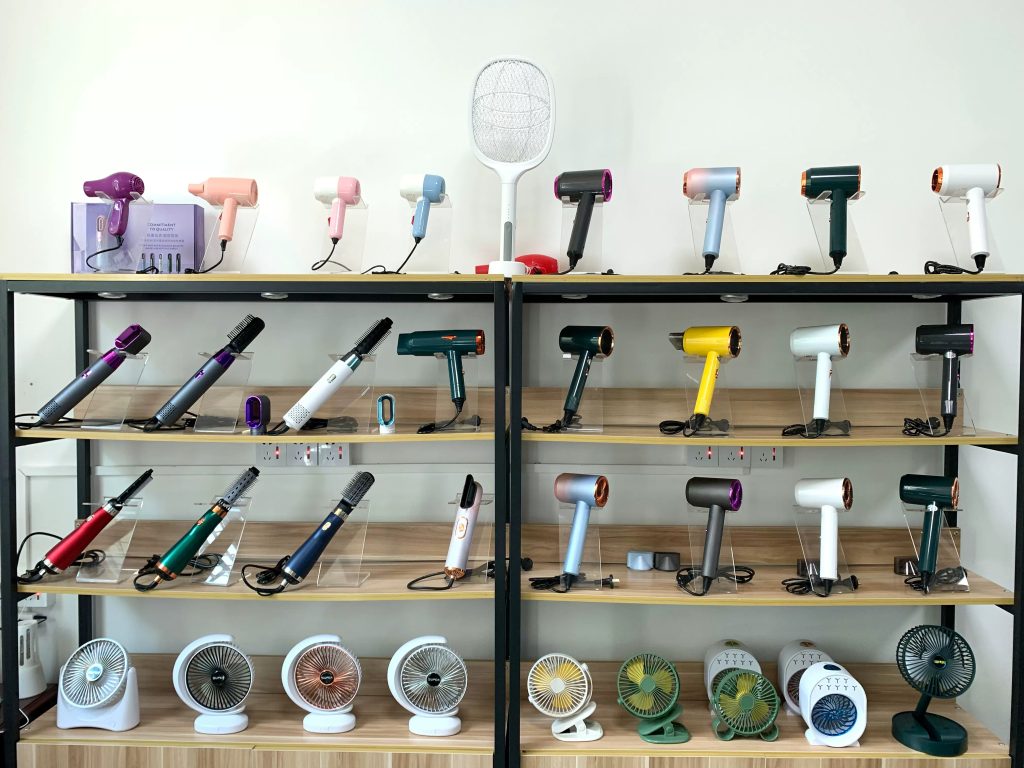
China has a large manufacturing base for small electrical appliances, making it possible to source hair dryers for different market segments, from basic household models to professional salon products and customized private-label products.
The key is choosing a supplier whose manufacturing capabilities match your actual requirements.
What Is the Difference Between a Hair Dryer Supplier and Manufacturer?
The terms “supplier” and “manufacturer” are often used interchangeably, but they can represent different business models.
A manufacturer operates or manages the production process. Depending on its capabilities, it may handle product development, component sourcing, injection molding, assembly, testing, packaging, and production management.
A supplier may manufacture products directly or provide products through a manufacturing network.
For buyers, this distinction matters because direct manufacturing cooperation can provide greater control over:
-
Product specifications
-
Customization
-
Production schedules
-
Quality requirements
-
Packaging
-
Product development
-
Repeat orders
However, being a manufacturer does not automatically mean a factory is suitable for every project. A factory may be excellent at producing standard hair dryers but have limited experience with advanced OEM development.
Therefore, buyers should evaluate actual capabilities rather than relying only on the word “manufacturer.”
What Types of Hair Dryers Can Be Sourced?
A professional hair dryer supplier may offer several product categories.
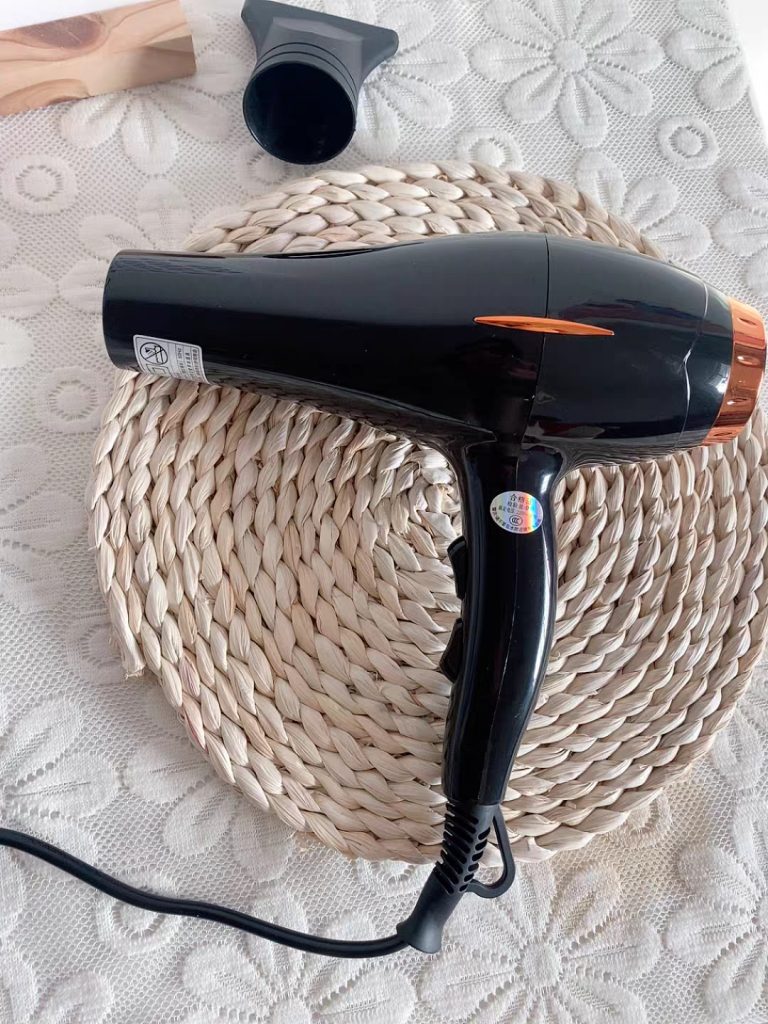
Household Hair Dryers
These products are designed for everyday consumer use.
Typical priorities include:
-
Reasonable price
-
Compact design
-
Multiple speed settings
-
Multiple heat settings
-
Easy operation
-
Lightweight construction
-
Attractive appearance
Professional Salon Hair Dryers
Salon products generally place greater emphasis on:
-
Motor performance
-
Airflow
-
Heat stability
-
Operating durability
-
Ergonomic design
-
Noise control
-
Long working periods
Professional users may operate a hair dryer many times throughout the day, so durability can become more important than simply achieving the lowest purchase price.
Travel Hair Dryers
Travel models generally focus on:
-
Compact size
-
Low weight
-
Folding handles
-
Convenient storage
-
Suitable electrical configurations
-
Portable packaging
Private-Label Hair Dryers
Private-label products are manufactured for a buyer’s own brand.
Customization may include:
-
Logo
-
Product color
-
Packaging
-
User manual
-
Labels
-
Accessories
-
Product appearance
More advanced projects can also involve functional and structural modifications.
OEM Hair Dryer Manufacturing
OEM manufacturing is suitable when the buyer has defined product requirements and wants a factory to manufacture the product according to those requirements.
The buyer may provide:
-
Product specifications
-
Drawings
-
Samples
-
Brand requirements
-
Packaging designs
-
Target market information
The manufacturer then evaluates production feasibility and provides a quotation.
OEM projects can range from simple branding to extensive product customization.
For example, adding a logo to an existing model is relatively straightforward.
Developing a completely new housing, motor configuration, heating system, and control system is much more complicated.
These two projects should not be treated as the same type of OEM order.
ODM Hair Dryer Manufacturing
ODM is useful when the buyer wants to develop a product based on an existing manufacturer platform or product-development capability.
The supplier may provide:
-
Existing product concepts
-
Industrial design
-
Engineering support
-
Product samples
-
Internal component configurations
-
Packaging solutions
The buyer can then customize selected aspects of the product for its market.
ODM can reduce development time compared with creating every component from zero.
For new brands, this can be an efficient way to develop a differentiated product without carrying the full burden of independent product development.
What Can Be Customized?
The level of customization depends on the supplier’s engineering and production capabilities.
Logo and Branding
The simplest form of customization is branding.
Possible applications include:
-
Housing logo
-
Printed logo
-
Product labels
-
Packaging logo
-
User manual
-
Shipping cartons
Product Color
The housing can potentially be produced in different colors.
However, color changes may affect MOQ because separate production runs and material preparation may be required.
Housing Design
More advanced projects may involve modifications to:
-
Shape
-
Handle
-
Buttons
-
Air inlet
-
Air outlet
-
Decorative elements
-
Surface finish
Changing the housing substantially may require new tooling.
Packaging
Custom packaging can include:
-
Retail box
-
Color box
-
Insert
-
Manual
-
Warranty information
-
Protective packaging
-
Shipping carton
Packaging should be considered early because it affects both manufacturing and logistics.
Accessories
Depending on the product, buyers may request accessories such as:
-
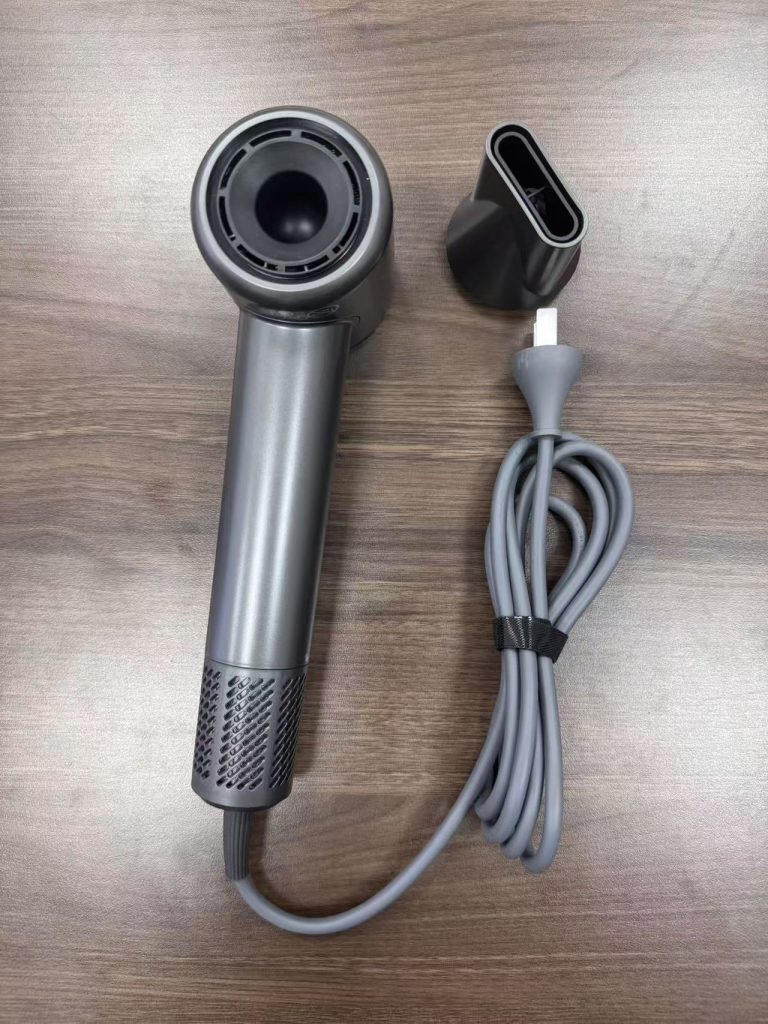
Concentrator nozzle
-
Diffuser
-
Comb attachment
-
Storage bag
-
Hanging accessories
The accessory combination should match the target market rather than simply adding items to increase the package size.
Motor Performance Matters
The motor has a major influence on the performance of a hair dryer.
It affects:
-
Airflow
-
Drying speed
-
Noise
-
Weight
-
Energy consumption
-
Operating life
-
Product cost
However, motor power alone should not be used to judge product quality.
A hair dryer is a complete airflow system.
The motor, fan, air inlet, internal air channels, heating system, and air outlet all affect the final performance.
A well-designed lower-power system can sometimes provide better practical performance than a poorly designed higher-power system.
For this reason, buyers should evaluate actual samples instead of comparing only motor wattage.
Heating System Design
The heating system needs to produce sufficient heat while maintaining stable operation.
Important considerations include:
-
Heating element
-
Temperature control
-
Thermal protection
-
Airflow balance
-
Internal insulation
-
Operating temperature
-
Continuous-use performance
The heating system should work together with the airflow system.
If airflow is insufficient, excessive heat can build up. If airflow is too high for the heating configuration, the product may not provide the desired drying performance.
A professional manufacturer should therefore consider the complete system rather than selecting components independently.
Voltage and Plug Configuration
Electrical specifications are especially important for international buyers.
Before ordering, confirm:
-
Rated voltage
-
Frequency
-
Rated power
-
Plug type
-
Power cord requirements
-
Target sales market
-
Applicable electrical requirements
A product designed for one market should not automatically be assumed to be suitable for another.
For international OEM projects, electrical specifications should be confirmed during the quotation and sample stages.
Changing electrical requirements after mass production has started can create unnecessary costs and delays.
Quality Control for Hair Dryers
Quality control should cover the entire manufacturing process.
Incoming Material Inspection
Components may be inspected before entering production.
Examples include:
-
Motors
-
Heating elements
-
PCBs
-
Plastic parts
-
Switches
-
Power cords
-
Connectors
-
Packaging materials
Production Inspection
During assembly, workers or quality inspectors can check:
-
Wiring
-
Fasteners
-
Component positioning
-
Housing alignment
-
Switch operation
-
Cable installation
-
Internal connections
Finished Product Inspection
Finished products may be checked for:
-
Power operation
-
Airflow
-
Heating
-
Speed settings
-
Temperature settings
-
Cool-air function
-
Noise
-
Electrical performance
-
Safety protection
-
Appearance
The exact inspection program should be established according to the product specification and destination market.
Why Samples Should Be Tested Before Bulk Orders
A quotation tells you what the supplier promises to manufacture.
A sample lets you see what the product actually feels and performs like.
Before placing a large order, buyers should evaluate:
-
Product appearance
-
Weight
-
Grip comfort
-
Button operation
-
Airflow
-
Heat
-
Noise
-
Cable
-
Accessories
-
Packaging
-
Labels
If the product is intended for professional use, repeated-operation testing can also be useful.
A short demonstration does not necessarily show how a product behaves during longer operating periods.
MOQ for Hair Dryer Orders
There is no universal MOQ for every hair dryer project.
MOQ can depend on:
-
Existing product or new development
-
Logo customization
-
Product color
-
Packaging
-
Accessories
-
Tooling
-
Component purchasing
-
Production efficiency
-
Order quantity
An existing product with simple branding may be easier to order in smaller quantities than a completely customized product.
Buyers should ask for the MOQ for the specific configuration, rather than asking only for the supplier’s general MOQ.
How Much Does a Hair Dryer Cost From a China Supplier?
The price depends on the product configuration and order quantity.
Factors include:
-
Motor
-
Heating system
-
Electronics
-
Housing material
-
Product design
-
Power rating
-
Accessories
-
Packaging
-
Logo customization
-
Tooling
-
Order quantity
-
Testing requirements
For this reason, a supplier should not provide a serious quotation based only on the words “hair dryer.”
Two products that look similar externally can have very different internal components and manufacturing costs.
A better quotation request includes a detailed specification.
What Should Be Included in a Hair Dryer Quotation?
When comparing suppliers, request a quotation that clearly identifies:
-
Product model
-
Unit price
-
MOQ
-
Sample cost
-
Tooling cost
-
Logo cost
-
Packaging cost
-
Accessories
-
Production lead time
-
Payment terms
-
Product specifications
-
Warranty terms
-
Shipping information
This makes supplier comparisons much more meaningful.
A quotation with a lower unit price is not necessarily cheaper if important costs are excluded.
How to Find a Reliable Hair Dryer Supplier in China
There are several practical questions you can ask before cooperation.
Does the Supplier Have Real Manufacturing Capability?
Ask about the production process and which stages are handled directly.
You can also request factory information, production photographs, product samples, and relevant documentation.
Can the Supplier Handle Your Customization?
Be specific.
Instead of asking:
“Can you do OEM?”
Ask:
“Can you change the housing?”
“Can you use our packaging?”
“Can you change the plug?”
“Can you modify the motor?”
“Can you develop a new mold?”
Specific questions produce more useful answers.
Can the Supplier Maintain Consistent Quality?
This is particularly important for repeat orders.
The product delivered six months later should continue to match the approved specifications unless changes have been formally agreed.
Does the Supplier Communicate Clearly?
A good supplier should be able to confirm:
-
Specifications
-
MOQ
-
Pricing
-
Sample details
-
Production schedule
-
Packaging
-
Quality requirements
Clear communication reduces mistakes during production.
Common Mistakes When Buying Hair Dryers
Focusing Only on Unit Price
The lowest price can come with lower-quality components, less customization, or additional costs elsewhere.
Not Asking About the Complete Specification
A product name is not enough.
The buyer should define the important technical and commercial requirements.
Ordering Large Quantities Without Testing Samples
This increases the financial risk of discovering problems after production.
Changing Specifications During Production
Late changes can affect components, tooling, packaging, production schedules, and cost.
Ignoring Packaging Requirements
Retail packaging is part of the product presentation and should be confirmed before mass production.
Not Confirming the Target Market
Electrical and labeling requirements should be considered before the final product specification is approved.
A Better Way to Compare Hair Dryer Suppliers
Instead of creating a comparison based only on price, use a broader evaluation.
You can compare suppliers according to:
Factor |
What to Check |
|---|---|
Product quality |
Sample performance and construction |
Manufacturing |
Production and assembly capabilities |
OEM |
Branding and customization |
ODM |
Product development capability |
MOQ |
Minimum order for your exact configuration |
Price |
Complete quotation |
Lead time |
Sample and bulk production schedule |
QC |
Inspection and testing process |
Packaging |
Retail and shipping packaging |
Communication |
Response quality and technical clarity |
After-sales |
Warranty and problem-solving process |
This gives you a much clearer picture of the supplier’s actual value.
From Sample to Mass Production
A typical custom hair dryer project can follow this sequence:
1. Product Requirement
Define the product, target market, functions, appearance, and quantity.
2. Supplier Evaluation
Review manufacturing capability, customization options, MOQ, and pricing.
3. Quotation
Request a detailed quotation based on the same specification.
4. Sample
Receive and evaluate the physical product.
5. Modification
Request necessary changes to the product or packaging.
6. Final Approval
Confirm the final specifications and approved sample.
7. Mass Production
Begin bulk manufacturing.
8. Quality Inspection
Inspect products according to the agreed requirements.
9. Packaging
Complete retail and shipping packaging.
10. Shipment
Prepare the finished goods for delivery.
This process gives both the buyer and supplier a clear reference point.
When Should You Choose OEM Instead of ODM?
OEM can be more appropriate when you already have:
-
Your own design
-
Technical drawings
-
Product specifications
-
Existing product concept
-
Brand requirements
ODM may be more suitable when you need:
-
Product development support
-
Existing product platforms
-
Faster product development
-
Engineering assistance
-
A starting point for a private-label product
There is no universally better model. The right choice depends on how much control and development work you want to manage yourself.
Building a Long-Term Supplier Relationship
For buyers placing repeat orders, supplier selection should be based on long-term consistency.
A useful manufacturing relationship should provide:
-
Stable quality
-
Clear specifications
-
Consistent components
-
Reliable production
-
Transparent communication
-
Reasonable lead times
-
Responsive problem solving
As your order volume increases, the supplier should also be able to support changes in packaging, product versions, colors, and production quantities.
The goal should not simply be to find a factory for one shipment. The better objective is to establish a stable manufacturing relationship that can support your brand as it grows.
Final Thoughts
A reliable hair dryer supplier and manufacturer in China should be evaluated from both a manufacturing and purchasing perspective.
Product quality, engineering capability, OEM/ODM services, MOQ, customization, electrical configuration, packaging, testing, and production consistency all affect the success of an import project.
For buyers who are developing a private-label hair dryer, the safest approach is to define the specification carefully, compare suppliers using the same requirements, evaluate samples, confirm the final configuration, and establish quality expectations before mass production.
A good supplier is not necessarily the one offering the lowest quotation. It is the supplier capable of producing the right product, at the required quality, quantity, cost, and schedule.
FAQ
1. Can I order hair dryers with my own brand?
Yes. Private-label hair dryers can be customized with your logo, product colors, packaging, labels, and other branding elements.
2. Can a China hair dryer manufacturer provide OEM and ODM?
Yes, depending on the manufacturer’s capabilities. OEM can range from simple branding to extensive customization, while ODM generally involves using an existing product platform or development capability.
3. Can I customize the hair dryer design?
Yes. Basic customization may include color, logo, buttons, and packaging. More extensive structural changes may require engineering work and new tooling.
4. Can I customize the voltage and plug?
Depending on the product design, voltage, frequency, and plug configuration may be selected or customized for the target market. These requirements should be confirmed before production.
5. What is the MOQ for private-label hair dryers?
MOQ varies according to the product, customization level, packaging, color, accessories, tooling, and order quantity. Ask for the MOQ for your exact configuration.
6. How long does OEM hair dryer production take?
The schedule depends on whether you are using an existing product or developing a new one. New products generally require additional time for engineering, samples, tooling, testing, and approval.
7. Should I order a sample before placing a bulk order?
Yes. A sample allows you to evaluate the actual product, including appearance, airflow, heat, noise, controls, weight, packaging, and accessories.
8. How can I compare different hair dryer suppliers?
Compare the complete quotation, product specifications, sample quality, MOQ, customization capability, manufacturing process, quality control, lead time, packaging, and communication—not just the unit price.
9. Can a supplier manufacture hair dryers for professional salons?
Yes. Suppliers with suitable manufacturing and engineering capabilities can develop or manufacture models designed for professional use. The product should be evaluated for airflow, motor performance, heat stability, durability, ergonomics, and continuous operation.
10. What information should I send when requesting a quotation?
Provide your target market, voltage, frequency, power, desired functions, product design, color, logo, packaging, accessories, estimated quantity, and any specific technical requirements. The more complete the specification, the more accurate the quotation is likely to be.
Article Link:
Hair Dryer Supplier & Manufacturer in China | OEM/ODM


No reply content