
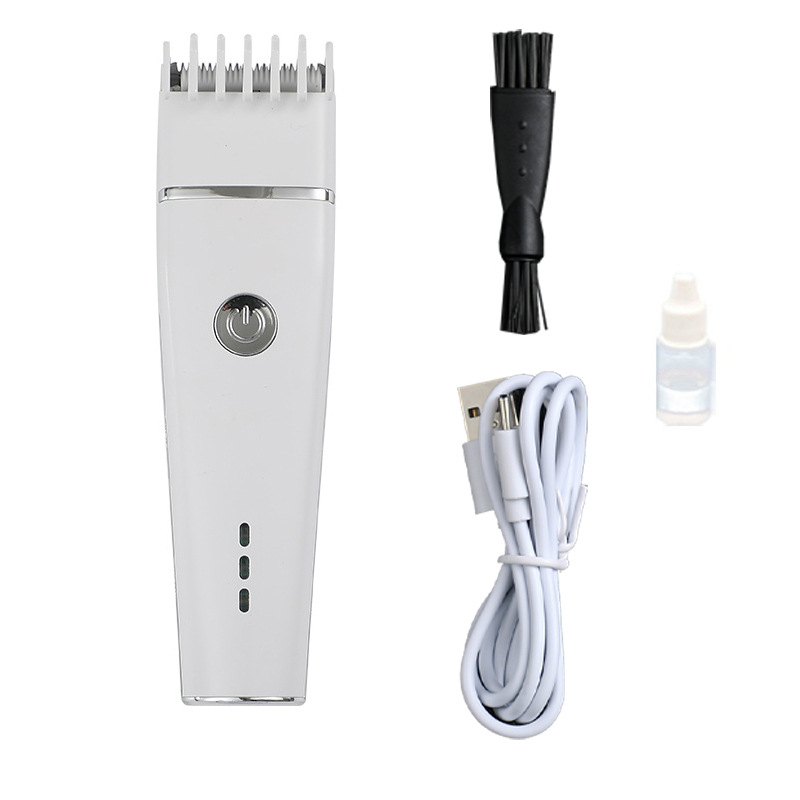
Blade pulling and hair snagging are among the most frustrating problems users can experience with a hair clipper. Instead of cutting hair smoothly, a poorly designed clipper may pull, tug, or catch hair between the blades.
For professional barbers, salons, distributors, retailers, and private-label brands, these problems are more than a minor inconvenience. Poor cutting performance can lead to customer complaints, product returns, negative reviews, and damage to a brand’s reputation.
For this reason, buyers should look beyond the appearance and price of a hair clipper when choosing a manufacturer.
A reliable hair clipper manufacturer should have a systematic approach to blade design, motor performance, assembly accuracy, lubrication, heat management, and quality control.
This article explains the main causes of blade pulling and what international buyers should check before purchasing hair clippers from a Chinese manufacturer.
Why Does a Hair Clipper Pull Hair?
Hair pulling can happen for several reasons.
Common causes include:
- Dull blades
- Poor blade alignment
- Incorrect blade spacing
- Poor blade geometry
- Insufficient motor torque
- Excessive blade friction
- Hair buildup
- Poor lubrication
- Low battery power
- Manufacturing inconsistencies
It is important to understand that blade pulling is rarely caused by only one component.
The cutting system works as a combination of:
Blade + motor + battery + alignment + lubrication + assembly + maintenance
A professional manufacturer should evaluate the entire system.
1. Blade Sharpness Is Critical
A sharp cutting edge is essential for efficient hair cutting.
When a blade becomes dull, it may fail to cut hair cleanly.
Instead, the hair can become trapped between the moving and stationary blades.
This can result in:
- Pulling
- Snagging
- Multiple passes
- Uneven cutting
- Increased user discomfort
For this reason, manufacturers should establish appropriate standards for blade processing and sharpness.
When evaluating a factory, ask:
- What blade material is used?
- How are the blades processed?
- How is blade sharpness tested?
- What quality standard is used?
- How is consistency maintained during mass production?
A supplier that cannot provide clear technical information may be difficult to evaluate.
2. Blade Alignment Can Affect Cutting Performance
The moving blade and fixed blade must work together accurately.
If the blades are incorrectly positioned, cutting performance can become inconsistent.
Poor alignment may cause:
- Hair pulling
- Uneven cutting
- Excessive friction
- Reduced cutting efficiency
During assembly, manufacturers should control the position and tolerances of the blade components.
For OEM buyers, blade alignment should be included in the product quality standard.
3. Blade Spacing Matters
The distance between the blades can affect how hair enters the cutting area.
If the configuration is not appropriate for the intended application, the clipper may have difficulty handling certain types of hair.
The correct setup depends on:
- Blade design
- Hair type
- Cutting length
- Intended application
- Motor performance
Manufacturers should optimize the blade configuration rather than using one design for every model.
4. Blade Geometry Affects Hair Feeding
The shape and geometry of the cutting teeth influence how hair enters the cutting system.
Poorly designed teeth may:
- Catch hair
- Pull hair
- Miss hair
- Produce uneven cutting
A professional manufacturer should consider the tooth profile, spacing, blade movement, and intended cutting application during product development.
For example, a professional barber clipper may require a different blade design from a basic home-use trimmer.
5. Motor Torque Is More Important Than Speed Alone
Many product descriptions emphasize motor speed.
However, a high RPM number does not automatically mean better cutting performance.
When cutting dense or thick hair, the motor needs to maintain sufficient power under load.
If motor performance drops significantly, the blades may slow down and pull hair.
Important motor characteristics can include:
- Operating speed
- Torque
- Power consumption
- Efficiency
- Heat generation
- Vibration
When comparing manufacturers, ask for actual motor specifications rather than relying only on phrases such as:
“High-speed professional motor.”
6. Battery Performance Can Affect Cutting
Cordless clippers depend on their battery to provide consistent electrical power.
As battery voltage decreases, some products may experience reduced motor performance.
This can contribute to:
- Slower blade movement
- Reduced cutting efficiency
- Hair pulling
- Longer cutting time
A manufacturer should test the clipper at different battery conditions.
For example, performance should not be evaluated only when the battery is fully charged.
Buyers should ask:
- What is the battery capacity?
- What is the rated voltage?
- What is the expected runtime?
- How does the product perform at low battery levels?
- What charging protection is included?
7. Lubrication Is Essential
Proper lubrication reduces friction between moving components.
Insufficient lubrication can result in:
- Increased friction
- Higher blade temperature
- Reduced cutting efficiency
- Increased wear
- Additional noise
Manufacturers should provide appropriate maintenance instructions for the product.
Users should also follow the manufacturer’s recommendations for cleaning and lubrication.
For commercial buyers, the package should ideally include clear maintenance instructions.
8. Hair Buildup Can Cause Snagging
Even a well-designed clipper can experience performance problems when hair accumulates between the blades.
Hair buildup can interfere with blade movement.
It may cause:
- Reduced cutting efficiency
- Pulling
- Increased friction
- Overheating
Manufacturers can improve the design by making the blade area easier to clean.
A detachable or easily accessible blade system can be valuable for professional users.
9. Easy Cleaning Can Improve Long-Term Performance
A clipper that is difficult to clean may gradually accumulate hair and debris.
For this reason, buyers should evaluate how easily users can:
- Remove the blade
- Brush away hair
- Clean the housing
- Apply lubricant
- Replace components
If you are developing a private-label product, consider including cleaning tools and clear maintenance instructions.
10. Excessive Friction Can Cause Heat
The cutting system generates friction during operation.
If friction is excessive, the blade can become hot.
This may affect user comfort and potentially accelerate component wear.
Manufacturers can address this through:
- Blade design
- Material selection
- Surface treatment
- Lubrication
- Motor selection
- Mechanical tolerances
A professional factory should conduct operating tests to evaluate heat generation.
11. Blade Material Selection
Different blade materials and treatments can provide different performance characteristics.
Common options include:
- Stainless steel
- Carbon steel
- Ceramic
- Coated blades
- Other engineered materials
Each solution involves different considerations related to:
- Sharpness
- Wear resistance
- Heat behavior
- Corrosion resistance
- Manufacturing cost
There is no universal blade material that is best for every hair clipper.
The appropriate material should match the intended product positioning.
12. Ceramic Blades vs. Stainless Steel Blades
Ceramic and stainless steel blades are often selected for different reasons.
Ceramic Blades
Potential advantages include:
- Different thermal characteristics
- Good wear resistance
- Smooth cutting performance when properly manufactured
Stainless Steel Blades
Potential advantages include:
- Durability
- Easier manufacturing
- Wide application range
- Competitive cost
The actual performance depends heavily on blade design, manufacturing quality, and assembly.
Therefore, buyers should evaluate the complete blade system rather than selecting a product solely because it uses a particular material.
13. Blade Temperature Should Be Tested
A blade that becomes excessively warm during prolonged operation can be uncomfortable for users.
This is particularly important for professional barbers who may use a clipper continuously throughout the day.
Manufacturers should consider:
- Motor efficiency
- Blade friction
- Lubrication
- Housing design
- Heat dissipation
When testing a sample, run the product continuously under realistic conditions and observe changes in blade temperature and performance.
14. Vibration Can Affect Cutting Accuracy
Excessive vibration can make it harder for users to control the clipper.
Potential causes include:
- Motor imbalance
- Poor assembly
- Mechanical tolerances
- Loose components
- Blade imbalance
A professional manufacturer should control these factors during production.
For private-label buyers, vibration should be evaluated as part of the product testing process.
15. Guide Combs Also Affect Cutting Results
The blade itself is not the only component that determines cutting length.
Guide combs can affect:
- Hair feeding
- Cutting length
- Stability
- User control
- Cutting consistency
A poor-quality guide comb may:
- Fit loosely
- Bend
- Move during use
- Catch hair
- Produce inconsistent results
When evaluating a clipper, test every included guide comb.
16. Manufacturing Tolerances Matter
Two clippers can use the same motor and blade materials but perform differently because of manufacturing tolerances.
Important tolerances may involve:
- Blade position
- Blade spacing
- Motor installation
- Housing components
- Guide-comb fit
- Moving parts
For mass production, manufacturers should establish acceptable tolerances and inspection procedures.
This is especially important for private-label brands because customers expect every unit to perform consistently.
17. How Manufacturers Test for Hair Pulling
There is no single universal test that applies to every hair clipper.
However, manufacturers can develop internal performance tests using representative hair conditions.
Testing can evaluate:
- Fine hair
- Thick hair
- Coarse hair
- Dense hair
- Different hair lengths
- Different cutting settings
The manufacturer can record:
- Cutting efficiency
- Hair pulling
- Motor stability
- Blade temperature
- Noise
- Vibration
- Battery performance
The testing method should reflect the intended target market.
18. What B2B Buyers Should Test Before Ordering
If you are a distributor, retailer, barber-equipment supplier, or private-label brand, do not evaluate a sample for only a few minutes.
Test it under realistic conditions.
Check:
Cutting Performance
Does it cut consistently?
Hair Pulling
Does it pull or snag hair?
Motor
Does the motor maintain stable performance?
Battery
Does performance remain stable as the battery level decreases?
Blade Temperature
Does the blade become excessively warm?
Vibration
Is the clipper comfortable to control?
Guide Combs
Are they secure and easy to install?
Cleaning
Can hair be removed easily?
This testing process can reveal problems that are not visible in product photographs.
19. Ask the Manufacturer for Technical Information
Before purchasing, request:
- Blade material
- Blade dimensions
- Motor model
- Motor speed
- Battery capacity
- Rated voltage
- Charging time
- Runtime
- Product weight
- Product dimensions
- Accessories
- Warranty terms
- Quality-control procedures
This information allows you to compare suppliers more objectively.
20. How OEM Buyers Can Prevent Quality Problems
If you are developing your own brand, define the product requirements before production.
Your specification can include:
Blade material
Blade configuration
Motor specification
Battery specification
Product weight
Cutting performance
Noise requirement
Vibration requirement
Charging performance
Accessories
Packaging
The factory should confirm these requirements before mass production.
21. Use an Approved Sample as the Production Standard
After testing the prototype, approve a final sample.
The approved sample should represent the exact product that will be manufactured.
Record:
- Blade configuration
- Motor
- Battery
- Housing
- Accessories
- Packaging
- Performance requirements
If possible, keep a reference sample for future comparison.
This is particularly useful when placing repeat orders.
22. Quality Control During Mass Production
A professional factory should inspect products at multiple stages.
Incoming Material Inspection
Check blades, motors, batteries, housings, switches, and other components.
Assembly Inspection
Check blade installation, electrical connections, motor installation, and housing assembly.
Functional Testing
Check:
- Starting
- Cutting
- Charging
- Battery operation
- Switching
Final Inspection
Check:
- Appearance
- Accessories
- Packaging
- Labels
- Product quantity
A complete QC system helps reduce inconsistent performance between units.
23. Red Flags When Choosing a Manufacturer
Be cautious if a supplier:
- Cannot explain the blade specification
- Refuses to provide samples
- Cannot explain its motor specifications
- Claims extremely high performance without technical evidence
- Changes specifications after receiving the order
- Cannot explain its QC process
- Refuses reasonable inspection
- Gives unclear warranty terms
- Focuses only on low prices
A professional manufacturer should be able to explain how its product is designed and tested.
24. Questions to Ask a Hair Clipper Manufacturer
Before placing an order, ask:
- What blade material is used?
- How is blade sharpness controlled?
- How is blade alignment controlled?
- What motor is used?
- What are the motor speed and torque specifications?
- What battery capacity is available?
- How long can the clipper operate?
- How is cutting performance tested?
- How do you test for hair pulling?
- How do you control blade temperature?
- How do you control vibration?
- How easy is the blade to remove and clean?
- What guide combs are included?
- What is the MOQ?
- Can you provide OEM/private-label production?
- Can you provide samples?
- What is the production lead time?
- What QC procedures are performed?
- What packaging is available?
- What warranty terms are offered?
Frequently Asked Questions
Why does my hair clipper pull hair?
Common causes include dull blades, incorrect blade alignment, poor blade geometry, insufficient motor performance, excessive friction, low battery power, and hair buildup.
Can a stronger motor prevent hair pulling?
A suitable motor with sufficient torque can help maintain blade movement under load, but motor power alone does not guarantee smooth cutting. Blade design and alignment are equally important.
Do sharper blades always mean better cutting?
Sharpness is important, but blade geometry, alignment, spacing, motor performance, and maintenance also affect cutting results.
Which blade material is best?
Stainless steel, ceramic, and coated blade solutions can all be suitable depending on the application. The best choice depends on the product design, target market, durability requirements, and price level.
How often should clipper blades be cleaned?
Cleaning frequency depends on usage. Professional barbers who use clippers frequently may need to clean them much more often than occasional home users. Follow the manufacturer’s maintenance instructions.
Can hair pulling be eliminated completely?
No manufacturer can guarantee that a clipper will never pull hair under every possible condition. However, appropriate blade design, motor performance, accurate assembly, maintenance, and quality control can significantly reduce the risk.
How can B2B buyers test a clipper before placing a bulk order?
Request samples and test them on different hair types and densities. Evaluate cutting consistency, pulling, motor stability, heat, vibration, battery performance, guide combs, and cleaning.
Final Checklist for Choosing a Hair Clipper Manufacturer
Before placing a commercial order, verify:
✓ Blade material
✓ Blade sharpness
✓ Blade geometry
✓ Blade alignment
✓ Blade spacing
✓ Motor speed
✓ Motor torque
✓ Battery capacity
✓ Cutting performance
✓ Hair-pulling performance
✓ Blade temperature
✓ Noise
✓ Vibration
✓ Guide-comb quality
✓ Cleaning and maintenance
✓ OEM capability
✓ Quality control
✓ Sample performance
✓ Production capacity
✓ Warranty
For international buyers, preventing hair pulling should be treated as a complete product-engineering problem rather than simply a blade problem.
A reliable hair clipper manufacturer should be able to demonstrate how the blade, motor, battery, mechanical structure, assembly process, and quality-control system work together to deliver consistent cutting performance.
Before placing a large OEM or private-label order, test samples under realistic conditions, confirm the technical specifications in writing, approve a final production sample, and establish clear quality standards.
This approach can help distributors, retailers, professional barber suppliers, and private-label brands reduce complaints and build a more reliable hair clipper product line.


No reply content