
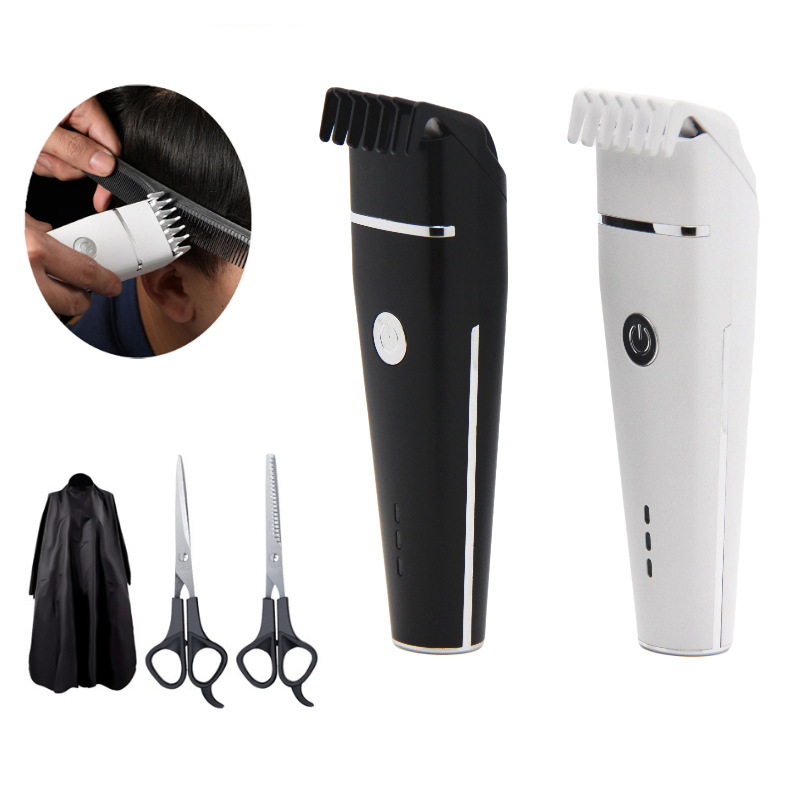
Uneven cutting, hair pulling, snagging, and difficult operation are common problems that can negatively affect the user experience of cordless hair clippers. For barbers, salons, distributors, retailers, and private-label brands, these problems can also lead to product returns, customer complaints, and damage to brand reputation.
For buyers sourcing hair clippers from China, choosing a manufacturer with strong product-development and quality-control capabilities is therefore important.
A professional hair clipper manufacturer should not only provide a competitive price. The factory should also understand why cutting becomes uneven, why blades pull hair, why the clipper becomes difficult to control, and how these problems can be prevented during product design and production.
This guide explains the main causes of these problems and what international buyers should check before selecting a hair clipper manufacturer.
1. Why Do Hair Clippers Cut Unevenly?
Uneven cutting can have several causes.
Common causes include:
- Poor blade alignment
- Inconsistent blade sharpness
- Insufficient motor power
- Poor blade design
- Incorrect blade gap
- Low-quality guide combs
- Excessive vibration
- Manufacturing tolerances
- Hair accumulation between the blades
A professional manufacturer should identify these problems during product development rather than waiting for customers to report them.
Blade Alignment
The moving blade and fixed blade need to work together correctly.
If the blades are not properly aligned, some areas of the hair may be cut while others remain longer.
During production, manufacturers should control blade positioning and assembly tolerances.
Blade Sharpness
A blade that is not sufficiently sharp can produce inconsistent cutting performance.
The manufacturer should establish quality standards for blade processing and inspect finished blades before assembly.
2. How Can Manufacturers Reduce Hair Pulling?
Hair pulling is one of the most frustrating problems for clipper users.
Instead of cutting hair smoothly, the blades may catch, tug, or pull the hair.
This can be caused by:
- Dull blades
- Poor blade geometry
- Incorrect blade alignment
- Insufficient motor torque
- Excessive blade friction
- Incorrect blade spacing
- Poor manufacturing tolerances
A manufacturer should evaluate the complete cutting system rather than focusing only on the blade material.
3. Blade Design Is Critical
The blade is one of the most important components of a hair clipper.
Manufacturers may use different blade materials and designs depending on the product’s positioning.
Common blade materials can include:
- Stainless steel
- Carbon steel
- Ceramic
- Ceramic-coated materials
- Titanium-coated components
Each option has different characteristics relating to durability, heat generation, sharpness, maintenance, and cost.
When purchasing for your market, ask the manufacturer:
- What blade material is used?
- What is the blade hardness?
- How is the blade processed?
- How is blade alignment controlled?
- How is blade sharpness tested?
- How long is the expected service life?
Do not evaluate a clipper only by its appearance.
4. Motor Performance Affects Cutting Quality
A high-quality blade still needs an appropriate motor.
If the motor cannot maintain sufficient power under load, the clipper may slow down when cutting thicker or denser hair.
This can contribute to:
- Uneven cutting
- Hair pulling
- Multiple passes
- Reduced cutting efficiency
Manufacturers should select a motor that matches the intended application.
For example, a professional barber clipper may require different motor characteristics from a basic home-use trimmer.
Important motor specifications may include:
- Motor type
- Operating speed
- Torque
- Power consumption
- Operating temperature
- Noise
- Vibration
Buyers should request actual technical specifications rather than relying on marketing terms such as “high power.”
5. Blade Gap and Alignment
Blade spacing can have a significant effect on cutting performance.
If the gap is too large, cutting may become less efficient.
If the gap is too small, the blades may create excessive friction or become uncomfortable depending on the design.
A manufacturer should establish appropriate assembly tolerances for each model.
For private-label buyers, the final blade configuration should be approved before mass production.
6. Guide Combs Can Also Cause Uneven Results
The cutting system does not consist only of the blades.
Guide combs also affect the final result.
Poorly designed or poorly manufactured combs may:
- Catch hair
- Bend during use
- Fit loosely
- Make length selection difficult
- Produce inconsistent cutting
When evaluating a hair clipper, buyers should test the complete system:
Clipper + blade + guide comb
rather than testing only the main unit.
7. How Manufacturers Can Improve Cutting Consistency
A professional factory can improve cutting consistency through several measures.
Product Design
The blade, motor, housing, guide comb, and control system should be designed as one complete product.
Component Control
Critical components should meet consistent specifications.
Assembly Control
Blade alignment and motor installation should follow standardized procedures.
Performance Testing
Finished products should be tested before shipment.
Random Sampling
Factories can conduct sampling inspections during mass production.
This helps reduce variation between individual units.
8. Why Motor Speed Alone Does Not Guarantee Better Performance
Some buyers focus heavily on motor RPM.
A high RPM number may look impressive, but it does not automatically mean the clipper will cut better.
Cutting performance depends on several factors:
Motor + blade + blade geometry + alignment + torque + housing design + guide comb
A clipper with a very high motor speed but poor blade design may still pull hair.
Therefore, buyers should evaluate the complete cutting system.
9. How to Solve Difficult Operation
Some users find certain clippers difficult to control because of:
- Excessive weight
- Poor grip
- Unbalanced body design
- Slippery housing
- Difficult switches
- Poor guide-comb installation
- Excessive vibration
- Short battery life
Manufacturers can address these problems during industrial design.
10. Ergonomic Design Matters
A professional barber may use a clipper for several hours per day.
Therefore, ergonomics should not be ignored.
Manufacturers can consider:
- Handle shape
- Grip area
- Product weight
- Center of gravity
- Button position
- Housing texture
- Blade visibility
A well-designed clipper should feel balanced in the hand.
This is especially important for professional models.
11. Product Weight and Balance
A very heavy clipper can become uncomfortable during extended use.
However, reducing weight too aggressively can affect:
- Battery capacity
- Motor performance
- Structural strength
- Heat dissipation
The goal is not simply to make the lightest product.
The goal is to create an appropriate balance between:
Weight + power + battery + durability + ergonomics
A professional manufacturer should be able to explain these design trade-offs.
12. Reduce Excessive Vibration
Excessive vibration can make precise cutting more difficult.
It may also cause discomfort during long periods of use.
Possible causes include:
- Motor imbalance
- Poor component assembly
- Blade imbalance
- Housing design
- Loose components
Manufacturers should test vibration during product development and production.
For B2B buyers, it is worth asking whether the factory performs vibration and noise testing.
13. Heat Management Is Also Important
Continuous operation can generate heat around the motor and blade.
Excessive heat may affect user comfort and potentially reduce component life.
Manufacturers can consider:
- Motor efficiency
- Heat dissipation
- Housing design
- Internal airflow
- Operating control
- Blade material
A professional clipper should be tested under realistic operating conditions rather than only during short demonstrations.
14. Battery Performance Can Affect Cutting Quality
Cordless operation is now an important feature for many hair clippers.
When battery voltage drops significantly, some products may experience reduced performance.
This can contribute to:
- Slower cutting
- More hair pulling
- Reduced motor power
- Longer cutting time
A manufacturer should design the electrical system so that the motor and battery work appropriately together.
For buyers, ask about:
- Battery capacity
- Battery type
- Rated voltage
- Charging time
- Operating time
- Charging protection
- Battery management
15. Quality Control During Mass Production
A good sample does not guarantee that every production unit will be identical.
This is why mass-production quality control is important.
A manufacturer’s QC process may include:
Incoming Inspection
Check motors, batteries, blades, housings, switches, and other components.
Assembly Inspection
Check blade installation, motor assembly, electrical connections, and housing.
Functional Testing
Check:
- Starting
- Cutting performance
- Motor operation
- Charging
- Battery operation
- Switching
Final Inspection
Check appearance, accessories, packaging, labels, and product quantity.
16. What Should B2B Buyers Test?
If you are a distributor, retailer, barber-equipment supplier, or private-label brand, test the clipper under realistic conditions.
Test different hair types and densities.
For example:
- Fine hair
- Thick hair
- Coarse hair
- Dense hair
- Dry hair
- Different lengths
Observe:
- Cutting consistency
- Hair pulling
- Motor stability
- Blade temperature
- Noise
- Vibration
- Battery performance
- Guide-comb stability
A short demonstration is not enough to evaluate a professional product.
17. How OEM Manufacturers Can Customize the Product
If you are building your own brand, a Chinese hair clipper manufacturer may be able to customize:
- Logo
- Housing color
- Housing design
- Blade type
- Guide combs
- Packaging
- User manual
- Display
- Charging system
- Accessories
However, customization capability varies between manufacturers.
Before ordering, ask which components can actually be modified.
18. Ask for a Pre-Production Sample
Before mass production, request a final sample that matches your approved specifications.
Confirm:
- Product appearance
- Logo position
- Blade type
- Motor
- Battery
- Accessories
- Packaging
- Charging system
- Performance
The approved sample can then become the reference standard for production.
19. How to Choose a Reliable Hair Clipper Manufacturer
When comparing Chinese manufacturers, evaluate more than the quotation.
Consider:
| Factor | What to Check |
|---|---|
| Blade quality | Material, sharpness, alignment |
| Motor | Speed, torque, stability |
| Battery | Capacity, runtime, charging |
| Ergonomics | Weight, grip, balance |
| QC | Functional and appearance inspection |
| OEM | Logo, design, packaging |
| MOQ | Standard and customized products |
| Sample | Physical performance |
| Production | Capacity and lead time |
| Packaging | Protection and customization |
| Export | Documentation and experience |
A manufacturer that can provide detailed technical answers is generally easier to evaluate than a supplier that only provides a price list.
20. Questions to Ask a Hair Clipper Manufacturer
Before placing an order, ask:
- What blade material do you use?
- How do you control blade alignment?
- What motor is used?
- What is the motor speed?
- What is the motor torque?
- What battery capacity is available?
- What is the typical operating time?
- How long does charging take?
- How do you test cutting performance?
- How do you test for hair pulling?
- How do you control vibration?
- How do you test motor temperature?
- What is your MOQ?
- Can you provide samples?
- Can you provide OEM/private-label production?
- Can you customize the housing?
- Can you customize the packaging?
- What is your production lead time?
- What quality inspections are performed before shipment?
- What is the warranty policy?
These questions can help distinguish a technically capable manufacturer from a supplier focused mainly on price.
Frequently Asked Questions
Why does my hair clipper pull hair instead of cutting it?
Hair pulling can be caused by dull blades, incorrect blade alignment, insufficient motor performance, unsuitable blade spacing, excessive friction, or poor blade design. Regular cleaning and appropriate maintenance are also important.
How can a manufacturer prevent uneven hair cutting?
Manufacturers can improve cutting consistency through better blade design, accurate blade alignment, appropriate motor performance, controlled assembly tolerances, reliable guide combs, and final performance testing.
Does a higher motor speed mean a better hair clipper?
Not necessarily. Motor speed is only one factor. Cutting performance also depends on torque, blade design, blade sharpness, alignment, battery performance, and the overall mechanical design.
What blade material is best for hair clippers?
There is no single material that is best for every application. Stainless steel, ceramic, coated materials, and other blade solutions can provide different combinations of sharpness, durability, heat performance, and cost.
How should buyers test a hair clipper before placing a bulk order?
Test the physical sample on different hair types and observe cutting consistency, hair pulling, motor stability, noise, vibration, blade temperature, battery runtime, guide-comb performance, and overall ergonomics.
Can Chinese manufacturers make private-label hair clippers?
Many manufacturers serving international markets offer private-label services. Depending on the factory, buyers may be able to customize logos, colors, housing designs, blades, accessories, packaging, and other product elements.
What should I look for when choosing a hair clipper manufacturer?
Focus on manufacturing experience, blade and motor quality, product testing, OEM capability, MOQ, production capacity, quality control, sample performance, packaging, communication, and export experience.
Final Checklist for B2B Buyers
Before choosing a hair clipper manufacturer, confirm:
✓ Blade material
✓ Blade sharpness
✓ Blade alignment
✓ Motor performance
✓ Battery capacity
✓ Cutting consistency
✓ Hair-pulling performance
✓ Noise
✓ Vibration
✓ Heat management
✓ Product weight
✓ Ergonomic design
✓ Guide-comb quality
✓ Quality-control procedures
✓ OEM/private-label capability
✓ MOQ
✓ Sample quality
✓ Production capacity
✓ Packaging
✓ Export experience
For international buyers, the best hair clipper manufacturer is not necessarily the factory offering the lowest unit price.
A reliable manufacturer should be able to solve the fundamental problems that affect the user’s experience: uneven cutting, hair pulling, difficult operation, excessive vibration, overheating, and inconsistent performance.
Before placing a large order, request a detailed specification sheet, test physical samples, confirm the quality standard, and make sure the mass-produced product will match the approved sample.
This approach can help distributors, retailers, barbershop suppliers, and private-label brands reduce product returns, improve customer satisfaction, and build a more reliable long-term product line.


No reply content