
China Surfboard and Snowboard Manufacturer Co., Ltd.
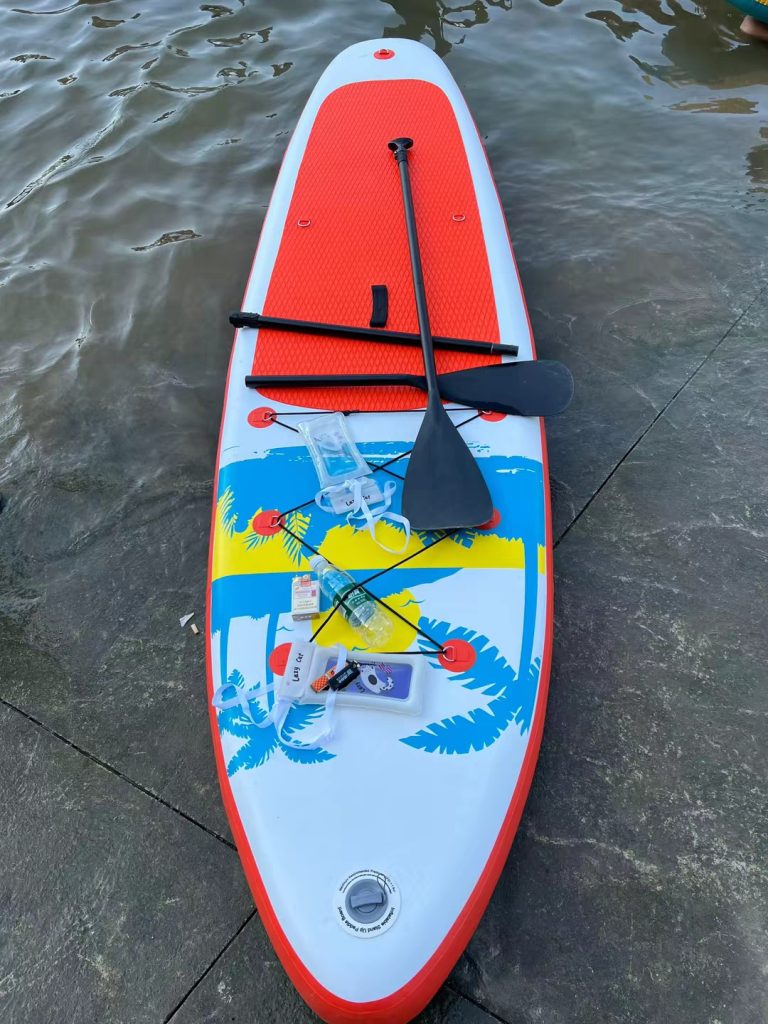
For surf shops, distributors, sporting-goods importers, and private-label brands, standard surfboards are not always enough. Many buyers want products with their own brand identity, custom dimensions, unique graphics, or specific performance characteristics.
This is where OEM surfboard manufacturing becomes important.
A capable surfboard manufacturer should be able to transform a buyer’s product concept into a practical manufacturing specification and then reproduce the approved design consistently during mass production.
However, not every supplier has the same OEM capabilities.
Before placing a custom order, buyers should understand what can actually be customized, how the development process works, and what information the manufacturer needs.
1. What Does OEM Surfboard Manufacturing Mean?
OEM means that a manufacturer produces a surfboard according to specifications provided by the buyer.
Depending on the factory’s capabilities, OEM services may include:
-
Custom surfboard shapes
-
Custom dimensions
-
Custom volume
-
Custom colors
-
Custom graphics
-
Brand logos
-
Deck designs
-
Fin configurations
-
Accessories
-
Packaging
-
Product labels
-
Retail boxes
For a private-label brand, OEM manufacturing allows the company to sell a product under its own brand instead of simply reselling an existing factory model.
The exact level of customization depends on the manufacturer’s equipment, design team, production processes, and minimum order requirements.
2. Start With a Clear Product Concept
Before contacting a manufacturer, buyers should define what they want to create.
For example:
Target Market: Beginner surfers
Board Type: Longboard
Length: 8 ft
Construction: EPS/Epoxy
Volume: Specific requirement
Color: Custom
Graphics: Brand artwork
Logo: Private label
Fin System: Specific configuration
Quantity: 200 units
The more clearly the requirements are defined, the easier it is for the manufacturer to provide an accurate quotation and production plan.
If you only tell a supplier:
“I need a custom surfboard.”
the manufacturer may not have enough information to determine the exact product.
3. Custom Shapes Are More Than Custom Graphics
One common misunderstanding is confusing a custom surfboard with a standard board carrying a different logo.
There are two very different levels of customization.
Basic Customization
This may include:
-
Logo
-
Color
-
Graphics
-
Packaging
-
Labels
The underlying board remains a standard factory model.
Full Product Customization
This can include:
-
Length
-
Width
-
Thickness
-
Volume
-
Rocker
-
Rail profile
-
Nose shape
-
Tail shape
-
Bottom contour
-
Fin configuration
This level of customization requires significantly more technical capability.
If your goal is to develop a unique surfboard rather than simply put your logo on an existing model, ask the manufacturer specifically about custom shape development.
4. Can a Manufacturer Work From Your Design?
Some OEM manufacturers can work from customer-provided design files.
Depending on the production process, you may be able to provide:
-
CAD files
-
Dimension drawings
-
3D models
-
Shape specifications
-
Reference boards
-
Product photographs
-
Graphic artwork
-
Logo files
If you already have a professional design, provide as much technical information as possible.
If you do not have a complete design, some manufacturers may be able to help develop the specifications based on your requirements.
For example, you could explain:
“Our target customers are beginners who surf smaller waves. We need a stable board with high volume and a durable construction.”
The manufacturer can then discuss possible dimensions and construction options.
5. Custom Dimensions
Dimensions are among the most important elements of a custom surfboard.
Typical specifications include:
-
Length
-
Width
-
Thickness
-
Volume
-
Nose width
-
Tail width
-
Rocker
-
Rail dimensions
Changing one specification can affect the overall characteristics of the board.
For example, increasing width and volume may improve stability for certain beginner-oriented designs, while a narrower design may be more appropriate for certain performance applications.
Therefore, custom dimensions should be developed according to the intended rider and wave conditions.
6. Custom Board Shapes
A professional OEM manufacturer should understand that shape is not simply an aesthetic choice.
Shape influences how the board behaves in the water.
Important design areas include:
Nose
The nose shape can affect stability, paddling characteristics, and the board’s interaction with waves.
Rails
Rail design can influence how the board transitions during turns.
Tail
Different tail configurations can provide different handling characteristics.
Bottom Contour
The bottom shape influences water flow beneath the board.
Rocker
The curve of the board from nose to tail can affect maneuverability and wave entry.
For this reason, buyers developing a new model should work with a manufacturer that understands the relationship between design specifications and intended usage.
7. Custom Materials and Construction
OEM customization does not necessarily stop at the shape.
Buyers may also want to specify the construction.
Potential options can include:
-
EPS/Epoxy
-
PU/Fiberglass
-
Soft-top
-
Reinforced construction
-
Composite materials
The appropriate construction depends on the target market and product positioning.
For example, a beginner product may prioritize stability and durability, while a premium performance product may emphasize weight and responsiveness.
Ask the manufacturer which construction options are available for your proposed design.
8. Custom Graphics and Branding
Branding is often one of the easiest areas to customize.
A manufacturer may be able to apply:
-
Brand logos
-
Custom artwork
-
Full-color graphics
-
Deck graphics
-
Bottom graphics
-
Custom colors
-
Serial numbers
-
Product labels
When submitting artwork, ask the manufacturer which file formats they require.
Common professional artwork formats may include vector files such as AI, EPS, or PDF, depending on the factory’s printing process.
Always request a digital proof before mass production.
This allows you to check:
-
Logo position
-
Graphic dimensions
-
Colors
-
Text
-
Spelling
-
Artwork orientation
A small mistake in artwork can become expensive if it is repeated across an entire production batch.
9. Custom Accessories
Depending on the manufacturer, buyers may also be able to customize or select accessories.
These can include:
-
Fins
-
Leashes
-
Deck pads
-
Fin boxes
-
Handles
-
Board bags
-
Repair kits
-
Packaging accessories
For retailers, offering a complete package can simplify product sales.
For example, a beginner-oriented product could be supplied with a suitable fin configuration, leash, and protective packaging.
10. OEM Packaging
Packaging is especially important for international buyers.
Custom packaging may include:
-
Individual cartons
-
Printed boxes
-
Brand labels
-
Instruction sheets
-
Product cards
-
Protective materials
-
Barcode labels
The packaging should also provide adequate protection during transportation.
Ask the manufacturer for the final packed dimensions and gross weight.
This information is useful for calculating international freight costs and planning warehouse space.
11. Why Samples Are Essential
Never assume that the first production batch will automatically match your expectations.
For custom surfboards, a pre-production sample is extremely valuable.
The sample allows you to check:
Shape
Does the physical board match the approved design?
Dimensions
Are length, width, and thickness within your requirements?
Construction
Does the actual construction match the quotation?
Graphics
Are the logo, colors, and artwork correct?
Accessories
Are the fins, deck pad, leash, and other components correct?
Packaging
Can the product survive normal international transportation?
Only after approving the sample should you move toward mass production.
12. Create an Approved Production Specification
Once the sample is approved, create a clear production specification.
It can include:
Model Name: OEM-01
Length: XX ft
Width: XX in
Thickness: XX in
Volume: XX L
Construction: Specified material
Color: Approved color
Graphics: Approved artwork
Logo: Approved position
Fin System: Specified system
Accessories: Specified
Packaging: Approved packaging
This document gives both sides a common reference.
It also reduces misunderstandings during repeat orders.
13. How to Maintain Consistency in Repeat Orders
One of the biggest challenges with OEM products is maintaining consistency.
Your second order should ideally match the approved first production sample.
Important quality-control points include:
-
Board dimensions
-
Weight
-
Volume
-
Surface finish
-
Graphics
-
Color
-
Fin box position
-
Accessories
-
Packaging
Ask the manufacturer how production consistency is controlled.
For larger orders, you can also discuss third-party inspection or pre-shipment inspection.
14. What Is the MOQ for OEM Surfboards?
OEM manufacturers usually have different minimum order requirements for different levels of customization.
For example:
Customization |
Typical Difficulty |
|---|---|
Logo |
Low |
Standard graphics |
Low |
Custom color |
Low to medium |
Custom packaging |
Medium |
Custom dimensions |
Medium |
Custom shape |
High |
New mold/tooling |
High |
New construction |
High |
The exact MOQ varies significantly between manufacturers.
Before requesting a quotation, tell the supplier your expected quantity.
For example:
“We are planning an initial order of 100 units and expect repeat orders if the product performs well.”
This helps the manufacturer determine whether the project is commercially practical.
15. Ask About Tooling and Development Costs
Some custom designs may require additional development work.
Possible costs can include:
-
Design fees
-
Prototyping
-
Mold/tooling
-
Sample production
-
Custom packaging
-
Printing plates
-
Special materials
Ask the manufacturer to separate these costs from the unit price.
For example:
Sample Cost: $XXX
Tooling Cost: $XXX
Unit Price: $XXX
Packaging: $XX per unit
This makes it easier to calculate the true cost of developing a new product.
16. Protect Your Brand and Design
If you are developing a unique surfboard design, intellectual-property considerations should not be ignored.
Before sending proprietary designs to a manufacturer, discuss:
-
Ownership of custom designs
-
Confidentiality
-
Use of your logo
-
Restrictions on selling your branded products
-
Tooling ownership
-
Reproduction rights
If your product design is commercially important, consider using an appropriate written agreement.
The exact legal requirements depend on the countries involved, so professional legal advice may be appropriate for significant projects.
17. Questions to Ask an OEM Surfboard Manufacturer
Before starting production, ask:
-
Can you manufacture completely custom surfboard shapes?
-
Can you work from CAD or 3D design files?
-
Can you develop a shape based on our requirements?
-
What construction options are available?
-
Can you customize dimensions and volume?
-
Can you apply our logo and graphics?
-
Can you customize the packaging?
-
Can you provide a pre-production sample?
-
What is the MOQ for our design?
-
Are there tooling or development fees?
-
How long does sample development take?
-
What is the mass-production lead time?
-
How do you control consistency between production batches?
-
Can you provide inspection photos before shipment?
-
Can you support repeat OEM orders?
A manufacturer that provides clear answers to these questions is easier to evaluate.
18. How to Compare Two OEM Manufacturers
Suppose two factories provide similar quotations.
Do not immediately choose the cheaper one.
Compare:
Factor |
Manufacturer A |
Manufacturer B |
|---|---|---|
Custom Shape |
Yes/No |
Yes/No |
Sample Support |
Yes/No |
Yes/No |
Material Options |
Available options |
Available options |
MOQ |
Quantity |
Quantity |
Production Capacity |
Capacity |
Capacity |
Lead Time |
Days |
Days |
QC Process |
Details |
Details |
Packaging |
Details |
Details |
OEM Experience |
Experience |
Experience |
Communication |
Quality |
Quality |


No reply content