
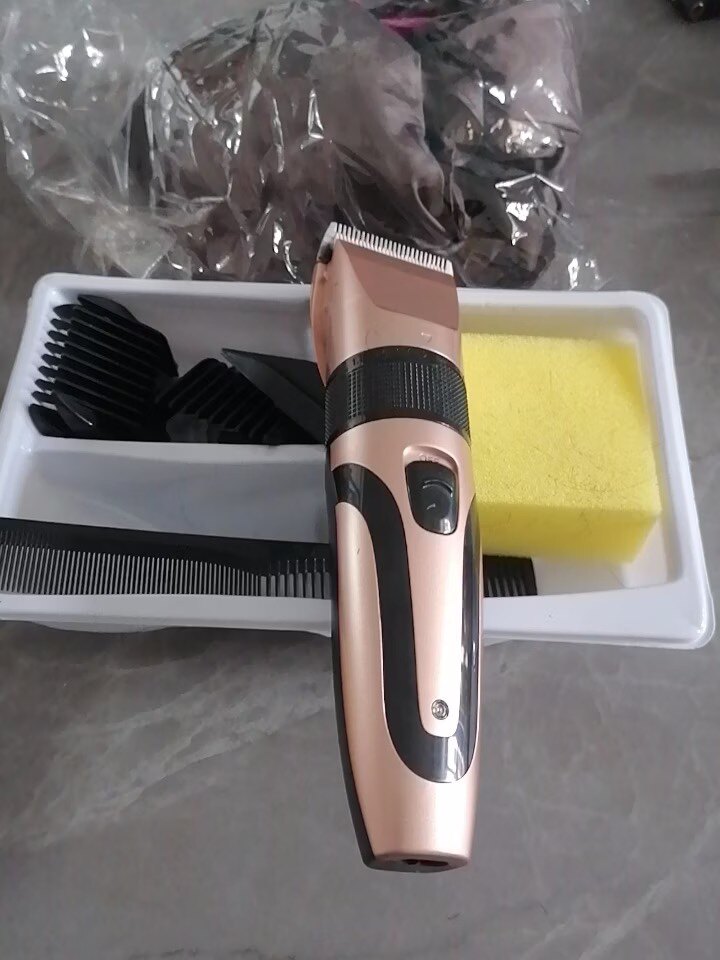
Noise and vibration are often overlooked when buyers compare hair clippers, but they can have a major impact on the user experience.
For professional barbers and salon workers, a clipper may be used repeatedly for several hours every day. Excessive noise, strong vibration, an uncomfortable grip, or poor weight distribution can quickly lead to user fatigue.
For distributors, retailers, and private-label brands, these problems can also result in negative reviews, product returns, and customer complaints.
A professional hair clipper manufacturer should therefore consider noise, vibration, ergonomics, motor performance, blade design, and housing structure during product development.
This guide explains the main causes of excessive noise and vibration and what B2B buyers should check before selecting a hair clipper manufacturer.
1. Why Do Hair Clippers Produce Noise?
Every electric hair clipper produces some level of sound during operation.
The main sources can include:
- Motor operation
- Blade movement
- Mechanical friction
- Vibration
- Cooling components
- Loose internal components
- Poor assembly
However, excessive noise may indicate that the product needs better mechanical design or assembly control.
For professional users, lower operating noise can make the working environment more comfortable.
2. Why Does a Hair Clipper Vibrate?
Vibration can come from several components.
Common causes include:
- Motor imbalance
- Moving blade movement
- Poor blade alignment
- Loose components
- Housing design
- Assembly tolerances
- Mechanical wear
A small amount of vibration is normal for an electric clipper.
The problem occurs when vibration becomes strong enough to affect control or comfort.
3. Motor Quality Affects Noise and Vibration
The motor is one of the most important components affecting the overall operating experience.
A poorly balanced motor may generate excessive vibration.
A manufacturer should consider:
- Motor design
- Motor balance
- Operating speed
- Torque
- Power consumption
- Heat generation
- Mechanical mounting
A high-speed motor is not automatically better.
The manufacturer should balance performance with noise, vibration, energy consumption, and durability.
4. Blade Movement Can Create Vibration
The moving blade rapidly travels back and forth during operation.
This movement naturally creates mechanical vibration.
However, poor blade design or incorrect assembly can increase vibration.
Potential causes include:
- Incorrect blade alignment
- Uneven blade movement
- Poor mechanical tolerances
- Excessive friction
- Damaged components
A professional manufacturer should inspect the blade assembly during production.
5. Blade Alignment Matters
Incorrect blade alignment can affect both cutting performance and vibration.
If the moving and fixed blades are not positioned correctly, the system may generate additional friction or mechanical movement.
This can result in:
- Increased noise
- Increased vibration
- Hair pulling
- Uneven cutting
- Higher blade temperature
Therefore, blade alignment should be included in the manufacturer’s quality-control process.
6. Housing Design Can Reduce User Discomfort
The outer housing is not only about appearance.
Its shape and internal structure can affect:
- Vibration transmission
- Grip comfort
- Weight distribution
- Noise
- Heat transfer
A well-designed housing can help isolate certain mechanical vibrations from the user’s hand.
The grip area should also be designed for comfortable long-term use.
7. Weight Distribution Is Important
Two clippers can have the same total weight but feel completely different in the hand.
Why?
Because their centers of gravity may be different.
A clipper with poor weight distribution may place too much pressure on the wrist.
This can become uncomfortable during extended professional use.
Manufacturers should consider:
- Motor position
- Battery position
- Blade position
- Housing shape
- Center of gravity
The goal is not simply to make the clipper lighter.
The goal is to make it balanced.
8. Grip Design Affects Comfort
A good grip should allow users to maintain control without excessive hand pressure.
Important considerations include:
- Handle diameter
- Grip shape
- Surface texture
- Button location
- Finger position
- Overall balance
For professional barber clippers, these factors can be especially important because users may operate the product repeatedly throughout the day.
9. Excessive Vibration Can Affect Cutting Accuracy
Vibration is not only a comfort issue.
It can also affect precision.
If a clipper vibrates excessively, the user may find it harder to maintain consistent movement.
This can affect:
- Fades
- Edges
- Beard trimming
- Detail work
- Hairline shaping
For professional applications, stable operation is therefore important.
10. Noise Matters in Barbershops and Salons
A barbershop may have several electric clippers operating simultaneously.
If every product produces high noise levels, the overall environment can become uncomfortable.
Lower operating noise can provide a more pleasant experience for:
- Barbers
- Salon workers
- Customers
- Children
- Home users
However, buyers should not assume that a “quiet motor” automatically means low overall noise.
The blade mechanism and mechanical structure also contribute to the final sound level.
11. Motor Speed and Noise
Higher motor speed can sometimes increase operating noise.
However, the relationship is not simply:
Higher RPM = louder
Noise also depends on:
- Motor construction
- Mechanical balance
- Blade design
- Housing
- Internal structure
- Assembly quality
Manufacturers should optimize the complete system.
12. Lubrication Can Affect Noise
Proper lubrication helps reduce friction between moving components.
Insufficient lubrication can result in:
- More friction
- Increased noise
- Higher temperature
- Increased wear
- Reduced cutting performance
Manufacturers should provide clear maintenance instructions.
Users should also clean and lubricate the blade according to the product’s instructions.
13. Loose Components Can Increase Noise
During operation, loose components can create rattling sounds.
Potential problem areas include:
- Housing screws
- Blade assemblies
- Internal brackets
- Switch components
- Battery connections
A professional assembly process should ensure that components are securely installed.
Final inspection can help identify abnormal sounds before shipment.
14. Heat Can Affect Comfort
Noise and vibration are not the only comfort factors.
Heat is also important.
A clipper that becomes excessively hot can be uncomfortable for professional users.
Potential sources include:
- Motor heat
- Blade friction
- Battery heat
- Charging
- Poor heat dissipation
Manufacturers should test the product during extended operation.
15. How Manufacturers Test Noise
Noise can be evaluated under controlled conditions.
A manufacturer may measure sound levels while the clipper is operating at different conditions.
Testing can include:
- No-load operation
- Normal cutting
- Different motor speeds
- Extended operation
The exact testing method should be defined clearly.
For B2B buyers, ask:
“Under what conditions was the advertised noise level measured?”
This question is important because laboratory measurements may differ from actual use.
16. How Manufacturers Test Vibration
Vibration can also be evaluated during product development.
The manufacturer can inspect:
- Motor vibration
- Blade vibration
- Housing vibration
- Handle vibration
The product should ideally be tested under normal operating conditions.
If the target market is professional barbers, longer-duration testing can provide more useful information.
17. How to Reduce Vibration During Product Design
Manufacturers can use several approaches.
Improve Motor Balance
A balanced motor can reduce unnecessary mechanical vibration.
Improve Blade Assembly
Accurate blade alignment can reduce unwanted movement.
Improve Internal Structure
Appropriate mounting and structural support can help control vibration.
Improve Housing Design
The housing can be designed to reduce the amount of vibration transferred to the user’s hand.
Improve Assembly Tolerances
Consistent assembly can reduce variation between individual products.
18. How to Reduce Noise
Noise reduction can involve multiple components.
Manufacturers can consider:
- Motor selection
- Blade geometry
- Mechanical friction
- Internal structure
- Housing design
- Component tolerances
- Lubrication
There is no single component that guarantees a quiet clipper.
Noise performance should be treated as a complete product-design issue.
19. Why Cheap Products May Have More Variation
Low-cost manufacturing does not necessarily mean poor quality.
However, very aggressive cost reduction can sometimes involve compromises in:
- Motor quality
- Blade processing
- Housing materials
- Assembly accuracy
- Component consistency
- Quality control
This can lead to greater variation between units.
For B2B buyers, consistency is often more important than having the lowest possible unit price.
20. How OEM Buyers Can Specify Noise and Vibration
If you are developing a private-label clipper, define your requirements before production.
Your specification may include:
Maximum noise level
Vibration requirements
Operating temperature
Product weight
Center of gravity
Grip design
Motor specification
Blade specification
Battery specification
The manufacturer should confirm which requirements can be tested and how they will be measured.
21. Sample Testing Is Essential
Never approve a large OEM order based only on photographs or specifications.
Request a physical sample.
Test:
Noise
Operate the clipper in a quiet environment.
Vibration
Hold the clipper during extended operation.
Comfort
Use it for a realistic period.
Grip
Evaluate whether the handle feels secure.
Balance
Check whether the wrist experiences excessive pressure.
Heat
Monitor blade and housing temperature during operation.
Cutting
Test different hair types and densities.
A sample can reveal problems that are impossible to identify from a product listing.
22. Test Multiple Samples
Testing one sample is useful, but testing several samples is better for B2B purchasing.
For example, test:
Sample A
Sample B
Sample C
Compare:
- Noise
- Vibration
- Cutting performance
- Motor behavior
- Battery performance
- Heat
- Appearance
If performance varies significantly between samples, ask the manufacturer about its production consistency.
23. Questions to Ask a Hair Clipper Manufacturer
Before placing an order, ask:
- What motor is used?
- What is the motor speed?
- What is the motor torque?
- How is motor balance controlled?
- How is blade alignment controlled?
- How is vibration tested?
- How is noise tested?
- What is the measured noise level?
- Under what conditions was noise measured?
- What is the product weight?
- Where is the center of gravity?
- How is heat managed?
- How is blade friction controlled?
- What lubrication is recommended?
- What quality-control procedures are used?
- Can the grip design be customized?
- Can the housing be customized?
- Can the motor be customized?
- What is the MOQ?
- Can you provide samples for testing?
24. Choosing a Manufacturer for Professional Barbers
If your target customers are professional barbers, prioritize:
- Stable motor performance
- Low vibration
- Comfortable grip
- Balanced weight
- Reliable battery
- Consistent cutting
- Durable blade
- Easy maintenance
A professional clipper should be designed for repeated use rather than occasional operation.
25. Choosing a Manufacturer for Home Users
Home users may prioritize different features.
Important factors can include:
- Simple operation
- Low noise
- Low vibration
- Lightweight design
- Long battery life
- Easy cleaning
- Multiple guide combs
- Competitive retail price
Understanding the target customer helps manufacturers create a more appropriate product.
26. Choosing a Manufacturer for Private Label
Private-label buyers should evaluate both product quality and customization capability.
Ask whether the factory can customize:
- Logo
- Housing color
- Housing design
- Blade
- Guide combs
- Packaging
- User manual
- Display
- Charging system
- Accessories
Not every factory can provide the same level of customization.
27. How to Compare Hair Clipper Manufacturers
Create a supplier comparison table before making a decision.
| Factor | Supplier A | Supplier B | Supplier C |
|---|---|---|---|
| Noise control | Excellent | Good | Medium |
| Vibration control | Excellent | Good | Good |
| Motor quality | Excellent | Good | Medium |
| Blade quality | Good | Excellent | Good |
| Ergonomics | Excellent | Good | Good |
| Battery | Good | Excellent | Good |
| OEM capability | Excellent | Good | Excellent |
| QC system | Excellent | Good | Medium |
| MOQ | Low | Medium | Low |
| Sample quality | Excellent | Good | Good |
The cheapest supplier may not provide the lowest total cost.
Poor product quality can result in returns, warranty claims, negative reviews, and lost customers.
Frequently Asked Questions
Why does my hair clipper vibrate so much?
Excessive vibration may be caused by motor imbalance, blade movement, poor blade alignment, loose components, mechanical tolerances, or assembly problems.
Can a manufacturer make a hair clipper quieter?
Yes. Noise can be reduced through appropriate motor selection, blade design, mechanical structure, lubrication, housing design, and manufacturing control.
Is a high-speed motor always louder?
Not necessarily. Overall noise depends on the motor, blade mechanism, housing, mechanical balance, and other design factors.
Does vibration affect cutting performance?
Excessive vibration can make precise control more difficult and may reduce user comfort during detailed cutting.
What should professional barbers look for?
Professional users should consider motor stability, cutting consistency, vibration, noise, ergonomics, battery performance, blade durability, and ease of maintenance.
How can B2B buyers test noise and vibration?
Request physical samples and operate them under realistic conditions. Compare several samples when possible and evaluate noise, vibration, grip comfort, heat, and cutting performance.
Can OEM hair clippers be customized for lower noise?
Potentially, depending on the manufacturer’s design and engineering capabilities. Noise-related customization should be discussed during product development rather than after mass production begins.
Final Checklist for B2B Buyers
Before selecting a hair clipper manufacturer, check:
✓ Motor quality
✓ Motor balance
✓ Motor speed
✓ Motor torque
✓ Blade alignment
✓ Blade movement
✓ Noise level
✓ Vibration
✓ Product weight
✓ Weight distribution
✓ Grip comfort
✓ Heat management
✓ Lubrication
✓ Assembly quality
✓ Quality-control process
✓ Sample consistency
✓ OEM customization
✓ MOQ
✓ Production capacity
✓ Warranty
For international buyers, a high-quality hair clipper should provide more than powerful cutting performance. It should also deliver a comfortable experience during repeated use.
A professional manufacturer should control the complete system, including the motor, blade assembly, housing, mechanical structure, battery, ergonomics, and production process.
Before placing a bulk OEM or private-label order, test physical samples under realistic operating conditions and evaluate noise, vibration, heat, grip comfort, balance, and cutting performance.
Choosing the right manufacturer can help distributors, retailers, barber-equipment suppliers, and private-label brands reduce product complaints and build a more competitive hair clipper product line.


No reply content