
China Umbrella Customization Factory
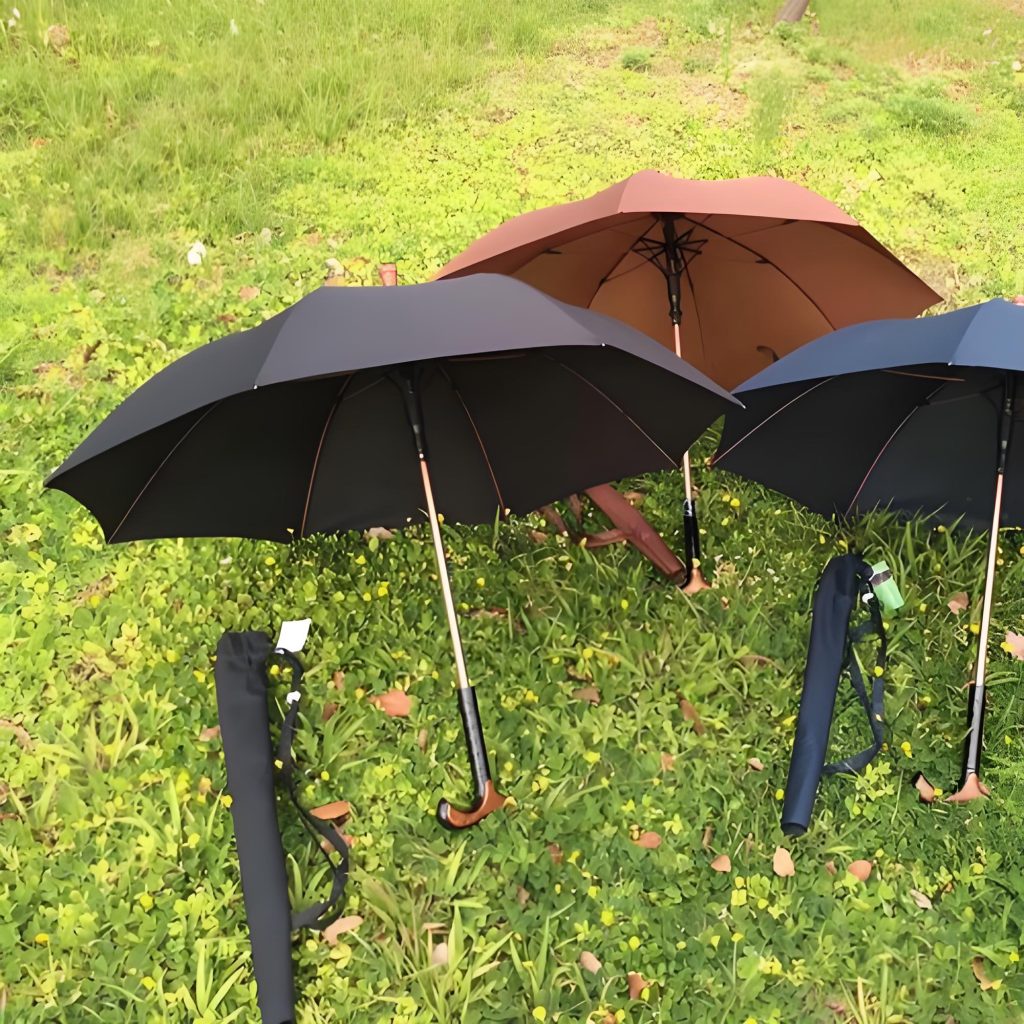
Sourcing umbrellas from China can be highly cost-effective, but international buyers often run into the same issues: unclear MOQs, inconsistent print quality, weak frames, delayed shipments, and compliance gaps. The good news is that experienced Chinese manufacturers—especially those in mature industrial clusters—have standardized solutions for each of these problems. This article explains where to source, how factories solve quality and customization issues, and what buyers should specify before placing an order.
1. Where the factories are—and why it matters
China accounts for a large share of global umbrella production, with tightly integrated supply chains for fabric, ribs, shafts, handles, springs, and printing. The main clusters are:
-
Zhejiang (Shangyu/Songxia in Shaoxing, Hangzhou Xiaoshan/Nanyang, Yiwu, Ningbo): Strong in high-volume folding umbrellas, automatic umbrellas, promotional umbrellas, UV/sun umbrellas, and export-grade quality. Shangyu is widely known as a major “umbrella city” cluster.
-
Fujian (Jinjiang/Dongshi, Xiamen): Jinjiang/Dongshi is strong in patio/beach and mass-market folding umbrellas; Xiamen suppliers often focus on export-oriented rain gear and promotional orders.
-
Guangdong (Huizhou, Shenzhen, Dongguan, Guangzhou): Good for OEM/ODM, tech features (LED, auto open/close, smart handles), UV-protection coatings, and faster prototyping near Shenzhen/Yantian port.
-
Other emerging bases: Henan Dancheng and some Jiangsu/Anhui suppliers handle mid-tier and transferred production, but component ecosystems are less dense than in Zhejiang/Fujian/Guangdong.
Choosing the right cluster solves the first “problem”: matching product type to supplier expertise instead of asking a patio-umbrella factory to make mini promo folding umbrellas, or vice versa.
2. Problem: “MOQ is either too high or unclear”
Many buyers ask for “low MOQ full customization,” but customization depth drives MOQ.
Chinese manufacturers typically structure it like this:
-
Stock/white-label umbrellas: sometimes 100–500 pcs, logo-only changes.
-
Custom-printed folding/promo umbrellas: commonly 500–1,000 pcs per design/color.
-
Custom Pantone-dyed fabric, unique frame, molded handle, or private-shape umbrella: often 1,000–3,000 pcs per style/color.
-
Patio/beach/cantilever umbrellas: lower unit counts but higher tooling/packaging complexity.
Solution: send a specification sheet before asking for a quote. Include umbrella type, open arc/diameter, fold stages, frame material, fabric, coating, handle, printing method, packaging, target FOB price, and estimated annual volume. A good factory returns tiered MOQs instead of one vague number.
3. Problem: “Samples look fine, but bulk quality fails”
This is the most common complaint in umbrella importing. Failures usually come from the mechanism and frame, not just the fabric.
Reputable Chinese factories address it with a staged QC plan:
-
Pre-production sample (PPS): confirms fabric, color, print position, frame, handle, open/close feel, and packaging.
-
Incoming material check: fabric weight (e.g., 190T/210T polyester or pongee), coating (PU, silver, black glue), rib material (steel, aluminum, fiberglass), shaft hardness, spring tension.
-
During-production check: rib alignment, runner movement, stitch density, seam tapping, tip assembly.
-
Pre-shipment inspection (PSI): AQL 2.5 or as agreed; cycle auto open/close units 20–30 times per sample, check waterproof spray/leakage, flex ribs, test print rub/scratch, verify logo placement.
Buyers should request written QC criteria and, for larger orders, a third-party inspection by SGS, Bureau Veritas, TÜV, or a local QA agency. For automatic umbrellas, explicitly test lock/open/close and spring rebound; for windproof models, test fiberglass rib recovery and joint cracking.
4. Problem: “Logo print is blurry, misaligned, or fades”
Print issues happen when buyers send low-res JPGs and approve colors by phone photo.
Chinese custom-umbrella factories solve this by offering:
-
Screen printing: best for simple 1–3 color logos on flat panels.
-
Heat transfer: good for full-color/photo artwork, but less durable in high humidity if poorly cured.
-
Digital sublimation: strong for all-over colorful designs on polyester/pongee.
-
Embroidery or woven jacquard: premium for golf/patio/brand umbrellas, higher cost, highest durability.
Best practice: provide vector files (AI/EPS/PDF), Pantone TCX/TPX for fabric, confirm a physical printed panel sample, and agree tolerance (for example ±3 mm logo placement). Curved canopy panels distort artwork, so never approve print based only on a computer mockup.
5. Problem: “Lead time slips before rainy season or promotions”
Umbrella demand is seasonal: spring rainy season, summer UV season, and Q4 holiday/gift season create factory bottlenecks.
Typical timelines from Chinese manufacturers:
-
Stock umbrellas: a few days to 1–2 weeks if inventory exists.
-
Standard custom print on stock fabric: about 25–45 days after sample approval.
-
Custom dye, special frame, molded handle, patented auto mechanism: 45–75 days.
-
Patio/large outdoor umbrellas with dyeing/coating/structural parts: longer, often 60+ days.
-
Sea freight: additional 15–35 days depending on destination.
Solution: place peak-season orders 45–60 days early for folding/promo, longer for patio; ask for a written production schedule with material-procurement start date, sample sign-off date, mass-production start, QC dates, and vessel booking plan. Include a delay penalty or at least a force-majeure notification clause.
6. Problem: “I don’t know if the factory is real or just a trader”
China has many legitimate manufacturers and also trading intermediaries. Both can work, but pricing and engineering support differ.
Verification steps:
-
Ask for business license, factory photos/video, and cluster address (Shangyu, Jinjiang, Huizhou, etc.).
-
Request ISO 9001; for social/compliance audits ask for BSCI or SEDEX/SMETA.
-
For EU/US chemical safety, request REACH for dyes/coatings/plastics; OEKO-TEX for textiles; for children’s umbrellas request EN 71 (EU) or CPSIA (US).
-
For UV claims, request UPF test data; for wind claims, request wind-resistance test method and pass threshold rather than marketing words like “stormproof.”
-
Use video audit or third-party factory audit before depositing on a first order.
7. Problem: “Shipping cost is unpredictable”
Umbrellas vary a lot in cube:
-
Folding umbrellas: dense, cheap to ship by sea in cartons.
-
Straight/golf umbrellas: longer cartons, more volume per unit.
-
Patio/beach/cantilever umbrellas: bulky, sometimes oversized; sea FCL or flat-pack components may be needed.
A Chinese manufacturer can reduce landed cost by optimizing carton size, using knock-down frames for patio umbrellas, consolidating with other goods in Yiwu/Shenzhen/Ningbo/Xiamen, and recommending LCL for trial orders vs FCL for repeats. For urgent promo replenishments, air or express is possible but only makes sense for high-margin or small runs.
8. Problem: “I need OEM/ODM, not just logo printing”
Many Chinese umbrella factories offer full OEM/ODM:
-
Frame redesign: steel, aluminum, fiberglass ribs; windproof double-canopy; reverse/inside-out; compact 5-fold; golf 27–37.5 inch arc.
-
Fabric upgrades: 190T/210T polyester, pongee, nylon, recycled RPET, solution-dyed acrylic for patio, silver/black-glue UV coating.
-
Mechanism: manual, auto-open, auto open/close, semi-automatic.
-
Added functions: LED lights, Bluetooth tracker, bottle opener handle, eco hangtags, RPET bags, gift boxes.
-
Packaging: polybag, sleeve, color box, header card, UPC/barcode, FNSKU if e-commerce.
For ODM, share reference samples or CAD/3D ideas; expect tooling/mold fees for handles and some mechanisms, and higher MOQ than logo-only jobs.
9. Quick specification template buyers should send
To get an accurate quote from a Chinese manufacturer, include:
-
Type: folding / straight / golf / patio / beach / kids / promo
-
Open arc or diameter, folded length, number of panels
-
Fabric + coating + weight (e.g., 210T polyester, PU 1500mm, UPF 50+)
-
Frame: rib material/count, shaft material, auto/manual, windproof features
-
Handle: plastic/wood/rubber/metal/custom mold
-
Printing: logo files, Pantone, method, panel position, one-color or full-color
-
Packaging: polybag, box, tag, master carton size limit
-
Order qty per style/color, reorders per year
-
Target market and compliance: US/EU/Australia/Japan, REACH/EN71/CPSIA/ISO/BSCI
-
Required delivery date and Incoterm (EXW/FOB/CIF/DDP)
Bottom line
Chinese umbrella manufacturers solve most buyer problems through cluster specialization, tiered MOQs, pre-production sampling, staged QC, standardized printing workflows, and export documentation. The buyer’s job is to specify clearly, approve physical samples, verify the factory, and build buffer time before peak season. If you do those four things, the risk of “cheap but defective” umbrellas drops sharply and the order becomes repeatable.
If you want, I can turn this into a shorter B2B blog version, a LinkedIn post, or a factory-audit checklist.


No reply content