
China Surfboard and Snowboard Manufacturer Co., Ltd.
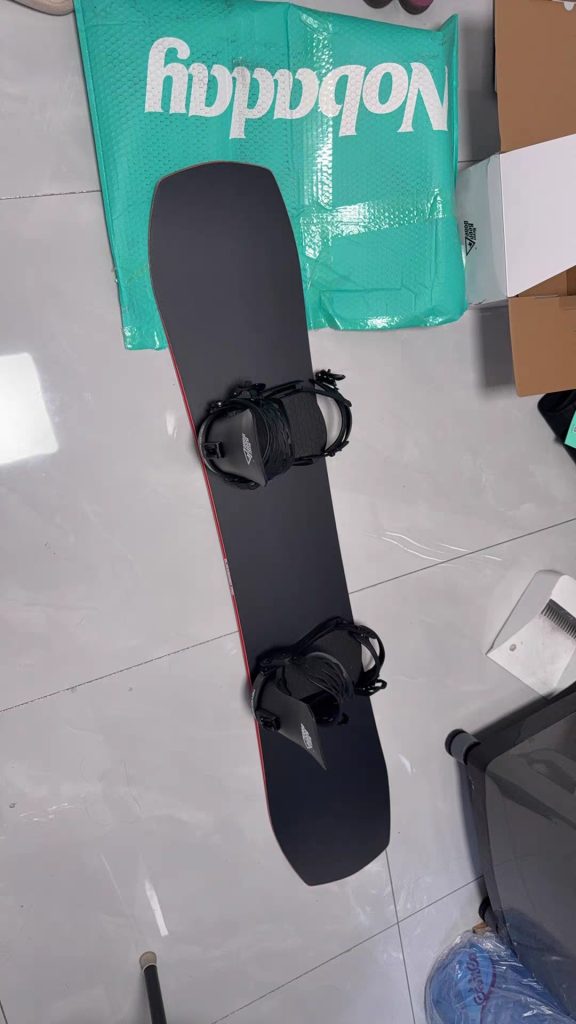
If you are planning to import skis from China, one of the first questions is usually: How much does a pair of skis cost from a Chinese manufacturer?
The answer depends on the ski type, materials, construction, size, order quantity, customization, packaging, and quality requirements. A basic ski may have a relatively low factory price, while a professional or fully customized ski can cost several times more.
This guide explains typical China factory price ranges, what determines the price, how OEM costs work, and what buyers should consider before placing a bulk order.
1. What Is the Factory Price of Skis in China?
For purchasing and budgeting purposes, the following ranges can be used as an initial reference:
Ski Category |
Approximate Factory Price |
|---|---|
Basic beginner skis |
$25–$50/pair |
Junior and kids’ skis |
$20–$50/pair |
Recreational skis |
$40–$80/pair |
All-mountain skis |
$60–$120/pair |
Freeride skis |
$70–$140/pair |
Professional/performance skis |
$80–$180+/pair |
Highly customized OEM skis |
$90–$200+/pair |
These are indicative factory-price ranges, not fixed quotations.
A factory may quote a different price depending on the exact construction, quantity, specifications, packaging, and customization requirements.
For an accurate quotation, buyers should provide a detailed product specification.
2. Why Do Ski Prices Vary So Much?
Two skis that look similar can have very different production costs.
The main price factors include:
-
Ski core material
-
Fiberglass
-
Carbon reinforcement
-
Base material
-
Steel edges
-
Ski dimensions
-
Construction method
-
Surface finishing
-
Graphics
-
Brand customization
-
Packaging
-
Order quantity
-
Tooling requirements
-
Quality standards
The biggest mistake is comparing two prices without comparing their specifications.
For example, one manufacturer may quote $45 per pair while another quotes $70. The $70 product may use a better core, stronger reinforcement, higher-grade base, better finishing, or more expensive packaging.
3. How Does the Ski Core Affect Price?
The core is one of the most important components of ski construction.
Depending on the design, manufacturers may use different core materials or combinations.
Wood core
Wood-core skis are widely used for performance-oriented products.
Advantages can include:
-
Natural flex characteristics
-
Good stability
-
Durable construction
-
Consistent performance
However, wood selection and processing can increase production costs.
Composite construction
Composite materials can be used to control weight, stiffness, and cost.
They may be suitable for entry-level or specific performance applications.
Advanced reinforcement
Higher-end skis may use materials such as carbon fiber or other reinforcement layers.
These materials can increase:
-
Strength
-
Stiffness
-
Weight control
-
Production complexity
-
Material cost
Therefore, premium ski construction usually costs more.
4. How Does Order Quantity Affect the Price?
Order volume is another major factor.
A manufacturer may quote significantly different prices for 100 pairs and 2,000 pairs.
For example:
Order Quantity |
Possible Price Level |
|---|---|
50–100 pairs |
Higher |
200–500 pairs |
Medium |
1,000+ pairs |
Lower |
3,000+ pairs |
Potentially lower |
The exact discount depends on the factory’s production capacity and material purchasing costs.
Larger orders can allow manufacturers to purchase materials in greater quantities and distribute setup and production costs across more units.
However, buyers should not order thousands of pairs simply to obtain a lower unit price if the product has not been tested.
5. How Much Does OEM Customization Cost?
OEM customization can involve different levels of investment.
Logo customization
Adding a brand logo to an existing model is usually the simplest option.
Possible additional costs include:
-
Logo setup
-
Printing
-
Laser marking
-
Packaging changes
Custom graphics
If you want your own ski graphics, the manufacturer may need to create new artwork or printing arrangements.
This can increase both setup costs and production time.
Customized construction
Changing the ski’s geometry, core, reinforcement, base, or other structural components is more complicated.
It may require:
-
Engineering work
-
Prototypes
-
Testing
-
New molds or tooling
-
Additional sampling
This type of customization generally requires a larger budget and MOQ.
6. How Much Does Packaging Add to the Cost?
Packaging requirements can have a noticeable impact on the final factory price.
Basic packaging may include:
-
Protective film
-
Cardboard protection
-
Standard carton
A retail brand may require:
-
Custom retail boxes
-
Printed sleeves
-
Product labels
-
Barcodes
-
Color inserts
-
Brand manuals
-
Protective packaging
A customized retail package may add approximately $1–$8+ per pair, depending on the material, printing method, design, and order quantity.
For premium packaging, the additional cost can be higher.
7. What Is the Cost of Ski Samples?
Samples are normally more expensive per unit than mass-production products.
A manufacturer may charge:
-
Sample product cost
-
Customization/setup cost
-
Shipping cost
-
Tooling cost if applicable
For a standard model, the sample price may be relatively close to the normal factory price.
For a customized ski, the sample can cost significantly more because the manufacturer may need to create special graphics, tooling, or construction.
Always ask whether the sample fee can be refunded or deducted from a future bulk order.
8. What Is the Typical Production Lead Time?
The factory price is only one part of your purchasing budget. You should also consider production time.
Typical planning ranges are:
Production Type |
Estimated Lead Time |
|---|---|
Standard ski |
15–30 days |
Logo customization |
20–40 days |
Custom graphics |
25–45 days |
Complex OEM development |
45–90+ days |
These are general planning estimates.
Peak-season production can take longer, especially when factories are handling large seasonal orders.
If your skis are intended for a specific winter selling season, place orders well in advance.
9. What Other Costs Should Importers Consider?
The factory quotation is not necessarily the final landed cost.
Depending on the trade terms, buyers may also need to budget for:
-
Sample shipping
-
International freight
-
Cargo insurance
-
Customs clearance
-
Import duties
-
Local taxes
-
Destination handling
-
Warehousing
-
Domestic delivery
-
Inspection fees
-
Packaging upgrades
For this reason, buyers should calculate landed cost, not just factory price.
Example
Suppose the factory price is:
$55 per pair
An importer purchases:
500 pairs
Product value:
$27,500
The final cost will depend on shipping, taxes, customs clearance, local delivery, and other charges.
Therefore, a $55 factory quotation does not mean the product will cost exactly $55 when it reaches your warehouse.
10. How Can You Reduce the Cost of Chinese Skis?
There are several practical ways to control costs without unnecessarily reducing quality.
Choose an existing model
Instead of developing a completely new ski, use an existing factory platform and customize the graphics and branding.
This can reduce development costs and lead time.
Increase order quantity carefully
Larger orders can reduce the unit price, but only increase volume after testing the product.
Simplify packaging
If your market does not require premium retail packaging, standard protective packaging can reduce costs.
Standardize specifications
Ordering several models with similar materials and components may simplify procurement and production.
Plan orders early
Avoid peak-season rush orders that may increase production pressure and shipping costs.
11. How Should You Compare Ski Manufacturers?
Do not ask only:
“What is your price?”
Instead, send each supplier the same specification.
For example:
Ski type: All-mountain
Length: 170 cm
Core: Specified material
Reinforcement: Specified material
Base: Specified grade
Edge: Specified specification
Graphics: Custom
Logo: Private label
Packaging: Custom retail packaging
Quantity: 1,000 pairs
Then request:
-
EXW price
-
FOB price if available
-
MOQ
-
Sample price
-
Production lead time
-
Packaging cost
-
Tooling cost
-
Customization cost
-
Payment terms
-
Warranty terms
This makes supplier comparisons much more accurate.
12. Should You Choose the Cheapest Ski Manufacturer?
Not necessarily.
A supplier offering a $35 ski may look attractive compared with a $60 product, but you should ask why the price is lower.
Possible differences may include:
-
Core material
-
Base quality
-
Reinforcement
-
Edge thickness
-
Surface finish
-
Quality control
-
Packaging
-
Production tolerances


No reply content