
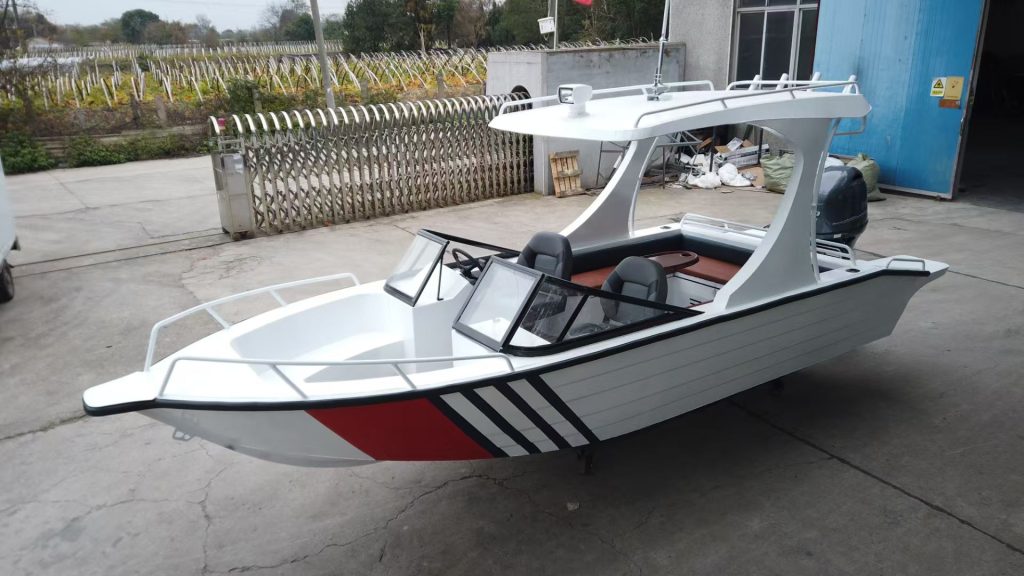
Buying a yacht directly from a Chinese manufacturer can provide international buyers with access to a wide range of models and custom options at competitive prices. However, the final cost of a yacht is influenced by many factors beyond the basic hull length. Understanding these cost drivers helps buyers set realistic budgets, compare quotations accurately, and avoid unexpected expenses.
This guide explains the main elements that determine the price of a yacht built in China and what buyers should clarify when requesting quotations.
### Why Yacht Prices Vary So Widely
Two yachts of similar length can have very different prices. The difference usually comes from:
– Hull material and construction method
– Design complexity and customization level
– Propulsion system (engine brand, power, and type)
– Interior quality and equipment level
– Systems and electronics
– Certification and compliance requirements
– Project management and build quality standards
A simple production-style yacht will cost significantly less than a fully custom, high-specification vessel of the same size.
### Main Cost Factors
#### 1. Yacht Size and Type
Length overall (LOA) is the starting point for most price discussions, but it is only one factor. Beam, displacement, number of decks, and hull form also affect material quantities and labor hours.
Common categories include:
– Small motor yachts or day boats
– Mid-size cruising yachts
– Larger flybridge or tri-deck yachts
– Catamarans
– Expedition or long-range vessels
– Electric or hybrid models
Larger and more complex designs require more materials, longer build times, and higher engineering input.
#### 2. Hull Material and Construction Method
Material choice has a major impact on cost:
– **Fiberglass (GRP)** – Generally the most cost-effective for production and semi-custom yachts
– **Aluminum** – Higher material and labor cost, but lighter and suitable for certain performance or commercial applications
– **Steel** – Often used for larger or long-range yachts; cost depends on thickness and finishing requirements
– **Advanced composites** – Higher cost, used for performance-oriented or specialized projects
Construction method (hand lay-up, vacuum infusion, welded aluminum, etc.) also influences both price and quality.
#### 3. Level of Customization
– **Production or semi-custom** – Lower cost, based on existing molds or designs with limited changes
– **Fully custom** – Higher cost due to unique design work, engineering, tooling, and longer project time
Custom interior layouts, exterior styling changes, special performance requirements, or unique features all add to the price.
#### 4. Propulsion and Mechanical Systems
The engine package is one of the largest single cost items. Factors include:
– Engine brand and power rating
– Number of engines
– Conventional diesel, hybrid, or full electric systems
– Gearboxes, shafts, propellers, and related equipment
– Generator sets and auxiliary systems
Electric and hybrid installations, including lithium battery systems, typically increase the overall cost compared with traditional diesel setups.
#### 5. Interior Fit-Out and Equipment
Interior quality can vary dramatically:
– Basic, durable finishes suitable for charter or commercial use
– Mid-level comfort packages
– High-end luxury interiors with premium materials and custom joinery
Additional cost drivers include:
– Number of cabins and bathrooms
– Galley equipment
– Air conditioning and heating systems
– Entertainment and lighting packages
– Soft furnishings and upholstery quality
#### 6. Navigation, Electronics, and Electrical Systems
Modern yachts often carry extensive electronics:
– Navigation and communication equipment
– Autopilot, radar, sonar, and displays
– Battery systems and power management
– Shore power and charging equipment
– Monitoring and control systems
Higher-specification electronics packages add noticeable cost.
#### 7. Certification, Classification, and Compliance
If the yacht needs to meet specific standards for the destination market (CE, classification society rules, commercial coding, etc.), additional engineering, documentation, and inspection costs will apply. These requirements should be clarified early, as they affect both price and build process.
#### 8. Shipping, Commissioning, and Other Extra Costs
The yacht price from the factory is usually only part of the total project cost. Buyers should also budget for:
– Ocean freight or yacht transport
– Insurance during transport
– Import duties, taxes, and customs clearance
– Crane or launching costs at destination
– Final commissioning and sea trial at the delivery location
– Initial spare parts and tools
– Possible local modifications or adaptations
### How to Get Meaningful Price Quotations
To compare offers accurately, provide manufacturers with clear information:
– Approximate size and type of yacht
– Intended use (private, charter, commercial)
– Preferred materials
– Level of customization required
– Engine or propulsion preferences
– Interior standard expected
– Required certifications
– Target delivery timeline
– Destination country or port
Ask each manufacturer to break down the quotation where possible (hull and structure, engines, interior, systems, etc.). This makes it easier to understand what is included and what is not.
### Typical Price Ranges (General Guidance Only)
Exact prices change with specifications and market conditions, but the following broad ranges are commonly observed for Chinese-built yachts:
– Smaller production-style motor yachts: relatively accessible entry-level pricing
– Mid-size semi-custom cruising yachts: mid-range investment
– Larger or fully custom yachts: significantly higher, depending on materials, systems, and finish level
Electric surfboards and smaller electric watercraft generally fall into a much lower price category than full-size yachts, while still offering customization options.
Always treat published or quoted prices as starting points. Final cost depends on the detailed specification.
### Tips for Managing Budget and Risk
1. Define your must-have features versus nice-to-have options early.
2. Request itemized quotations so you can compare apples to apples.
3. Clarify what is included in the base price and what is optional.
4. Include a contingency allowance for changes and unexpected items.
5. Confirm payment terms, milestone schedule, and inspection rights in the contract.
6. Factor in shipping, import, and commissioning costs from the beginning.
### Conclusion
The cost of a yacht from a Chinese manufacturer depends on far more than length alone. Hull material, construction method, customization level, propulsion system, interior quality, electronics, certification requirements, and logistics all play important roles.
Buyers who clearly define their requirements and request detailed, comparable quotations are in a much stronger position to evaluate value and control the overall project budget.
If you are planning to source a yacht or electric watercraft from China, prepare a clear specification brief first, then ask manufacturers for itemized proposals based on those requirements. This approach leads to more accurate pricing and fewer surprises later in the project.


No reply content