
Custom CNC Machining Parts Manufacturer in Dongguan China
China
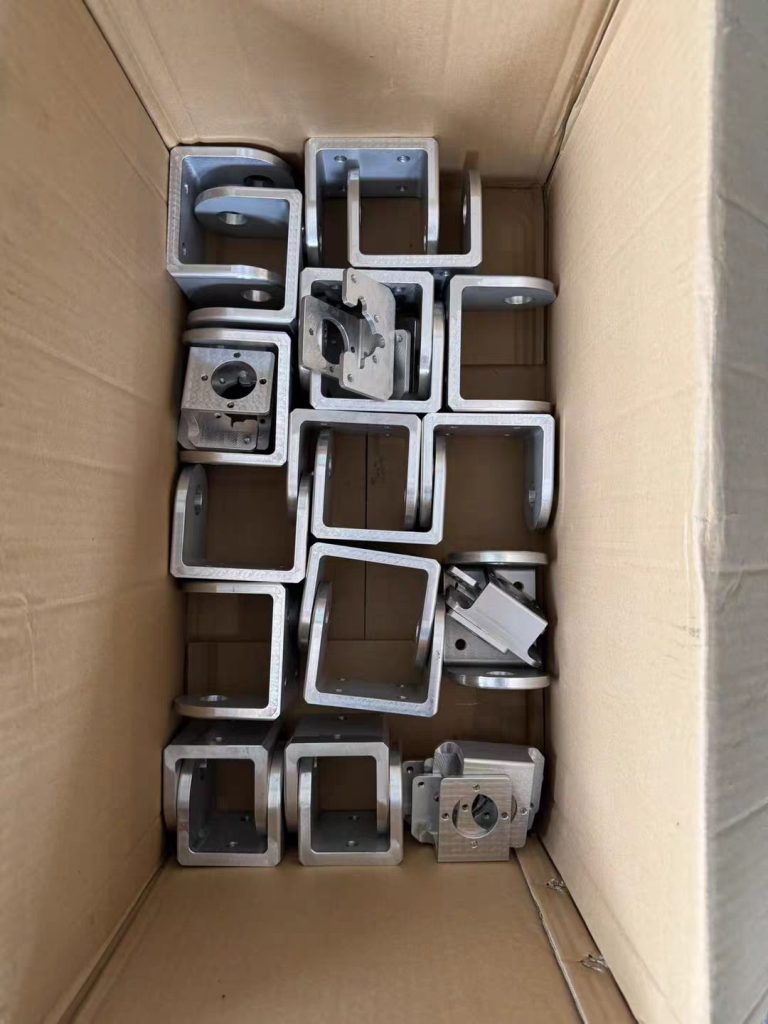
CNC machining in China can offer competitive production costs for prototypes, custom components, small batches, and large-volume manufacturing. However, there is no fixed price for CNC machined parts.
The final cost depends on the material, part geometry, dimensions, tolerances, machining time, order quantity, surface treatment, tooling, inspection requirements, and other production factors.
For international buyers, understanding these cost factors makes it easier to request accurate quotations and compare Chinese CNC manufacturers.
1. What Determines CNC Machining Cost?
A CNC machining quotation may include several major cost components:
-
Raw material
-
CNC machining time
-
Programming
-
Tooling
-
Fixtures
-
Setup
-
Surface treatment
-
Heat treatment
-
Quality inspection
-
Packaging
-
Quantity
-
Engineering support
International shipping, customs duties, and import taxes are normally separate from the factory machining price unless the supplier specifically provides a delivered quotation.
2. Material Cost
The material is one of the first factors affecting CNC machining cost.
Common materials include:
-
Aluminum
-
Stainless steel
-
Carbon steel
-
Brass
-
Copper
-
Titanium
-
POM
-
Nylon
-
PTFE
-
PEEK
-
ABS
-
Polycarbonate
Different materials have different raw-material prices.
For example, aluminum is generally more economical than titanium, while high-performance engineering plastics such as PEEK can also be relatively expensive.
The material grade matters as well.
For example, 6061 aluminum and 7075 aluminum should not be treated as the same material when comparing quotations.
3. Part Size and Material Volume
Larger CNC parts generally require more raw material.
A large aluminum housing may require a much larger starting block than a small precision bracket.
Material cost depends on:
-
Overall dimensions
-
Starting stock size
-
Material density
-
Material waste
-
Required machining allowance
Some complex parts also generate considerable material waste because large sections of the original block must be removed.
4. Part Geometry and Complexity
The geometry of the part has a major effect on machining cost.
A simple rectangular component may require relatively few machining operations.
A complex component may require:
-
Multiple setups
-
Multiple tools
-
Deep pockets
-
Thin walls
-
Curved surfaces
-
Angled holes
-
Internal features
-
Tight tolerances
-
4-axis machining
-
5-axis machining
More complex geometry generally requires more programming, setup, machining, and inspection.
5. CNC Machining Time
Machining time is one of the most important factors in the final price.
The manufacturer may estimate how long it takes to:
-
Load the material
-
Set up the machine
-
Install tools
-
Program the CNC machine
-
Rough machine
-
Finish machine
-
Drill holes
-
Cut threads
-
Perform additional operations
-
Inspect the part
A part that takes 10 minutes to machine will generally have a different production cost from one that requires several hours.
6. Tolerances Affect the Cost
Standard machining tolerances are usually less expensive to achieve than extremely tight tolerances.
If your drawing requires very precise dimensions, the manufacturer may need:
-
Additional machining operations
-
Better tooling
-
More frequent inspection
-
Temperature control
-
Specialized measuring equipment
-
Additional finishing operations
Therefore, unnecessary tight tolerances can increase costs without improving the actual function of the part.
A good engineering practice is to specify tighter tolerances only where they are functionally necessary.
7. Surface Finish Requirements
Surface finish can also affect CNC machining cost.
A standard machined finish may require fewer operations than a highly polished surface.
Possible requirements include:
-
Standard CNC finish
-
Fine machining
-
Brushing
-
Polishing
-
Sandblasting
-
Mirror finishing
If the drawing requires a specific surface roughness, the manufacturer may need additional finishing or inspection.
8. Surface Treatment
Many CNC components require post-machining treatment.
Common treatments include:
-
Anodizing
-
Powder coating
-
Zinc plating
-
Nickel plating
-
Black oxide
-
Passivation
-
Electroless nickel
-
Polishing
-
Sandblasting
The cost depends on:
-
Treatment type
-
Part size
-
Surface area
-
Quantity
-
Color
-
Thickness requirements
-
Supplier
If you need surface treatment, include it in the original quotation request.
9. Heat Treatment
Some CNC parts require heat treatment to achieve specific mechanical properties.
Examples include:
-
Hardening
-
Tempering
-
Stress relieving
-
Aging
Heat treatment can increase the total manufacturing cost and production lead time.
It can also affect dimensional stability, so machining and heat-treatment processes may need to be carefully coordinated.
10. Order Quantity
Quantity has a major effect on unit cost.
A prototype may have a relatively high unit cost because programming and setup expenses are distributed across only one or a few parts.
With larger orders, these fixed costs can be distributed across more units.
For example:
Order Size |
Typical Cost Structure |
|---|---|
1–5 pcs |
High unit cost |
10–50 pcs |
Lower unit cost |
100–500 pcs |
Potentially lower unit cost |
1,000+ pcs |
Often more competitive |
These are general examples, not fixed market prices.
The actual cost depends on the part and manufacturer.
11. Programming and Setup Costs
Before machining begins, the factory may need to create CNC programs and prepare the machine.
This may include:
-
CAM programming
-
Tool selection
-
Fixture preparation
-
Workholding setup
-
Machine calibration
-
First-piece setup
For a small order, these costs can represent a significant portion of the total price.
For larger orders, the same setup costs can be spread across many parts, reducing the setup cost per piece.
12. Tooling Costs
CNC machining uses cutting tools such as:
-
End mills
-
Drills
-
Reamers
-
Taps
-
Inserts
-
Special cutters
Standard tools are relatively straightforward.
However, complex or specialized features may require custom tooling.
Tooling costs can increase when:
-
The material is difficult to machine
-
The geometry is unusual
-
A special surface finish is required
-
High production volumes justify dedicated tools
Ask whether tooling is included in the quotation.
13. Fixtures and Workholding
Some parts can be held using standard machine fixtures.
Others require custom fixtures.
Custom fixtures can improve:
-
Positioning accuracy
-
Production efficiency
-
Repeatability
-
Machining speed
However, they can also add an initial tooling cost.
For high-volume production, a dedicated fixture may reduce the long-term unit cost.
14. Number of Machining Setups
Every time a part needs to be repositioned, additional setup time may be required.
A simple component may require one setup.
A complex component may require several setups.
More setups generally mean:
-
More labor
-
More machine preparation
-
More alignment
-
More inspection
-
Longer production time
This is one reason why parts designed with simpler machining access can sometimes be less expensive to manufacture.
15. 3-Axis, 4-Axis, and 5-Axis Machining
The required machine type can influence cost.
3-Axis CNC
Suitable for many standard parts and relatively straightforward geometries.
4-Axis CNC
Can machine additional surfaces and features with fewer manual repositioning operations.
5-Axis CNC
Useful for complex geometries and components requiring access from multiple angles.
5-axis machining can reduce setups for certain parts but may involve more sophisticated equipment, programming, and process control.
The best option depends on the geometry rather than simply choosing the most advanced machine.
16. Prototype CNC Machining Costs
Prototype production usually costs more per piece than mass production.
This is because a prototype may require:
-
Engineering review
-
Programming
-
Setup
-
Material preparation
-
Individual machining
-
Additional inspection
However, prototypes can save money later by identifying design problems before mass production.
For new products, a prototype is often a useful investment.
17. DFM Can Reduce CNC Costs
DFM means Design for Manufacturability.
A CNC manufacturer may review your CAD model and identify opportunities to reduce machining time.
Possible improvements include:
-
Increasing unnecessary tight tolerances
-
Simplifying difficult features
-
Increasing internal corner radii
-
Reducing deep pockets
-
Improving tool access
-
Reducing unnecessary setups
-
Choosing a more readily available material
A small design change can sometimes significantly reduce manufacturing cost.
18. Material Availability
Material availability can affect both price and lead time.
Standard materials that are readily available may be easier to source.
Special alloys or uncommon grades may require:
-
Special purchasing
-
Higher minimum quantities
-
Longer sourcing time
-
Additional certification
If your project has a strict delivery schedule, ask the manufacturer whether the required material is currently available.
19. Inspection Requirements
Standard inspection may be included in the manufacturing price.
However, special inspection requirements can increase costs.
Examples include:
-
Full dimensional inspection
-
CMM inspection
-
Material certification
-
First article inspection
-
Surface roughness testing
-
Hardness testing
-
Special testing reports
For critical components, additional inspection may be justified.
20. Packaging Requirements
Packaging is sometimes overlooked when calculating CNC part costs.
Precision parts may require:
-
Individual bags
-
Foam protection
-
Anti-scratch materials
-
Protective film
-
Custom inserts
-
Export cartons
-
Wooden cases
If the components have delicate surfaces or tight tolerances, appropriate packaging can prevent damage during transportation.
21. How to Get an Accurate CNC Machining Quote
To receive a useful quotation, provide the manufacturer with:
-
2D drawing
-
3D CAD file
-
Material
-
Quantity
-
Tolerances
-
Surface finish
-
Surface treatment
-
Heat treatment
-
Inspection requirements
-
Packaging requirements
-
Delivery destination
For example:
Material: Aluminum 6061-T6
Quantity: 500 pcs
Surface treatment: Black anodizing
Tolerance: As specified on drawing
Inspection: Dimensional inspection
Files: STEP + PDF drawing
Destination: Germany
This information allows the manufacturer to calculate the production requirements more accurately.
22. Ask for Multiple Quantity Prices
If you are developing a new component, ask the manufacturer for several quantity levels.
For example:
-
10 pcs
-
50 pcs
-
100 pcs
-
500 pcs
-
1,000 pcs
This lets you understand how the unit price changes as production volume increases.
It can also help you determine whether a larger production run is economically reasonable.
23. Compare Chinese CNC Manufacturers Correctly
Do not compare suppliers based only on their final unit price.
Instead, compare:
Factor |
Supplier A |
Supplier B |
Supplier C |
|---|---|---|---|
Material |
Same |
Same |
Same |
Quantity |
Same |
Same |
Same |
Tolerance |
Same |
Same |
Same |
Surface Finish |
Same |
Same |
Same |
Surface Treatment |
Same |
Same |
Same |
Inspection |
Same |
Same |
Same |
Lead Time |
— |
— |
— |
Unit Price |
— |
— |
— |
The quotations should be based on identical technical requirements.
Otherwise, the cheapest quotation may simply exclude important processes.
24. How to Reduce CNC Machining Costs
1. Avoid Unnecessary Tight Tolerances
Use precision tolerances only where required.
2. Choose Readily Available Materials
Common materials can reduce sourcing costs and lead time.
3. Simplify the Geometry
Simpler designs can require fewer machining operations.
4. Reduce the Number of Setups
Designing parts for easier machining can reduce setup time.
5. Increase Quantity When Demand Justifies It
Larger orders can reduce the unit cost.
6. Use Standard Tool Sizes
Where appropriate, standard tooling can reduce special tooling requirements.
7. Discuss DFM Before Production
A manufacturer can sometimes identify design changes that reduce machining time without affecting functionality.
FAQ
How much does CNC machining cost in China?
There is no standard price because every part has different material, geometry, tolerance, machining time, and quantity requirements. A manufacturer needs your technical drawings and specifications to provide an accurate quotation.
Is CNC machining cheaper in China?
China has a large manufacturing supply chain and many CNC machining suppliers, which can provide competitive pricing. However, actual cost depends on the part specification, production volume, quality requirements, and supplier capabilities.
Does quantity affect CNC machining price?
Yes. Larger production quantities can reduce the unit cost because programming, setup, and other fixed costs are distributed across more parts.
Does material affect CNC machining cost?
Yes. Material price, machinability, tool wear, and machining speed can all affect the final cost.
Can I reduce CNC machining costs without reducing quality?
Often, yes. Design optimization, reasonable tolerances, standard materials, efficient machining strategies, and appropriate production quantities can reduce costs while maintaining required performance.
Should I ask for a prototype?
For new or complex components, a prototype can help identify dimensional, assembly, and functional problems before mass production.
What information does a CNC manufacturer need for a quotation?
At minimum, provide the part drawing or CAD file, material, quantity, tolerances, surface treatment, finishing requirements, and delivery requirements.
Final Thoughts
The cost of CNC machining in China depends on the complete manufacturing process rather than simply the size of the part.
Material, geometry, machining time, tolerances, quantity, tooling, fixtures, surface treatment, inspection, and packaging can all influence the final price.
The best way to obtain a competitive quotation is to provide complete technical information and request quotes based on identical specifications.
For new projects, consider starting with a prototype or small batch. After confirming the manufacturer’s quality and reliability, larger production quantities can often provide better unit economics.
Most importantly, don’t reduce costs by removing requirements that are essential to the function of the part. Instead, work with the CNC manufacturer on DFM, reasonable tolerances, efficient machining, suitable materials, and appropriate production quantities to achieve the best balance between quality and cost.
Article Link:
How Much Does CNC Machining Cost in China?


No reply content