
China Custom Furniture Factory
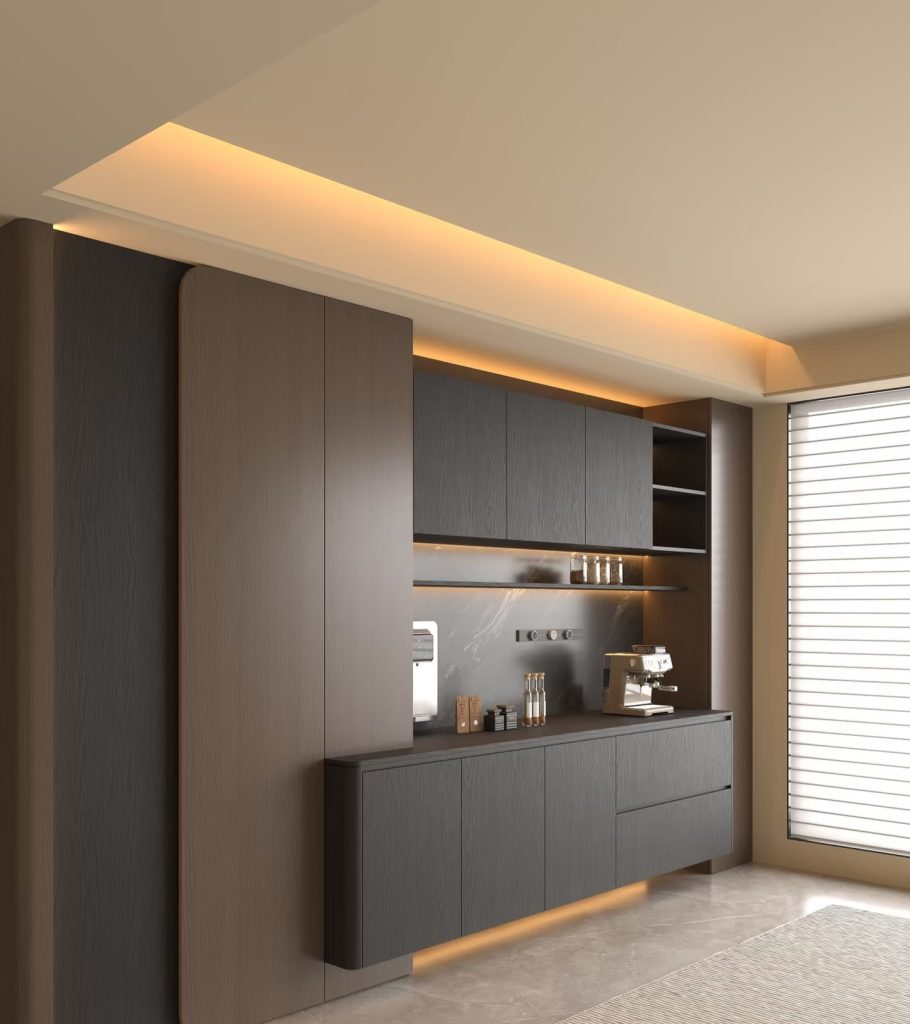
The cost of custom kitchen furniture can vary significantly from one project to another. Two kitchens with similar sizes may have very different prices because of differences in materials, cabinet construction, hardware, finishes, countertops, storage systems, appliances, order quantities, and installation requirements.
For homeowners, contractors, interior designers, property developers, importers, and furniture distributors, understanding what determines the price of custom kitchen furniture is more useful than simply looking for a single price per cabinet or per square meter.
A reliable quotation should reflect the actual specifications of the project.
This guide explains the major factors that affect custom kitchen furniture costs and provides a practical method for comparing quotations from different manufacturers.
1. Why Custom Kitchen Furniture Prices Vary
Custom kitchen furniture is manufactured according to specific dimensions and requirements rather than being selected entirely from standardized sizes.
The final price can be affected by:
-
Kitchen size
-
Cabinet quantity
-
Cabinet dimensions
-
Cabinet materials
-
Door materials
-
Surface finishes
-
Hardware
-
Drawer systems
-
Corner storage
-
Tall cabinets
-
Kitchen islands
-
Countertops
-
Integrated appliances
-
Lighting
-
Accessories
-
Packaging
-
Installation
-
Shipping
-
Order quantity
This means a simple small kitchen and a premium large kitchen should not be compared only by total quotation.
The specifications behind the price are equally important.
2. What Is Normally Included in a Custom Kitchen Furniture Quote?
Before comparing prices, buyers should understand exactly what each quotation includes.
A typical kitchen furniture quotation may include:
-
Base cabinets
-
Wall cabinets
-
Tall cabinets
-
Cabinet doors
-
Drawers
-
Shelves
-
Hinges
-
Drawer slides
-
Handles
-
Decorative panels
-
Fillers
-
Toe kicks
Depending on the supplier, the quotation may also include:
-
Countertops
-
Sinks
-
Faucets
-
Lighting
-
Storage accessories
-
Appliance panels
-
Installation
-
Delivery
Some manufacturers quote cabinets separately from countertops and hardware.
Therefore, a low quotation does not necessarily mean that the supplier is cheaper. The supplier may simply have excluded several components.
3. Cabinet Material Has a Major Impact on Cost
The cabinet box is one of the most important components affecting price.
Common materials include particle board, MDF, plywood, and solid wood.
Particle Board
Particle board is commonly used for cost-sensitive kitchen furniture.
It can provide a practical solution for residential and commercial projects when appropriate board quality, edge sealing, and surface treatment are used.
The price can vary according to:
-
Board thickness
-
Density
-
Surface finish
-
Moisture resistance
-
Edge banding
-
Manufacturing quality
MDF
MDF provides a smooth and uniform surface and is widely used for painted or decorative cabinet doors.
It can be suitable for projects where appearance and design flexibility are important.
Plywood
Plywood is often selected for higher-end kitchen furniture because of its structural strength and stability.
However, not all plywood is the same.
Buyers should ask about:
-
Thickness
-
Core construction
-
Grade
-
Surface quality
-
Formaldehyde emission standards
-
Moisture resistance
Solid Wood
Solid wood is generally associated with premium kitchen furniture.
The final cost depends heavily on the species, grade, moisture content, construction, finishing process, and quantity of solid wood used.
4. Door Material Can Change the Price Significantly
The cabinet door is one of the most visible parts of a kitchen.
Different door materials and finishes can produce substantial price differences.
Common options include:
-
Melamine
-
Laminate
-
Acrylic
-
PVC film
-
Painted MDF
-
Veneer
-
Solid wood
For example, a basic melamine finish may be appropriate for a cost-conscious project, while premium painted, veneer, or solid wood doors can significantly increase the overall budget.
Buyers should therefore specify the exact door construction rather than simply requesting a “high-quality cabinet.”
5. Hardware Is More Important Than Many Buyers Expect
Cabinet hardware may represent a relatively small percentage of the total furniture cost, but it can have a major effect on user experience and long-term durability.
Important hardware includes:
-
Hinges
-
Drawer slides
-
Lift mechanisms
-
Pull-out baskets
-
Corner systems
-
Waste sorting systems
-
Pantry mechanisms
-
Adjustable legs
-
Handles
Two kitchen quotations may look similar while using very different hardware specifications.
For professional projects, buyers should request the brand, model, load capacity, opening cycle rating, and warranty where applicable.
6. Drawers Can Increase the Cost of Kitchen Cabinets
Drawers are usually more expensive than simple cabinet doors because they require additional hardware and construction.
A basic drawer may use a standard metal slide, while a premium drawer system may include:
-
Soft closing
-
Full extension
-
Adjustable side panels
-
Higher load capacity
-
Premium internal organization
A kitchen with many deep drawers can therefore cost substantially more than a similar kitchen with mostly hinged doors.
However, drawers can provide excellent accessibility and may be worthwhile in areas used frequently.
7. Custom Corner Solutions Can Increase the Budget
Corners are among the most difficult areas to design efficiently.
Basic corner cabinets may have relatively low costs, while specialized systems can be much more expensive.
Examples include:
-
Magic corner systems
-
Rotating shelves
-
Pull-out corner systems
-
Corner drawers
-
Specialized storage mechanisms
The buyer should decide whether maximum accessibility justifies the additional cost.
For budget-conscious projects, a simple corner cabinet may be sufficient.
For premium kitchens, advanced corner hardware can improve convenience.
8. Kitchen Islands Add More Than Just Cabinet Cost
A kitchen island can increase the project budget because it may require additional:
-
Base cabinets
-
Countertop
-
Decorative side panels
-
Electrical connections
-
Plumbing
-
Drawers
-
Seating extensions
-
Lighting
If the island contains a sink, cooktop, dishwasher, or other appliance, installation complexity can increase further.
The cost should therefore be calculated as part of the complete kitchen project rather than as a simple cabinet box.
9. Countertop Material Affects the Total Project Cost
Countertops can represent a significant portion of the total kitchen budget.
Common countertop materials include:
-
Laminate
-
Quartz
-
Granite
-
Porcelain
-
Solid surface
-
Natural stone
-
Solid wood
Each material has different characteristics in terms of appearance, durability, maintenance, weight, fabrication, and installation.
The quotation should specify:
-
Thickness
-
Edge profile
-
Cutouts
-
Backsplash
-
Sink cutout
-
Cooktop cutout
-
Installation
-
Transportation
A countertop quotation without these details may not provide an accurate comparison.
10. Cabinet Size and Kitchen Layout Affect the Price
The number of cabinets is not the only factor.
Cabinet configuration also matters.
For example, a simple straight kitchen may require fewer special components than a U-shaped kitchen with several corners.
An L-shaped kitchen may require specialized corner storage.
A large kitchen may require multiple tall cabinets and an island.
Therefore, buyers should compare quotations based on the complete design rather than simply using a price per linear meter.
11. Finishing Quality Influences the Final Price
Surface finishing affects both appearance and manufacturing cost.
Popular finishes include:
-
Matte
-
Gloss
-
Wood grain
-
Textured
-
Painted
-
Metallic
-
Natural veneer
Special colors and custom finishes may require additional setup or minimum order quantities.
For large projects, buyers should request physical samples before mass production.
A digital image may not accurately represent the actual color, texture, gloss level, or material quality.
12. Customization Level Affects Manufacturing Cost
There is a major difference between selecting cabinets from a standard product range and creating a completely customized kitchen.
Customization may involve:
-
Non-standard cabinet dimensions
-
Special door shapes
-
Custom colors
-
Special hardware
-
Integrated appliances
-
Unique storage systems
-
Curved cabinets
-
Special decorative panels
The more customization required, the more design and manufacturing work may be necessary.
This can increase:
-
Engineering time
-
Material waste
-
Production time
-
Quality-control requirements
-
Packaging complexity
13. Order Quantity Matters for B2B Buyers
For importers, developers, distributors, and furniture retailers, quantity can have a significant impact on unit cost.
A manufacturer producing one custom kitchen has different production economics from a factory producing dozens or hundreds of kitchens using similar specifications.
Larger orders may improve pricing because fixed costs can be distributed across more units.
However, buyers should not assume that a larger order automatically guarantees a lower price.
Material specifications, customization, packaging, production efficiency, and payment terms also matter.
14. Custom Kitchen Furniture Pricing for International Buyers
International buyers need to distinguish between the factory price and the final landed cost.
The factory quotation may not include:
-
Domestic transportation
-
Export packaging
-
Customs clearance
-
Port charges
-
International freight
-
Import duties
-
Local taxes
-
Destination delivery
-
Installation
For example, a kitchen cabinet quotation from a manufacturer may look inexpensive until shipping, customs, and installation costs are added.
A better purchasing method is to calculate the estimated total landed cost before making a final supplier decision.
15. How Packaging Affects Kitchen Furniture Cost
Kitchen cabinets are vulnerable to scratches, dents, moisture, and impact during transportation.
Packaging requirements may include:
-
Carton boxes
-
Foam protection
-
Corner protection
-
Protective film
-
Wooden frames
-
Pallets
-
Reinforced export packaging
Higher-quality packaging can increase the initial product cost, but inadequate packaging may create much larger losses if products arrive damaged.
For international orders, packaging should be discussed before production.
16. Flat-Pack vs. Fully Assembled Kitchen Cabinets
One important decision for international buyers is whether to purchase flat-pack or assembled cabinets.
Flat-Pack Cabinets
Advantages can include:
-
Lower shipping volume
-
Easier container utilization
-
Lower transportation costs in some cases
-
Easier warehouse storage
Potential disadvantages include:
-
More assembly work
-
Greater installation requirements
-
Need for clear instructions
-
Greater dependence on assembly quality
Fully Assembled Cabinets
Advantages can include:
-
Faster installation
-
Less assembly work
-
Easier quality inspection of completed units
Potential disadvantages include:
-
Larger shipping volume
-
Higher transportation requirements
-
More complicated handling
The best option depends on the destination market, project size, labor costs, and logistics arrangements.
17. How to Compare Two Custom Kitchen Furniture Quotations
Suppose Supplier A offers a lower price than Supplier B.
Do not immediately choose Supplier A.
Instead, compare:
Item |
Supplier A |
Supplier B |
|---|---|---|
Cabinet material |
Confirm |
Confirm |
Board thickness |
Confirm |
Confirm |
Door material |
Confirm |
Confirm |
Surface finish |
Confirm |
Confirm |
Hinges |
Confirm |
Confirm |
Drawer slides |
Confirm |
Confirm |
Countertop |
Confirm |
Confirm |
Corner hardware |
Confirm |
Confirm |
Packaging |
Confirm |
Confirm |
Installation |
Confirm |
Confirm |
Warranty |
Confirm |
Confirm |
Production time |
Confirm |
Confirm |
This approach can reveal why one quotation is cheaper.
A low price may be caused by lower material specifications or fewer included components rather than better factory efficiency.
18. How to Reduce Custom Kitchen Furniture Costs Without Sacrificing Quality
There are several practical ways to control the budget.
Simplify Cabinet Dimensions
Using a larger number of standard cabinet dimensions can reduce manufacturing complexity.
Reduce Unnecessary Accessories
Not every cabinet needs premium storage hardware.
Use advanced mechanisms in areas where they provide real value.
Choose Practical Materials
A good-quality engineered board with an appropriate finish may provide excellent performance without the cost of premium solid wood.
Optimize the Layout
Reducing unnecessary cabinet sections, decorative panels, or complicated shapes can lower production costs.
Purchase in Larger Quantities
For B2B projects, consolidating multiple kitchens into one production order may improve manufacturing efficiency.
Optimize Packaging
For international shipments, packaging should provide adequate protection without unnecessary material and volume.
19. What Information Should You Send to a Manufacturer for an Accurate Quote?
A manufacturer cannot provide a reliable quotation based only on the statement “I need a custom kitchen.”
Provide as much information as possible.
Recommended information includes:
-
Kitchen drawings
-
Wall dimensions
-
Ceiling height
-
Number of kitchens
-
Cabinet layout
-
Cabinet material
-
Door style
-
Door finish
-
Hardware requirements
-
Countertop requirements
-
Appliance list
-
Sink and faucet requirements
-
Target market
-
Delivery destination
-
Packaging requirements
-
Target delivery date
Photos and reference designs can also help manufacturers understand the expected appearance.
20. Hidden Costs Buyers Should Watch For
Some kitchen projects become more expensive because certain costs were not included in the original quotation.
Potential additional costs include:
-
Design fees
-
Samples
-
Mold charges
-
Special colors
-
Hardware upgrades
-
Countertop fabrication
-
Installation
-
Local delivery
-
Export packaging
-
Shipping
-
Customs clearance
-
Replacement parts
Before signing a purchase agreement, ask the manufacturer to provide a detailed quotation with clearly defined inclusions and exclusions.
21. Is the Cheapest Kitchen Furniture Quote the Best Choice?
Not necessarily.
A kitchen is used every day, so the cheapest initial price may not represent the best long-term value.
A better evaluation should consider:
-
Material quality
-
Manufacturing precision
-
Hardware performance
-
Surface durability
-
Design functionality
-
Quality control
-
Packaging
-
Delivery reliability
-
Warranty
-
After-sales support
For B2B buyers, supplier reliability is especially important because poor quality or late delivery can affect the buyer’s own customers and project schedule.
22. Questions to Ask a Custom Kitchen Furniture Manufacturer
Before placing an order, ask:
Can you manufacture according to our drawings?
This is important for projects with non-standard dimensions.
Can you provide shop drawings before production?
Approved drawings help reduce dimensional misunderstandings.
Can you provide material samples?
Physical samples are useful for checking color, texture, thickness, and finish.
What hardware do you use?
Request specific specifications instead of accepting a general statement such as “premium hardware.”
What is the production lead time?
Ask for a realistic schedule based on the actual order quantity.
How do you handle quality problems?
Clarify inspection, replacement, warranty, and after-sales procedures.
How are products packaged for export?
International shipments require stronger packaging than local deliveries in many cases.
23. A Practical Custom Kitchen Furniture Budget Checklist
Before approving the final quotation, confirm:
-
[ ] Cabinet quantity
-
[ ] Cabinet dimensions
-
[ ] Cabinet material
-
[ ] Door material
-
[ ] Surface finish
-
[ ] Hardware
-
[ ] Drawers
-
[ ] Corner systems
-
[ ] Tall cabinets
-
[ ] Kitchen island
-
[ ] Countertop
-
[ ] Sink
-
[ ] Faucet
-
[ ] Appliances
-
[ ] Packaging
-
[ ] Delivery
-
[ ] Installation
-
[ ] Warranty
-
[ ] Replacement parts
-
[ ] Production lead time


No reply content