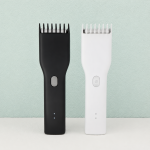
China Professional Hair Clipper Manufacturing Co., Ltd.
If you are planning to import hair clippers from China, one of the first questions is usually: How much do hair clippers cost from a Chinese manufacturer?
The answer depends on the product type, motor, battery, blade material, order quantity, customization, packaging, and shipping method. A basic rechargeable hair clipper may have a very different factory price from a professional barber clipper with a high-performance motor, premium blades, display, customized housing, and branded packaging.
For international buyers, understanding these cost factors is important because the lowest unit price does not always mean the lowest total purchasing cost.
This guide explains how Chinese hair clipper prices are calculated, what affects the quotation, how MOQ changes the cost, and how to estimate your total landed cost.
1. Typical Hair Clipper Price Ranges in China
The following ranges can be used as a general purchasing reference for factory-level products. Actual quotations vary according to specifications, order quantity, customization, and market conditions.
Hair Clipper Type |
Approximate Factory Price |
|---|---|
Basic corded clipper |
$5–$10 |
Basic rechargeable clipper |
$7–$15 |
Mid-range cordless clipper |
$12–$25 |
Professional barber clipper |
$18–$40 |
Premium professional clipper |
$30–$60+ |
OEM/private-label clipper |
$10–$50+ |
These are indicative product-price ranges, not fixed market prices.
For example, a simple clipper using a standard motor and battery may cost considerably less than a professional model with a high-torque motor, premium blade, digital display, large-capacity battery, metal housing, and customized packaging.
The best way to obtain an accurate price is to provide the manufacturer with a detailed product specification.
2. Why Do Hair Clipper Prices Vary So Much?
Two hair clippers can look similar but have completely different internal components.
The major cost factors include:
-
Motor
-
Battery
-
Blade
-
Housing
-
PCB/electronic components
-
Display
-
Charging system
-
Accessories
-
Packaging
-
Logo customization
-
Certifications
-
Production quantity
This means buyers should never compare two quotations based only on product photographs.
A $10 clipper and a $25 clipper may be designed for completely different markets.
3. Motor Cost
The motor is one of the most important components affecting both price and performance.
A basic consumer clipper may use a relatively simple motor, while professional barber clippers may require higher torque and more stable performance.
Motor-related factors include:
-
Motor speed
-
Torque
-
Efficiency
-
Noise
-
Vibration
-
Operating temperature
-
Continuous operating capability
-
Expected service life
If your target customers are professional barbers, paying more for a better motor can be worthwhile.
For budget-oriented consumer products, a standard motor may provide a better balance between price and performance.
4. Battery Cost
For cordless hair clippers, the battery can significantly affect the final price.
Common battery-related specifications include:
-
Capacity
-
Voltage
-
Battery chemistry
-
Number of cells
-
Charging time
-
Operating time
-
Protection system
-
Battery lifespan
For example, a clipper designed for long professional use may require a larger battery than a compact travel trimmer.
When comparing prices, always ask for the battery capacity and actual operating time rather than looking only at the advertised product price.
5. Blade Material and Design
The blade is another major cost factor.
Manufacturers may offer different blade materials and configurations, including stainless-steel and ceramic-based components.
Price can vary according to:
-
Material
-
Hardness
-
Manufacturing process
-
Precision
-
Coating
-
Blade design
-
Adjustment mechanism
A professional clipper with a high-quality precision blade will normally cost more than an entry-level model.
For importers, blade quality can also influence product reviews and repeat purchases, so cutting performance should be considered together with price.
6. Housing Material
The external housing also affects cost.
Common materials include:
-
ABS plastic
-
PC plastic
-
Aluminum
-
Zinc alloy
-
Other metal combinations
Plastic housing is generally suitable for lightweight and cost-sensitive products.
Metal housing may provide a more premium appearance and stronger construction but can increase manufacturing and shipping costs.
If you are building a premium barber brand, a metal housing may help create a higher perceived product value.
7. Display and Electronic Features
Some modern hair clippers include:
-
LED battery indicators
-
Digital displays
-
Speed controls
-
Adjustable power settings
-
Travel locks
-
Charging indicators
-
Smart protection systems
These features can increase both component and assembly costs.
If your target market does not need these functions, removing unnecessary electronics may reduce the purchase price.
8. Accessories Can Change the Price
A quotation may include different accessories.
For example:
-
Guide combs
-
Cleaning brush
-
Blade oil
-
Charging cable
-
Charging stand
-
Protective cap
-
Carrying case
-
Storage bag
-
Replacement blade
-
User manual
Two suppliers may quote different prices because their standard accessory packages are different.
Therefore, ask the manufacturer to provide a complete packing list before comparing quotations.
9. How MOQ Affects Hair Clipper Prices
MOQ means Minimum Order Quantity.
Generally, larger orders can receive better unit prices because manufacturers can spread setup, procurement, labor, and packaging costs across more products.
For example, a factory might quote different prices for:
Quantity |
Example Unit Price |
|---|---|
100 units |
$20.00 |
500 units |
$17.50 |
1,000 units |
$15.50 |
5,000 units |
$13.50 |
These numbers are only an example of how volume pricing can work and should not be treated as fixed quotations.
For a new brand, ordering 5,000 units simply to obtain a lower unit price may not be financially sensible.
Inventory risk is also a cost.
10. OEM Logo Cost
Adding your brand logo can involve different processes.
Common options include:
-
Laser engraving
-
Screen printing
-
Pad printing
-
Embossing
-
Metal logo plates
-
Customized housing
The cost depends on the product material and logo method.
For small orders, there may also be a setup fee.
Ask the supplier:
Is there a logo setup fee?
What is the MOQ for logo customization?
Is the logo cost included in the unit price?
Can you provide a pre-production sample?
This prevents unexpected costs later.
11. Customized Packaging Costs
Private-label packaging can add another significant cost.
Possible packaging options include:
-
Standard carton
-
Color box
-
Retail box
-
Gift box
-
Premium rigid box
-
Custom insert
-
Printed manual
-
Custom barcode label
A basic standard package may add relatively little to the product cost, while premium retail packaging can add several dollars per unit.
If you are testing a new product, consider using simpler packaging during the first order and upgrading after the product proves its market demand.
12. Product Development Costs
If you want a completely new hair clipper rather than an existing model with your logo, development costs can increase substantially.
Potential expenses include:
-
Industrial design
-
3D modeling
-
Mold development
-
Prototype production
-
Engineering
-
Electronic development
-
Testing
-
Packaging design
A fully customized product can therefore have a much higher initial investment than a standard OEM product.
For startups, using an existing platform and customizing the logo, color, packaging, and selected components may be more cost-effective.
13. Sample Costs
Manufacturers may charge for samples.
A sample quotation can include:
Sample product + shipping + customization + packaging
Some manufacturers may refund the sample cost after a larger order is placed.
Before ordering samples, ask:
-
Sample price
-
Shipping cost
-
Sample production time
-
Customization cost
-
Refund policy
Testing several suppliers can help you identify the best combination of price and quality.
14. Shipping Costs From China
The factory quotation is only one part of your total purchasing cost.
International buyers also need to consider shipping.
Common shipping options include:
Express
Suitable for samples and small quantities.
Advantages:
-
Fast
-
Convenient
-
Door-to-door options
Disadvantages:
-
Higher cost per kilogram
Air Freight
Suitable for relatively urgent commercial shipments.
Advantages:
-
Faster than sea freight
-
Suitable for medium-sized shipments
Disadvantages:
-
More expensive than sea freight
Sea Freight
Suitable for larger commercial orders.
Advantages:
-
Lower cost per unit for larger shipments
-
Suitable for bulk orders
Disadvantages:
-
Longer transit time
The best shipping method depends on destination, weight, volume, urgency, and battery transportation requirements.
15. Battery Products Require Extra Attention
Rechargeable hair clippers commonly contain lithium-ion batteries.
International transportation of lithium battery products can involve additional documentation, packaging, labeling, and carrier requirements.
Before placing an order, ask the manufacturer for the relevant battery information, such as:
-
Battery type
-
Battery capacity
-
Watt-hour information
-
Safety documentation
-
Test reports where applicable
-
Transport documentation
Your freight forwarder can also confirm the appropriate shipping method for the destination country.
Do not assume that every shipping company will accept battery-containing products under identical conditions.
16. Import Taxes and Duties
The final cost can also depend on your destination country.
Potential costs may include:
-
Customs duties
-
Import VAT/GST
-
Customs clearance
-
Port charges
-
Local delivery
-
Brokerage
-
Other destination charges
The exact amount depends on the destination country’s regulations and the product’s customs classification.
Before ordering, calculate the expected landed cost, not just the factory price.
17. Example of a Landed Cost Calculation
Suppose you purchase:
1,000 professional cordless hair clippers
Factory price:
$18 × 1,000 = $18,000
Additional costs might include:
-
Customized packaging
-
Logo
-
Inspection
-
Inland transportation
-
International freight
-
Customs-related costs
-
Import taxes
-
Destination delivery
For illustration, if all additional costs total $5,000:
Total landed cost = $18,000 + $5,000 = $23,000
Therefore:
Landed cost per unit = $23
The $18 factory price is not the real cost of getting the product into your warehouse.
18. How to Negotiate With Chinese Hair Clipper Manufacturers
Price negotiation works better when you provide a clear purchasing plan.
Instead of saying:
“Give me your lowest price.”
Try:
We are planning an initial order of 1,000 units. Please quote the best price for this quantity and also provide prices for 3,000 and 5,000 units.
This gives the manufacturer a clear volume forecast.
You can also negotiate based on:
-
Order quantity
-
Packaging
-
Accessories
-
Payment terms
-
Production schedule
-
Repeat orders
Sometimes reducing unnecessary accessories is more effective than negotiating the core product price.
19. Do Not Choose the Cheapest Manufacturer
A low price can be attractive, but it can also create hidden costs.
Cheap components may result in:
-
Shorter battery life
-
Weak motor performance
-
Excessive noise
-
Blade problems
-
Higher defect rates
-
Poor packaging
-
More customer returns
For online sellers, returns and negative reviews can cost significantly more than saving $1–$2 per unit.
The better approach is to find the best price-to-quality ratio.
20. How to Compare Three Manufacturer Quotations
Suppose you receive three quotations:
Factor |
Supplier A |
Supplier B |
Supplier C |
|---|---|---|---|
Unit price |
$12 |
$15 |
$18 |
Battery |
Basic |
Medium |
High capacity |
Motor |
Standard |
High torque |
High torque |
Blade |
Standard |
Premium |
Premium |
Packaging |
Standard |
Custom |
Custom |
MOQ |
500 |
1,000 |
1,000 |
OEM |
Yes |
Yes |
Yes |
Supplier A may appear cheapest.
However, if your target market requires professional performance, Supplier C may provide better overall value.
Always compare equivalent specifications.
21. Questions to Ask Before Accepting a Quotation
Send the manufacturer a complete list of questions:
-
What is the factory price?
-
Is the quotation EXW, FOB, or another trade term?
-
What is the MOQ?
-
What is the sample price?
-
What is the motor specification?
-
What is the battery capacity?
-
What is the actual operating time?
-
What material is the blade?
-
What accessories are included?
-
Is logo customization included?
-
Is customized packaging included?
-
Are there mold or setup fees?
-
What certifications are available?
-
What is the production lead time?
-
What is the warranty?
-
What is the payment term?
-
Can you provide spare parts?
-
Can you support repeat orders?
This makes supplier quotations much easier to compare.
22. How to Reduce Your Purchasing Cost
There are several ways to reduce costs without sacrificing essential quality.
Buy in Appropriate Volumes
Larger orders can reduce unit costs, but avoid excessive inventory.
Use Existing Models
Existing product platforms are usually cheaper than developing a completely new product.
Simplify Packaging
Premium packaging can be added after the product gains market traction.
Optimize Accessories
Only include accessories that customers actually need.
Compare Multiple Factories
Obtain quotations from several qualified manufacturers.
Consolidate Shipments
Combining shipments can sometimes improve overall logistics efficiency.
Plan Orders in Advance
Urgent production and shipping can increase costs.
23. What Is a Reasonable Budget for a New Brand?
For a small private-label launch, your budget may need to cover:
-
Product samples
-
Initial inventory
-
Logo customization
-
Packaging
-
Product photography
-
Testing
-
Shipping
-
Import costs
-
Marketing


No reply content