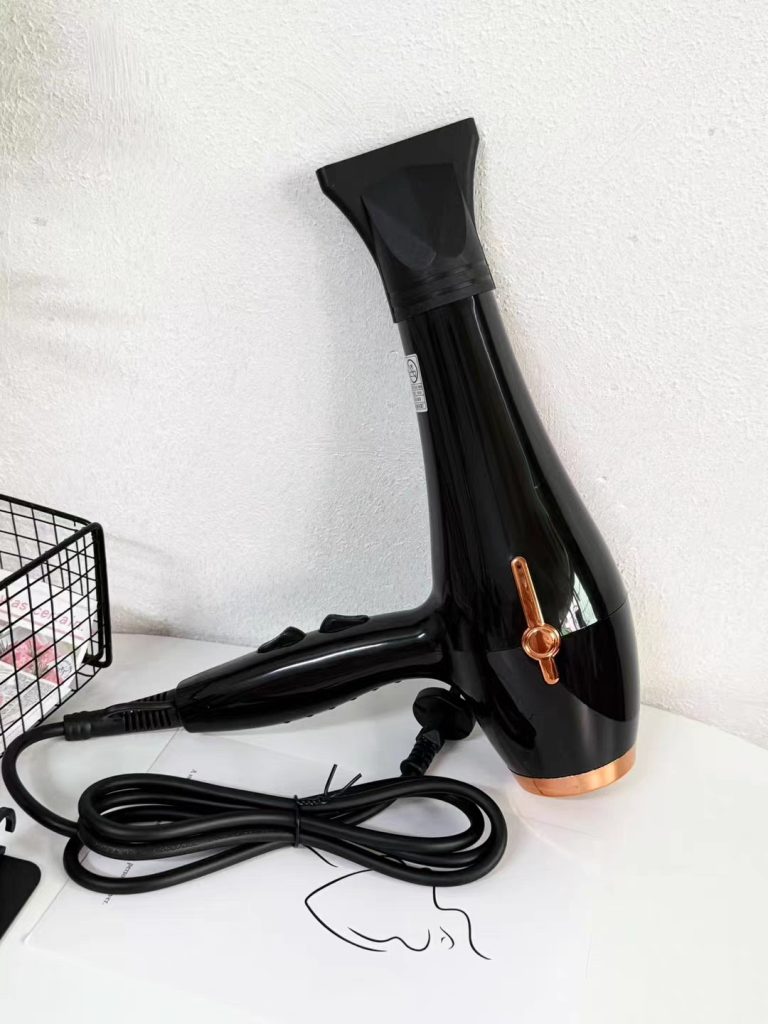
If you are planning to import hair dryers from China, the factory quotation is usually the first number you want to know.
But the factory price is not the same as your final purchasing cost.
A hair dryer may have a relatively low unit price at the factory, but your actual cost can also include customized packaging, logo printing, sample development, inspection, inland transportation, international shipping, customs duties, taxes, and destination delivery.
This is why two buyers can purchase similar-looking hair dryers from China and end up with very different total costs.
The better question is not simply:
“How much does a hair dryer cost in China?”
It is:
“How much will this product cost me from factory to my warehouse?”
This guide explains how to calculate the cost of importing hair dryers from China and which factors can significantly change the final price.
1. There Is No Single China Hair Dryer Import Price
A professional hair dryer, salon model, hotel hair dryer, basic retail model, and high-speed brushless hair dryer can have very different manufacturing costs.
The price depends on the actual configuration.
Important variables include:
- Motor type
- Motor speed
- Rated power
- Heating system
- Electronics
- Housing material
- Airflow design
- Temperature control
- Speed settings
- Cool-shot function
- Display or control system
- Accessories
- Cable
- Plug
- Packaging
- Logo
- Order quantity
- Customization
- Testing requirements
Therefore, asking a supplier for the price of “a hair dryer” without defining the product can produce a quotation that is difficult to compare with other suppliers.
For B2B purchasing, the first step should always be defining the product specification.
2. The Factory Price Is Only the Starting Point
Suppose a manufacturer gives you a quotation of $20 per hair dryer.
That does not necessarily mean your final cost is $20.
Your purchasing cost may look more like this:
Product price + customization + packaging + inspection + local logistics + international freight + import costs + destination delivery
The exact components vary according to your country, shipping method, Incoterms, order size, and purchasing arrangement.
This is why experienced buyers calculate the expected landed cost before approving an order.
3. What Determines the Factory Price?
The product configuration is one of the biggest factors.
Motor
The motor can significantly influence the manufacturing cost.
Different motor technologies can have different costs and performance characteristics.
Buyers should consider:
- Motor type
- Speed
- Airflow
- Noise
- Expected operating life
- Power consumption
- Motor protection
A higher-performance motor may increase the product cost, but that does not automatically mean it is the right choice.
The motor should match the intended market position.
For buyers considering high-speed hair dryers, your existing article about 110,000 RPM brushless motors is a useful related internal page.
Heating System
The heating element and temperature-control system also affect cost.
A basic model and a professional model may use different heating systems and thermal-control designs.
Buyers should therefore compare the complete specification rather than asking why one supplier is more expensive.
Electronics
Modern hair dryers can include:
- Multiple speed controls
- Multiple temperature settings
- Cool air
- Digital controls
- LED indicators
- Temperature monitoring
- Thermal protection
- Ion-related functions
- Displays
Additional electronic components can increase manufacturing and testing requirements.
Housing and Materials
The external housing is another cost factor.
The material, finish, molding requirements, surface treatment, color, and construction can all affect production cost.
A simple plastic housing and a highly customized premium housing should not be compared as if they were the same product.
4. Order Quantity Has a Major Effect on Cost
Quantity is another important factor.
A factory may quote differently for:
- 100 units
- 500 units
- 1,000 units
- 5,000 units
- 10,000 units
Higher quantities can sometimes improve production economics because setup and purchasing costs are distributed across more units.
However, buyers should not automatically place a huge order simply to obtain a lower unit price.
Inventory also has a cost.
If you buy 10,000 units but only sell 2,000 quickly, your money becomes tied up in inventory.
The right order quantity should consider:
Unit price + inventory risk + sales forecast + cash flow + storage cost.
5. Standard Hair Dryer vs. OEM Hair Dryer
One of the biggest differences in pricing comes from customization.
A standard existing product is usually easier to quote.
An OEM or ODM project can involve additional costs related to:
- Logo
- Color
- Packaging
- Accessories
- Product labeling
- User manual
- Plug
- Cable
- Product modifications
- Custom molds
- Special components
- Engineering
- Testing
Your existing Hair Dryer Manufacturer in China | OEM & ODM Hair Dryers page can be used as a supporting internal link here because it explains the difference between OEM and ODM production and the factors that affect customized products.
6. Packaging Can Change the Final Cost
Packaging is often underestimated by new importers.
If you are purchasing products for wholesale, distribution, or retail, you may need customized packaging.
Possible requirements include:
- Retail box
- Custom artwork
- Printed logo
- Product inserts
- User manual
- Protective materials
- Inner carton
- Master carton
- Shipping marks
The more customized the packaging, the more variables need to be included in the quotation.
Ask the supplier whether the quoted price includes your required packaging.
Do not assume that the product quotation automatically includes retail-ready packaging.
7. Logo Customization May Affect the Price
Adding a brand logo sounds simple, but the actual cost depends on the method and quantity.
Possible methods can include:
- Printing
- Laser marking
- Embossing
- Other branding methods
The manufacturer may also have minimum quantities for particular branding methods.
If you are launching a private-label brand, provide the supplier with your logo requirements when requesting the quotation.
That produces a much more useful price than asking for the price of an unbranded product and adding customization later.
8. Sample Cost Should Be Considered Separately
Before a bulk order, most serious buyers should evaluate a sample.
The sample cost may include:
- Product
- Custom logo
- Custom packaging
- Shipping
- Engineering adjustments
- Special sample preparation
A sample can appear expensive compared with the future bulk unit price.
That is not necessarily a problem.
The purpose of a sample is different from the purpose of mass production.
The sample gives you an opportunity to determine whether the product is worth ordering in quantity.
9. Inspection Is Another Cost to Consider
Quality inspection can add to your purchasing cost.
However, inspection should be viewed in relation to the potential cost of receiving a large quantity of defective products.
Depending on the purchasing arrangement, inspection may involve:
- Product appearance
- Quantity verification
- Packaging
- Electrical testing
- Product function
- Accessories
- Labels
- Carton condition
- Sample comparison
The exact inspection scope should be agreed before production is completed.
For customized products, the approved sample should be used as an important reference.
10. Shipping Can Significantly Change the Landed Cost
International shipping is one of the most important variables in the final import cost.
The cost can depend on:
- Destination country
- Shipping method
- Shipment volume
- Gross weight
- Chargeable weight
- Number of cartons
- Shipping season
- Delivery terms
- Destination charges
For this reason, a buyer should calculate shipping using the actual packaging information rather than estimating only from the product’s individual weight.
Ask the supplier for:
- Units per carton
- Carton dimensions
- Gross weight
- Net weight
- Total cartons
- Total shipment volume
Then you can obtain a more realistic freight quotation.
11. Incoterms Matter
Two suppliers can quote different prices because they are using different trade terms.
For example, one supplier may quote the factory price, while another may quote a price that includes transportation to a particular destination.
These quotations should not be compared directly without understanding what is included.
Before comparing offers, confirm:
- What is included?
- Where does the seller’s responsibility end?
- Who arranges export procedures?
- Who pays international freight?
- Who handles destination costs?
- Who handles customs clearance?
- Which costs are paid by the buyer?
A lower-looking price can become more expensive when additional costs are added later.
12. Import Duties and Taxes Must Be Checked Separately
Import duties and taxes depend on the destination market and the applicable product classification.
Do not assume that every country charges the same amount.
Before placing a large order, check the import requirements for your destination.
You may need to consider:
- Product classification
- Customs duties
- Import taxes
- Customs clearance
- Local handling
- Port or airport charges
- Delivery after clearance
The exact calculation should be confirmed for your destination before finalizing the purchase.
13. Voltage and Plug Configuration Can Affect Cost
International buyers should tell the manufacturer where the hair dryers will be sold.
Different markets can require different:
- Voltage
- Frequency
- Plug
- Cable
- Labels
- Electrical configuration
Changing these requirements can affect components and production arrangements.
Do not wait until the goods are ready for shipment to tell the manufacturer that the plug or electrical configuration is different.
Your Professional Hair Dryer Factory in China | Custom Hair Dryers page is another useful internal resource for buyers considering customized electrical configurations.
14. A Simple Landed Cost Example
Imagine a buyer wants to purchase 1,000 hair dryers.
For illustration only, the purchasing calculation could be structured like this:
Product cost:
1,000 × agreed unit price
Customization:
Logo + packaging + accessories
Inspection:
Pre-shipment quality inspection
Local logistics:
Factory to export warehouse or port
International freight:
Based on shipment volume and destination
Import costs:
Applicable customs duties and taxes
Destination delivery:
Port or airport to buyer’s warehouse
The buyer should add all these costs together.
The result is the estimated landed cost.
Then divide the total cost by the number of sellable units.
This gives you a much more useful figure than the factory unit price alone.
15. How to Compare Two Hair Dryer Quotations
Imagine you receive two quotations.
Supplier A:
Lower unit price
Basic packaging
Standard motor
Limited accessories
Supplier B:
Higher unit price
Better motor
Custom packaging
More accessories
Different quality-control process
It would be a mistake to conclude that Supplier A is automatically cheaper.
Instead, create a comparison table.
| Cost / Specification | Supplier A | Supplier B |
|---|---|---|
| Motor | Confirm | Confirm |
| Power | Confirm | Confirm |
| Heating system | Confirm | Confirm |
| Voltage | Confirm | Confirm |
| Plug | Confirm | Confirm |
| Accessories | Confirm | Confirm |
| Packaging | Confirm | Confirm |
| MOQ | Confirm | Confirm |
| Sample | Confirm | Confirm |
| Inspection | Confirm | Confirm |
| Production time | Confirm | Confirm |
| Shipping | Confirm | Confirm |
| Total landed cost | Calculate | Calculate |
The winner should be determined after the specifications and total costs are normalized.
16. Why the Cheapest Quotation Can Become Expensive
A low factory quotation can create additional expenses if the product requires significant changes later.
For example:
The buyer accepts a cheap standard model.
Later, the buyer discovers that the plug is wrong.
Then the packaging needs to be redesigned.
Then the logo needs to be added.
Then the accessories need to be changed.
Then the product needs additional testing.
Then the shipping carton dimensions change.
The original “cheap” quotation is no longer the real project cost.
This is why a detailed RFQ is so important.
17. How to Request a More Accurate Hair Dryer Quote
Instead of sending:
“Please send me your best price for 1,000 hair dryers.”
send a complete inquiry.
For example:
Product: Hair Dryer
Quantity: 1,000 units
Target market: [Country]
Voltage: [Required voltage]
Frequency: [Required frequency]
Plug: [Plug type]
Power: [Required wattage]
Motor: [Required motor or supplier recommendation]
Speed settings: [Requirement]
Temperature settings: [Requirement]
Cool-shot: [Yes/No]
Logo: [Yes/No]
Packaging: [Custom/Standard]
Accessories: [Required accessories]
Sample: Required
OEM/ODM: [Requirement]
Delivery destination: [City/Country]
Then ask the supplier to provide:
- Unit price
- MOQ
- Sample cost
- Customization cost
- Packaging cost
- Production lead time
- Carton dimensions
- Gross weight
- Net weight
- Available documentation
- Shipping options
This creates a quotation that is much easier to compare.
18. How to Reduce Import Costs Without Destroying Product Quality
Cost reduction does not always mean choosing cheaper components.
There are more practical ways to control purchasing costs.
Reduce unnecessary customization
If you are launching a new product, start with an existing platform where possible.
Optimize packaging
Avoid oversized packaging that increases shipping volume without adding meaningful protection.
Choose the right order quantity
Do not purchase more inventory than your sales forecast can reasonably support.
Compare complete quotations
Compare landed cost rather than factory price alone.
Standardize components
If several products can use compatible components or packaging, standardization may simplify purchasing.
Discuss annual demand
If you expect repeat orders, tell the manufacturer your expected annual volume.
This gives the supplier more information when proposing a production solution.
19. What Price Should You Target?
There is no universal “correct” price for a hair dryer.
Your target price should be connected to the product you want to sell.
A basic retail product, professional salon product, hotel hair dryer, and high-speed premium product can have completely different cost structures.
Instead of starting with:
“I want the cheapest hair dryer.”
start with:
“What product specification can meet my target selling price and required quality?”
This changes the sourcing conversation.
The manufacturer can then help you evaluate the trade-offs between motor, power, functions, materials, packaging, and quantity.
20. The Most Important Number Is Your Landed Cost
For an importer, the factory quotation is useful, but it is not the final business number.
Your real purchasing calculation should answer:
How much does one sellable hair dryer cost after purchasing, customization, shipping, import costs, and delivery?
That number can then be compared with:
- Wholesale price
- Distributor price
- Retail price
- Marketplace fees
- Warehousing
- Marketing
- Returns
- Warranty
- Other business costs
Only after these numbers are understood can you determine whether the product has enough margin for your business.
FAQ
How much does it cost to import hair dryers from China?
There is no single import price. The total cost depends on the hair dryer’s specification, order quantity, customization, packaging, shipping, destination, and applicable import costs.
Is the factory price the same as the landed cost?
No. The factory price is only one part of the purchasing cost. Landed cost can include product cost, customization, logistics, international freight, import costs, and destination delivery.
What makes a hair dryer more expensive?
Motor type, heating system, electronics, materials, functions, accessories, customization, packaging, testing requirements, and order quantity can all affect the price.
Does buying more hair dryers reduce the unit price?
It can, but not automatically. The supplier’s production economics, product configuration, customization, and quantity all affect the quotation.
Is OEM hair dryer production more expensive?
It can be, particularly when the project requires custom molds, special components, packaging, engineering, or extensive product modifications. An existing ODM platform may require less development work.
Should I ask for a sample before placing a bulk order?
Yes. A sample allows you to evaluate the actual product before committing to a large quantity.
What information should I give a Chinese hair dryer supplier for a quotation?
Provide quantity, target market, voltage, frequency, plug, power, motor requirements, functions, accessories, packaging, logo requirements, and any OEM/ODM requirements.
How can I compare hair dryer prices from different Chinese suppliers?
Give all suppliers the same specification and compare unit price, MOQ, customization, packaging, quality-control requirements, production time, shipping, and estimated landed cost.
Does packaging affect the import cost?
Yes. Packaging can affect both product cost and shipping cost, particularly when larger cartons increase shipment volume.
What is the best way to reduce hair dryer import costs?
Focus on total cost rather than simply negotiating the lowest unit price. Standardizing specifications, optimizing packaging, choosing appropriate quantities, and comparing complete quotations can often produce a better result.
Final Thoughts
Importing hair dryers from China is not simply a matter of finding the lowest factory quotation.
A successful purchasing decision starts with a clear product specification and continues through sampling, customization, packaging, quality control, shipping, customs, and final delivery.
The most useful calculation is therefore not:
“What is the cheapest price per hair dryer?”
It is:
“What is the total landed cost for a hair dryer that meets my required quality and market specifications?”
Once you look at the purchase this way, supplier comparisons become much clearer.
You can identify where the money is actually going, remove unnecessary costs, negotiate more effectively, and choose a product that has a realistic margin for your business.


No reply content