
Dongguan Plastic Manufacturing Plant
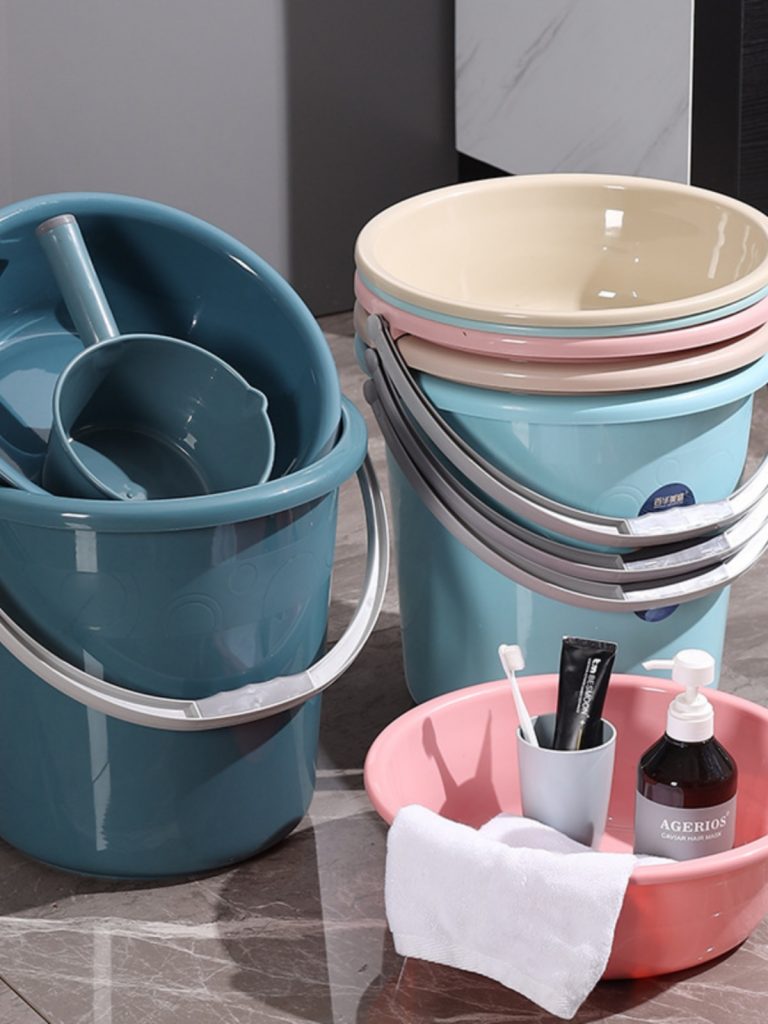
The cost of importing household water buckets from China depends on more than the factory price. Buyers should calculate the product cost, packaging, inland transportation, international freight, customs clearance, duties, taxes, and other import expenses to determine the real landed cost.
Because household water buckets are relatively bulky compared with their value, shipping and container utilization can have a significant impact on the final cost.
1. Start with the Factory Price
The first cost is the manufacturer’s quotation.
The price may depend on:
-
Bucket capacity
-
Plastic material
-
Product weight
-
Wall thickness
-
Color
-
Handle design
-
Logo customization
-
Packaging
-
Order quantity
-
Mold requirements
For example, a 5-liter bucket and a 20-liter bucket should not be compared only by their unit prices. Their material consumption, packaging volume, and shipping costs can be very different.
2. Calculate the Actual Product Cost
For a basic order, the product cost can be calculated as:
Product Cost = Unit Price × Quantity
For example, if the factory quotation is $1.20 per bucket and you order 5,000 pieces:
$1.20 × 5,000 = $6,000
This is only the purchase cost, not the final import cost.
3. Add Customization Costs
If you want your own brand, additional costs may include:
-
Logo printing
-
Custom colors
-
Customized packaging
-
Labels
-
Special handles
-
New molds
Some manufacturers include simple logo printing in the unit price when the order quantity is sufficiently large, while others charge separately.
Always ask the manufacturer for a quotation showing customization costs separately.
4. Consider Domestic Transportation in China
If the factory is located far from the export warehouse or port, you may need to pay for domestic transportation.
Possible costs include:
-
Factory pickup
-
Truck transportation
-
Warehouse handling
-
Loading
-
Palletization
-
Storage
-
Export warehouse charges
For small orders, these costs can represent a noticeable percentage of the total.
5. International Freight Can Be Important
Household buckets are relatively large products.
As a result, sea freight is often considered for commercial-volume orders because the shipping cost per unit can be much lower than air freight.
When requesting a freight quotation, provide:
-
Number of cartons
-
Carton dimensions
-
Gross weight
-
Net weight
-
Port of loading
-
Destination port
-
Delivery address if door-to-door service is required
The freight forwarder can then calculate the appropriate shipping cost.
6. Container Utilization Matters
For bulky products, how many buckets fit into a container can be more important than the unit factory price.
For example, suppose Supplier A offers a slightly cheaper bucket but uses larger cartons, while Supplier B offers a slightly higher unit price but packs the buckets more efficiently.
Supplier B could potentially have the lower overall landed cost.
Therefore, ask the manufacturer:
-
Carton dimensions
-
Pieces per carton
-
Cartons per pallet
-
Loading quantity per container
-
Gross container weight
7. Customs Duties and Taxes
Import duties and taxes depend on the destination country, product classification, customs value, and applicable regulations.
Before importing, confirm the appropriate HS classification with a qualified customs professional or your customs authority.
Do not assume that the same tax rate applies in every country.
8. Calculate the Landed Cost
A useful formula is:
Landed Cost = Product Cost + China Local Charges + International Freight + Insurance + Customs Duty + Import Taxes + Destination Charges + Other Fees
This gives you a much better picture of the actual cost of importing household water buckets.
9. Compare FOB, CIF, and DDP Carefully
When requesting quotations from Chinese suppliers or freight forwarders, you may encounter different Incoterms.
EXW: You take responsibility for most transportation after collecting the goods from the factory.
FOB: The seller handles specified costs up to the agreed loading point at the export port.
CIF: The seller includes the cost of goods, insurance, and freight to the named destination port, subject to the exact Incoterm terms.
DDP: The seller is responsible for delivery to the agreed destination and applicable import formalities and costs, subject to the agreed terms.
Do not compare an EXW quotation directly with a DDP quotation. The included costs are different.
10. Example of a Landed-Cost Calculation
Suppose you purchase:
-
5,000 household water buckets
-
Factory price: $1.20 each
-
Product value: $6,000
Then suppose the additional costs are:
-
China domestic transportation: $250
-
Export-related charges: $150
-
International freight: $1,200
-
Insurance and other charges: $100
Before customs duties and import taxes:
$6,000 + $250 + $150 + $1,200 + $100 = $7,700
The actual landed cost would then depend on the destination country’s customs duties, taxes, clearance fees, and destination charges.
Therefore, the final cost per bucket cannot be determined from the factory quotation alone.
11. How to Reduce Import Costs
Several strategies can help reduce the total cost:
Optimize packaging
Ask the manufacturer whether the bucket can be nested or stacked efficiently.
Increase order quantity
Larger orders may reduce the factory unit price and spread fixed costs over more products.
Compare multiple suppliers
Compare the same specification from at least several manufacturers.
Optimize container loading
Ask suppliers to provide container-loading plans or estimated quantities.
Compare shipping options
For larger orders, compare different sea freight and delivery options.
Avoid unnecessary customization
Complex molds, special packaging, and multiple colors can increase the total cost.
Questions to Ask Before Ordering
Before placing an order, ask the manufacturer:
-
What is the unit price?
-
What quantity does the quotation apply to?
-
What material is used?
-
What is the product weight?
-
What are the carton dimensions?
-
How many pieces are packed in each carton?
-
What is the MOQ?
-
Is logo printing included?
-
Are custom colors included?
-
What is the production lead time?
-
How many cartons can fit in a 20-foot or 40-foot container?
-
What Incoterm is included in the quotation?


No reply content