
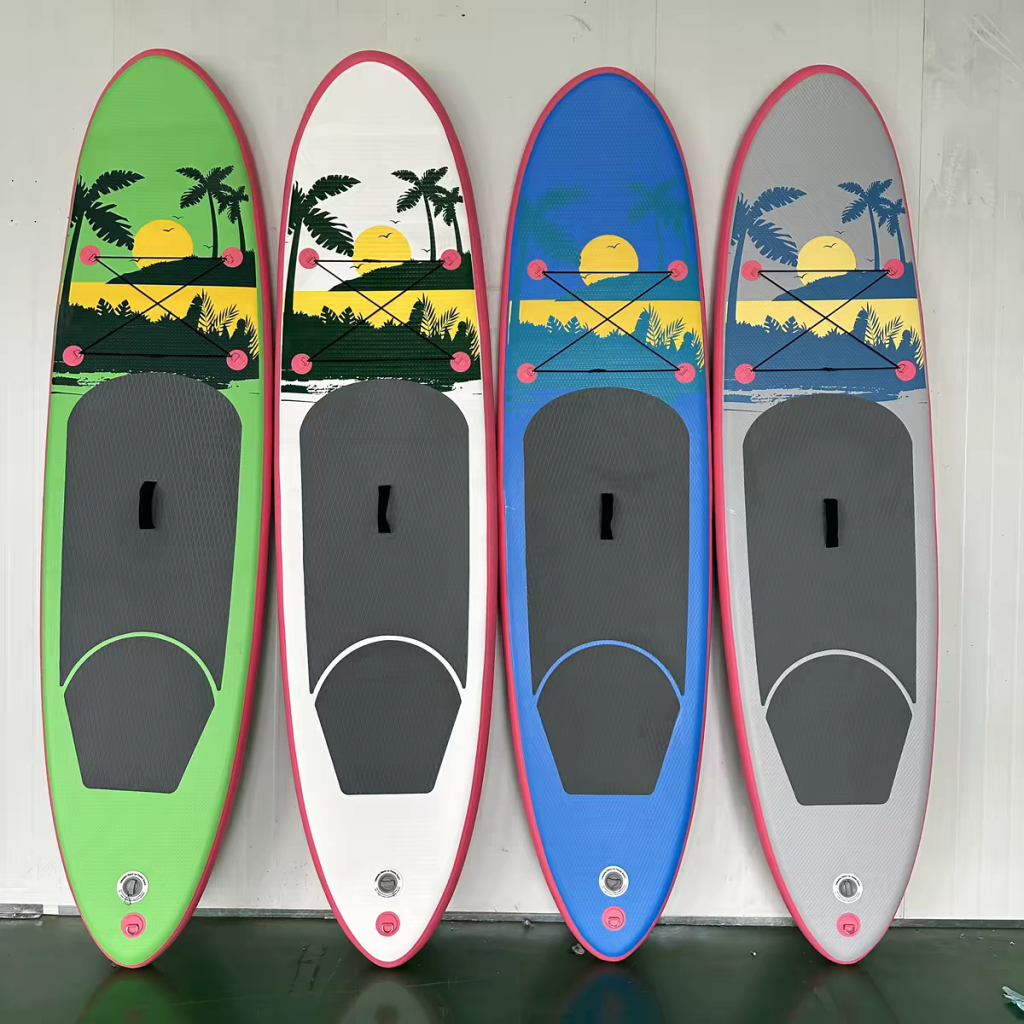
How Much Does It Cost to Import Surfboards from China? A Complete Buyer’s Guide
Importing surfboards from China can be an attractive option for surf shops, distributors, sports retailers, online sellers, and private-label brands. Chinese manufacturers can offer a wide range of surfboards, including soft-top, EPS/epoxy, fiberglass, beginner, professional, and custom-branded models.
However, the factory price is only one part of the total cost.
To calculate the real cost of importing surfboards from China, buyers should consider the product price, customization, packaging, inland transportation, international freight, insurance, customs duties, import taxes, customs clearance, and final delivery.
This guide explains how to estimate the complete landed cost before placing an order.
What Is the Typical Price of Surfboards from China?
The price of a surfboard from a Chinese manufacturer can vary considerably depending on its construction, size, materials, accessories, customization, and order quantity.
As a general purchasing reference, buyers may encounter approximately these factory price ranges:
| Surfboard Type | Approximate Factory Price |
|---|---|
| Basic soft-top surfboard | $45–$90 |
| Beginner recreational board | $60–$120 |
| EPS/epoxy surfboard | $90–$180 |
| Fiberglass surfboard | $100–$220 |
| Higher-end performance board | $180–$350+ |
| Custom OEM/private-label board | $70–$250+ |
These are indicative ranges rather than fixed quotations. Actual prices depend on specifications and order volume.
A 10-piece sample order and a 500-piece production order can have very different unit prices.
1. Product Cost
The first component is the manufacturer’s price.
For example, suppose you purchase:
- 100 surfboards
- Factory price: $100 per board
Your product cost would be:
100 × $100 = $10,000
But $10,000 is not your final import cost.
You still need to calculate the costs associated with getting the products from the factory to your warehouse.
2. What Determines the Factory Price?
Several factors can significantly affect surfboard pricing.
Board Size
Larger boards normally require more materials and packaging space.
For example, a 6-foot board and an 8-foot board should not be expected to have the same manufacturing cost.
Construction
EPS/epoxy, PU/fiberglass, soft-top, and other constructions can have different material and labor costs.
Materials
The price can change depending on:
- Foam core
- Fiberglass
- Resin
- Deck material
- Bottom material
- Fin system
- Leash
- Accessories
Quantity
Larger orders generally provide better opportunities for volume pricing.
For example:
50 units: higher unit cost
200 units: lower unit cost
500+ units: potentially lower unit cost
However, the actual price reduction depends on the manufacturer’s production structure.
3. OEM and Private-Label Costs
If you are purchasing surfboards under your own brand, additional costs may apply.
Customization can include:
- Logo printing
- Custom graphics
- Custom colors
- Board shape
- Dimensions
- Packaging
- Labels
- Stickers
- User manuals
- Accessories
Some manufacturers include basic logo printing in the product price when the order quantity is sufficiently large.
Other suppliers may charge separate setup or customization fees.
Before ordering, ask the manufacturer for a complete OEM quotation rather than assuming customization is included.
4. Sample Costs
Before placing a large order, many buyers request samples.
A sample can cost more per unit because the manufacturer cannot spread development and setup costs across a large production run.
For example:
Bulk price: $100 per board
Sample price: $130–$200 per board
This does not necessarily mean the factory is charging too much. Sample production often involves additional handling, customization, artwork preparation, and shipping.
International express delivery can also make a sample order relatively expensive.
5. Packaging Costs
Surfboards are large and relatively fragile products, so packaging is important.
Packaging may include:
- Individual plastic protection
- Foam protection
- Cardboard
- Protective corners
- Individual cartons
- Reinforced cartons
- Pallets
Depending on your market and shipping method, stronger packaging may be worth the additional cost.
A small increase in packaging cost can potentially prevent much larger losses caused by transportation damage.
6. Inland Transportation in China
If your manufacturer is located inland and your cargo needs to be transported to a major export port, domestic freight will add another cost.
The final cost depends on:
- Factory location
- Port
- Cargo volume
- Number of cartons
- Trucking distance
- Delivery requirements
For example, a manufacturer located close to a major port may have lower domestic transportation costs than a factory located hundreds of kilometers away.
Ask the manufacturer for the packed cargo information before calculating the shipping cost.
7. International Freight Costs
International freight is one of the most important factors when importing surfboards.
You may choose between:
Sea Freight
Usually the most practical option for larger commercial shipments.
Advantages:
- Lower cost per unit for larger shipments
- Suitable for large-volume orders
- Better for heavy or oversized cargo
Disadvantage:
- Longer transit time
Air Freight
Air freight can be useful for:
- Samples
- Small urgent orders
- Time-sensitive shipments
However, surfboards are large, so volumetric weight can make air freight expensive.
Express Shipping
Courier services can be convenient for small samples but are generally unsuitable for large commercial quantities.
8. Why Surfboards Can Have High Freight Costs
One important issue for surfboard importers is that freight charges are not always based only on actual weight.
Because surfboards are long and relatively lightweight, their dimensional or volumetric weight can be significant.
For air freight, a common formula is:
Length × Width × Height ÷ 5,000
The exact divisor depends on the carrier and shipping service.
For example, if a packaged surfboard measures:
220 × 65 × 15 cm
The volumetric weight would be:
220 × 65 × 15 ÷ 5,000
= 42.9 kg
Even if the actual gross weight is considerably lower, the carrier may charge based on the higher billable weight.
This is why packaging dimensions are essential when requesting freight quotations.
9. Example: Importing 100 Surfboards
Let’s create a simplified example.
Suppose you purchase:
100 surfboards
Factory price:
$100 each
Product cost:
$10,000
Assume additional costs are:
| Cost | Example Amount |
|---|---|
| Surfboards | $10,000 |
| OEM/packaging | $500 |
| China inland transportation | $300 |
| International freight | $2,000 |
| Cargo insurance | $100 |
| Customs/clearance-related charges | $300 |
| Import duties/taxes | Varies |
| Final delivery | $500 |
Before import duties and taxes:
$13,700
Therefore, the effective pre-tax cost would be approximately:
$137 per surfboard
The actual landed cost could be higher after duties and taxes.
This example is for understanding the calculation method only. Actual costs vary according to destination country, product specifications, freight market conditions, shipment size, and customs regulations.
10. Import Duties and Taxes
Import duties and taxes depend on the destination country and the product’s customs classification.
This is an important point:
Do not assume that every country charges the same import duty on surfboards.
Before ordering, check:
- HS classification
- Import duty
- VAT/GST/sales tax
- Customs processing fees
- Brokerage charges
- Other local import requirements
The customs value may also include certain transportation and insurance costs depending on the country’s customs rules.
If you are uncertain about the correct classification, consult your customs broker or local customs authority before importing.
11. Calculate the Landed Cost
The most useful number for an importer is the landed cost per surfboard.
A simplified formula is:
Landed Cost = Product Cost + Packaging + Domestic Freight + International Freight + Insurance + Duties + Taxes + Customs Clearance + Final Delivery
Then:
Landed Cost per Unit = Total Import Cost ÷ Number of Surfboards
For example:
Total landed cost:
$16,000
Quantity:
100 boards
Landed cost:
$16,000 ÷ 100 = $160 per board
This is much more useful than simply looking at a $100 factory quotation.
12. How Much Money Do You Need to Start?
Your required budget depends heavily on MOQ and product type.
A small test order might require approximately:
$3,000–$8,000
A medium commercial order could require:
$10,000–$30,000
A larger private-label order may require:
$30,000–$100,000+
These are broad planning ranges rather than fixed requirements.
A buyer should calculate the budget based on actual quotations rather than using a generic industry estimate.
13. How to Reduce Import Costs
There are several practical ways to control your total purchasing cost.
Buy Larger Quantities When Demand Is Proven
Manufacturers may offer better unit pricing for larger orders.
However, do not buy large quantities simply to obtain a lower unit price.
Inventory that does not sell can cost more than a higher factory price.
Optimize Packaging
Ask the manufacturer whether packaging dimensions can be reduced without compromising protection.
This can be especially important for air freight.
Compare Shipping Methods
Request quotations for:
- Sea freight
- Air freight
- Door-to-door service
- Port-to-port service
Then compare the total landed cost rather than only the freight rate.
Consolidate Orders
If you purchase different models from the same production area, consolidation may help reduce transportation costs.
Negotiate Based on Complete Specifications
Instead of simply asking:
“Can you give me a cheaper price?”
provide your exact requirements and negotiate based on:
- Quantity
- Materials
- Packaging
- Logo
- Accessories
- Delivery terms
This produces a much more meaningful quotation.
14. FOB, CIF, DDP: Which Shipping Term Should You Choose?
International buyers may receive quotations under different Incoterms.
EXW
The buyer is generally responsible for arranging transportation from the factory onward.
This can provide greater control but requires more logistics management.
FOB
The seller generally handles delivery to the named port and export-related responsibilities under the agreed FOB terms.
The buyer arranges the main international transportation.
CIF
The seller arranges freight and insurance to the named destination port, subject to the agreed Incoterm.
The buyer remains responsible for import procedures and local costs as applicable.
DDP
DDP can provide a more convenient door-to-door purchasing experience because the seller generally takes responsibility for import clearance, duties, and delivery under the agreed terms.
However, buyers should carefully confirm what is included in a DDP quotation.
15. What Information Should You Send to a Chinese Surfboard Manufacturer?
For an accurate quotation, send a detailed RFQ.
Include:
Product type: Soft-top / EPS / epoxy / fiberglass
Length: For example, 7 ft
Width: Required dimension
Thickness: Required dimension
Construction: Required construction
Quantity: For example, 200 pcs
Logo: Yes / No
Custom graphics: Yes / No
Packaging: Individual export packaging
Accessories: Fins, leash, etc.
Destination: Country and city
Shipping method: Sea / Air / DDP / FOB
The more complete your information, the more accurate your quotation will be.
16. Example RFQ for Surfboards
You can send the following information to a manufacturer:
We are looking for a Chinese surfboard manufacturer for a private-label project.
Product: 7 ft surfboard
Construction: EPS/Epoxy
Quantity: 200 pcs
Logo: Custom logo
Graphics: Custom design
Packaging: Individual export packaging
Accessories: Fins and leash
Destination: [Country/City]Please provide:
- Unit price
- MOQ
- Sample cost
- OEM customization cost
- Production lead time
- Carton dimensions
- Gross weight
- Total CBM
- Available shipping options
- Payment terms
This gives the manufacturer enough information to prepare a more useful quotation.
Frequently Asked Questions
How much does a surfboard cost from a Chinese factory?
Depending on the construction, materials, size, quantity, and customization, factory prices can range broadly from around $45 to more than $350 per board. Custom and high-performance models can cost considerably more.
Is it cheaper to buy surfboards directly from China?
It can be, particularly for medium and large orders. However, buyers need to include freight, duties, taxes, customs clearance, and local delivery when comparing the Chinese factory price with local suppliers.
What is the MOQ for surfboards from China?
MOQ varies by manufacturer and product. Standard models may have relatively low MOQs, while customized OEM products may require larger quantities.
Is sea freight cheaper than air freight?
For larger commercial shipments, sea freight is generally much more economical than air freight. Surfboards are also relatively large compared with their weight, which can make air freight expensive because of volumetric weight.
Can I order a small quantity first?
Yes. A sample or small trial order is often a sensible way to evaluate product quality, packaging, manufacturing consistency, and communication before placing a larger order.
What is the biggest hidden cost when importing surfboards?
For many buyers, freight and import-related costs can have a significant impact because surfboards occupy substantial cargo space. Packaging dimensions should therefore be confirmed before calculating the final cost.
Should I choose the cheapest surfboard manufacturer?
Not necessarily. A low factory price may come with lower-grade materials, weaker packaging, limited customization, or inconsistent quality. Compare the complete landed cost and product specifications instead.
Final Cost Calculation Checklist
Before placing an order, confirm all of the following:
- Factory unit price
- MOQ
- Sample cost
- OEM fees
- Logo/graphic costs
- Packaging cost
- Carton dimensions
- Gross weight
- Total CBM
- China inland freight
- International freight
- Insurance
- Import duty
- VAT/GST/sales tax
- Customs clearance
- Local delivery
- Payment fees
The most important number is not the factory quotation.
It is the final landed cost per surfboard.
A manufacturer offering a $90 board may not be cheaper than another manufacturer offering a $100 board if the first supplier has higher freight costs, weaker packaging, additional customization charges, or higher defect rates.
For serious importers, the best approach is to compare at least three manufacturers using identical product specifications and calculate the complete landed cost before making a purchasing decision.


No reply content