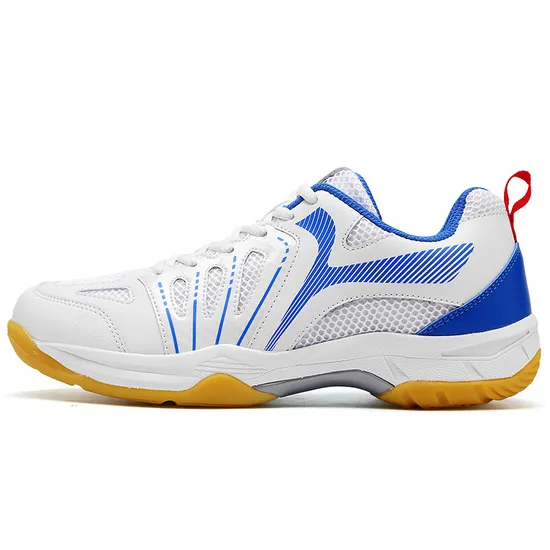
Custom Shoe OEM Manufacturer China | Low MOQ & Fast Sample

Importing athletic footwear from China can be one of the most rewarding moves for a footwear brand—or one of the most expensive mistakes you’ll ever make. The gap between a smooth, profitable import and a logistical nightmare rarely comes down to bad luck. It comes down to anticipating the pitfalls that catch unprepared buyers.
This guide outlines the eight most common—and most costly—mistakes brands make when importing sneakers from China, along with the concrete systems you need to avoid them. No fluff, no generic advice. Just the hard-won lessons that separate brands that thrive from those that flame out after their first container.
Pitfall 1: Mistaking FOB Price for “The Cost”
The single most expensive mistake in footwear importing is treating the FOB (Free on Board) quote as your unit cost. It is not. The FOB price typically represents only 55–65% of your true landed cost. The rest is freight, insurance, import duties, brokerage fees, and last-mile delivery.
The Real Cost Stack
| Cost Layer | What It Includes | When It Hits Your Budget |
|---|---|---|
| Development & Tooling | Patterns, molds, lasts, sampling | Upfront (one-time) |
| FOB Production | Materials, labor, factory overhead, packing | Per order |
| Compliance & Testing | Lab tests, inspections, audit fees | Per order / per model |
| Freight & Insurance | Ocean or air freight, cargo insurance | Per shipment |
| Import Duties & Taxes | Tariffs, VAT/GST, Section 301 (if applicable to US) | At customs clearance |
| Brokerage & Last-Mile | Customs broker, port handling, trucking to warehouse | Per shipment |
How Duties Sneak Up on You
Athletic footwear falls under specific HS codes, and the duty rates vary dramatically by construction:
-
6404.11 – Sports footwear with textile uppers: 20% base duty (US)
-
6404.19 – Other textile-upper footwear: up to 37.5% (US)
-
6403.99 – Leather-upper athletic shoes: 8.5–10% (US)
-
EU rates: 8–17% plus VAT (19–27% depending on member state)
⚠️ Section 301 tariffs (7.5–25%) may apply on Chinese-origin footwear depending on HTS classification and current trade policy. These rates shift with US-China trade negotiations—verify the current applicable rate at time of import, don’t assume last year’s number still holds.
The fix: Build a landed-cost model before you negotiate with any factory. Use a licensed customs broker to confirm HS classification for your specific design. Only when you know your true landed cost can you set pricing that leaves room for healthy margins.
Pitfall 2: Assuming “The Factory” Is Actually a Factory
A large percentage of “manufacturers” advertising on B2B platforms are trading companies—middlemen with beautiful catalogs and suspiciously low MOQs, but no production floor of their own. They add a 15–25% markup and outsource to a factory you’ve never seen.
Verification Checklist
| Verification Step | What to Check | Red Flag |
|---|---|---|
| Business license (SAMR) | Verify on China’s National Enterprise Credit Information system; match legal name, address, and scope | Refuses to share license number |
| Registered address | Should be in a manufacturing zone, not a commercial office tower | Address is in a trade building |
| Live video walkthrough | Request a real-time video tour of the production floor—not a pre-recorded video | “Factory is too busy for video” |
| Bank account name match | Wire transfer beneficiary must match the business license entity | Personal account or different name |
| Production capacity audit | Ask for machine list, current capacity utilization, and production schedule | Vague answers or reluctance |
| Third-party audit | Hire SGS, TÜV, QIMA, or Intertek to conduct an on-site facility audit | Factory refuses or stalls |
The cost of a third-party audit ($500–$1,500) is trivial compared to the cost of discovering your “factory” is a trading company after you’ve paid a deposit and received substandard goods.
Pitfall 3: Sample-to-Bulk Mismatch
You approve a gorgeous proto sample. The bulk shipment arrives with different materials, poorer stitching, and a sole that starts peeling after a week of wear. This is the most common quality disaster in footwear importing—and it’s entirely preventable.
The Root Causes
-
Material substitution – Factory swaps your approved PU leather for cheaper PVC, or your specified rubber outsole for a lower-grade compound.
-
Adhesive shortcuts – Incorrect adhesive application or insufficient curing time causes sole delamination.
-
Uncalibrated lasts – Poor last calibration creates inconsistent sizing across your size run.
-
Subcontracting – Factory outsources part of your order to an unmonitored workshop without telling you.
The Prevention Protocol
| Stage | What to Do | Why It Matters |
|---|---|---|
| PP (Pre-Production) Sample | Made on actual production line with actual bulk materials | Becomes your “Gold Sample” reference |
| Sealed Sample | Lock away 2–3 pairs of the approved PP sample in a controlled environment | Your legal benchmark for bulk acceptance |
| DUPRO Inspection | Conducted when 20–30% of goods are completed | Catches material substitution before it’s too late |
| Material Batch Certificates | Demand certs for every component: adhesives, dyes, fabrics, outsoles | Verifies materials match your spec |
| Bond Strength Testing | Require adhesive bond strength ≥ 60 N/cm (ISO 17709) with 72-hour pre-shipment curing | Prevents delamination |
| Final Random Inspection | AQL 2.5 sampling when 80%+ goods are packed | Your last line of defense before payment |
💡 Critical: Cheap suppliers often substitute materials (e.g., PVC for rubber, 0.8mm PU instead of 1.2mm). Always demand material batch certificates and conduct third-party lab tests pre-shipment.
Pitfall 4: Skipping or Under-Testing for Compliance
Every destination market has specific regulatory requirements for footwear. Skipping required testing doesn’t save money—it transfers risk to your balance sheet in the form of border rejections, recalls, and fines.
What You Must Test (By Market)
| Market | Key Regulations | Essential Tests |
|---|---|---|
| United States | CPSIA, CA Prop 65 | Phthalates, lead, heavy metals, flammability |
| European Union | REACH, EN ISO 20344 | SVHC substances, PAHs, azo dyes, DMF, formaldehyde |
| United Kingdom | UK REACH, UKCA | Same as EU plus UK-specific labeling |
| Canada | CCPSA | Lead, phthalates, flammability |
| Australia/NZ | AS/NZS standards | Chemical restrictions, labeling |
Performance Testing (All Markets)
-
Sole adhesion (ISO 17709): ≥ 60 N/cm
-
Abrasion resistance (DIN 53516): Outsole volume loss ≤ 4mm³ at 40m
-
Flex resistance (ISO 5402): 50,000+ cycles without cracking
-
Colorfastness (ISO 105-C06): Grade 3+ for rubbing, Grade 4+ for light
-
VOC emissions (EN 16516): Formaldehyde ≤ 0.5 mg/m³
Common Testing Failures in China Sourcing
According to industry inspection data, the most frequent compliance failures include:
-
Phthalates in PVC trims exceeding 0.1% (DEHP)
-
Phthalates in adhesives exceeding 0.1% (often overlooked—glue matters as much as materials)
-
Azo dyes in synthetic leathers
-
Formaldehyde in fabric treatments and adhesives
The fix: Request a full test report from an accredited lab (SGS, TÜV, Intertek)—not a generic “compliance letter.” Verify the certificate number on the issuing body’s database. For high-risk components, commission blind testing: submit a random sample from the production line to a lab under your own account without informing the factory.
Pitfall 5: HS Code Misclassification
Misclassifying your footwear under the wrong HS code is a deceptively easy mistake that leads to incorrect duties, customs delays, or retroactive penalties. The difference between “textile-upper athletic shoes” (6404.11, 20% duty) and “leather-upper athletic shoes” (6403.99, 8.5% duty) can swing your duty cost by 2–3×.
How to Get It Right
-
Work with a licensed customs broker to assign HS codes early in product development—before you quote to customers.
-
Obtain a binding ruling from your destination customs authority for ambiguous designs (e.g., hybrid textile/leather uppers).
-
Document your rationale for each SKU’s classification. Keep this record for 5–6 years (customs audit requirement).
-
Ensure material composition percentages are documented and match your classification. If you claim “textile upper” but leather exceeds 50% by weight, you’re misclassified.
-
Maintain documentation consistency – your commercial invoice, packing list, bill of lading, and customs declaration must contain identical product descriptions, quantities, and values.
⚠️ Under-valuation is another silent killer: Excluding freight, insurance, or assists from customs value leads to duty underpayment. HMRC and US CBP both conduct post-entry audits and will assess back duties plus interest and penalties.
Pitfall 6: Weak Contracts and Payment Terms
A handshake and a PayPal deposit are not a manufacturing agreement. Without a detailed, China-law-governed contract, you have virtually no recourse when things go wrong.
Essential Contract Clauses
| Clause | What It Must Cover |
|---|---|
| Tooling Ownership | Since you paid the tooling fees, you own the physical molds and design rights. Specify return procedure if the relationship ends. |
| IP Protection | Non-Disclosure, Non-Use, Non-Circumvention (NNN) – see Pitfall 7 |
| Quality Benchmarks | Reference the Gold Sample; define AQL levels (2.5 for Major, 1.0 for Critical defects) |
| Defect Rate Penalties | Liquidated damages for defect rates exceeding threshold (e.g., 1% of order value per 1% over AQL limit) |
| Delivery Penalties | 1% of order value per week of delay beyond agreed ETD |
| Payment Terms | 30% deposit, 70% against bill of lading copy (never 100% upfront) |
| Subcontracting Disclosure | Written disclosure and approval required for any subcontracting |
| Force Majeure | Define what constitutes force majeure and the remedies available |
| Governing Law | Must be Chinese law with disputes resolved in a Chinese court or arbitration body for enforceability |
The Payment Trap
Never, ever pay 100% upfront—regardless of how persuasive the factory’s sales pitch. If they demand full payment before production, walk away. Equally dangerous: paying the 70% balance before passing Final Random Inspection. Your final payment is your primary leverage—release it only when the FRI passes.
Pitfall 7: Inadequate IP Protection
China operates on a “first-to-file” trademark system. If you don’t register your trademark in China before contacting factories, someone else can—and likely will—register it first, then hold it for ransom or use it to seize your goods at customs.
The Three-Layer IP Defense
Layer 1: Register Your Trademark in China
Register your brand with the China National Intellectual Property Administration (CNIPA) before you begin factory outreach. Even if you only sell outside China, you must own the mark in China to prevent customs from seizing your goods as “counterfeit” when exporting.
Layer 2: Sign an NNN Agreement
A standard Western NDA is effectively unenforceable in Chinese courts. You need a Non-Disclosure, Non-Use, Non-Circumvention (NNN) Agreement:
-
Drafted in Chinese by a China-focused IP lawyer
-
Governed by Chinese law with liquidated damages clauses
-
Signed BEFORE sharing any tech packs, designs, or 3D models
Typical cost: $1,500–$5,000 from a qualified China IP firm. This is not an expense—it’s insurance.
Layer 3: Component Segregation (for truly novel designs)
Instead of entrusting the entire shoe to one factory, contract different facilities to produce individual components (upper, outsole, insole, laces), then assemble through a separate partner. Since no single facility possesses the complete blueprint, the incentive for IP theft evaporates.
The Threats NNN Addresses
-
Overproduction – Factory runs extra units and sells surplus on Alibaba/Taobao, undercutting you
-
Design theft – Factory uses your designs to produce for competing brands
-
Circumvention – Factory contacts your distributors directly, cutting you out
Pitfall 8: Underestimating Lead Times and Logistics Complexity
First-time importers consistently underestimate how long the full cycle takes. The result: missed launch dates, stockouts, and emergency air freight that destroys margins.
Realistic Timeline for a New Sneaker Model
| Phase | Duration | Notes |
|---|---|---|
| Factory vetting & quotation | 2–3 weeks | Request 3–5 quotes minimum |
| Sampling & revisions | 6–10 weeks | Budget 3–5 rounds |
| Tooling (molds, lasts) | 2–4 weeks | Parallel to sampling |
| Bulk production | 30–45 days | After PP sample approval |
| Lab testing & inspections | 2–3 weeks | DUPRO + FRI + testing |
| Ocean freight | 14–38 days | Depending on route |
| Customs clearance & last-mile | 5–10 days | Plus potential exam delays |
| Total (first order) | 4–6 months | Add 2–4 week buffer |
Logistics Pitfalls to Avoid
| Risk | Prevention |
|---|---|
| Volumetric weight surprises | Shoes have large volume; dimensional weight often exceeds actual. Always request quotes based on both actual and volumetric weight. |
| Humidity damage in transit | Use moisture-resistant liners, silica gel packs, and double-boxing for high-value pairs. Sea containers accumulate condensation. |
| Documentation inconsistency | Commercial invoice, packing list, and bill of lading must match exactly in product description, quantity, and value. Discrepancies trigger manual customs intervention. |
| CITES-restricted materials | Exotic leathers (snake, crocodile, lizard) require CITES export permits. Without them, goods are stopped at origin. |
| Under-declaration | Never undervalue to dodge duties. If caught: back taxes, fines, and possible blacklisting. |
| No cargo insurance | Ocean freight claims are slow and limited. Insure at 0.3–0.5% of shipment value. |
The Record-Keeping Requirement
Importers must retain all import records—commercial invoices, transport documents, customs declarations, certificates, test reports, and correspondence—for a minimum of 5–6 years (US: 5 years; UK: 6 years per HMRC). These records demonstrate due diligence during post-clearance audits.
Set up a centralized digital repository from your very first shipment. Future you will thank you when customs comes knocking.
The 8-Point Pre-Shipment Checklist
Before you release the final 70% payment, verify ALL of the following:
-
✅ Gold Sample sealed and stored as legal benchmark
-
✅ Material batch certificates received for every component
-
✅ Full lab test report from accredited laboratory for destination market
-
✅ DUPRO report passed with acceptable findings
-
✅ FRI (AQL 2.5) passed with defect rate within threshold
-
✅ HS code verified by licensed customs broker
-
✅ Commercial documents consistent across invoice, packing list, and B/L
-
✅ Container loading supervised with photographs of seal number and loading sequence
If any item is missing, do not release payment. The 70% balance is your only real leverage.
Final Thoughts
Importing athletic footwear from China is a craft, not a transaction. The brands that win are the ones that approach their first order with the skepticism of an auditor, the precision of an engineer, and the patience of a marathon runner. They calculate true landed cost before negotiating. They verify factories with third-party audits. They lock samples and enforce testing. They register IP in China and sign NNN agreements. They build timelines with generous buffers.
The pitfalls outlined above have sunk thousands of promising brands. They are entirely avoidable—but only if you respect the process. Your competitors are hoping you cut corners. Don’t give them the satisfaction.
FAQ
Q: How much should I budget for the “hidden costs” beyond FOB when importing 1,000 pairs of athletic shoes?
A: Beyond the FOB production cost, budget an additional 35–55% of the FOB value for: tooling amortization ($2–$5/pair on first order), lab testing and inspections ($1.50–$2.80/pair), ocean freight ($0.80–$1.50/pair), import duties (20% of customs value for US 6404.11; 8–17% + VAT for EU), brokerage and last-mile ($0.30–$0.60/pair), and cargo insurance. For a $26 FOB pair landing in the US, your true landed cost will be approximately $38–$42/pair. Always model this before setting retail pricing.
Q: What’s the #1 red flag that I’m dealing with a trading company instead of a factory?
A: The most reliable indicator is the refusal to allow a live video walkthrough of the production floor, combined with a registered business address in a commercial office building rather than a manufacturing zone. A real factory will proudly show you their stitching lines, lasting section, and outsole bonding area in real time. A trading company will offer “pre-recorded videos” or claim “the factory is too busy.” Additionally, verify that the bank account name on the wire transfer matches the business license entity—trading companies often use intermediary accounts.
Q: Can I really get my IP protected in China, or is it hopeless?
A: It is absolutely protectable—but only if you take the right steps before sharing designs. China’s legal system has strengthened IP enforcement significantly: in 2024, Chinese courts accepted over 529,000 new IP cases, and customs detained 41,600 infringing shipments containing 81.6 million items. The key is establishing your rights first: register your trademark with CNIPA, sign a Chinese-law NNN agreement (drafted in Chinese by a qualified IP lawyer), and specify in your manufacturing contract that all molds and tooling belong to you. Enforcement only works if you have the right agreements in place from Day 1.
Q: My factory says testing is “optional” and adds cost. Should I skip it?
A: Never. Skipping testing transfers all regulatory risk to you. If your shoes fail compliance at the border, you face: shipment seizure, forced re-export, fines, and potentially a recall if products already reached consumers. The cost of full lab testing ($400–$900 per model) is 0.5–1% of a typical 1,000-pair order value. The cost of a failed compliance check is 100% of the shipment plus legal fees. Moreover, 72% of failed footwear tests involve phthalates exceeding 0.1% in PVC trims—a failure that occurs in both materials and adhesives, meaning you must test glue, dyes, and every component, not just the upper fabric.
Q: How do I handle a situation where bulk goods don’t match the approved sample?
A: Your Manufacturing Agreement should specify that the sealed Gold Sample is the legal benchmark for bulk acceptance. If DUPRO or FRI reveals material substitution or defect rates exceeding AQL thresholds: (1) immediately notify the factory in writing with photographic evidence, (2) withhold the 70% balance payment, (3) demand a Corrective and Preventive Action (CAPA) plan, (4) require rework or replacement at factory expense, and (5) if the factory refuses, initiate the dispute resolution mechanism specified in the contract (typically arbitration in a Chinese arbitration body). Document everything—your payment withholding is legally justified only if you can prove non-conformance against the sealed sample.
Q: What’s the most overlooked pitfall that even careful importers miss?
A: Lead time underestimation. Most first-time importers plan for production time but forget the cumulative effect of sampling revisions, tooling development, lab testing windows, and ocean transit. The result is a launch date that slips by 6–10 weeks, forcing emergency air freight ($7–$15/pair vs. $1–$2/pair for ocean) or a missed selling season. Build a minimum 2–4 week buffer into your first order timeline, and never launch a marketing campaign with a fixed date until your goods have cleared customs. Seasoned importers plan their first order 6–9 months ahead of the intended on-sale date—not 3–4 months.


No reply content