China Professional Hair Clipper Manufacturing Co., Ltd.
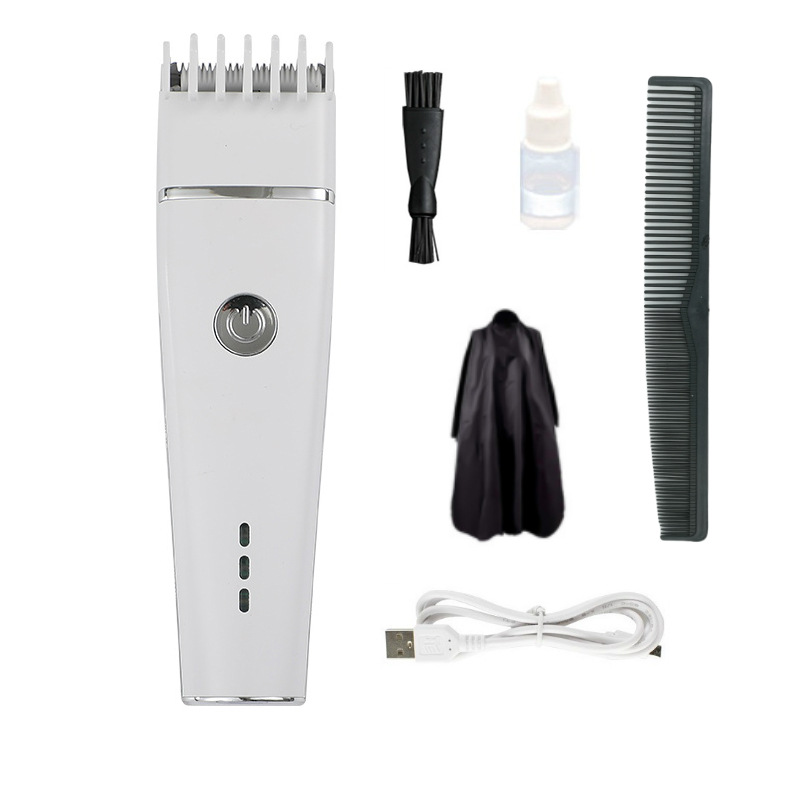
Importing hair clippers from China can provide competitive pricing, OEM customization, and access to a wide range of products. However, buyers need to control quality carefully, especially when purchasing hundreds or thousands of units.
The biggest problem is not always that the first sample is poor. In some cases, the sample is acceptable but the mass-produced products have differences in materials, battery performance, blade quality, assembly, packaging, or accessories.
For distributors, wholesalers, barber-equipment brands, and e-commerce sellers, these problems can lead to customer complaints, returns, warranty costs, and damaged brand reputation.
The solution is to establish a systematic purchasing and quality-control process before placing a large order.
1. Define Your Product Requirements Before Searching for a Supplier
One of the most common sourcing mistakes is contacting factories without a clear specification.
Before requesting quotations, define:
-
Product type
-
Motor requirements
-
Battery capacity
-
Expected runtime
-
Blade material
-
Blade type
-
Charging method
-
Product weight
-
Accessories
-
Housing color
-
Logo
-
Packaging
-
Target market
-
Required certifications
For example, instead of asking:
“How much is a professional hair clipper?”
provide a complete specification.
The more specific the requirements, the easier it is to compare suppliers and control production.
2. Do Not Choose a Manufacturer Based Only on Price
Price is important, but it should not be the only selection criterion.
A very low quotation may result from:
-
Lower-grade components
-
Smaller battery capacity
-
Cheaper motor
-
Lower-quality blades
-
Simplified packaging
-
Fewer quality inspections
A product that costs $1 less but generates significantly more returns may ultimately be more expensive.
A better purchasing calculation is:
Total Cost = Product Cost + Logistics + Import Costs + Inspection + Warranty + Returns
Always evaluate the total business cost rather than the factory quotation alone.
3. Verify the Supplier’s Manufacturing Capability
Before placing a large order, determine whether the supplier is actually capable of producing the product consistently.
Ask about:
-
Factory location
-
Production lines
-
Monthly capacity
-
Main products
-
OEM experience
-
Quality-control procedures
-
Production lead time
-
Export experience
-
Spare-parts supply
You do not necessarily need the largest factory.
For many buyers, the most suitable manufacturer is one with the right combination of product expertise, production capacity, quality control, and communication.
4. Request Samples Before Bulk Purchasing
Never rely only on photographs or videos.
Request physical samples.
Ideally, test samples from more than one supplier.
Evaluate:
-
Motor
-
Blade
-
Battery
-
Charging
-
Heat
-
Noise
-
Vibration
-
Ergonomics
-
Housing
-
Accessories
-
Packaging
The sample should be tested under conditions similar to actual customer use.
5. Test the Sample Yourself
A professional hair clipper should be tested in real working conditions.
For example:
Cutting Test
Test different hair types and lengths.
Battery Test
Measure actual operating time.
Charging Test
Check charging stability and charging time.
Heat Test
Operate the clipper continuously and evaluate temperature.
Noise Test
Listen for unusual sounds and excessive vibration.
Ergonomic Test
Use the product for an extended period.
A sample that passes these tests becomes a much stronger basis for a purchasing decision.
6. Create a Golden Sample
After selecting a supplier, keep an approved sample as the reference product.
This is sometimes called a golden sample or approved reference sample.
It should represent the exact product you expect to receive.
The reference sample can include:
-
Product
-
Color
-
Logo
-
Blade
-
Accessories
-
Packaging
During future production, the manufacturer can compare the finished products against this reference.
This is especially useful for repeat OEM orders.
7. Create a Detailed Product Specification Sheet
Do not rely on verbal agreements.
Create a written specification.
For example:
Item
|
Approved Specification
|
Product
|
Cordless Hair Clipper
|
Motor
|
Approved model
|
Battery
|
Approved capacity
|
Runtime
|
Agreed minimum
|
Blade
|
Approved material
|
Charging
|
Approved method
|
Weight
|
Agreed range
|
Color
|
Approved color
|
Logo
|
Approved design
|
Accessories
|
Defined quantity
|
Packaging
|
Approved artwork
|
This document should be confirmed before production.
8. Control the Battery Specification
Battery quality is one of the most important areas for cordless hair clippers.
Verify:
-
Battery type
-
Rated capacity
-
Voltage
-
Actual configuration
-
Protection system
-
Charging characteristics
Do not rely solely on a printed capacity number.
For important orders, consider verifying the battery specification through testing or inspection.
A mismatch between the approved sample and mass-production battery can significantly affect runtime.
9. Test Actual Battery Runtime
Battery runtime should be measured rather than accepted purely from marketing claims.
A basic test can be:
Fully Charged → Continuous Operation → Record Shutdown Time
For more realistic testing, operate the clipper under representative cutting conditions.
Test multiple samples rather than only one unit.
This helps identify production variation.
10. Check Blade Quality and Alignment
The blade is another major source of customer complaints.
Inspect:
-
Material
-
Sharpness
-
Alignment
-
Adjustment mechanism
-
Surface finish
-
Cutting performance
A blade that is slightly different from the approved sample can change the customer’s experience.
For mass production, establish an acceptable standard for blade alignment and cutting performance.
11. Check Motor Consistency
The motor should provide consistent performance across production batches.
Inspect:
-
Starting
-
Cutting power
-
Noise
-
Vibration
-
Heat
-
Speed stability
If one unit sounds significantly different from the approved sample, it should be investigated.
The goal is not merely to confirm that the motor works.
The goal is to ensure that the production motor performs within the agreed specification.
12. Inspect Assembly Quality
Many quality problems are related to assembly rather than the main components.
Check:
-
Housing fit
-
Screws
-
Buttons
-
Blade installation
-
Charging port
-
Battery installation
-
Internal connections
-
Decorative parts
Small assembly inconsistencies can become serious problems after repeated use.
13. Pay Attention to Charging Ports
The charging port is frequently handled by users.
Check whether it:
-
Connects securely
-
Charges consistently
-
Fits the cable correctly
-
Has excessive movement
-
Shows signs of poor assembly
For products using USB-C, also verify that the actual charging configuration matches the agreed specification.
14. Test the Power Button
The power button should operate consistently.
Check:
-
Pressing force
-
Response
-
Position
-
Stability
-
Repeated operation
If the button feels loose on samples, discuss the issue with the manufacturer before production.
For professional products, frequently operated components should receive appropriate durability testing.
15. Inspect Accessories
Accessories are often overlooked during quality inspection.
Check whether the order includes the correct:
-
Guide combs
-
Charging cable
-
Charger
-
Cleaning brush
-
Lubricating oil
-
Blade cover
-
Storage case
-
User manual
A product can be technically functional but still generate complaints if accessories are missing.
16. Confirm Packaging Before Production
Packaging should be approved before mass production.
Check:
-
Retail box
-
Product label
-
Barcode
-
User manual
-
Accessories
-
Inner protection
-
Outer carton
For private-label products, carefully check spelling, product information, logo placement, and regulatory information before approving the packaging artwork.
Changing packaging after mass production can be expensive.
17. Use Pre-Production Samples
For customized orders, request a pre-production sample before the factory begins full production.
The pre-production sample should reflect the final:
-
Product
-
Logo
-
Color
-
Packaging
-
Accessories
Only approve mass production after confirming that the sample meets your requirements.
18. Establish Quality Standards Before Production
Quality requirements should be agreed before manufacturing begins.
For example:
Appearance
No major scratches, cracks, or obvious defects.
Function
Motor, charging, switch, and blade must operate normally.
Battery
Capacity and runtime must meet the agreed specification.
Accessories
All required accessories must be included.
Packaging
Packaging must match the approved version.
The exact acceptance criteria should be customized to the product.
19. Consider AQL Inspection for Large Orders
For larger orders, buyers can use a statistical sampling inspection system such as AQL rather than checking every individual unit.
A typical inspection can evaluate:
-
Critical defects
-
Major defects
-
Minor defects
-
Quantity
-
Product specifications
-
Function
-
Packaging
The exact AQL levels and sample sizes should be agreed before inspection.
AQL is a quality-control method, not a guarantee that every unit is defect-free, so buyers should choose acceptance criteria appropriate to the product and risk level.
20. Conduct Pre-Shipment Inspection
For significant orders, inspect the goods before shipment.
A pre-shipment inspection can verify:
Quantity
Does the factory have the correct number of units?
Product
Does the product match the approved sample?
Function
Do the clippers operate correctly?
Accessories
Are all required components included?
Packaging
Does the retail and shipping packaging meet requirements?
Labels
Are product labels and shipping marks correct?
Finding problems before shipment is usually much easier than discovering them after the cargo reaches your warehouse.
21. Do Not Allow Unapproved Component Substitution
One potential problem in manufacturing is component substitution.
For example, a supplier may replace:
-
Motor
-
Battery
-
Blade
-
Charger
-
Circuit board
with another component without informing the buyer.
Even if the replacement component appears similar, it may change product performance.
For OEM orders, clearly state that critical components require buyer approval before substitution.
22. Control Battery and Charger Matching
The battery and charger should be compatible with the approved product design.
Check:
-
Voltage
-
Current
-
Connector
-
Charging behavior
-
Protection
-
Charger specifications
For international markets, confirm that the charger configuration is appropriate for the destination market.
23. Verify Compliance Documentation
Before importing, determine which requirements apply to your destination market.
Depending on the product and country, requirements may relate to:
-
Electrical safety
-
Electromagnetic compatibility
-
Batteries
-
Chargers
-
Labeling
-
Packaging
-
Product instructions
Ask the manufacturer for documentation corresponding to the exact model and configuration you are buying.
Do not assume documents from another model automatically apply.
24. Check the Manufacturer’s Quality-Control Process
Ask the factory:
-
What incoming inspections are performed?
-
How are motors tested?
-
How are batteries checked?
-
How are blades inspected?
-
Are finished products tested?
-
Is charging tested?
-
Is runtime tested?
-
How are defective products handled?
The more clearly the manufacturer can explain its process, the easier it is to evaluate production risk.
25. Keep Production Records
For repeat orders, keep records of:
-
Product specifications
-
Approved samples
-
Inspection reports
-
Production dates
-
Batch numbers
-
Packaging specifications
-
Defect rates
-
Warranty problems
These records can help identify whether quality changes from one production batch to another.
26. Monitor the First Bulk Order Carefully
The first large order is particularly important.
After the goods arrive, inspect a representative number of units.
Compare them with:
-
Golden sample
-
Specification sheet
-
Inspection report
-
Purchase order
Check whether there are differences in:
-
Color
-
Motor
-
Blade
-
Battery
-
Accessories
-
Packaging
If problems appear, report them before placing the next order.
27. Evaluate Defect Rates Over Time
One shipment does not always tell the entire story.
For repeat purchases, track:
Defect Rate = Defective Units ÷ Total Units × 100%
Also track the type of defects.
For example:
Defect Type
|
Possible Cause
|
Weak Motor
|
Motor specification or assembly
|
Short Runtime
|
Battery or electronics
|
Blade Problem
|
Blade quality/alignment
|
Charging Failure
|
Charger/port/electronics
|
Loose Button
|
Assembly
|
Damaged Housing
|
Packaging or production
|
Missing Accessories
|
Packing process
|
This data can help identify recurring problems.
28. Have a Clear Warranty Process
Before ordering, agree on how defective products will be handled.
Discuss:
-
Warranty period
-
Covered defects
-
Replacement policy
-
Spare parts
-
Evidence requirements
-
Shipping responsibility
-
Defect-rate procedure
Written terms are preferable to informal promises.
29. Maintain a Spare-Parts Strategy
For distributors and private-label brands, spare parts can reduce warranty costs.
Consider keeping access to:
-
Replacement blades
-
Batteries
-
Chargers
-
Guide combs
-
Charging stands
-
Switches
-
Housing components
A manufacturer that can provide spare parts consistently may be more valuable than one offering a slightly lower initial price.
30. Common Importing Mistakes to Avoid
Mistake 1: Choosing the Cheapest Factory
Low price can sometimes come with higher quality risk.
Mistake 2: Ordering Without a Sample
You lose the opportunity to test the product before committing.
Mistake 3: Not Keeping an Approved Sample
There is no clear physical reference for future production.
Mistake 4: Using Only Verbal Specifications
Disagreements become harder to resolve.
Mistake 5: Skipping Pre-Shipment Inspection
Problems may only be discovered after arrival.
Mistake 6: Ignoring Component Changes
Unapproved substitutions can affect performance.
Mistake 7: Not Tracking Defects
Without data, recurring problems are difficult to identify.
31. Recommended China Import Process
A safer sourcing process is:
1. Define Requirements
↓
2. Find Potential Manufacturers
↓
3. Compare Quotations
↓
4. Request Samples
↓
5. Test Samples
↓
6. Select Manufacturer
↓
7. Create Specification Sheet
↓
8. Approve Golden Sample
↓
9. Approve Packaging
↓
10. Start Production
↓
11. Conduct Quality Inspection
↓
12. Approve Shipment
↓
13. Inspect Goods Upon Arrival
↓
14. Track Defect Rate
This process creates multiple quality-control points instead of relying on one final inspection.
32. Questions to Ask a Chinese Hair Clipper Manufacturer
Before placing an order, ask:
-
Are you a manufacturer or trading company?
-
What hair clipper models do you produce?
-
What is your monthly production capacity?
-
What motor is used?
-
What battery specification is used?
-
What is the tested runtime?
-
What blade material is used?
-
Can you provide samples?
-
Can you provide OEM customization?
-
What is the MOQ?
-
What quality-control tests are performed?
-
Can you provide pre-shipment inspection?
-
What certifications are available?
-
Can you provide spare parts?
-
What is the warranty period?
-
What is the production lead time?
-
Can critical components be changed without buyer approval?
-
Can you provide production and inspection records?
These questions can help buyers identify potential problems before placing an order.
33. A Simple Supplier Scoring System
When comparing several Chinese manufacturers, consider using a scorecard.
Category
|
Weight
|
Product Quality
|
20%
|
Cutting Performance
|
15%
|
Battery Performance
|
15%
|
Quality Control
|
15%
|
Manufacturing Capability
|
10%
|
OEM Capability
|
10%
|
Warranty & Spare Parts
|
5%
|
Price
|
10%
|
The exact weighting should reflect your business.
If you are selling to professional barbers, product performance and durability may be more important than the lowest purchase price.
34. What Makes a Reliable Hair Clipper Manufacturer?
A reliable manufacturer should be able to provide more than a competitive quotation.
Look for a supplier that can demonstrate:
-
Stable product quality
-
Consistent production
-
Clear specifications
-
Professional quality control
-
Reliable battery sourcing
-
Stable blade supply
-
OEM capability
-
Appropriate documentation
-
Spare-parts support
-
Clear warranty terms
-
Good communication
The manufacturer’s ability to reproduce the approved sample consistently is particularly important.
Conclusion
Importing hair clippers from China can be a profitable sourcing strategy, but quality should be controlled throughout the entire purchasing process.
The most effective approach is to define specifications, test samples, approve a golden sample, establish written quality standards, control critical components, inspect production, verify packaging, and track defects after delivery.
Do not judge a supplier solely by its quotation or product photographs.
A reliable manufacturer should be able to demonstrate consistent production capability and provide clear information about the motor, battery, blades, charging system, quality control, OEM services, spare parts, and warranty.
For distributors and private-label brands, the goal is not simply to find a factory that can produce one good sample.
The real goal is to find a manufacturing partner that can produce the same quality product repeatedly, at the required quantity, with predictable performance and reliable after-sales support.
That is the foundation for building a successful long-term hair clipper business.


No reply content