
Guangzhou Fishing Tackle Co., Ltd
China
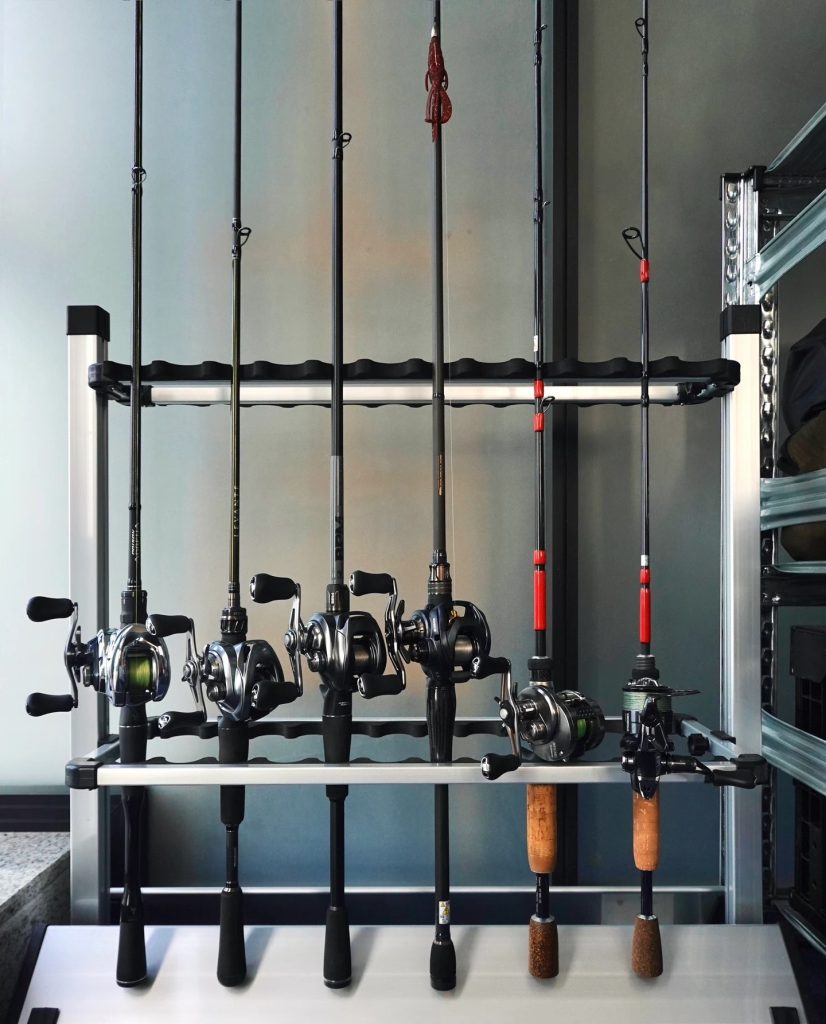
Buying fishing rods from China is not simply a matter of comparing the unit price quoted by different suppliers.
For importers, wholesalers, fishing tackle distributors, sporting goods retailers, and private-label brands, the actual purchasing cost can include much more than the fishing rod itself.
Product specifications, materials, components, customization, packaging, sample development, inspection, shipping, customs clearance, duties, and destination delivery can all affect the final landed cost.
This is why two suppliers offering seemingly similar fishing rods may produce very different total costs.
This guide explains how international buyers can calculate the major cost components of a fishing rod purchasing project from China and how to compare supplier quotations more accurately.
1. Start With the Fishing Rod Specification
Before comparing prices, define the product.
A supplier cannot provide a meaningful quotation if the product specification is unclear.
For example, buyers should consider:
-
Fishing rod type
-
Rod length
-
Rod power
-
Rod action
-
Number of sections
-
Carbon fiber or fiberglass construction
-
Guide configuration
-
Reel seat
-
Handle material
-
Handle design
-
Line rating
-
Lure rating
-
Color and finish
-
Logo requirements
-
Packaging requirements
A short product description such as “carbon fishing rod” is usually not enough for a professional wholesale quotation.
A 2-piece carbon spinning rod and a specialized multi-section casting rod may have completely different production requirements even if both are simply described as fishing rods.
For buyers who are still developing the product, it is often better to explain the intended fishing application and target market to the supplier rather than selecting every technical parameter without sufficient product knowledge.
2. The Fishing Rod Unit Price Is Only the Starting Point
The supplier’s product price is normally the first number buyers look at.
However, it should not automatically be treated as the final purchasing cost.
The unit price can be affected by:
-
Blank material
-
Carbon construction
-
Rod length
-
Number of sections
-
Components
-
Guide type
-
Reel seat
-
Handle material
-
Surface finish
-
Printing
-
Assembly requirements
-
Packaging
-
Order quantity
-
Customization
When comparing suppliers, make sure the quoted products have comparable specifications.
A lower quotation may simply represent a different product configuration.
For example, one supplier may quote a basic stock fishing rod while another quotation includes customized components, printed packaging, and a private-label logo.
The numbers cannot be compared fairly unless the specifications are standardized first.
3. Material Can Affect the Cost of a Fishing Rod
The blank is one of the most important parts of a fishing rod.
Carbon fiber and fiberglass are commonly used in fishing rod construction, while some products use composite structures.
Carbon fiber rods are often selected for applications where buyers want a combination of low weight, stiffness, sensitivity, and responsiveness.
Fiberglass can be attractive for other applications where flexibility, durability characteristics, or a particular fishing experience are more important.
However, buyers should avoid assuming that a material label alone determines the quality of the finished product.
The final performance also depends on blank design, material orientation, wall thickness, resin system, reinforcement, taper, and manufacturing quality.
For this reason, the material specification should be clearly documented when comparing quotations.
For a more detailed discussion of material selection, buyers can also read:
Carbon Fiber vs Fiberglass Fishing Rods: Which Is Right for Your Market?
This can help buyers understand why two fishing rods with different constructions may have different commercial positioning.
4. Fishing Rod Components Also Affect the Cost
The blank is only one part of the finished fishing rod.
Other components can influence both manufacturing cost and product positioning.
Guides
Guide frames, inserts, quantity, arrangement, and finishing can vary between products.
For an OEM project, buyers should specify whether the supplier is expected to use a standard component or a particular guide configuration.
Reel Seat
The reel seat needs to match the intended fishing rod and reel application.
Different designs and materials can produce different costs.
Handle
Handle materials and designs may include EVA, cork, or other materials.
Buyers may also request different grip shapes, colors, lengths, or branding.
Decorative Finish
Surface finishes, wraps, printing, decorative elements, and other cosmetic requirements can also affect the production cost.
When requesting a quotation, these details should be included rather than discussed only after the supplier has already quoted the product.
5. Order Quantity Can Change the Commercial Calculation
Wholesale buyers should provide an estimated order quantity whenever possible.
A supplier may need different production arrangements for:
-
Sample orders
-
Small trial orders
-
Wholesale orders
-
Large-volume orders
-
Repeated production
-
OEM projects
The relationship between quantity and pricing should be confirmed directly with the supplier rather than assuming that every product has a fixed wholesale price.
Buyers should also distinguish between:
MOQ
and
the quantity they actually intend to purchase.
A supplier may have a minimum order requirement for a customized product because custom printing, packaging, tooling, or production setup creates additional work.
If you are uncertain about the final quantity, tell the supplier that you are comparing several order scenarios.
For example:
-
Initial sample quantity
-
First commercial order
-
Expected repeat order
-
Potential annual volume
This gives the supplier more useful information when preparing a quotation.
6. OEM and Private-Label Costs
Private-label fishing rods can involve additional requirements that do not exist in a standard stock order.
An OEM project may include:
-
Custom logo
-
Custom colors
-
Custom rod design
-
Custom handle
-
Custom components
-
Custom printing
-
Custom packaging
-
Product labels
-
Instruction materials
-
Retail boxes
Not every customization necessarily creates a separate charge, but buyers should ask the supplier to identify which requirements are included in the quotation and which may create additional costs.
For buyers developing their own fishing tackle brand, it is useful to separate the project into three stages:
Product Development
Define the rod specifications and design.
Sample Approval
Review the physical sample before mass production.
Bulk Production
Produce the approved product according to the agreed specification.
The more clearly these stages are documented, the easier it is to control unexpected changes later.
For a deeper look at this process, buyers can also review:
How to Develop a Private Label Fishing Rod with a Chinese OEM Factory
and
OEM Fishing Rod Manufacturing in China: Custom Logo, Design and Packaging
7. Sample Costs Should Be Considered Separately
Before placing a large fishing rod order, many buyers request samples.
A sample may be required to check:
-
Actual rod length
-
Weight
-
Blank construction
-
Guide alignment
-
Reel seat
-
Handle
-
Finish
-
Logo
-
Packaging
-
General product quality
The sample arrangement should be discussed with the supplier before ordering.
Buyers should ask:
-
Is the sample available from existing stock?
-
Does the sample need customization?
-
Is there a sample charge?
-
Is customization charged separately?
-
What shipping method will be used?
-
Can the sample be used as the production reference?
A sample is particularly important for private-label projects because a photograph cannot always show the physical characteristics of the finished rod.
8. Packaging Is Part of the Total Cost
Fishing rods require packaging that protects the product during handling and transportation.
Packaging requirements may include:
-
Individual protective sleeves
-
Plastic bags
-
Printed boxes
-
Protective tubes
-
Inner cartons
-
Master cartons
-
Shipping marks
-
Custom labels
Long fishing rods can create special packaging considerations because the package dimensions may affect storage and freight calculations.
For online retailers and international distributors, packaging dimensions can also influence warehouse space and shipping costs.
Therefore, packaging should be confirmed before the final quotation rather than added at the end of the purchasing process.
9. Quality Inspection Can Be an Additional Cost
Quality control should be considered before the order is placed.
Depending on the project, buyers may inspect:
-
Product quantity
-
Rod dimensions
-
Blank appearance
-
Guide alignment
-
Reel seat
-
Handle
-
Section joints
-
Printing
-
Logo placement
-
Packaging
-
Carton markings
The exact inspection requirements should be agreed before production.
For larger orders, an independent inspection service may also be considered.
However, the inspection method should match the product and the buyer’s requirements.
The goal is not simply to inspect the products after production. A good purchasing process defines acceptance criteria before production begins.
10. International Shipping Is Part of the Landed Cost
After the fishing rods are manufactured, the products need to be transported to the destination country.
Depending on the order, buyers may consider:
-
Express shipping
-
Air freight
-
Sea freight
-
LCL shipping
-
FCL shipping
-
Other logistics arrangements
Fishing rods have relatively long packaging dimensions, so buyers should not estimate freight only from product weight.
Depending on the shipping method and carrier, dimensional characteristics can also matter.
Before arranging shipment, confirm:
-
Number of cartons
-
Carton dimensions
-
Gross weight
-
Net weight
-
Shipping origin
-
Destination
-
Shipping term
-
Freight arrangement
-
Export documentation
-
Destination delivery requirements
For larger wholesale orders, sea freight may be considered, while samples and smaller shipments may use other transportation methods.
The most suitable option depends on the shipment size, destination, urgency, and commercial terms.
11. Customs Clearance, Duties, and Taxes
The final landed cost can also include destination-side charges.
Depending on the transaction structure and destination country, these may include:
-
Import customs clearance
-
Customs duties
-
Import taxes
-
Destination handling
-
Port charges
-
Local delivery
-
Other government or service fees
The buyer should clarify who is responsible for each charge.
This is especially important when comparing different Incoterms or supplier shipping quotations.
For example, a product quotation that appears cheaper may not include the same shipping or destination costs as another quotation.
Therefore, buyers should compare the complete commercial scope rather than comparing only the fishing rod unit price.
12. A Simple Way to Think About the Total Cost
A basic purchasing calculation can be structured like this:
Total Landed Cost = Product Cost + Customization + Packaging + Inspection + Freight + Customs/Duties/Taxes + Destination Charges
This is a simplified framework rather than a universal quotation formula.
Some projects may have additional costs, while some items may already be included in the supplier’s commercial terms.
The important point is to identify every major cost before comparing suppliers.
For example, a buyer can create a simple quotation comparison sheet:
Cost Item |
Supplier A |
Supplier B |
Supplier C |
|---|---|---|---|
Fishing rods |
— |
— |
— |
Custom logo |
— |
— |
— |
Packaging |
— |
— |
— |
Samples |
— |
— |
— |
Inspection |
— |
— |
— |
Freight |
— |
— |
— |
Customs/duties/taxes |
— |
— |
— |
Destination charges |
— |
— |
— |
Estimated total |
— |
— |
— |
The actual values should come from supplier quotations and the buyer’s logistics arrangements rather than from a generic online price estimate.
13. How to Compare Two Fishing Rod Quotations
Suppose two suppliers provide different prices.
Do not immediately choose the lower number.
First compare:
Product
Are the rod length, material, power, action, sections, and components equivalent?
Customization
Does each quotation include the same logo, colors, printing, and packaging?
Quantity
Are both suppliers quoting the same quantity?
Packaging
Are the packaging standards equivalent?
Shipping
Are the freight terms and destinations the same?
Commercial Terms
Are payment terms, delivery terms, and quotation validity comparable?
Quality Requirements
Are both suppliers accepting the same inspection and quality requirements?
Only after these factors have been standardized should the commercial quotations be compared.
14. Questions to Ask a Chinese Fishing Rod Supplier
Before placing a wholesale order, buyers can ask:
-
What fishing rod specifications are included in the quotation?
-
Is the quoted product a standard model or customized model?
-
What material is used for the blank?
-
What components are included?
-
What packaging is included?
-
What customization options are available?
-
Is a sample available before bulk production?
-
What information is required for an OEM quotation?
-
What quality inspection arrangements are available?
-
What shipping terms can be offered?
-
Which costs are included in the quoted price?
-
Which destination-side costs remain the buyer’s responsibility?
These questions help prevent a common purchasing mistake: comparing quotations that do not actually cover the same product and service scope.
15. Prepare a Complete Fishing Rod RFQ
A professional request for quotation does not need to be complicated.
A buyer can send the supplier:
Product: Carbon fiber fishing rod
Type: Spinning / Casting / Telescopic
Length: [Required specification]
Sections: [Required specification]
Power: [Required specification]
Action: [Required specification]
Line/Lure rating: [If applicable]
Quantity: [Estimated quantity]
Logo: Yes / No
Packaging: Standard / Custom
Destination: [Country and city]
Sample: Required / Not required
If you do not know all the technical specifications, explain your intended fishing application and target customer instead.
A professional supplier can then confirm which details need to be finalized before providing a production quotation.
Frequently Asked Questions
Is the fishing rod unit price the final cost?
No. The unit price is only one component of the purchasing cost. Customization, packaging, inspection, freight, customs, taxes, and destination charges may also need to be considered.
Why can two suppliers quote different prices for similar fishing rods?
The products may not actually be identical. Differences in blank construction, components, packaging, customization, order quantity, and commercial terms can all affect the quotation.
Should I request a sample before a wholesale order?
For a new supplier or OEM project, a sample is generally useful for checking the actual product before committing to bulk production.
How can I reduce the total cost of importing fishing rods?
Start by standardizing the product specification, comparing equivalent quotations, selecting suitable packaging, confirming shipping arrangements early, and avoiding unnecessary customization. The cheapest unit price is not necessarily the lowest total landed cost.
Can I ask a Chinese supplier to calculate the complete shipping cost?
Yes. Provide the destination, estimated quantity, carton information when available, and preferred shipping arrangement. The supplier or logistics provider can then confirm the applicable transportation terms and charges.
Conclusion
Calculating the cost of buying fishing rods from China requires more than looking at the supplier’s unit price.
A professional buyer should consider the entire purchasing chain:
Product specification → Unit price → Customization → Packaging → Sample → Quality inspection → Freight → Customs → Destination costs
This approach makes supplier quotations easier to compare and reduces the risk of unexpected expenses after the order has been placed.
For wholesalers, distributors, retailers, and private-label fishing tackle brands, the best quotation is not necessarily the one with the lowest product price. It is the quotation that provides the right product specification, quality level, customization, packaging, and commercial terms for the target market.
Request a Fishing Rod Wholesale or OEM Quotation
If you are sourcing fishing rods from China for wholesale, distribution, retail, or a private-label project, prepare your product specifications and estimated quantity before contacting a supplier.
Guangzhou Fishing Tackle Co., Ltd is listed on Vlefooena as a China-based fishing tackle supplier offering spinning rods, casting rods, telescopic rods, carbon fiber fishing rods, OEM/ODM inquiries, custom logos, packaging options, and wholesale orders.
You can provide:
-
Fishing rod type
-
Required specifications
-
Estimated quantity
-
Target market
-
Logo requirements
-
Packaging requirements
-
Destination country
-
Sample requirements
The supplier can then review the requirements and discuss suitable product configurations and quotation details.
Related Vlefooena buyer guides:
-
How to Choose a Carbon Fiber Fishing Rod for Wholesale and OEM Projects
-
What Specifications Should Buyers Provide When Ordering Fishing Rods in Bulk?
-
How to Inspect Fishing Rod Quality Before Placing a Bulk Order
-
Wholesale Fishing Rod Buying Guide: MOQ, Samples, Quality Control and Packaging
-
How to Develop a Private Label Fishing Rod with a Chinese OEM Factory


No reply content