
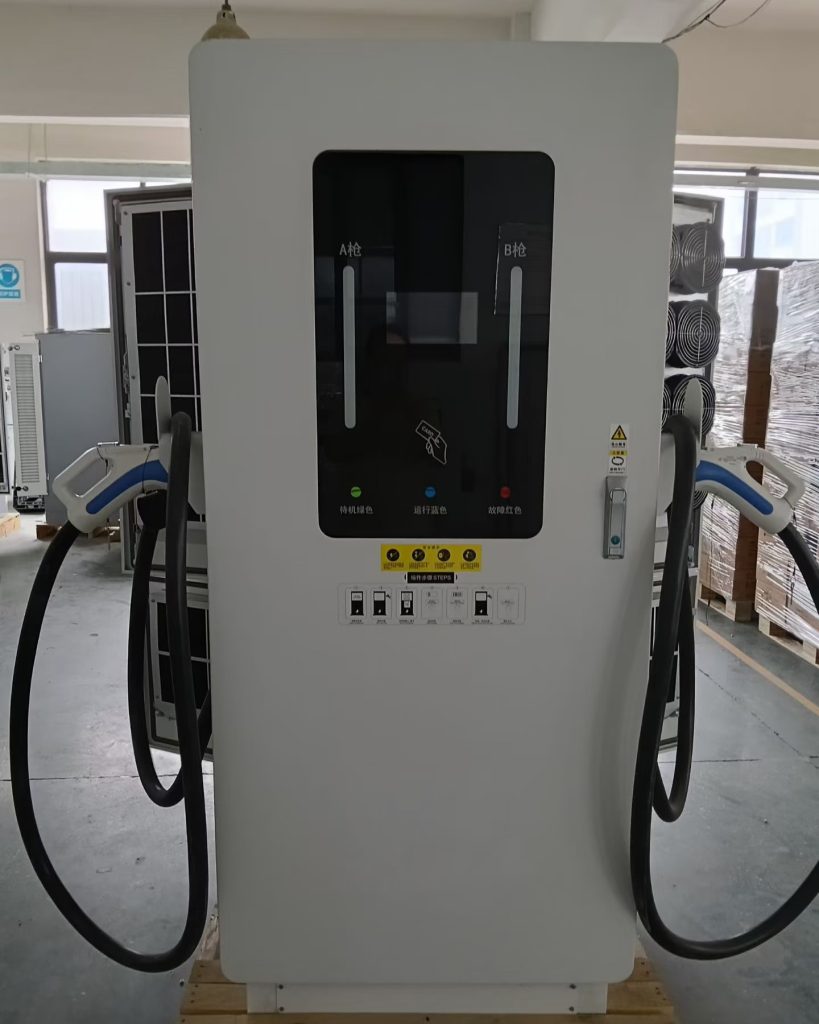
How to Choose a 7kW, 11kW, or 22kW AC EV Charger
Choosing the right AC EV charger requires more than simply selecting the highest available power rating. For many residential, workplace, hotel, apartment, and commercial charging projects, 7kW, 11kW, and 22kW AC chargers are among the most common options.
The best choice depends on the electrical supply, vehicle charging capability, parking time, installation conditions, target market, and project requirements.
This guide explains the differences between 7kW, 11kW, and 22kW AC EV chargers and what international buyers should consider before purchasing.
1. What Is an AC EV Charger?
An AC EV charger supplies alternating current to an electric vehicle. The vehicle’s onboard charger converts the AC electricity into the DC electricity required to charge the battery.
AC chargers are commonly used in locations where vehicles remain parked for several hours, including:
- Homes
- Apartments
- Offices
- Hotels
- Workplaces
- Private parking areas
- Commercial properties
Compared with high-power DC fast chargers, AC chargers generally require less complex electrical infrastructure and can be a practical solution for long-duration parking.
2. What Is a 7kW AC EV Charger?
A 7kW AC charger is commonly used for residential and private charging.
It can be suitable for:
- Home charging
- Villas
- Small offices
- Private parking spaces
- Long-duration overnight charging
A typical 7kW charger may be a practical option when the vehicle is parked overnight or for several hours.
However, actual charging speed depends on the vehicle’s onboard AC charger and the available electrical supply.
A vehicle that cannot accept 7kW will not necessarily charge at the full rated power of the charger.
3. What Is an 11kW AC EV Charger?
An 11kW AC charger provides a higher charging power than a typical 7kW unit and is commonly considered for residential and commercial applications where three-phase electrical power is available.
Potential applications include:
- Residential properties
- Apartment buildings
- Hotels
- Offices
- Workplace parking
- Commercial parking facilities
An 11kW charger can provide a useful balance between charging speed, installation requirements, and equipment cost.
Before selecting an 11kW model, buyers should confirm that the target site and vehicle support the required electrical configuration.
4. What Is a 22kW AC EV Charger?
A 22kW AC charger provides substantially higher AC charging power than a 7kW unit when the vehicle and electrical installation support it.
It can be suitable for:
- Commercial parking
- Hotels
- Fleet locations
- Workplace charging
- Apartment charging
- Public AC charging
- Locations where vehicles need faster AC charging
However, not every EV can accept 22kW AC charging.
A vehicle with a lower onboard AC charging limit may charge below the charger’s maximum rated power.
Therefore, buyers should always check both the vehicle specification and the site’s electrical capacity before selecting a 22kW charger.
5. 7kW vs. 11kW vs. 22kW
The basic difference can be summarized as follows:
| Feature | 7kW AC Charger | 11kW AC Charger | 22kW AC Charger |
|---|---|---|---|
| Typical application | Residential | Residential & commercial | Commercial & public |
| Charging power | Lower | Medium | Higher |
| Long-duration parking | Suitable | Suitable | Suitable |
| Overnight charging | Suitable | Suitable | Suitable |
| Electrical requirement | Generally simpler | Higher | Higher |
| Three-phase supply | Usually not required | Commonly required | Commonly required |
| Vehicle compatibility | Depends on vehicle | Depends on vehicle | Depends on vehicle |
| Commercial applications | Suitable | Suitable | Highly suitable |
The exact electrical requirements vary by country, installation, and charger model.
6. Check the Vehicle’s Maximum AC Charging Power
One of the most important purchasing considerations is the vehicle’s onboard AC charging capability.
For example, purchasing a 22kW AC charger does not automatically mean that every EV will charge at 22kW.
If the vehicle’s onboard charger supports a lower AC charging power, the vehicle will normally charge according to its own maximum capability.
Therefore, buyers should check:
- Maximum AC charging power
- Single-phase or three-phase charging
- Vehicle model
- Battery capacity
- Charging connector
- Manufacturer charging specifications
For a fleet project, check the specifications of the vehicles that will actually use the chargers.
7. Check the Electrical Supply
The available electrical supply at the installation location is equally important.
Before selecting a charger, determine:
- Input voltage
- Single-phase or three-phase supply
- Available current
- Available electrical capacity
- Distribution board capacity
- Cable requirements
- Protection requirements
A higher-power charger may require electrical upgrades.
For commercial projects, the site should be assessed by a qualified electrical professional before final equipment selection.
8. Choose 7kW for Simple Residential Charging
A 7kW AC charger can be a practical choice when the main requirement is overnight or long-duration charging.
It may be particularly suitable when:
- The vehicle is parked overnight
- Daily driving distance is moderate
- The site has limited electrical capacity
- A simple charging solution is preferred
- Fast charging is not a major requirement
For residential projects, the total charging requirement should be considered rather than automatically choosing the highest available power.
9. Choose 11kW for a Balance of Performance and Infrastructure
An 11kW AC charger can provide a middle ground between lower-power residential charging and higher-power commercial AC charging.
It may be appropriate for:
- Homes with suitable three-phase power
- Apartment buildings
- Hotels
- Offices
- Workplace parking
- Small commercial charging projects
For buyers managing multiple charging points, load management may also be important.
10. Choose 22kW for Higher-Power AC Charging
A 22kW charger may be suitable when faster AC charging is required and both the electrical system and vehicle support the higher power.
Potential applications include:
- Commercial parking
- Public AC charging
- Fleet operations
- Hotels
- Shopping centers
- Workplace charging
- High-turnover parking locations
Before selecting 22kW, confirm the available electrical capacity and the maximum AC charging capability of the target vehicles.
11. Consider Smart Charging and Load Management
When multiple AC chargers are installed at the same location, total power demand can become an important issue.
For example, installing ten 22kW chargers does not necessarily mean the building should continuously provide 220kW of charging power.
Depending on the project, smart charging or dynamic load management may help distribute available electrical capacity among vehicles.
Buyers should ask manufacturers whether their chargers support:
- Load management
- Dynamic power adjustment
- OCPP
- Remote monitoring
- Energy monitoring
- Scheduled charging
- Network connectivity
The exact functions depend on the charger model and software platform.
12. Check the Connector Requirements
The required charging connector depends on the destination market and target vehicles.
Before ordering, confirm:
- Connector type
- Cable configuration
- Cable length
- Vehicle compatibility
- Local charging standards
- Number of charging points
If the chargers are being imported for resale, the connector configuration should be selected according to the target market rather than simply based on the manufacturer’s standard configuration.
13. Consider Installation Location
The physical installation environment can affect the charger specification.
For outdoor installations, buyers should consider:
- Weather protection
- IP rating
- Operating temperature
- Cable management
- Wall or pedestal mounting
- Physical protection
- Lighting
- User access
For indoor installations, other factors such as ventilation, available wall space, cable routing, and electrical distribution may be more important.
Always confirm the manufacturer’s environmental specifications before installation.
14. Check Certification and Documentation
International buyers should request the applicable technical documentation before ordering.
Depending on the model and destination market, documents may include:
- CE certification
- Test reports
- Product datasheet
- Installation manual
- User manual
- Declaration of conformity, where applicable
- Electrical specifications
- Communication specifications
Certification requirements vary by destination market and product configuration.
15. Ask About OEM and ODM Options
If you are importing AC EV chargers under your own brand, ask the manufacturer about OEM and ODM options.
Possible customization may include:
- Logo
- Product labels
- Packaging
- Housing color
- Product appearance
- User interface
- Charging cable
- Documentation
The available customization options, MOQ, engineering requirements, and additional costs should be confirmed before production.
16. Questions to Ask an AC EV Charger Manufacturer
Before placing an order, international buyers should ask:
- Is the charger 7kW, 11kW, or 22kW?
- Does the model require single-phase or three-phase power?
- What input voltage does it support?
- Which connector options are available?
- Does it support OCPP?
- What IP rating does the product have?
- Which certifications are available?
- Can the charger be customized?
- What is the MOQ?
- What is the typical lead time?
- What warranty is provided?
- Can technical documents and samples be supplied?
A complete technical comparison can help buyers avoid choosing a charger based only on the advertised power rating.
Frequently Asked Questions
Is a 7kW EV charger enough for home charging?
For many home users, a 7kW charger can be suitable for overnight charging. The appropriate power depends on the vehicle, daily driving requirements, available electrical supply, and desired charging time.
Is 11kW better than 7kW?
Not necessarily. An 11kW charger can provide higher charging power, but the vehicle and electrical installation must support it. For some residential applications, 7kW may already provide sufficient charging capacity.
Can every EV use a 22kW AC charger at 22kW?
No. The vehicle’s onboard AC charger determines how much AC power it can accept. A 22kW charger can provide up to its rated power when the vehicle and electrical system support the required conditions.
Does a 22kW charger require three-phase electricity?
Many 22kW AC charging configurations use three-phase power, but exact requirements depend on the specific charger model and electrical system. Buyers should confirm the manufacturer’s technical specifications.
Which AC charger is best for commercial projects?
The answer depends on parking duration, vehicle type, electrical capacity, number of charging points, and expected charging demand. 11kW or 22kW chargers may be considered for commercial AC charging, while high-turnover applications may require DC fast charging.
Can 7kW, 11kW, and 22kW chargers be customized?
Depending on the manufacturer and model, buyers may be able to customize branding, packaging, connectors, cables, communication functions, and other specifications. OEM and ODM requirements should be confirmed before placing an order.
Conclusion
Choosing between a 7kW, 11kW, and 22kW AC EV charger should be based on the vehicle, electrical installation, charging duration, and intended application.
A 7kW charger can be practical for many residential applications. An 11kW charger can provide a balance between charging power and infrastructure requirements, while a 22kW charger may be more suitable for commercial or higher-demand AC charging where the vehicle and electrical system support it.
International buyers should confirm the charging power, electrical configuration, connector, certifications, communication functions, OEM options, MOQ, lead time, and technical documentation before placing an order.
For buyers sourcing AC EV chargers from China, you can learn more about the supplier here:
China EV Charging Station Manufacturer
You can also provide your required power rating, quantity, destination market, connector requirements, and OEM specifications when requesting a quotation.


No reply content