
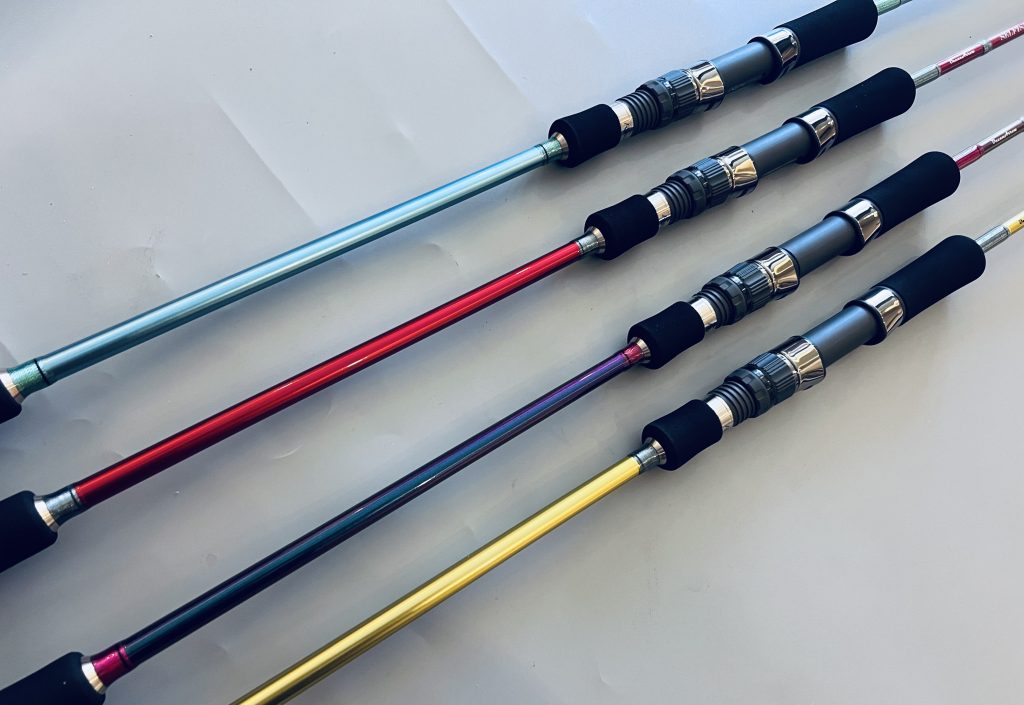
How to Choose a Carbon Fiber Fishing Rod for Wholesale and OEM Projects
Selecting a carbon fiber fishing rod for a wholesale or private-label project involves more than comparing appearance, weight, or advertised material grades. For international buyers, the right purchasing decision depends on the intended fishing application, target customer, rod specifications, component quality, customization requirements, and consistency between samples and bulk production.
A fishing rod that performs well for one market may not suit another. A retailer serving freshwater anglers may prioritize portability and versatility, while a specialist fishing tackle distributor may require specific lengths, actions, power ratings, and guide configurations.
For importers, distributors, sporting goods retailers, and fishing tackle brands, understanding these differences before requesting quotations can make supplier communication more precise and reduce avoidable specification problems.
This guide explains how to evaluate carbon fiber fishing rods for wholesale purchasing and OEM development, from material selection and technical specifications to sample approval, quality inspection, and export preparation.
1. Understand What Carbon Fiber Means in Fishing Rod Manufacturing
Carbon fiber is widely used in fishing rod construction because it offers a combination of low weight, stiffness, and structural performance.
However, the term “carbon fiber fishing rod” does not describe one standardized product. Rod performance depends on several interacting factors, including the material system, blank construction, wall thickness, taper, reinforcement, resin system, and manufacturing process.
Two rods described as carbon fiber models may therefore have different weight, recovery characteristics, strength behavior, and intended applications.
Carbon Fiber and Fiberglass: Understanding the Difference
Carbon fiber and fiberglass are both used in fishing rod blanks, but their characteristics differ.
Carbon fiber rods are commonly selected when buyers prioritize reduced weight, sensitivity, and a responsive feel. Fiberglass rods are often considered for applications where flexibility, durability characteristics, or a particular action profile are important.
Some fishing rods use composite construction, combining carbon fiber and fiberglass to balance selected performance characteristics.
For wholesale buyers, the important question is not simply which material sounds more advanced. It is whether the construction matches the intended fishing conditions, customer expectations, and selling price category.
What Does 24T, 30T, or 40T Carbon Mean?
Buyers may encounter descriptions such as 24T, 30T, or 40T carbon in fishing rod specifications.
These labels are commonly used in the fishing tackle market to describe carbon material categories or modulus-related classifications. However, terminology and supplier usage are not always standardized.
A higher number should not automatically be interpreted as a stronger, more durable, or better-performing finished rod.
The finished product also depends on blank design, material orientation, resin content, wall thickness, reinforcement, and production quality.
When comparing quotations, ask suppliers to clarify:
- The meaning of the carbon grade stated in the specification.
- Whether the designation refers to the material used in the blank or a marketing description.
- Whether the construction is full carbon or a composite structure.
- Whether the proposed material is consistent with the approved sample.
- What performance characteristics the design is intended to deliver.
For OEM projects, written material specifications are more useful than relying on a carbon grade number alone.
2. Choose the Right Fishing Rod Type for Your Target Market
Before discussing customization, determine which rod category fits your customers.
Spinning Fishing Rods
Spinning rods are designed for use with spinning reels and are commonly selected for freshwater fishing, lure fishing, and various general-purpose applications.
When sourcing spinning rods, buyers should consider:
- Intended fishing environment.
- Rod length and action.
- Compatible line and lure ratings.
- Guide layout and reel seat configuration.
- Handle material and grip design.
- Portability and packaging requirements.
A distributor serving general sporting goods retailers may prefer a versatile product range, while a specialist fishing tackle business may need more specific configurations.
Casting Fishing Rods
Casting rods are designed for baitcasting or other compatible casting reel arrangements.
The reel seat, guide arrangement, blank design, and intended lure range should be reviewed together.
For wholesale purchasing, confirm the intended reel type and product application rather than assuming that a casting rod can be substituted directly for a spinning model.
Telescopic Carbon Fiber Fishing Rods
Telescopic rods use sections that extend and retract, making them attractive for buyers who prioritize compact storage and transport.
Important specifications include:
- Extended length.
- Closed or collapsed length.
- Number of sections.
- Section overlap and fit.
- Guide alignment.
- Handle and reel seat construction.
- Protective packaging for transport.
For importers selling through online retail channels, collapsed length and packaged dimensions can be especially relevant to storage, shipping, and product presentation.
3. Evaluate the Technical Specifications Before Ordering
A product description such as “carbon fishing rod, lightweight, strong, professional quality” is not sufficient for a reliable wholesale quotation.
Buyers should request a clear specification sheet.
The following parameters are particularly useful.
Rod Length
Rod length affects casting characteristics, handling, storage, and suitability for different fishing environments.
A longer rod may be appropriate for certain casting applications, while a shorter model may be more practical where space is limited.
When comparing products, confirm whether the stated length refers to the fully assembled rod and whether the measurement is expressed in feet, inches, or centimeters.
Rod Power
Power generally describes the force required to bend a rod.
Common descriptions include:
- Ultra Light
- Light
- Medium Light
- Medium
- Medium Heavy
- Heavy
- Extra Heavy
These terms are widely used, but exact performance can vary between manufacturers and rod designs.
For OEM purchasing, buyers should confirm the intended line and lure ratings alongside the power classification.
Rod Action
Action describes where a rod primarily bends under load.
Common descriptions include:
- Fast
- Moderate Fast
- Moderate
- Slow
Action influences casting feel, lure presentation, and how the rod responds during use.
Do not rely on the action label alone when comparing suppliers. Ask for the intended application and, where possible, compare physical samples.
Line Rating and Lure Rating
Line and lure ratings help buyers understand the intended operating range of a rod.
These ratings should be stated clearly on the product specification sheet and, if required, on the rod itself or its packaging.
For private-label products, ensure the printed specifications match the approved technical documentation.
Number of Sections
A rod may be supplied as a one-piece, two-piece, multi-piece, or telescopic model.
Section count affects portability, packaging dimensions, assembly, and product positioning.
For two-piece and multi-piece rods, inspect the connection design and fit between sections. The assembled rod should be checked for alignment and consistent construction.
4. Inspect the Fishing Rod Blank and Components
The blank is the main structural body of a fishing rod. However, the finished product also depends on its guides, reel seat, handle, joints, finish, and assembly quality.
A wholesale buyer should evaluate the complete product rather than focusing only on the carbon material.
Blank Surface and Finish
Inspect the blank for visible defects such as:
- Uneven surface finish.
- Obvious resin buildup.
- Scratches or impact marks.
- Inconsistent coating.
- Visible damage around joints.
- Irregular decorative wrapping.
Cosmetic standards should be agreed upon before mass production, particularly for branded products.
Fishing Guides
Guide quality and alignment affect line movement and the overall user experience.
During sample inspection, check:
- Guide spacing and alignment.
- Frame condition.
- Insert seating and visible damage.
- Wrapping consistency.
- Adhesive or coating appearance.
- Compatibility with the intended line and fishing application.
The appropriate guide configuration depends on the rod design and intended use.
Reel Seat and Handle
Check that the reel seat is compatible with the intended reel type and that its locking mechanism operates properly.
Handle materials may include EVA foam, cork, or other materials depending on the product design.
For OEM orders, confirm handle dimensions, grip shape, color, surface finish, and any branding requirements.
Section Joints
For multi-piece rods, inspect the joints for fit, alignment, and visible defects.
For telescopic models, extend and retract the sections carefully, checking for unusual looseness, binding, or inconsistent movement.
These checks should be included in the sample approval process rather than postponed until the shipment arrives.
5. How to Select a Fishing Rod for Your Target Customers
The same fishing rod specification may not suit every sales channel.
Before requesting a quotation, define the intended customer and use case.
For General Sporting Goods Retailers
A general retail assortment may require clear product differentiation, easy-to-understand specifications, practical packaging, and models suitable for a broad customer base.
Buyers should consider how customers will compare rod length, power, action, and intended fishing application on the shelf or product page.
For Specialist Fishing Tackle Distributors
Specialist buyers may need a more detailed range with distinct actions, power ratings, line ratings, and component configurations.
Technical consistency between the product description, sample, and final production is particularly important.
For Private-Label Fishing Brands
OEM buyers should define the product identity before requesting final production.
This may include:
- Target customer and price positioning.
- Rod type and intended application.
- Blank material and construction requirements.
- Length, power, action, and ratings.
- Guide and reel seat configuration.
- Handle design and color.
- Logo placement and printing method.
- Packaging artwork and labeling.
- Sample approval criteria.
A clear product brief helps suppliers determine whether the requested configuration is feasible and what information is still required.
6. OEM Fishing Rod Projects: What Buyers Should Confirm
OEM and ODM are often used together in supplier descriptions, but buyers should clarify the exact scope of service for each project.
An OEM project may involve producing a specified product with the buyer’s branding, while an ODM project may involve adapting or developing a product design with the supplier.
The actual responsibilities should be agreed upon directly.
Custom Logo
Confirm the logo artwork, placement, dimensions, colors, and application method.
Ask for a visual proof or physical sample before approving production.
Custom Packaging
Packaging options may include individual protective sleeves, printed boxes, product labels, and outer cartons.
The final packaging should protect the rod during handling and transportation while meeting the buyer’s retail presentation requirements.
Product Specifications
Prepare a written specification sheet covering all agreed technical and visual details.
Avoid relying solely on photographs or informal messages.
Sample Approval
The approved sample should serve as the reference for the bulk order.
Record the agreed specifications, appearance, components, logo placement, and packaging details.
If a change becomes necessary, request confirmation before production proceeds.
7. A Practical Wholesale Purchasing Process
A structured purchasing process helps international buyers communicate requirements and evaluate supplier responses.
Step 1: Prepare a Product Brief
Start with the rod category, intended fishing application, target market, approximate order quantity, and customization requirements.
If you are still comparing options, explain which specifications are fixed and which can be discussed.
Step 2: Request a Detailed Quotation
Ask suppliers to quote against the same specification whenever possible.
A useful quotation should clarify:
- Product model and specifications.
- Material description.
- Included components.
- Customization scope.
- Packaging arrangement.
- Sample availability and applicable charges.
- Production lead time, once confirmed.
- Payment terms.
- Shipping terms and quotation validity.
Do not compare prices without checking whether the quoted products have equivalent specifications and included services.
Step 3: Review Samples
Evaluate the physical rod for dimensions, finish, component quality, assembly, and intended use.
For OEM projects, also check logo appearance and packaging.
Step 4: Confirm the Purchase Order
The purchase order should identify the approved model, quantity, specifications, customization details, packaging, price, delivery terms, and agreed inspection requirements.
Step 5: Arrange Quality Inspection
Agree on inspection timing and acceptance criteria before production.
Depending on the order, checks may include visual inspection, dimensional verification, component checks, packaging inspection, and agreed functional tests.
Any destructive or load-based testing should follow a defined method and suitable safety precautions.
Step 6: Confirm Export Packaging and Shipping
Fishing rods are long products and may require protective packaging to reduce bending, impact, and handling damage.
Before shipment, confirm carton dimensions, packing quantity, gross weight, shipping marks, and the agreed shipping arrangement.
For international orders, clarify who is responsible for export documentation, freight, import customs clearance, duties, and destination delivery.
8. Common Mistakes to Avoid When Buying Carbon Fiber Fishing Rods
Choosing Only by Carbon Grade
A carbon grade label does not describe the entire rod design or guarantee finished-product performance.
Review the complete specification and sample.
Comparing Different Specifications as if They Were Identical
Two quotations may differ in length, components, guide configuration, packaging, or customization.
Normalize the specifications before comparing commercial terms.
Approving Production Without a Reference Sample
A photograph may not reveal grip feel, joint fit, guide alignment, finish quality, or actual dimensions.
Use an approved sample and written specification wherever practical.
Leaving Packaging Requirements Until the Last Minute
Packaging affects product protection, branding, carton dimensions, and freight planning.
Confirm it before finalizing the order.
Using Unclear Product Labels
Terms such as “professional,” “high quality,” or “premium carbon” are not substitutes for measurable specifications.
Provide clear technical information that can be checked during production and inspection.
9. What Information Should You Include When Requesting a Wholesale Quote?
To receive a useful quotation, international buyers should provide as much of the following information as possible:
| Information | What to Specify |
|---|---|
| Product type | Spinning, casting, telescopic, or other |
| Intended use | Freshwater, saltwater, lure fishing, or other application |
| Rod length | Preferred length and unit |
| Power and action | Required rating or preferred performance |
| Line and lure rating | Target specifications, if known |
| Material | Carbon or composite requirements |
| Sections | One-piece, two-piece, multi-piece, or telescopic |
| Components | Guides, reel seat, handle, and other preferences |
| Order quantity | Estimated purchasing quantity |
| Customization | Logo, colors, design, and packaging |
| Destination | Country or delivery location |
| Sample requirement | Whether a sample is needed before ordering |
If some specifications are not yet decided, explain your target application and customer group. A supplier can then discuss possible configurations based on the information provided.
Frequently Asked Questions
1. Is a higher carbon grade always better for a fishing rod?
No. A carbon grade designation alone does not determine the performance or durability of a finished fishing rod. Blank design, material orientation, resin system, wall thickness, reinforcement, and manufacturing quality also matter. Buyers should compare complete specifications and physical samples.
2. What specifications should I provide when ordering carbon fiber fishing rods wholesale?
At minimum, provide the rod type, length, intended fishing application, power and action preferences, line and lure ratings where applicable, section count, estimated quantity, and customization requirements. Also confirm packaging and destination details when requesting a quotation.
3. Can I customize carbon fiber fishing rods with my own brand?
Custom branding may be available for OEM projects, but the exact options should be confirmed with the supplier. Discuss logo artwork, placement, application method, handle and component colors, packaging, sample approval, and any applicable production requirements before placing an order.
4. How can I check the quality of a carbon fiber fishing rod before bulk production?
Request a physical sample and inspect the blank finish, guide alignment, reel seat, handle, section joints, dimensions, and printed specifications. For bulk orders, agree on inspection criteria and use the approved sample and specification sheet as references.
5. What should I confirm before importing fishing rods from China?
Confirm the product specifications, order quantity, quotation scope, customization, packaging, production schedule, payment terms, shipping arrangement, export documents, and responsibility for destination customs clearance and applicable duties or taxes. The final commercial terms should be documented in the purchase order.
Request a Wholesale or OEM Fishing Rod Quotation
Are you sourcing carbon fiber fishing rods for wholesale distribution, retail sales, or a private-label fishing tackle brand?
Guangzhou Fishing Tackle Co., Ltd is listed on Vlefooena as a China-based fishing tackle supplier focusing on spinning rods, casting rods, telescopic rods, and carbon fiber fishing rods. Its supplier profile describes support for OEM/ODM inquiries, custom logos, packaging options, and wholesale orders.
International buyers can contact the supplier through Vlefooena to discuss product specifications, customization requirements, samples, and quotations.
To help clarify your requirements, please include:
- Your preferred fishing rod type and specifications.
- Estimated order quantity.
- Target market or destination country.
- Custom logo and packaging requirements.
- Sample or mass-production requirements.


No reply content