
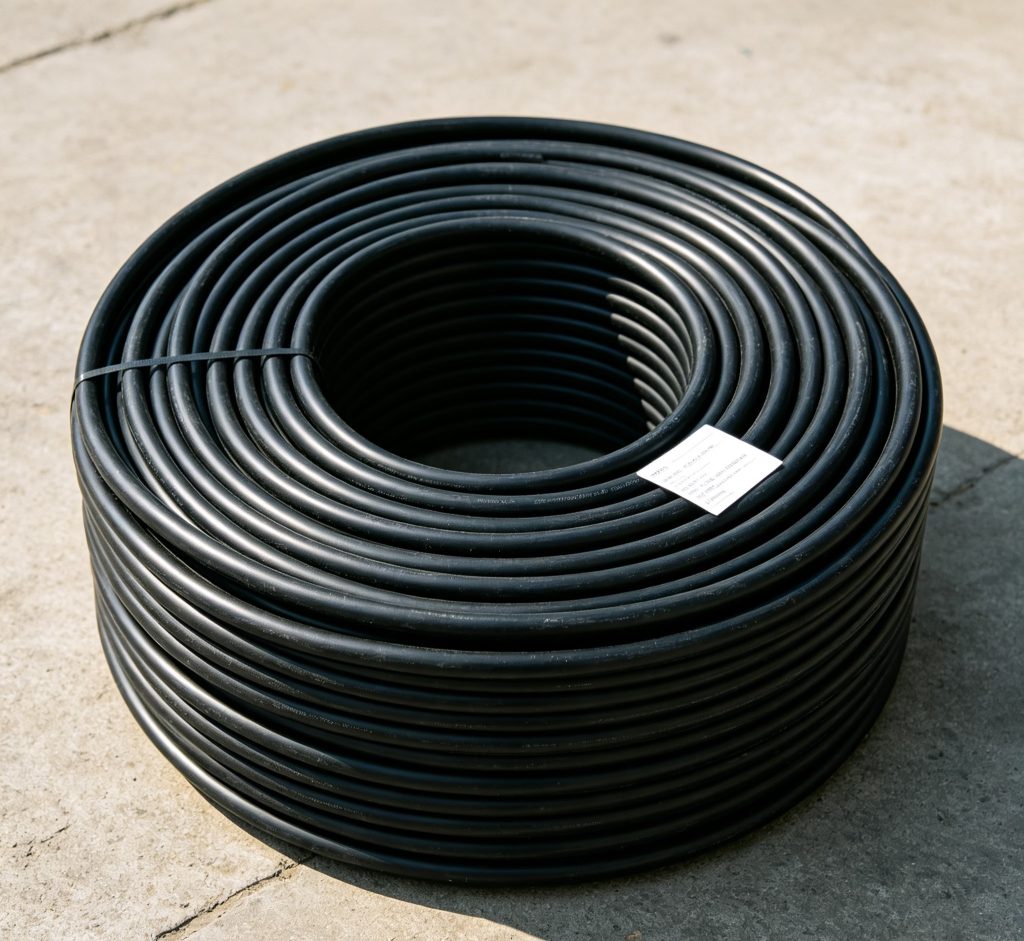
Choosing a copper wire supplier is not simply a matter of asking several factories for their lowest price.
For a construction project, electrical distribution business, machinery manufacturer, or wholesale operation, the wrong specification can create problems long after the purchase order has been placed. A supplier may quote a low price because the conductor, insulation, standard, packaging, or commercial terms are different from what another supplier is offering.
This is why experienced buyers usually define the product first and compare suppliers second.
If you are sourcing copper wire from China, the following points can help you make your RFQ more precise and your supplier comparison more meaningful.
First Decide What Copper Wire You Actually Need
“Copper wire” covers a very wide range of products.
A supplier will need more information before giving you a useful quotation.
Start with the application.
Is the wire intended for:
- Residential or commercial building wiring?
- Electrical panels?
- Industrial equipment?
- Machinery?
- Control systems?
- Internal wiring?
- Wholesale distribution?
- A specific OEM application?
The application can determine which type of wire and which standard are appropriate.
For example, a buyer looking for building wire may be considering products such as BV, BVR, H07V-U, or similar products depending on the destination market and required standard.
If you are not certain about the exact product designation, tell the supplier where and how the wire will be used. A qualified manufacturer can then recommend products that match the stated requirements.
Copper Conductor: The Detail You Should Not Skip
Copper is usually one of the largest cost components of copper wire.
But simply specifying “copper wire” is not enough.
Ask the supplier to confirm the conductor material and construction.
Depending on the application, you may need:
- Solid copper
- Stranded copper
- Flexible copper
- Tinned copper
- Bare copper
You should also confirm the required conductor size.
For example:
1.5 mm²
2.5 mm²
4 mm²
6 mm²
10 mm²
These numbers refer to the conductor’s cross-sectional area and should not be treated as interchangeable product sizes.
For a commercial purchase, put the exact requirement into the RFQ rather than relying on a product name alone.
Why Two Suppliers Can Quote Different Prices
Suppose you send the same inquiry to five factories and receive five different prices.
That does not automatically mean that the supplier with the highest quotation is expensive or that the supplier with the lowest quotation is offering the same product more cheaply.
The difference may come from:
- Copper material and conductor construction
- Insulation material
- Manufacturing standard
- Product tolerance
- Certification requirements
- Packaging
- Order quantity
- Customization
- Production schedule
- Trade terms
- Copper price used for the quotation
This is why the first question should be:
“Are all suppliers quoting exactly the same specification?”
If the answer is no, the price comparison is not meaningful yet.
Ask Suppliers to Separate Product and Commercial Details
A useful quotation should tell you what you are buying and under what conditions.
For example, ask the supplier to provide:
| Information | Example |
|---|---|
| Product | Copper electrical wire |
| Type | BV |
| Conductor | Copper |
| Construction | Solid |
| Size | 2.5 mm² |
| Insulation | PVC |
| Rated voltage | 450/750V |
| Standard | Required standard |
| Quantity | 1,000 kg |
| MOQ | Supplier confirmation |
| Packaging | Roll/coil |
| Lead time | Supplier confirmation |
| Price term | FOB |
| Payment | Supplier terms |
This format makes supplier quotations much easier to compare.
MOQ Should Match Your Purchasing Plan
MOQ is important, but the lowest MOQ is not necessarily the most useful offer.
Consider a distributor who normally sells 2,000 kg of wire every month.
A supplier offering a 100 kg MOQ may sound attractive, but another manufacturer may provide significantly better pricing at 1,000 kg or 2,000 kg.
On the other hand, if you are testing a new market, committing to a very large MOQ may create unnecessary inventory.
Think about your actual purchasing cycle:
Trial order → First bulk order → Repeat order → Regular supply
Ask the manufacturer whether the price changes at each level.
For example:
- 100 kg
- 500 kg
- 1,000 kg
- 2,000 kg
- 5,000 kg
This gives you information that is much more useful than asking only for the “best price.”
What About Copper Price Fluctuations?
Copper prices can change, which means a quotation may have a limited validity period.
When requesting a quotation, ask:
“How long is this price valid?”
Also ask whether the quotation is:
- Fixed for the stated period
- Subject to copper price changes
- Based on a particular copper price reference
- Recalculated before production
This matters particularly for large orders or quotations that remain open for several weeks.
A supplier quoting today may not be able to maintain exactly the same price later if the raw-material cost changes.
Ask About the Insulation, Not Just the Copper
A copper conductor is only one part of the finished wire.
The insulation can also affect performance, application, and price.
Depending on the product, insulation may be made from materials such as PVC or XLPE.
Ask the supplier to specify:
- Insulation material
- Insulation thickness where relevant
- Temperature rating
- Voltage rating
- Applicable standard
If the project has a particular technical requirement, include it in the RFQ instead of allowing the supplier to select a specification without confirmation.
Certifications Need to Match the Actual Product
Buyers often ask:
“Do you have CE?”
That question may not be enough.
Depending on the destination market and application, different standards or certifications may be relevant.
You may need to investigate requirements involving:
- IEC
- UL
- BS
- VDE
- ASTM
- CE
- RoHS
- Local electrical regulations
More importantly, ask whether the documentation applies to the specific product you intend to purchase.
A general company certificate does not necessarily prove that a particular wire specification meets the standard required for your project.
Ask for Samples When the Specification Is Critical
A sample is particularly useful when:
- You have never purchased from the supplier before.
- The product is customized.
- The order value is significant.
- The wire will be used in a technical application.
- You need to check appearance, marking, packaging, or documentation.
For a sample evaluation, compare it against the agreed specification rather than simply deciding whether the wire “looks good.”
For technical projects, the applicable testing and acceptance requirements should be established before production.
How to Evaluate the Supplier Behind the Quotation
A competitive price is only one part of supplier evaluation.
Look at the manufacturer’s ability to support your order over time.
Useful questions include:
Does the company actually manufacture the product?
Can it maintain the same specification for repeat orders?
What production capacity is available?
Can it provide technical documents?
Does it have experience exporting to your market?
Can it meet your required packaging?
How quickly does it respond to technical questions?
Can it provide samples before bulk production?
For a long-term wholesale relationship, these details can be more important than a small difference in the first quotation.
A Simple Way to Compare Copper Wire Suppliers
Imagine you have three quotations.
Instead of writing only the prices into a spreadsheet, create columns for:
- Exact product
- Conductor material
- Conductor construction
- Cross-sectional area
- Insulation
- Standard
- Certification
- MOQ
- Quantity
- Unit price
- Packaging
- Lead time
- Incoterm
- Payment terms
- Price validity
Then ask each supplier to confirm anything that is missing.
You may discover that the apparently cheapest quotation has a different specification or excludes an important cost.
What Should Your RFQ Say?
A practical inquiry could look like this:
We are looking for a copper wire supplier for a wholesale project.
Product: BV copper wire
Conductor: Copper
Size: 2.5 mm²
Insulation: PVC
Rated voltage: 450/750V
Required standard: [standard]
Quantity: 2,000 kg
Destination: [country/port]
Packaging: Standard export packagingPlease provide your MOQ, price at 500 kg / 1,000 kg / 2,000 kg, production lead time, available certificates, sample policy, payment terms, and FOB/CIF quotation.
This gives the supplier enough information to respond with something useful.
If you are buying several sizes, put them into one table instead of sending separate messages.
When Should You Choose a Manufacturer Instead of a Trading Company?
Both manufacturers and trading companies can be useful, depending on your purchasing needs.
A manufacturer may be particularly relevant when you need:
- Large quantities
- OEM production
- Customized specifications
- Long-term supply
- Factory-level technical support
A trading company may be useful when you need:
- Multiple product categories
- Smaller combined orders
- Different products from different factories
- A single purchasing contact
The important point is to understand who is supplying the product and what role they play in the transaction.
Ask directly:
“Are you the manufacturer of this product, or do you source it from another factory?”
That simple question can clarify the supply chain before you proceed.
Find a Copper Wire Supplier for Your Project
If you are sourcing copper electrical wire from China, Vlefooena can be used to discover relevant manufacturers and suppliers.
Before contacting a supplier, prepare three things:
Your exact specification
Your expected quantity
Your destination
If you already have a technical datasheet or existing sample, include its specifications in your inquiry. This can make supplier communication much faster.
For larger purchasing projects, ask several qualified suppliers to quote against the same specification so that you can make a direct comparison.
FAQ
What is the most important information when buying copper wire?
The exact product type, conductor material, conductor size, insulation, voltage rating, applicable standard, quantity, and destination are among the key details. Without these specifications, supplier quotations may not be directly comparable.
Is the cheapest copper wire quotation always the best price?
Not necessarily. A lower quotation may be based on a different specification, quantity, packaging arrangement, or trade term. Compare the complete quotation before deciding how the offers differ.
How can I get a lower wholesale price?
Providing a larger and realistic order quantity may allow manufacturers to offer different price levels. You can also request quotations at several quantities rather than simply asking for a discount.
What MOQ should I request?
There is no universal MOQ. Your appropriate quantity depends on your inventory, sales volume, project requirements, and the manufacturer’s production conditions. Ask for the MOQ for your exact specification and request price breaks at higher quantities.
How long is a copper wire quotation usually valid?
The validity period depends on the supplier and market conditions. Because copper is a raw material with changing market prices, always ask the supplier how long the quoted price will remain valid.
Should I buy copper wire directly from a factory?
Direct factory purchasing can be useful for large or repeat orders, customized products, and OEM projects. However, the appropriate supplier depends on your quantity, product range, and purchasing requirements.
Can I request several wire sizes in one quotation?
Yes. If you need multiple sizes, provide a clear list showing each specification and quantity. This allows the supplier to quote each item accurately and may make it easier to negotiate volume pricing.
What should I do if I do not know the exact wire type?
Explain the application, destination market, required voltage, approximate quantity, and any existing specification or sample. Ask the supplier to recommend a suitable product, then verify that the proposed specification meets your project’s requirements.
Should I ask for a sample before a large copper wire order?
For a new supplier or technically important order, a sample can help you check the product and documentation before committing to a larger purchase.
Final Takeaway
The right copper wire supplier is not identified by a single number on a quotation.
A useful supplier comparison starts with the specification and then looks at MOQ, price, raw-material conditions, certification, packaging, lead time, payment terms, and the manufacturer’s ability to supply the same product consistently.
If you are preparing a wholesale order, send every supplier the same RFQ. Ask them to quote the same wire size, quantity, standard, packaging, and shipping term.
That gives you a much clearer basis for comparing offers and moving from an initial inquiry to a real purchasing discussion.
If you are ready to source copper wire from China, prepare your specification and quantity and request quotations from relevant suppliers through Vlefooena.


No reply content