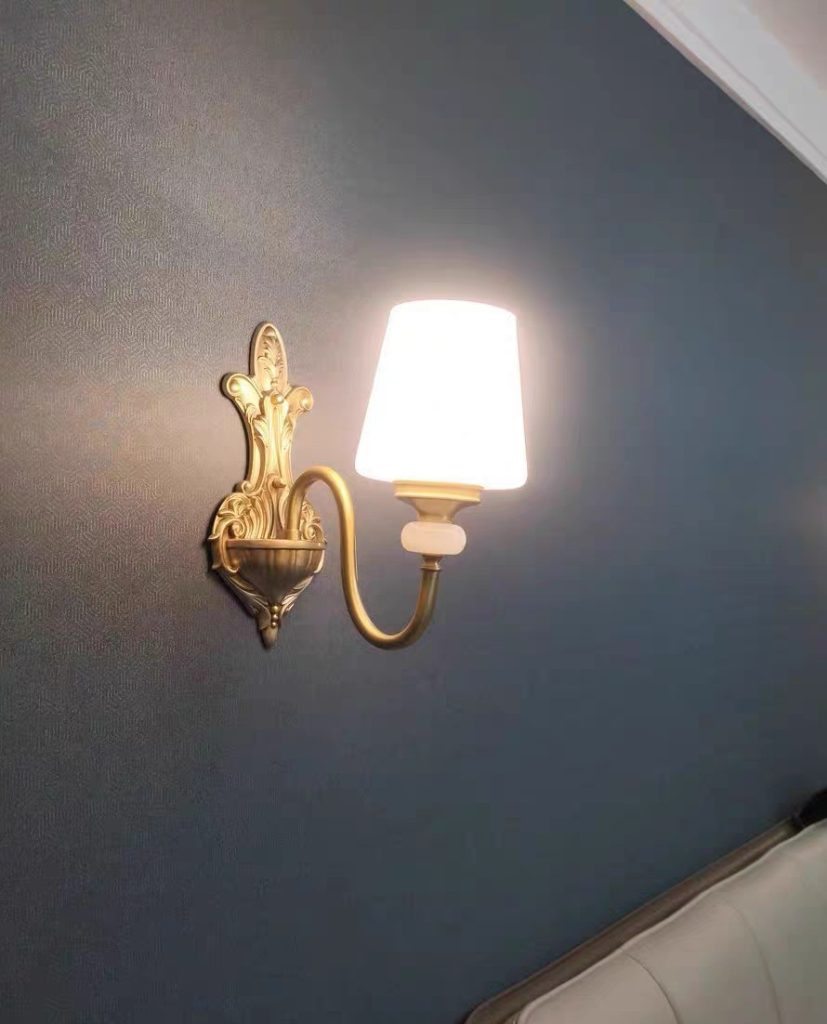
Finding a custom lighting supplier in China is relatively easy. Finding one that can consistently deliver the right design, quality, pricing, production schedule, and export support is much more difficult.
For importers, wholesalers, hotel projects, interior designers, retailers, and commercial buyers, the lowest quotation is rarely the only factor that matters. A lighting supplier should be evaluated according to its manufacturing capability, customization experience, quality control, communication, production capacity, packaging, and ability to handle the requirements of international orders.
This guide explains what buyers should check before selecting a custom lighting supplier in China and how to reduce common sourcing risks.
1. Start With the Type of Lighting You Need
Before contacting suppliers, clearly define the type of lighting products you want to purchase.
Custom lighting can include pendant lights, chandeliers, ceiling lights, wall lights, decorative fixtures, hotel lighting, restaurant lighting, residential lighting, and other indoor lighting products.
The supplier you choose should have experience with the specific product category you are buying.
For example, a supplier experienced in standard commercial fixtures may not necessarily be the right partner for a project requiring decorative pendant lights with a special structure, finish, size, or installation method.
A clear product brief should include:
- Product type
- Dimensions
- Materials
- Surface finish
- Light source
- Voltage and frequency
- Color temperature
- Power requirements
- Installation requirements
- Packaging requirements
- Target quantity
- Destination market
The more specific the initial requirements are, the easier it becomes to compare suppliers accurately.
2. Check Whether the Supplier Is Actually a Manufacturer
One of the most important questions is whether you are dealing directly with a factory or with a trading company.
A trading company may still be useful, particularly when you need multiple product categories, but buyers looking for deep customization should understand who will actually manufacture the products.
Ask the supplier:
- Where is the factory located?
- What lighting products are produced in-house?
- Which processes are outsourced?
- How many production workers are available?
- What is the normal monthly production capacity?
- Can the supplier provide factory photographs or videos?
- Can the supplier explain its production process?
For buyers sourcing indoor lighting from China, Zhongshan is an important manufacturing area for the lighting industry. However, the location alone should never be treated as proof of manufacturing capability.
The factory’s actual equipment, production process, workers, quality-control procedures, and previous customization experience are more important than the city name.
3. Look for Real Customization Capability
A supplier may advertise itself as a “custom lighting manufacturer,” but buyers should determine exactly what customization is available.
True customization can involve much more than changing the color of a standard product.
Depending on the supplier, customization may include:
Design customization
The buyer provides drawings, reference photographs, sketches, dimensions, or a new concept.
Size customization
The fixture may need to be produced according to a particular ceiling height, room size, table arrangement, or architectural requirement.
Material customization
Different materials, finishes, glass types, metal components, fabrics, wood elements, or other decorative materials may be required.
Electrical customization
International projects can require different voltage, wiring systems, sockets, drivers, switches, connectors, or other electrical configurations.
Finish customization
The same lighting design may require different surface finishes to match an interior design project or retail concept.
Before placing an order, ask the supplier which changes are included in normal customization and which changes require new tooling, engineering, or additional development costs.
4. Ask for a Sample Before Mass Production
A sample can reveal problems that are invisible in product photographs.
For custom lighting, the sample should be evaluated for more than appearance.
Check:
- Dimensions
- Materials
- Surface finish
- Color consistency
- Assembly quality
- Wiring
- Electrical components
- Structural stability
- Installation method
- Light distribution
- Packaging
For larger commercial projects, the sample should be reviewed by the purchasing team, designer, engineer, or project manager before approving mass production.
It is much cheaper to correct a specification problem during the sample stage than after hundreds of lighting fixtures have already been manufactured.
5. Compare Quotations Correctly
Price comparison is important, but comparing only the final unit price can produce misleading results.
Two suppliers may quote apparently similar products while using different materials, components, finishes, packaging methods, and levels of customization.
When comparing quotations, ask each supplier to provide a clear breakdown covering:
Product price + customization cost + tooling cost + sample cost + packaging + shipping terms
Also confirm whether the quotation includes the required electrical components and accessories.
A lower quotation may become more expensive later if additional costs appear during production.
A good sourcing comparison therefore focuses on total purchasing cost, not simply the lowest initial quotation.
6. Confirm MOQ and Production Capacity
Minimum order quantity is especially important for new buyers.
A supplier may accept a sample order but require a much larger MOQ for mass production. Another supplier may offer lower MOQs but have limited production capacity.
Ask:
- What is the MOQ for standard products?
- What is the MOQ for customized products?
- Is the MOQ different for different finishes?
- Can different models be combined in one order?
- What is the normal lead time?
- Can the supplier handle repeat orders?
- What happens when the order quantity increases significantly?
For project-based purchasing, production capacity can be more important than the lowest unit price.
A supplier that cannot maintain the required production schedule can cause installation delays, warehouse costs, and additional shipping expenses.
7. Evaluate Quality Control Before Ordering
Quality control should not begin only after production is completed.
A professional lighting supplier should have a process for controlling quality throughout production.
This may include:
Incoming material inspection → component inspection → assembly inspection → electrical testing → final inspection → packaging inspection
Ask how defective products are handled and whether the supplier performs a final inspection before shipment.
For customized products, buyers should also compare the finished product against the approved sample or technical specification.
The approved sample should not simply be treated as a reference photograph. It should become the practical benchmark for production quality.
8. Pay Attention to Packaging and International Shipping
Lighting products can be vulnerable to damage during transportation, particularly glass components, large chandeliers, thin metal structures, and decorative fixtures.
Ask the supplier how products are protected during international transportation.
Important questions include:
- Is each fixture individually protected?
- Are fragile components separated?
- Is foam or another protective material used?
- Are cartons strong enough for international shipping?
- Are wooden cases available for larger or fragile products?
- Can the packaging be customized for the buyer’s logistics requirements?
A well-designed lighting product that arrives damaged is still a failed order.
Packaging should therefore be considered part of the sourcing decision rather than an afterthought.
9. Check Communication and Technical Support
Communication becomes increasingly important as the level of customization increases.
A reliable supplier should be able to understand technical requirements rather than simply respond with a price.
During the quotation stage, pay attention to whether the supplier asks useful questions about:
- Dimensions
- Materials
- Electrical specifications
- Installation
- Finish
- Quantity
- Destination market
- Packaging
Good communication during the quotation stage often provides an early indication of how smoothly the supplier will handle production.
A supplier that carefully confirms specifications before quoting is generally easier to work with than one that gives a price without understanding the project.
10. Review the Supplier’s Existing Product Range
A supplier’s existing products can provide useful evidence of manufacturing experience.
For example, buyers interested in indoor pendant lighting should review the supplier’s existing pendant light range rather than judging capability from one promotional photograph.
Look for:
- Different designs
- Different sizes
- Material variations
- Different finishes
- Custom projects
- Product descriptions
- Factory information
- Previous production examples
You can also review the supplier’s product catalog and compare products with your own requirements.
For buyers interested in indoor lighting, Vlefooena’s supplier profile can be used as an additional reference point when reviewing available products and customization capabilities:
Custom Lighting Supplier in Zhongshan, China
11. Ask About Export Experience
Domestic production capability does not automatically mean that a supplier is experienced in international orders.
International buyers should ask whether the supplier regularly works with overseas customers and whether it understands export packaging, documentation, shipping arrangements, and destination-market requirements.
You should also confirm:
- Incoterms
- Export documentation
- Commercial invoice requirements
- Packing list
- Shipping marks
- Product labeling
- Destination-country electrical requirements
The exact requirements vary according to the product and destination market, so buyers should confirm applicable requirements before production begins.
12. Verify the Supplier Before Paying a Large Deposit
Before moving from sample production to a large order, verify the supplier carefully.
Useful verification steps include:
- Confirm the company’s legal business information.
- Compare the company name on the quotation, contract, and payment details.
- Verify the factory or production location.
- Request current factory photographs or video.
- Check whether the supplier can provide a proper commercial invoice and sales contract.
- Confirm who is responsible for production.
- Review samples before approving mass production.
- Use a clear written specification for the final order.
The purpose of supplier verification is not to eliminate every possible risk. It is to identify avoidable risks before money and production capacity are committed.
13. Do Not Choose a Supplier Based Only on the Cheapest Price
Price is important, but it should be considered together with quality and service.
A supplier offering a slightly higher unit price may provide:
- Better materials
- More stable quality
- Better packaging
- Better communication
- More reliable production scheduling
- More flexible customization
- Fewer defects
- Better support for repeat orders
For long-term sourcing, these factors can have a significant impact on the actual cost of purchasing.
The real objective is not simply to find the cheapest lighting factory.
It is to find a supplier that can produce the required product consistently at a commercially acceptable total cost.
14. A Practical Supplier Evaluation Checklist
Before selecting a custom lighting supplier in China, buyers can score suppliers according to several basic criteria.
| Evaluation Factor | What to Check |
|---|---|
| Manufacturing capability | Factory, equipment, production processes |
| Customization | Design, dimensions, materials, finishes |
| Product quality | Sample quality and inspection procedures |
| MOQ | Minimum quantity for standard and customized products |
| Production capacity | Lead time and monthly capacity |
| Pricing | Unit price and total purchasing cost |
| Packaging | Protection for international transportation |
| Communication | Technical understanding and response quality |
| Export experience | International order and documentation experience |
| After-sales support | Defect handling and replacement process |
Using the same checklist for every supplier makes supplier comparison much more objective.
15. Questions to Ask a Custom Lighting Supplier
Before requesting a quotation, prepare a list of questions instead of simply asking, “What is your price?”
For example:
Can you manufacture this design according to our drawing?
What materials do you recommend for this application?
What is the MOQ for this customized design?
How much does the sample cost?
What is the estimated sample lead time?
What is the mass-production lead time?
Which parts are manufactured in-house?
How is quality inspected before shipment?
How is the product packaged for international shipping?
Can you provide replacement support for defective products?
These questions make it easier to determine whether a supplier is genuinely suitable for the project.
Conclusion
Choosing a custom lighting supplier in China should be treated as a supplier evaluation process rather than a simple price comparison.
The most suitable supplier should be able to understand your specifications, provide a workable sample, explain its production process, maintain consistent quality, meet the required production schedule, and package the finished products appropriately for international transportation.
For buyers sourcing indoor lighting, pendant lights, chandeliers, and other customized fixtures, reviewing a supplier’s actual product range and manufacturing information before placing a bulk order can significantly reduce sourcing risks.
Vlefooena’s supplier profile for this lighting manufacturer can be reviewed here:
View the Custom Lighting Supplier Profile
A well-defined product specification, sample approval process, supplier verification, and written quality requirements should all be completed before mass production begins.


No reply content