
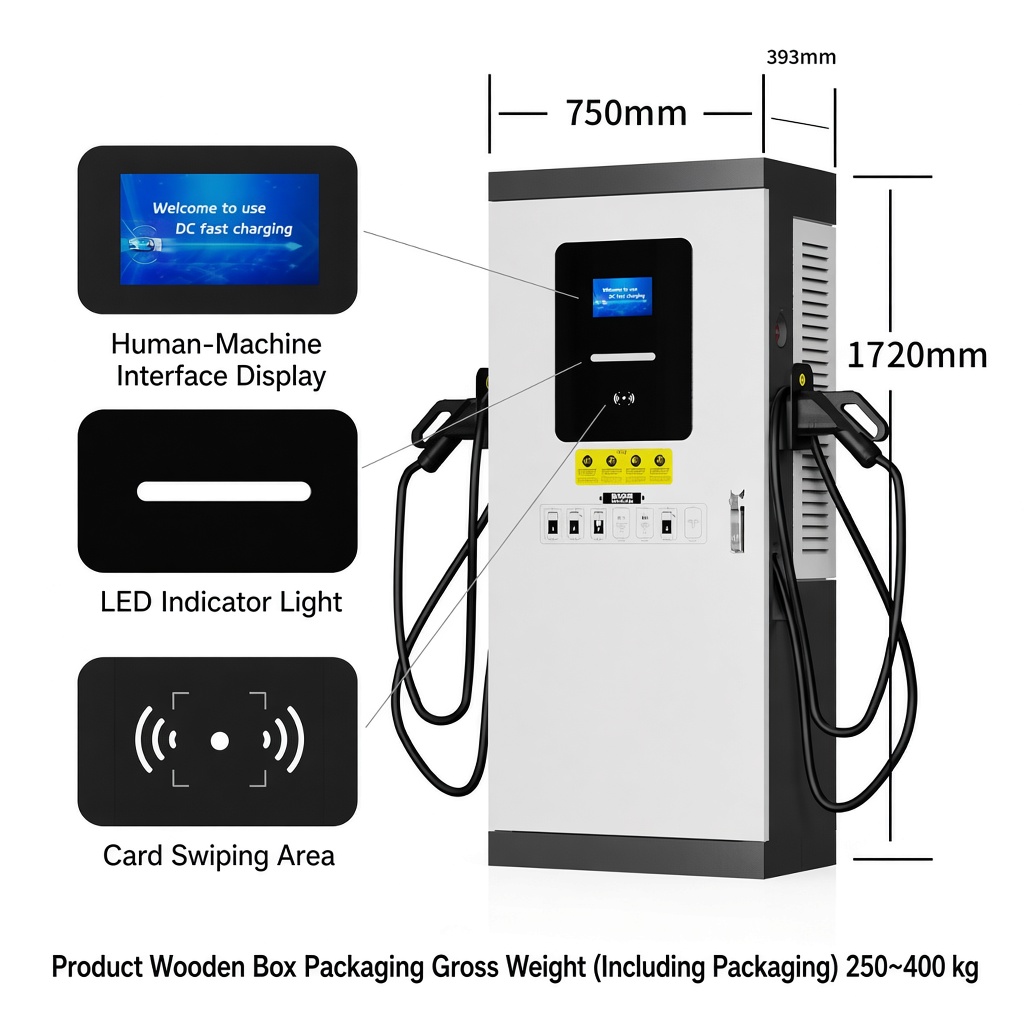
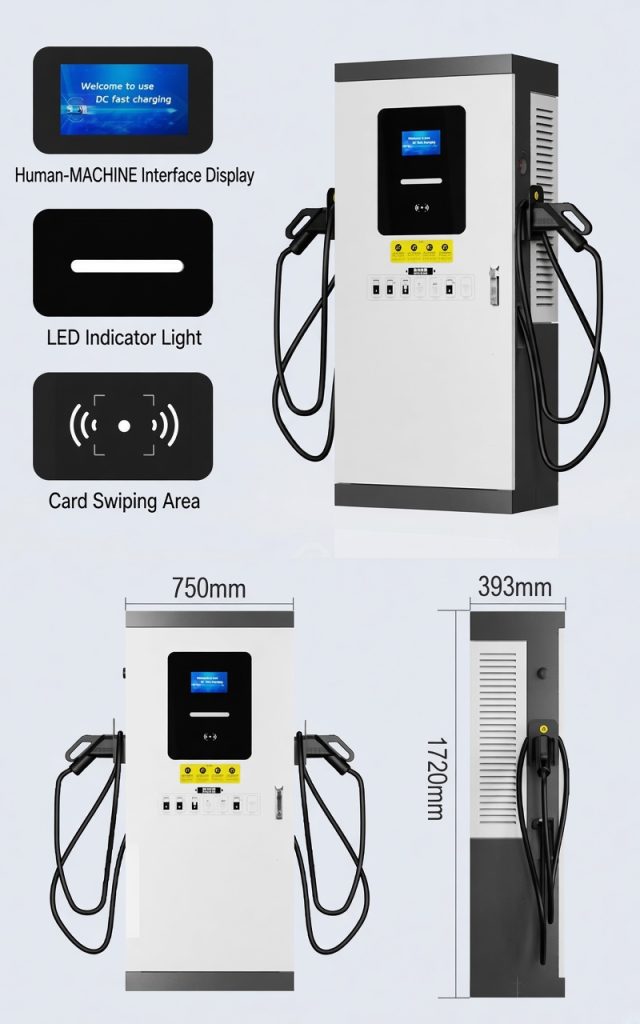
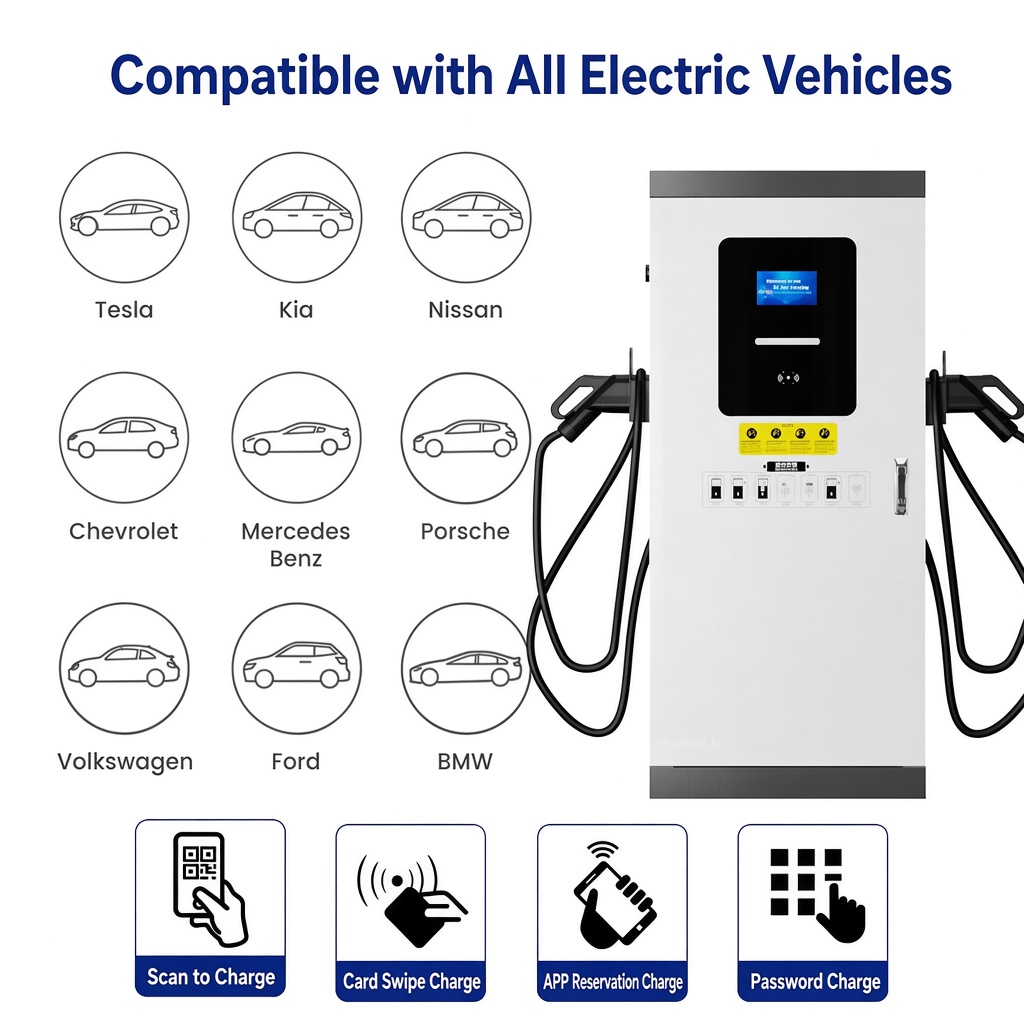
How to Choose a DC Fast Charger for Commercial EV Charging
Choosing the right DC fast charger is an important decision for commercial EV charging projects. Unlike residential AC charging, commercial DC charging often requires higher power, stronger electrical infrastructure, reliable communication, and careful consideration of vehicle charging requirements.
DC fast chargers can be used for public charging stations, fleet depots, highway charging locations, commercial parking facilities, logistics operations, dealerships, and other applications where vehicles need to recharge in a relatively short period.
This guide explains the key factors international buyers should consider when sourcing DC fast chargers for commercial projects.
1. Determine the Required Charging Power
The first step is to determine how much charging power your project actually needs.
Commercial DC chargers may be available in different power configurations, such as:
- 30kW
- 60kW
- 120kW
- 180kW
- 240kW
- 360kW
A higher-rated charger can potentially provide faster charging, but it also normally requires greater electrical capacity and may increase project costs.
The correct power rating depends on:
- Vehicle types
- Battery capacity
- Maximum vehicle charging power
- Daily charging demand
- Expected charging duration
- Number of vehicles
- Available grid capacity
- Site operating conditions
Do not select a 360kW charger simply because it offers the highest power. The charger should match the actual requirements of the project.
2. Understand the Difference Between Charger Power and Actual Charging Speed
The rated power of a DC charger is not necessarily the power that every vehicle will receive.
For example, a vehicle with a lower maximum DC charging capability cannot automatically charge at the full output of a 180kW or 360kW charger.
Actual charging performance can depend on:
- Vehicle battery condition
- Battery temperature
- State of charge
- Vehicle charging limits
- Charger output capability
- Charging protocol
- Electrical conditions
Therefore, buyers should evaluate both the charger and the vehicles that will use it.
3. Identify the Target Vehicles
The target vehicle fleet should be identified before selecting the charger.
For passenger EVs, check:
- Maximum DC charging power
- Charging connector
- Battery capacity
- Charging voltage
- Charging current
- Vehicle compatibility
For commercial fleets, also consider:
- Number of vehicles
- Daily mileage
- Operating schedule
- Average charging duration
- Return-to-depot time
- Required vehicle turnaround
For example, a fleet operating throughout the day may require higher-power DC charging to minimize vehicle downtime.
4. Choose the Appropriate Connector
Charging connector requirements vary between markets and vehicle fleets.
Before ordering a DC charger, confirm:
- Required connector type
- Number of charging guns
- Cable length
- Vehicle compatibility
- Destination-market requirements
For international projects, the charger configuration should be selected according to the actual target vehicles and local requirements.
Buyers should ask the manufacturer to provide detailed connector specifications before placing an order.
5. Check Input Voltage and Electrical Capacity
High-power DC charging requires suitable electrical infrastructure.
Before purchasing a DC fast charger, the project should evaluate:
- Grid capacity
- Input voltage
- Maximum input current
- Transformer capacity
- Distribution equipment
- Cable specifications
- Protection systems
- Site electrical limitations
A high-power charger may require electrical infrastructure upgrades.
For commercial projects, a qualified electrical engineer or local installation professional should evaluate the site before final equipment selection.
6. Consider the Number of Chargers
The total number of charging stations can be just as important as the power rating of each charger.
For example, a project with ten 120kW chargers could have a very different electrical demand from a project with only two 120kW chargers.
Buyers should calculate:
- Number of charging points
- Maximum simultaneous charging demand
- Expected peak demand
- Average daily utilization
- Vehicle arrival patterns
- Available electrical capacity
Load management can sometimes help distribute available power between multiple charging stations.
7. Evaluate Dual-Gun and Multi-Port Options
Some DC fast chargers can support multiple charging connectors.
A dual-gun configuration may allow two vehicles to connect to the same charging station, depending on the specific product design and power distribution system.
Before selecting a dual-gun charger, confirm:
- Total rated output power
- Power distribution between connectors
- Whether both connectors can operate simultaneously
- Connector types
- Cable length
- Vehicle compatibility
The exact charging performance should be confirmed in the manufacturer’s technical documentation.
8. Check OCPP and Network Connectivity
For commercial charging networks, communication capabilities are important.
Buyers should check whether the charger supports the required OCPP version and whether it can communicate with their selected charging management platform.
Depending on the product, communication options may include:
- Ethernet
- Wi-Fi
- 4G
- Other network interfaces
Potential software functions include:
- Remote monitoring
- Charging session management
- User authentication
- Energy monitoring
- Remote configuration
- Firmware updates
- Fault monitoring
Compatibility should be confirmed before placing a large order.
9. Evaluate Protection and Safety Features
Commercial DC chargers should have appropriate electrical and operational protection.
Depending on the product and market, buyers may need to evaluate functions such as:
- Overvoltage protection
- Overcurrent protection
- Short-circuit protection
- Over-temperature protection
- Leakage protection
- Emergency stop
- Surge protection
- Ground protection
The exact protection functions should be verified in the manufacturer’s technical specifications.
10. Check Environmental Protection
Many commercial DC charging stations are installed outdoors.
For outdoor projects, buyers should evaluate:
- IP rating
- Operating temperature
- Humidity requirements
- Cooling system
- Enclosure design
- Corrosion resistance
- Cable management
The appropriate environmental specification depends on the installation location.
For projects in hot, cold, humid, dusty, or coastal environments, the manufacturer should be informed about the actual operating conditions before the product is selected.
11. Consider Cooling and Thermal Management
Higher-power DC chargers generate more heat than lower-power charging equipment.
Thermal management can therefore become an important consideration for commercial projects.
Depending on the charger design, cooling may involve:
- Air cooling
- Fan-assisted cooling
- Liquid cooling
- Other thermal management systems
Buyers should ask the manufacturer about the cooling method, operating temperature range, maintenance requirements, and expected operating conditions.
12. Review Certifications and Technical Documents
International buyers should request the applicable documentation for the selected DC charger.
Documents may include:
- CE certification
- Product datasheet
- Test reports
- User manual
- Installation manual
- Declaration of conformity, where applicable
- Electrical specifications
- Communication specifications
- Safety documentation
Certification requirements vary according to the destination market and product configuration.
Buyers should confirm the requirements applicable to their specific project before ordering.
13. Evaluate Manufacturer Quality Control
For commercial projects, charger reliability can directly affect the operation of the charging station.
When evaluating a manufacturer, ask about:
- Incoming material inspection
- Assembly procedures
- Electrical testing
- Functional testing
- Aging testing
- Finished-product inspection
- Packaging inspection
If possible, request factory information, product testing records, and current product photos.
For larger projects, a sample evaluation or factory audit may also be appropriate.
14. Consider OEM and ODM Requirements
Distributors, charging operators, and project developers may require branded DC chargers.
Depending on the manufacturer, OEM/ODM options may include:
- Company logo
- Product labels
- Housing design
- Housing color
- Packaging
- User interface
- Charging cable configuration
- Communication requirements
- Product documentation
Customization can affect engineering work, MOQ, production time, and cost.
These requirements should therefore be confirmed before mass production.
15. Confirm MOQ and Lead Time
Before placing an order, buyers should confirm the manufacturer’s commercial terms.
Important questions include:
- What is the MOQ?
- What is the production lead time?
- Are samples available?
- Is there an OEM MOQ?
- How long does customization take?
- What payment terms are available?
- What warranty is provided?
Lead time can vary according to the selected model, order quantity, customization requirements, and production schedule.
16. Calculate the Total Project Cost
The DC charger price is only one part of the total investment.
Commercial buyers should consider:
- Charger equipment
- Transportation
- Insurance
- Import duties and taxes
- Electrical installation
- Transformer
- Distribution equipment
- Cabling
- Civil works
- Network connection
- Software
- Maintenance
- Spare parts
Comparing suppliers only by factory unit price can lead to an inaccurate assessment of the actual project cost.
17. Prepare a Detailed RFQ
When contacting a China DC fast charger manufacturer, provide as much project information as possible.
A useful RFQ should include:
- Required charger power
- Quantity
- Connector type
- Number of charging guns
- Target vehicles
- Destination country
- Electrical requirements
- OCPP requirements
- OEM requirements
- Required certifications
- Packaging requirements
- Expected delivery schedule
For example:
We are sourcing 120kW DC fast chargers for a commercial charging project. Please provide available models, connector options, technical specifications, certifications, MOQ, lead time, OEM options, warranty information, and quotation for our required quantity.
A detailed RFQ allows the manufacturer to recommend a more suitable configuration.
18. Questions to Ask Before Buying a DC Fast Charger
Before placing an order, ask the manufacturer:
- What DC power ratings are available?
- Which connector types are supported?
- Can the charger support multiple charging guns?
- What is the maximum output voltage and current?
- What input voltage is required?
- Does the charger support OCPP?
- What network communication options are available?
- What cooling system is used?
- What protection functions are included?
- Which certifications are available?
- What is the MOQ?
- What is the typical lead time?
- What OEM/ODM options are available?
- What warranty and after-sales support are provided?
- Can technical documents and samples be supplied?
Frequently Asked Questions
What power rating should I choose for a commercial DC fast charger?
The appropriate power rating depends on the vehicles, charging demand, required turnaround time, available electrical capacity, and project budget. Common commercial configurations can range from 30kW to 360kW.
Is a 120kW charger suitable for commercial charging?
A 120kW DC charger can be suitable for many commercial applications, but suitability depends on the target vehicles, site electrical capacity, expected charging demand, and required charging speed.
Can a DC fast charger charge two vehicles at the same time?
Some DC charging stations support multiple charging guns. However, the available power may be distributed between connected vehicles. Buyers should check the manufacturer’s technical specifications for the exact power-sharing configuration.
Does a higher-power DC charger always charge faster?
No. Actual charging speed depends on both the charger and the vehicle. Battery condition, temperature, state of charge, vehicle charging limits, and other factors can affect the charging rate.
Is OCPP important for commercial DC chargers?
OCPP can be important for networked commercial charging projects because it can allow charging stations to communicate with a central management platform. The required OCPP version and functions should be confirmed with the charging network operator.
Can DC fast chargers be customized for international markets?
Depending on the manufacturer and model, customization may include connectors, branding, housing, packaging, communication functions, and other specifications. Buyers should confirm available options before placing an order.
Conclusion
Selecting a DC fast charger for a commercial project requires more than comparing advertised power ratings.
Buyers should evaluate the target vehicles, charging demand, connector requirements, electrical infrastructure, power rating, communication functions, safety features, environmental conditions, certifications, quality control, OEM capability, MOQ, lead time, and total project cost.
A well-defined technical requirement can help international buyers select a charger that is better suited to the actual application and avoid unnecessary equipment or infrastructure costs.
For buyers sourcing DC fast charging stations from China, you can learn more about the supplier here:
China EV Charging Station Manufacturer
When requesting a quotation, provide the required power rating, quantity, connector type, destination market, target vehicles, OEM requirements, and project specifications.


No reply content