
How to Choose a Fishing Rod Manufacturer in China for Wholesale Orders
Choosing a fishing rod manufacturer in China is not simply a matter of finding the lowest unit price. For importers, fishing tackle distributors, retail chains, and private-label brands, the supplier must be able to produce the required rod specifications consistently, communicate clearly, package products for international transport, and support the order quantity and customization level the buyer needs.
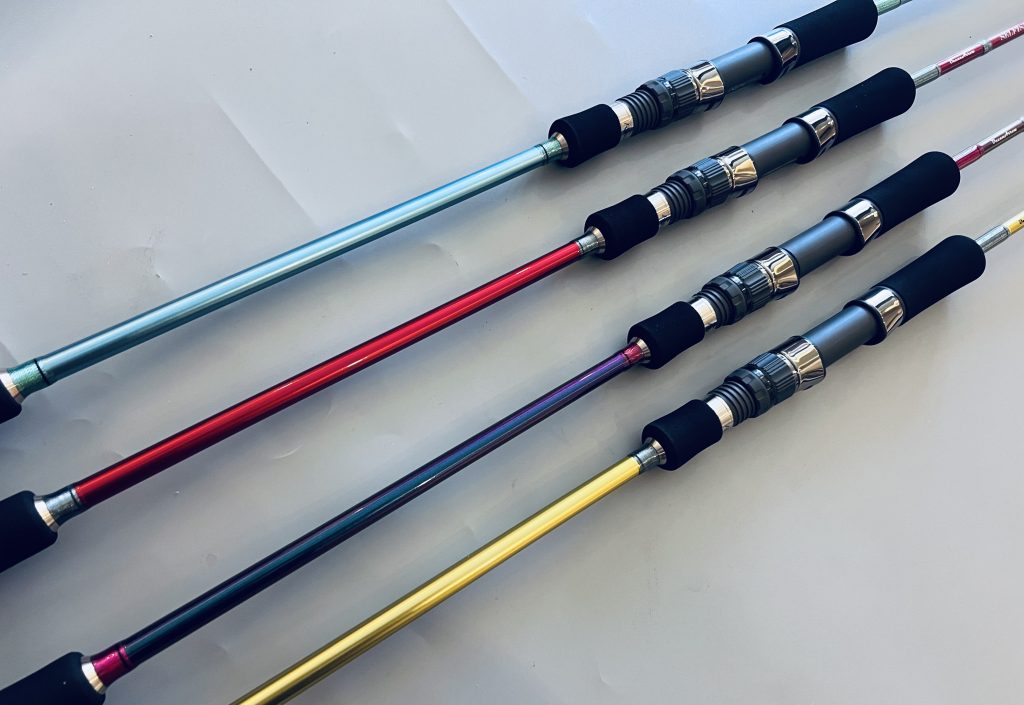
A fishing rod may look simple in a product photograph, but its performance depends on several details: blank material, rod action, power, length, section design, guides, reel seat, handle material, and assembly quality. If these details are not clearly agreed upon before production, buyers may receive products that differ from the approved sample or are unsuitable for their target market.
This guide explains how to assess a Chinese fishing rod manufacturer, what information to request, how to compare quotations, and which checks to complete before placing a wholesale order.
1. Start with the Fishing Rods You Actually Need
Before contacting manufacturers, define the type of fishing rods you intend to purchase. A supplier may offer many product categories, but not every factory or trading company will be suitable for every specification.
Common categories include:
- Spinning rods
- Casting rods
- Telescopic fishing rods
- Travel rods
- Surf fishing rods
- Boat fishing rods
- Fly fishing rods
- Carbon fiber fishing rods
- Fiberglass fishing rods
- Kids’ fishing rod sets
The intended market matters. A distributor serving recreational freshwater anglers may need a different product range from a retailer specializing in saltwater fishing or travel equipment.
Prepare a short product brief containing the rod type, target customer, expected retail price range, preferred materials, and estimated order quantity. This helps the supplier recommend relevant models rather than sending an unrelated general catalogue.
2. Check Whether the Supplier’s Product Range Matches Your Requirements
A manufacturer’s catalogue is useful, but the important question is whether it can produce the models and specifications you plan to sell.
Ask for information such as:
- Available rod types and lengths
- Blank materials and construction options
- Available power and action ratings
- Number of sections
- Guide and reel-seat options
- Handle materials
- Standard packaging
- Available customization options
For example, if your market requires compact travel rods, confirm the collapsed length and protective packaging. If you are sourcing rods for saltwater use, discuss the intended environment and the materials or components specified for that application.
Do not assume that two rods with similar photographs have the same construction or performance. Request model numbers and written specifications so that products can be compared accurately.
3. Evaluate the Manufacturer’s Ability to Handle Wholesale Orders
Wholesale suitability depends on more than the advertised minimum order quantity. Buyers should understand how the supplier handles production planning, repeat orders, product consistency, and communication.
Useful questions include:
- What is the minimum order quantity for standard models?
- Does the MOQ change for custom colors, logos, or packaging?
- Can the supplier provide a sample before bulk production?
- What is the estimated production lead time?
- How are product specifications confirmed before manufacturing?
- Can the supplier support repeat orders using the same approved specifications?
- What information is provided if a production delay occurs?
For a first order, it may be practical to begin with a limited selection of models rather than ordering a large number of variations. This can help the buyer evaluate product quality, packaging, and customer response before expanding the range.
4. Request a Sample and Compare It with the Written Specifications
A sample gives the buyer an opportunity to assess the product directly. However, a sample is useful only when the buyer knows what to inspect and what specifications it is supposed to represent.
Check the following points:
| Inspection area | What to review |
|---|---|
| Rod length | Confirm the measured length against the specification |
| Sections | Check section count, fit, and assembly |
| Blank surface | Look for visible cracks, dents, or unusual surface defects |
| Guides | Check alignment, attachment, and visible damage |
| Reel seat | Confirm fit and operation with a compatible reel |
| Handle | Review material, finish, comfort, and attachment |
| Joint connections | Check whether sections connect securely and consistently |
| Packaging | Confirm protection against scratches and impact during transit |
For products with custom features, make sure the sample includes the relevant logo, color, guide arrangement, handle, and packaging wherever practical.
Record any changes requested after sample inspection. The final approved specifications should be clear enough for both the buyer and supplier to identify the exact product being ordered.
5. Confirm OEM and Private-Label Requirements Before Negotiating the Final Price
If you plan to sell fishing rods under your own brand, discuss customization before approving the quotation.
Possible customization requirements include:
- Brand logo on the rod
- Custom colors or decorative finishes
- Handle or reel-seat options
- Custom rod bag or protective tube
- Retail box design
- Barcode and product labels
- User manuals or care instructions
- Carton markings for warehouse handling
Not every customization option will be available for every model or order quantity. Some changes may require additional setup, artwork approval, or a higher MOQ.
Provide logo files in a suitable format and confirm the exact placement, size, color, and method of application. Ask for a digital proof or physical sample when the appearance of the finished product is important to your brand.
6. Compare Quotations on the Same Product Basis
A low quotation is difficult to evaluate if the specifications are incomplete. One supplier may quote a standard model while another includes custom packaging, upgraded components, or a different blank material.
When comparing offers, make sure each quotation refers to the same:
- Model number
- Rod length and section count
- Blank material
- Power and action
- Guides and reel seat
- Handle material
- Logo and customization requirements
- Packaging
- Order quantity
- Trade term and delivery location
Also ask whether the price includes sample costs, packaging costs, domestic transportation, and any other charges relevant to your order.
For international purchases, clarify the Incoterm or delivery arrangement. A factory-gate price, FOB price, and delivered price represent different cost responsibilities. Compare them only after confirming what each quotation includes.
7. Discuss Quality Control Before Production Begins
Quality expectations should be agreed upon before the order is placed, not only after the goods are finished.
For a wholesale order, buyers can request a written specification sheet and discuss how the finished products will be checked. Depending on the product, inspection points may include dimensions, component installation, surface appearance, section fit, logo placement, and packaging condition.
For larger or repeat orders, buyers may also agree on a pre-shipment inspection process. The inspection scope should be practical and clearly documented. For example, the buyer and supplier can agree on which product features are checked, how defects are recorded, and how nonconforming products are handled.
Avoid relying only on broad descriptions such as “premium quality” or “export quality.” Specific, measurable requirements are easier to verify.
8. Confirm Packaging and Shipping Details
Fishing rods are often long and can be vulnerable to bending, impact, or surface damage if packed inadequately. Packaging should be considered part of the product specification.
Ask the supplier to confirm:
- Individual rod protection
- Rod bags or protective tubes, if required
- Inner-box dimensions
- Master carton dimensions
- Number of rods per carton
- Gross and net carton weight
- Carton markings
- Whether the packaging is suitable for the intended shipping method
These details help freight forwarders estimate shipping costs and help importers plan warehouse storage.
For mixed-model orders, request a packing list that identifies the quantity of each model and the carton contents. This can make receiving and inventory checks easier after arrival.
9. Look for Clear Communication and Documented Agreements
A supplier’s responsiveness is useful, but buyers should also pay attention to the clarity of its answers.
A reliable purchasing process should make it possible to confirm:
- The exact product model
- The approved specifications
- The agreed price and currency
- MOQ and order quantity
- Sample approval status
- Production lead time
- Packaging requirements
- Payment terms
- Shipping terms
- The process for handling discrepancies
Keep important decisions in written records, including specification changes and sample approvals. This reduces the risk of misunderstandings when an order moves from quotation to production.
10. Prepare a Clear RFQ Before Requesting a Quotation
A detailed request for quotation (RFQ) helps manufacturers provide more useful and comparable offers.
You can use the following template:
Subject: Wholesale Fishing Rod Inquiry
Hello,
We are sourcing fishing rods for wholesale distribution and would like to receive your product information and quotation.
Our initial requirements are:
- Product type: [Spinning / Casting / Telescopic / Other]
- Rod length: [Required length]
- Sections: [Number of sections]
- Blank material: [Carbon fiber / Fiberglass / Other]
- Power and action: [If specified]
- Quantity: [Estimated quantity]
- Logo: [Standard / Custom logo]
- Packaging: [Standard / Custom retail packaging]
- Destination country: [Country]
- Required delivery term: [If known]
Please provide:
- Available models matching these requirements
- Product specifications and catalogue
- MOQ for standard and customized orders
- Sample availability and sample cost
- Unit price at different order quantities, if available
- Estimated production lead time
- Packaging dimensions and carton information
- Available payment and shipping terms
Please also advise which specifications you need from us to prepare an accurate quotation.
Thank you.
11. Begin with a Manageable Trial Order
For a new supplier relationship, a trial order can help confirm whether the product, communication, packaging, and delivery process meet your business requirements.
A trial order should still use the same clear documentation expected for a larger purchase. Confirm the product specifications, approved sample, quantity, packaging, and delivery terms in writing.
After receiving the goods, review customer feedback and record any issues involving product performance, assembly, packaging, or model consistency. Use those findings to refine the next order rather than relying on memory or informal messages.
Frequently Asked Questions
How do I find a fishing rod manufacturer in China?
Start by defining the rod type, materials, specifications, order quantity, and customization requirements. Then request product catalogues, written specifications, sample information, and quotations from suppliers whose product ranges match your needs.
Should I order samples before placing a wholesale order?
A sample is useful for checking product details before committing to a larger quantity. Confirm that the sample represents the model and specifications you intend to order, especially if you require custom components, logos, or packaging.
What information affects the MOQ for fishing rods?
MOQ may depend on whether the buyer selects a standard model or requests custom colors, logos, components, or packaging. Ask the supplier to state the MOQ separately for standard and customized products.
How can I compare fishing rod quotations accurately?
Compare quotations using the same model, length, material, components, packaging, order quantity, and delivery terms. Ask suppliers to identify any excluded charges or specification differences.
What should I confirm before approving mass production?
Confirm the final written specifications, sample approval, logo artwork, packaging requirements, order quantity, price, lead time, payment terms, and shipping arrangement. Keep the approved details in a written record.
Can a Chinese fishing rod supplier support private-label orders?
Some suppliers offer OEM or private-label options, but available services and minimum quantities vary. Confirm logo placement, artwork requirements, packaging options, additional costs, and sample approval procedures directly with the supplier.
Final Thoughts
Choosing a fishing rod manufacturer for wholesale orders requires a structured evaluation of product fit, specifications, sample quality, customization, communication, packaging, and total purchasing terms.
The most useful first step is to prepare a clear product brief and request quotations based on the same requirements. Once a suitable model is identified, inspect a sample, document the approved specifications, and consider a manageable trial order before expanding the product range.
For buyers sourcing spinning rods, casting rods, telescopic rods, or custom fishing tackle from China, Guangzhou Fishing Tackle Co., Ltd welcomes inquiries that include the target product type, specifications, quantity, and destination market.


No reply content