
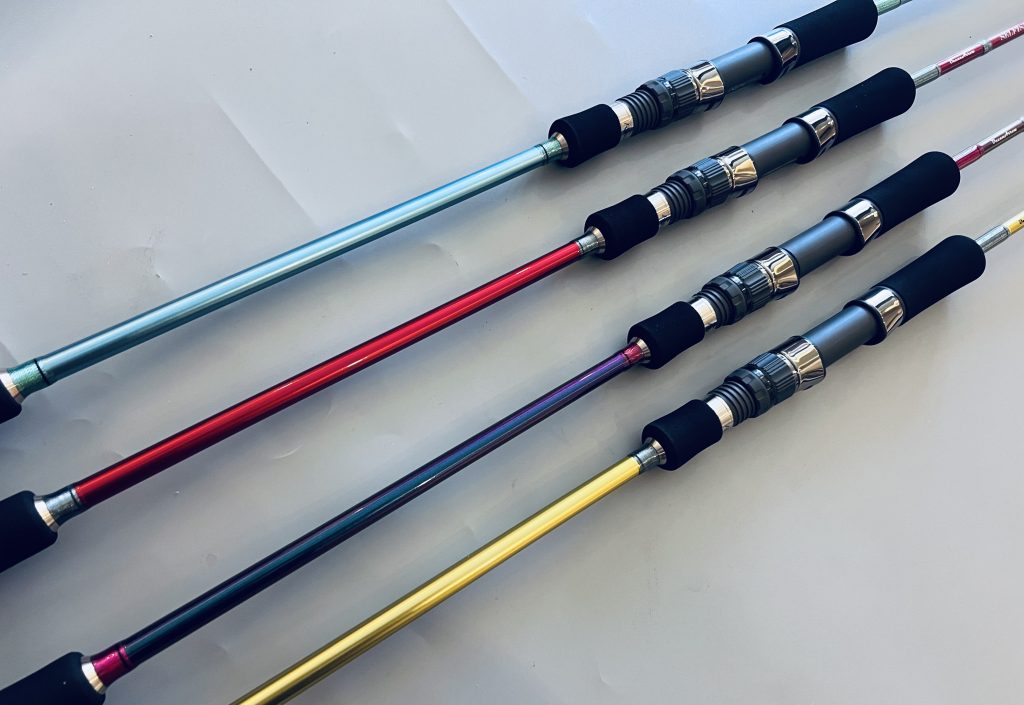
How to Choose a Fishing Rod Manufacturer in China for Wholesale Orders
Buying fishing rods from China can give wholesalers, fishing tackle distributors, retailers, and outdoor brands access to a wide range of products and customization options. However, choosing a suitable manufacturer requires more than comparing the lowest quotation.
A fishing rod is a product where materials, construction, components, finishing, and quality control can all affect its performance. For buyers planning a wholesale order, the right manufacturer should be able to understand product specifications, provide samples, maintain consistent quality, and support the requirements of the target market.
This guide explains what international buyers should check when selecting a fishing rod manufacturer in China.
1. Start With the Type of Fishing Rod You Need
Before contacting manufacturers, define the type of fishing rod you want to purchase.
Different fishing applications require different rod designs. Common categories include:
- Spinning rods
- Casting rods
- Telescopic fishing rods
- Travel fishing rods
- Surf fishing rods
- Carbon fiber fishing rods
- Freshwater fishing rods
- Saltwater fishing rods
The target market also matters. A rod designed for recreational freshwater fishing may have very different specifications from a heavy-duty saltwater rod.
When sending an inquiry, provide as much information as possible, including rod length, power, action, sections, material, handle type, guides, reel seat, target species, packaging requirements, and expected quantity.
A detailed specification allows the manufacturer to prepare a more accurate quotation.
2. Check the Manufacturer’s Production Capability
A company that sells fishing rods is not necessarily a manufacturer.
Wholesale buyers should understand what parts of production are handled by the factory and what components may come from outside suppliers.
Depending on the product, manufacturing and assembly can involve:
- Carbon fiber blanks
- Fiberglass or composite materials
- Reel seats
- Fishing rod guides
- Handles
- Grips
- Decorative components
- Surface finishing
- Printing and logos
- Individual packaging
The more clearly a manufacturer can explain its production process, the easier it is for a buyer to evaluate whether the factory is suitable for long-term cooperation.
For larger orders, buyers should also ask about production capacity and lead time. A supplier may be able to produce a small sample order but struggle to maintain the same quality and delivery schedule when the order volume increases.
3. Pay Attention to Carbon Fiber and Blank Quality
For many modern fishing rods, the blank is one of the most important components.
Carbon fiber rods can provide a useful combination of strength, sensitivity, and relatively low weight, but the actual performance depends on the material and construction rather than the words “carbon fiber” alone.
Buyers should ask manufacturers about the blank construction and specifications instead of relying only on a general material description.
Questions may include:
- What type of carbon material is used?
- What is the blank construction?
- What are the available rod powers?
- What actions are available?
- How is the blank tested?
- How consistent are the specifications between production batches?
If the buyer is developing a private-label product, these details should be confirmed before mass production.
4. Request Samples Before Placing a Large Order
A sample is one of the simplest ways to evaluate a fishing rod manufacturer.
Before ordering thousands of units, buyers can request samples and inspect the actual products.
A sample inspection can include:
Rod appearance: Check the finish, printing, paint, wrapping, and overall appearance.
Guide alignment: Make sure the guides are properly positioned and securely attached.
Reel seat: Check whether the reel seat operates smoothly and holds the reel securely.
Handle: Examine the grip material, shape, finishing, and assembly.
Sections and joints: For multi-section rods, check whether the sections connect properly and remain secure during use.
Weight and dimensions: Compare the actual product with the agreed specifications.
A sample also gives the buyer an opportunity to evaluate communication and technical support before committing to a larger order.
5. Ask About OEM and ODM Options
Many fishing tackle buyers are not looking for generic products. They may want to develop their own brand.
This makes OEM and ODM capability important.
Depending on the manufacturer, customization may include:
- Brand logo
- Rod color
- Length
- Power
- Action
- Handle design
- Guide configuration
- Reel seat
- Packaging
- Product labels
- Instruction materials
If you are developing a new fishing rod line, provide the manufacturer with drawings, reference products, specifications, or sample products whenever possible.
The clearer the requirements are, the easier it is to avoid misunderstandings during production.
6. Compare More Than the Unit Price
Price is important for wholesale buyers, but the cheapest quotation is not always the lowest total purchasing cost.
A fishing rod quotation should be evaluated together with:
- Material specifications
- Product construction
- Components
- Packaging
- MOQ
- Sample costs
- Production lead time
- Customization costs
- Quality control
- Shipping requirements
For example, two rods may have similar external appearances but different materials, components, construction methods, and durability.
When comparing suppliers, make sure you are comparing products with equivalent specifications.
7. Understand the MOQ Before Ordering
Minimum order quantity is another important issue for importers.
Some buyers may need several thousand fishing rods for distribution, while smaller brands may want to test a new product with a much smaller order.
Ask the manufacturer:
- What is the MOQ for standard products?
- Is the MOQ different for customized products?
- Is there a minimum quantity for custom packaging?
- Can several models be combined in one order?
- Does the MOQ change when the product carries a private label?
Understanding these conditions early can prevent problems during negotiations.
8. Discuss Quality Control Before Mass Production
Quality should be agreed upon before production begins, not after the goods are completed.
A buyer and manufacturer should establish the key specifications before confirming the order.
Depending on the product, quality control may cover:
- Rod length
- Weight
- Action
- Power
- Blank appearance
- Guide position
- Reel seat assembly
- Handle finishing
- Logo printing
- Packaging
- Quantity
For private-label products, the approved sample can also serve as an important reference for subsequent production.
If the order is large, buyers may consider arranging a pre-shipment inspection or using an independent inspection company.
9. Consider Packaging and Export Requirements
Fishing rods are relatively long products, so packaging should not be overlooked.
Individual boxes, protective tubes, master cartons, and pallet arrangements can affect shipping costs and product safety.
Before ordering, ask about:
- Individual packaging
- Carton dimensions
- Number of rods per carton
- Gross and net weight
- Carton protection
- Shipping marks
- Export documentation
This information is also useful when calculating the total landed cost of the products.
For international buyers, the final purchasing decision should consider both the product price and the logistics cost.
10. Communicate Your Target Market Clearly
A manufacturer can provide better recommendations when it understands where the fishing rods will be sold.
For example, a distributor serving recreational anglers may have different requirements from an online retailer selling entry-level fishing equipment or a brand targeting specialist anglers.
Tell the manufacturer:
- Target country or region
- Fishing applications
- Target customers
- Expected annual volume
- Target price range
- Required certifications, if applicable
- Packaging requirements
- Branding requirements
This information can help the manufacturer recommend appropriate specifications instead of simply sending a standard product catalog.
11. Use a Structured Supplier Comparison
When comparing several Chinese fishing rod manufacturers, create a simple supplier comparison sheet.
You can record:
| Item | Supplier A | Supplier B | Supplier C |
|---|---|---|---|
| Product type | |||
| Material | |||
| MOQ | |||
| Sample cost | |||
| OEM available | |||
| Custom packaging | |||
| Production lead time | |||
| Quality control | |||
| Quotation |
This makes it easier to identify differences between suppliers.
Instead of choosing a supplier based on one quotation, buyers can evaluate the complete purchasing requirements.
12. Find Chinese Fishing Rod Suppliers Through a B2B Platform
International buyers can also use a B2B platform to discover Chinese manufacturers and suppliers.
Vlefooena provides a platform where international buyers can find Chinese manufacturers, suppliers, and product information.
For buyers looking for fishing tackle, the platform can be used as an additional source for discovering potential Chinese suppliers and contacting companies about products, OEM requirements, and wholesale orders.
The important point is to treat online supplier information as the beginning of the sourcing process. Buyers should still communicate with the supplier, request specifications and samples, and confirm commercial terms before placing a bulk order.
What Should You Ask a Fishing Rod Manufacturer?
When sending your first inquiry, you do not need to write a long message.
A practical inquiry could include:
We are looking for fishing rods for wholesale distribution in our market. Please provide your product catalog, available rod types, specifications, MOQ, OEM options, sample cost, production lead time, and wholesale pricing. We are also interested in custom logo and packaging.
If you already know the required specifications, include them in the inquiry.
For example:
- Rod type
- Length
- Sections
- Power
- Action
- Material
- Quantity
- Logo requirements
- Packaging requirements
- Destination country
The more specific the inquiry, the more useful the supplier’s response will be.
Final Thoughts
Choosing a fishing rod manufacturer in China should be based on more than a low factory price.
For wholesale buyers, the important factors include product specifications, manufacturing capability, material quality, customization options, MOQ, sample quality, production capacity, quality control, packaging, and export requirements.
A good sourcing process starts with a clear product specification, continues with sample evaluation and supplier comparison, and only then moves to a larger production order.


No reply content