
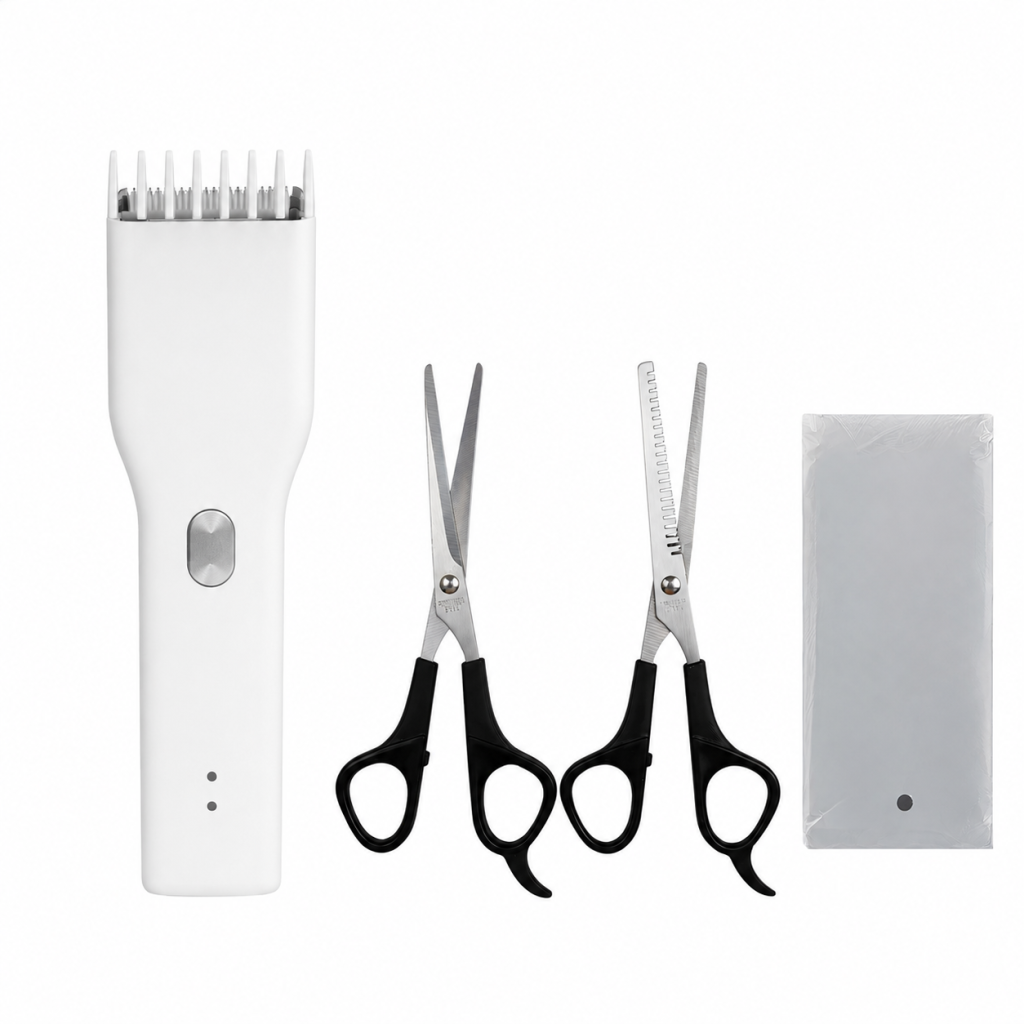
For distributors, wholesalers, barbershop suppliers, retailers, and private-label brands, choosing a hair clipper manufacturer is not simply about finding the lowest factory price.
A product may look attractive and have competitive specifications, but if the blade becomes dull quickly, the clipper is difficult to clean, or important components wear out prematurely, customers may complain and request returns.
Durability and maintenance therefore play an important role in the long-term value of a hair clipper.
A reliable hair clipper manufacturer should pay attention to blade material, blade processing, motor performance, mechanical tolerances, housing design, cleaning access, lubrication, battery quality, and production quality control.
This guide explains what international buyers should evaluate when choosing a hair clipper manufacturer for durable blades, easy maintenance, and long-term use.
1. Why Blade Durability Matters
The blade is one of the most important components of a hair clipper.
During normal operation, the moving blade repeatedly moves against the fixed blade.
Over time, this can cause wear.
A low-quality blade may gradually experience:
- Reduced sharpness
- Increased friction
- Hair pulling
- Uneven cutting
- Higher operating temperature
- Reduced cutting efficiency
For professional users, blade durability is particularly important because the clipper may be used many times every day.
2. Blade Material Affects Durability
Manufacturers use different materials and treatments for clipper blades.
Common options include:
- Stainless steel
- Carbon steel
- Ceramic
- Coated metal
- Other engineered materials
Each material has different characteristics.
Factors to consider include:
- Hardness
- Wear resistance
- Corrosion resistance
- Heat behavior
- Cutting performance
- Manufacturing cost
The best material depends on the product’s intended application.
A professional manufacturer should be able to explain why a particular blade material was selected.
3. Blade Hardness Is Important
Blade hardness can affect wear resistance and cutting performance.
However, maximum hardness is not necessarily the goal.
The blade must also have appropriate:
- Toughness
- Surface finish
- Geometry
- Manufacturing accuracy
A blade that is extremely hard but poorly designed may not provide the desired overall performance.
Therefore, buyers should evaluate the complete blade specification.
4. Blade Processing Quality Matters
The raw material is only one part of blade quality.
Manufacturing processes can also affect performance.
These may include:
- Cutting
- Grinding
- Polishing
- Heat treatment
- Surface treatment
- Precision processing
Consistent processing helps ensure that individual blades perform similarly.
For large OEM orders, production consistency is particularly important.
5. Blade Alignment Affects Service Life
Correct alignment is important not only for cutting performance but also for durability.
If the moving and fixed blades are incorrectly positioned, excessive friction may occur.
This can lead to:
- Faster wear
- Increased heat
- More noise
- Reduced cutting efficiency
- Hair pulling
A manufacturer should control blade assembly tolerances during production.
6. Lubrication Helps Reduce Wear
Proper lubrication can reduce friction between moving components.
Without appropriate lubrication, the cutting mechanism may experience:
- Increased friction
- Higher temperature
- Faster wear
- Increased noise
- Reduced cutting performance
Manufacturers should provide clear maintenance instructions for users.
Professional barbers may need to clean and lubricate their clippers more frequently than occasional home users.
7. Easy Cleaning Is Important
Hair, dust, skin particles, and other debris can accumulate around the blade.
If these materials are not removed, they can affect performance.
A well-designed clipper should make routine cleaning reasonably easy.
Important design features may include:
- Removable blade
- Accessible cutting area
- Cleaning brush
- Washable components where appropriate
- Easy-to-open maintenance areas
The exact cleaning method depends on the product design.
8. Is a Waterproof Hair Clipper Better?
Water resistance can make cleaning easier, but buyers should understand exactly what the product’s rating means.
A product described as washable is not necessarily designed to be submerged.
Manufacturers should provide clear instructions regarding:
- Which parts can get wet
- Whether the blade can be washed
- Whether the body is water resistant
- Whether the clipper can be used in wet conditions
- How the product should be dried
For B2B buyers, unclear waterproof claims should be treated carefully.
9. Cleaning Instructions Should Be Clear
A good product should come with clear maintenance instructions.
Instructions can explain:
- Turn off the clipper.
- Disconnect the charger if applicable.
- Remove loose hair.
- Clean the blade according to the manufacturer’s instructions.
- Dry washable components properly.
- Apply appropriate lubricant when required.
- Reassemble the blade correctly.
Clear instructions can help users maintain the product properly.
10. Guide Combs Need Maintenance Too
Guide combs are frequently exposed to hair and styling products.
Poor-quality guide combs can become:
- Loose
- Cracked
- Deformed
- Difficult to install
- Difficult to clean
For professional products, guide comb durability should also be considered.
When purchasing from a manufacturer, ask whether replacement guide combs are available.
11. Motor Durability Matters
A durable blade cannot compensate for an unreliable motor.
The motor should be selected according to the intended application.
Important considerations include:
- Motor type
- Speed
- Torque
- Power consumption
- Heat generation
- Operating stability
A professional barber clipper may require a different motor specification from a basic home-use model.
12. Heat Can Affect Product Life
Heat is an important factor in long-term durability.
Continuous operation can generate heat from:
- Motor
- Blade friction
- Battery
- Electronics
Excessive heat can affect user comfort and potentially accelerate component aging.
Manufacturers should consider:
- Motor efficiency
- Blade friction
- Housing design
- Heat dissipation
- Electronic protection
Long-duration testing can help identify thermal problems.
13. Battery Durability Matters for Cordless Clippers
For cordless models, the battery is another important component.
Battery performance can decline over repeated charging cycles.
Buyers should ask the manufacturer about:
- Battery chemistry
- Capacity
- Voltage
- Expected cycle life
- Protection system
- Replacement options
A product with a reliable battery can provide a better long-term customer experience.
14. Choose a Manufacturer With Replacement Parts
For B2B buyers, replacement parts can be extremely important.
Common replacement components may include:
- Blades
- Guide combs
- Charging cables
- Chargers
- Batteries
- Switches
- Protective covers
A manufacturer that can provide replacement components can make after-sales service easier.
This is especially valuable for distributors and professional-equipment suppliers.
15. Product Design Should Support Maintenance
Maintenance should be considered during product development.
A manufacturer can improve serviceability through:
- Replaceable blades
- Accessible screws
- Modular components
- Easy-to-clean cutting areas
- Replaceable guide combs
- Clear maintenance instructions
Not every product needs to be fully modular, but important wear components should be reasonably serviceable.
16. Why Professional Users Need Durable Clippers
Professional barbers may use clippers repeatedly throughout the day.
A product used for several hours per day experiences significantly more operating cycles than one used occasionally at home.
Professional users may therefore prioritize:
- Blade durability
- Motor reliability
- Battery reliability
- Comfortable ergonomics
- Easy cleaning
- Replacement parts
- Stable performance
For this customer group, the cheapest initial price may not provide the lowest total cost.
17. Total Cost of Ownership
B2B buyers should consider more than the initial purchase price.
For example:
| Cost Factor | Low-Quality Product | Durable Product |
|---|---|---|
| Purchase price | Lower | Higher |
| Blade replacement | More frequent | Less frequent |
| Warranty claims | Potentially higher | Potentially lower |
| Returns | Potentially higher | Potentially lower |
| Maintenance | More difficult | Easier |
| Customer satisfaction | Lower | Higher |
| Long-term cost | Potentially higher | Potentially lower |
A slightly higher-quality product can sometimes provide better value over its operating life.
18. How to Test Blade Durability
B2B buyers should test physical samples before placing a large order.
Possible tests include:
Cutting Test
Use the clipper repeatedly on representative hair types.
Repeated Operation
Operate the clipper over an extended period.
Cleaning Test
Clean and reinstall the blade repeatedly.
Lubrication Test
Follow the manufacturer’s recommended maintenance procedure.
Blade Inspection
Check the cutting edge after repeated use.
Alignment Test
Check whether blade positioning remains stable.
The exact test duration should be determined according to the intended application.
19. How to Test Cleaning Convenience
Cleaning should also be evaluated.
Ask:
- Can the blade be removed easily?
- Can hair be brushed away quickly?
- Can the cutting area be accessed?
- Is a cleaning brush included?
- Can washable components be safely washed?
- How easy is reassembly?
A clipper that performs well but is difficult to maintain may still create problems for professional users.
20. How to Choose a Manufacturer for OEM Production
If you are building your own hair clipper brand, define durability requirements before production.
Your product specification can include:
Blade material
Blade processing
Motor specification
Battery specification
Expected operating conditions
Cleaning method
Replacement parts
Warranty requirements
Packaging
User manual
The manufacturer should confirm which requirements can be tested.
21. Ask for a Sample Before Mass Production
Never rely solely on product photos.
Request a physical sample.
Evaluate:
- Cutting performance
- Blade sharpness
- Blade alignment
- Motor stability
- Noise
- Vibration
- Heat
- Battery performance
- Cleaning
- Guide-comb quality
- Overall construction
If possible, test more than one sample.
This can help determine whether the manufacturer can maintain consistent quality.
22. Inspect Production Quality
A professional manufacturer should have procedures for quality control.
Possible inspection stages include:
Incoming Inspection
Check raw materials and components.
Assembly Inspection
Check blade installation, motor assembly, battery connection, and housing.
Functional Testing
Test:
- Motor operation
- Cutting
- Charging
- Battery
- Switching
Final Inspection
Check:
- Appearance
- Accessories
- Packaging
- Labels
- Product quantity
Quality control should be appropriate to the product and target market.
23. Questions to Ask a Hair Clipper Manufacturer
Before placing an order, ask:
- What blade material do you use?
- What blade treatment is applied?
- How do you control blade hardness?
- How do you control blade sharpness?
- How do you control blade alignment?
- What motor is used?
- What is the expected blade service life?
- What maintenance is required?
- Can the blade be replaced?
- Are replacement blades available?
- Are replacement guide combs available?
- Is the product washable?
- What does the water-resistance rating mean?
- How should the product be cleaned?
- What battery is used?
- What is the battery cycle life?
- How is heat controlled?
- What QC procedures are performed?
- Can you provide OEM/private-label production?
- What is the warranty?
24. Red Flags When Choosing a Supplier
Be cautious if a manufacturer:
- Cannot explain blade specifications
- Has no clear maintenance instructions
- Cannot provide samples
- Cannot provide replacement parts
- Makes unrealistic durability claims
- Cannot explain its QC procedures
- Provides inconsistent product specifications
- Changes components without approval
- Focuses only on the lowest price
A reliable B2B supplier should be able to provide clear technical information.
25. How to Compare Hair Clipper Manufacturers
Create a supplier comparison table.
| Factor | Supplier A | Supplier B | Supplier C |
|---|---|---|---|
| Blade quality | Excellent | Good | Good |
| Blade durability | Excellent | Good | Medium |
| Cleaning design | Excellent | Good | Good |
| Motor reliability | Good | Excellent | Good |
| Battery quality | Excellent | Good | Good |
| Replacement parts | Excellent | Good | Medium |
| QC | Excellent | Good | Medium |
| OEM capability | Excellent | Good | Excellent |
| MOQ | Low | Medium | Low |
| Sample performance | Excellent | Good | Good |
This approach makes supplier selection more objective.
Frequently Asked Questions
How long should a hair clipper blade last?
There is no universal service life because it depends on blade material, usage frequency, hair type, maintenance, lubrication, and product design. Professional users may need replacement blades more frequently than occasional home users.
What is the best blade material for long-term use?
There is no single material that is best for every application. Stainless steel, ceramic, and coated blade solutions can all be suitable depending on the product design and target market.
How can I make hair clipper blades last longer?
Regular cleaning, appropriate lubrication, proper storage, and following the manufacturer’s maintenance instructions can help reduce unnecessary wear.
Are washable hair clippers easier to maintain?
They can be, but buyers should verify exactly which components are washable and what level of water resistance the manufacturer specifies.
Should B2B buyers purchase replacement blades?
For professional and commercial applications, keeping replacement blades available can help reduce downtime and simplify after-sales service.
What should I test before buying hair clippers in bulk?
Test cutting performance, blade durability, motor stability, battery performance, noise, vibration, heat, cleaning convenience, guide-comb quality, and overall construction.
Can a Chinese manufacturer produce durable OEM hair clippers?
Yes, manufacturers with appropriate engineering, component sourcing, production control, and testing capabilities can develop OEM/private-label products. Buyers should evaluate the factory through samples, specifications, QC procedures, and production consistency.
Final Checklist for International Buyers
Before choosing a hair clipper manufacturer, confirm:
✓ Blade material
✓ Blade hardness
✓ Blade processing
✓ Blade sharpness
✓ Blade alignment
✓ Motor quality
✓ Battery quality
✓ Heat management
✓ Cleaning method
✓ Water-resistance specifications
✓ Guide-comb durability
✓ Replacement blades
✓ Replacement parts
✓ Maintenance instructions
✓ Quality-control system
✓ Sample testing
✓ OEM/private-label capability
✓ MOQ
✓ Production lead time
✓ Warranty
For international buyers, choosing a durable hair clipper is about more than selecting a strong blade.
Long-term product performance depends on the complete system, including the blade, motor, battery, mechanical structure, housing, assembly accuracy, maintenance design, and quality-control process.
Before placing a large wholesale, OEM, or private-label order, request samples, verify the technical specifications, test the product under realistic conditions, and confirm replacement-part availability.
A manufacturer that can provide consistent quality, clear technical documentation, reliable after-sales support, and practical customization options can be a stronger long-term partner for distributors, retailers, barbershop suppliers, and private-label brands.


No reply content