
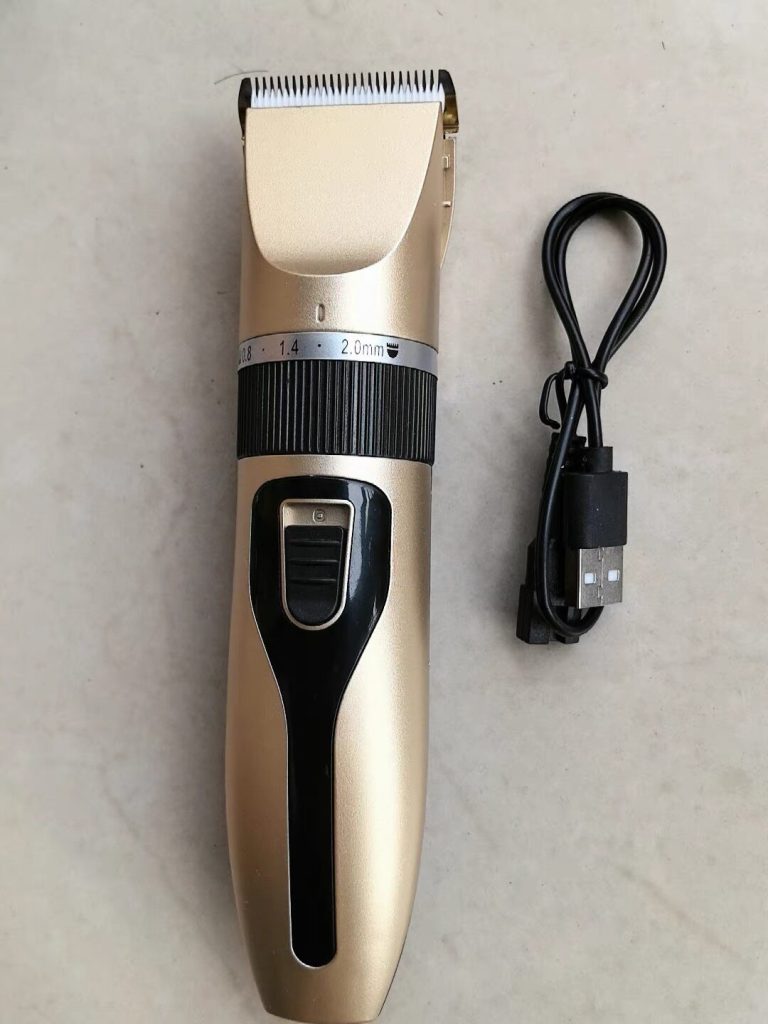
How to Choose a Hair Clipper Manufacturer for Long Battery Life and Fast Charging?
Battery performance has become one of the most important factors when choosing a cordless hair clipper. For professional barbers, salons, distributors, retailers, and private-label brands, short battery life and slow charging can directly affect product usability and customer satisfaction.
A cordless hair clipper may have excellent blades and a powerful motor, but if the battery cannot provide sufficient operating time, the overall user experience can still be disappointing.
For B2B buyers sourcing hair clippers from China, it is therefore important to evaluate not only the battery capacity but also charging speed, power management, motor efficiency, battery protection, heat management, and long-term battery performance.
This guide explains what international buyers should check when selecting a hair clipper manufacturer for long battery life and fast charging.
1. Why Is Battery Performance Important?
Cordless hair clippers are often used in environments where users need freedom of movement.
Professional barbers may use a clipper repeatedly throughout the day, while home users may expect a product to operate for several sessions between charges.
Poor battery performance can result in:
- Frequent charging
- Interrupted haircuts
- Reduced motor power
- Longer charging periods
- Shorter product lifespan
- Customer complaints
For professional products, battery reliability can be just as important as blade quality.
2. Check the Battery Capacity
Battery capacity is commonly expressed in mAh.
For example:
2,000 mAh
indicates the battery’s rated capacity.
A higher capacity can potentially provide longer operating time, but capacity alone does not determine actual runtime.
Runtime also depends on:
- Motor power
- Motor efficiency
- Operating speed
- Control electronics
- Blade resistance
- Battery voltage
- Product design
Therefore, buyers should not compare products only by mAh.
3. Battery Capacity vs. Actual Runtime
Two hair clippers can use batteries with similar capacities but have different operating times.
For example:
Clipper A: 2,000 mAh
Clipper B: 2,000 mAh
If Clipper A uses a more efficient motor and better power management, it may operate longer.
This is why B2B buyers should ask manufacturers for actual runtime testing rather than relying solely on battery capacity.
Ask:
- What is the rated battery capacity?
- What is the operating voltage?
- What is the typical runtime?
- Under what test conditions was the runtime measured?
The test conditions are important.
4. Motor Efficiency Affects Battery Life
The motor is one of the largest consumers of electrical power in a cordless clipper.
A high-performance motor can provide strong cutting performance, but higher power consumption can reduce battery runtime.
A professional manufacturer should balance:
Motor performance + cutting efficiency + battery capacity + operating time
The objective is not necessarily to install the largest battery.
It is to create an efficient overall system.
5. Why Motor Speed Is Not Enough
Some manufacturers promote very high motor RPM as a selling point.
However, a high motor speed can also increase power consumption depending on the motor and control system.
When evaluating a product, consider:
- RPM
- Torque
- Power consumption
- Efficiency
- Load performance
- Heat generation
A well-designed motor can provide sufficient cutting performance without unnecessarily wasting battery power.
6. Charging Speed Matters for Professional Users
Professional barbers may need to use their clippers repeatedly throughout the working day.
Fast charging can reduce downtime.
For example, a clipper with:
60-minute charging time
may be more convenient than one requiring several hours.
However, charging speed must be balanced with battery safety and battery longevity.
A manufacturer should use an appropriate charging system rather than simply increasing charging current.
7. What Is Fast Charging for Hair Clippers?
There is no single universal definition of “fast charging” for all hair clippers.
Different manufacturers may use different charging technologies.
Some products may support:
- USB charging
- USB-C charging
- Dedicated charging adapters
- Charging stands
- Fast-charging systems
When comparing suppliers, ask for actual charging specifications.
For example:
- Input voltage
- Input current
- Charging time
- Battery voltage
- Charging method
- Charger specification
This is more useful than simply stating “fast charging.”
8. USB-C Charging for Modern Hair Clippers
USB-C has become a popular charging interface for many consumer electronics.
Potential advantages include:
- Convenient charging
- Widely available cables
- Easy travel
- Compatibility with common power adapters
- Simple product design
However, the presence of a USB-C port does not automatically mean the product supports fast charging.
The manufacturer should specify the actual charging requirements.
9. Battery Protection Is Essential
Rechargeable batteries require appropriate protection.
A professional hair clipper should incorporate suitable battery management and charging protection.
Protection systems may address conditions such as:
- Overcharging
- Over-discharging
- Overcurrent
- Short circuit
- Abnormal charging
- Excessive temperature
The exact protection design depends on the battery chemistry and electrical architecture.
B2B buyers should ask manufacturers what battery protection system is used.
10. Battery Chemistry Matters
Different rechargeable battery chemistries have different characteristics.
Many modern cordless hair clippers use lithium-ion battery technology.
When evaluating a manufacturer, ask:
- What battery chemistry is used?
- What is the nominal voltage?
- What is the rated capacity?
- What is the battery cell specification?
- What protection system is included?
- How is battery quality controlled?
Battery specifications should be documented rather than described only as “high-quality lithium battery.”
11. Battery Life Over Multiple Charging Cycles
A battery can perform well when new but lose capacity over time.
This is important for professional products.
B2B buyers should ask the manufacturer about:
- Expected cycle life
- Battery degradation
- Warranty
- Battery replacement options
- Long-term testing
A manufacturer should have a clear method for evaluating battery performance over repeated charging cycles.
12. Battery Quality Consistency Matters
Using a large-capacity battery does not guarantee reliable products.
The factory should control:
- Battery supplier
- Cell quality
- Capacity
- Voltage
- Internal resistance
- Protection components
- Assembly quality
Inconsistent battery cells can lead to different runtimes between individual products.
For private-label brands, consistency is especially important.
13. Battery Runtime Should Be Tested Under Load
A manufacturer may advertise a very long runtime based on ideal laboratory conditions.
Actual usage can be different.
Motor load changes depending on:
- Hair density
- Hair thickness
- Cutting length
- Blade condition
- User technique
- Operating speed
Therefore, B2B buyers should ask how runtime was measured.
A realistic test should consider normal operating conditions.
14. Low-Battery Performance
Another important question is:
What happens when the battery is nearly empty?
Some products may gradually lose motor power.
This can lead to:
- Slower cutting
- Hair pulling
- Reduced cutting efficiency
- Poor user experience
A well-designed electronic system should manage battery power appropriately.
Ask the manufacturer whether the clipper maintains stable performance during normal battery discharge.
15. Charging While Using the Clipper
Some cordless hair clippers support operation while connected to a power source, while others may not.
For professional users, this feature can be useful because it provides an alternative if the battery becomes depleted.
However, charging-and-use functionality depends on the product’s electrical design and safety requirements.
Always confirm this feature with the manufacturer rather than assuming that every cordless clipper supports it.
16. Heat Management During Charging
Charging generates heat.
Operating the motor also generates heat.
When both processes occur close together, thermal management becomes important.
Manufacturers should consider:
- Battery temperature
- Charger temperature
- Motor temperature
- Internal electronics
- Housing ventilation
- Charging control
A professional factory should conduct appropriate temperature testing.
17. Charging Safety Should Be a Priority
International buyers should not focus only on fast charging.
Battery safety is more important.
Depending on the destination market and product configuration, buyers may need to consider applicable product safety and transport requirements.
Ask the manufacturer about relevant testing and documentation for your target market.
The exact requirements depend on the destination country and product configuration.
18. Certifications and Compliance
If you are importing hair clippers into another country, check which certifications and compliance documents are required.
Depending on the market, requirements may involve:
- Electrical safety
- Electromagnetic compatibility
- Battery requirements
- Charger requirements
- Transport documentation
Do not assume that a certificate required in one market automatically satisfies another market’s requirements.
Before placing a commercial order, confirm the exact requirements for your destination.
19. How OEM Buyers Can Customize Battery Performance
Private-label and OEM buyers may have different battery requirements.
For example, you may want:
- Longer runtime
- USB-C charging
- Shorter charging time
- Replaceable battery
- Charging stand
- Battery indicator
- Digital display
Some changes may require modifications to the electrical design.
Therefore, discuss these requirements with the manufacturer before finalizing the product.
20. Battery Indicator Design
A clear battery indicator can improve the user experience.
Common options include:
- LED indicators
- Multiple battery-level lights
- Digital displays
- Percentage indicators
For professional products, accurate battery information can help users plan charging and avoid unexpected interruptions.
21. How Manufacturers Can Improve Battery Life
A manufacturer can improve overall battery performance through several approaches:
Optimize the Motor
Use a motor that provides appropriate power without excessive energy consumption.
Optimize the Blade
A well-designed blade can reduce unnecessary resistance.
Optimize Electronics
Efficient control electronics can reduce energy losses.
Optimize Battery Capacity
Select an appropriate capacity for the product’s size and target use.
Improve Thermal Management
Reducing excessive heat can help protect components and battery performance.
The final product should be designed as an integrated system.
22. Don’t Judge a Clipper by Battery Capacity Alone
Consider this example:
| Feature | Clipper A | Clipper B |
|---|---|---|
| Battery | 2,000 mAh | 2,500 mAh |
| Runtime | 150 min | 160 min |
| Charging | 2 hours | 1 hour |
| Motor efficiency | High | Medium |
| Weight | Lower | Higher |
Clipper B has a larger battery but only slightly longer runtime.
Clipper A may be more attractive for users who prioritize lightweight design.
This demonstrates why buyers should evaluate the entire product rather than one specification.
23. Questions to Ask a Hair Clipper Manufacturer
Before placing an order, ask:
- What battery chemistry is used?
- What is the battery capacity?
- What is the battery voltage?
- What is the actual runtime?
- How was the runtime tested?
- What is the charging time?
- Does the product support fast charging?
- What charging interface is used?
- Does it support USB-C?
- Can the clipper operate while charging?
- What battery protection system is included?
- What is the expected battery cycle life?
- How is battery quality inspected?
- What motor is used?
- What is the motor power consumption?
- How is heat managed?
- What certifications are available?
- Can the battery configuration be customized?
- What is the MOQ for OEM production?
- Can you provide a sample for testing?
24. How B2B Buyers Should Test Battery Performance
Before placing a large order, test the sample under realistic conditions.
Test 1: Full-Charge Runtime
Fully charge the clipper and measure operating time under normal use.
Test 2: Charging Time
Record the time required to reach a full charge.
Test 3: Low-Battery Performance
Observe whether cutting performance changes as the battery level decreases.
Test 4: Repeated Use
Use the clipper repeatedly to evaluate heat and performance stability.
Test 5: Charging Temperature
Monitor whether the charger or battery becomes unusually hot.
Test 6: Multiple Charging Cycles
For long-term projects, repeated charging tests can provide more useful information than a single runtime test.
25. How to Compare Three Manufacturers
When comparing suppliers, create a battery-focused scorecard.
| Factor | Supplier A | Supplier B | Supplier C |
|---|---|---|---|
| Battery capacity | Good | Excellent | Good |
| Actual runtime | Excellent | Good | Good |
| Charging speed | Good | Excellent | Medium |
| Battery protection | Excellent | Good | Good |
| Motor efficiency | Excellent | Good | Medium |
| Heat control | Good | Excellent | Good |
| Documentation | Excellent | Good | Medium |
| OEM capability | Excellent | Good | Excellent |
This approach can help you avoid choosing a supplier based only on battery capacity or price.
Frequently Asked Questions
How long should a cordless hair clipper battery last?
There is no single ideal runtime. Basic models may offer shorter operating times, while professional models may be designed for much longer continuous or intermittent use. The appropriate runtime depends on the target market and product design.
Is a larger battery always better?
No. A larger battery can increase runtime, but it can also increase product weight, size, and cost. Motor efficiency and electronic power management are equally important.
How long should a hair clipper take to charge?
Charging time varies by battery capacity, charging system, and product design. Buyers should compare actual charging specifications rather than relying on general claims such as “fast charging.”
Is USB-C better for hair clippers?
USB-C can provide convenient charging and easier cable compatibility, but the charging performance depends on the product’s electrical design. USB-C by itself does not guarantee fast charging.
Can a cordless hair clipper be used while charging?
Some models support corded operation while charging, while others do not. Always confirm this specification with the manufacturer.
How can I verify the manufacturer’s advertised battery runtime?
Request the test conditions and perform your own sample testing. Ideally, test the clipper under realistic operating conditions rather than relying solely on the manufacturer’s advertised number.
How can I reduce battery-related customer complaints?
Choose a manufacturer with reliable battery sourcing, appropriate protection systems, consistent assembly, realistic runtime testing, and clear charging instructions.
Final Checklist for B2B Buyers
Before selecting a hair clipper manufacturer, confirm:
✓ Battery chemistry
✓ Battery capacity
✓ Battery voltage
✓ Actual runtime
✓ Charging time
✓ Fast-charging capability
✓ Charging interface
✓ USB-C compatibility
✓ Battery protection
✓ Cycle life
✓ Low-battery performance
✓ Motor efficiency
✓ Heat management
✓ Charging safety
✓ Required certifications
✓ OEM customization
✓ Sample testing
✓ Quality control
✓ Warranty
✓ Replacement support
For international buyers, a good cordless hair clipper should provide a balanced combination of battery capacity, motor efficiency, charging speed, safety, durability, and cutting performance.
A manufacturer that simply advertises a large battery capacity may not necessarily provide the best product.
Before placing an OEM or private-label order, request detailed battery specifications, verify the charging system, test actual runtime, evaluate low-battery performance, and confirm the required compliance documentation for your target market.
For distributors and private-label brands, these checks can help reduce battery-related complaints, improve customer satisfaction, and build a more reliable long-term product line.


No reply content