
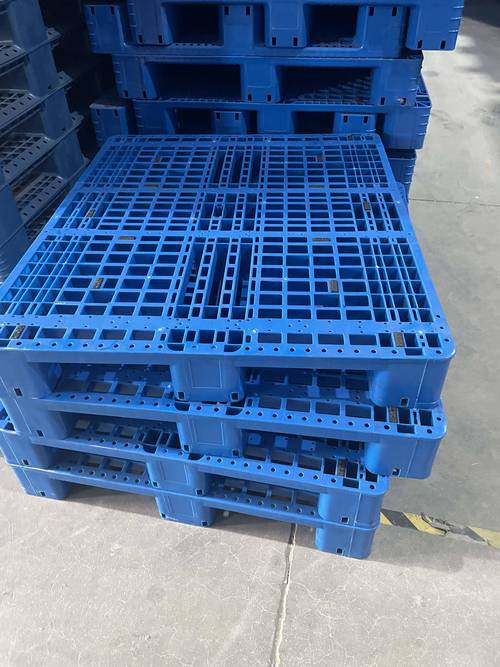
How to Choose a Heavy Duty 1200×1000 Plastic Pallet for Warehouse and Racking Use
Choosing a heavy duty plastic pallet for a warehouse is not simply a matter of selecting the largest or heaviest model available. The correct pallet must match the load, handling equipment, storage system, operating environment, and expected service life.
For companies sourcing 1200×1000 plastic pallets from China, understanding these factors before placing a bulk order can reduce specification problems and make supplier communication much easier.
What Is a Heavy Duty Plastic Pallet?
A heavy duty plastic pallet is designed for applications where the pallet must support substantial loads or withstand repeated handling.
Compared with lightweight pallets, heavy duty models may use:
- More plastic material
- Reinforced ribs
- Stronger support feet
- Thicker deck sections
- Reinforced forklift entry areas
- Structural designs intended for repeated industrial handling
However, “heavy duty” is not a universal technical specification.
Two suppliers may use the same description while offering pallets with different weights and load capacities.
For purchasing purposes, always ask for the actual specifications.
Why Choose a 1200×1000 mm Pallet?
A 1200×1000 mm footprint provides a practical balance between cargo area, warehouse handling, and transportation requirements.
It can be used in applications such as:
- Industrial warehouses
- Manufacturing plants
- Distribution centers
- Export logistics
- Food and beverage operations
- Chemical product handling
- Retail distribution
- General cargo storage
The correct dimensions still depend on your warehouse layout and cargo packaging.
Before ordering, check the pallet dimensions against your racks, forklifts, pallet jacks, conveyors, and storage areas.
Dynamic Load vs Static Load vs Racking Load
One of the most important points when purchasing a heavy duty pallet is understanding the different load ratings.
Dynamic Load
Dynamic load refers to the load supported while the pallet is being moved.
Forklifts and pallet jacks can create forces that are different from stationary storage.
If pallets will frequently move between production lines, trucks, and warehouses, dynamic load capacity is particularly important.
Static Load
Static load refers to the load supported while the pallet remains stationary on a suitable surface.
For example, a pallet supporting stacked goods on a warehouse floor may primarily involve static loading.
Racking Load
Racking load relates to pallet use in a warehouse rack system.
The support conditions are different from floor storage, so the required pallet specification can also be different.
If your pallets will be stored on racks, tell the manufacturer this requirement before requesting a quotation.
How Much Weight Can a 1200×1000 Plastic Pallet Hold?
There is no single load capacity for every 1200×1000 plastic pallet.
Capacity depends on factors such as:
- Pallet weight
- Material
- Structural design
- Support configuration
- Load distribution
- Handling method
- Storage conditions
- Temperature
- Whether the load is concentrated or evenly distributed
For this reason, buyers should not select a pallet based only on a general statement such as “heavy duty.”
Request the manufacturer’s specific dynamic, static, and racking load ratings for the exact pallet model.
How Pallet Weight Affects Performance
Pallet weight is an important purchasing consideration.
A heavier pallet may provide additional structural strength, but the buyer should consider the total logistics system rather than weight alone.
For example, pallet weight can affect:
- Product handling
- Transportation cost
- Container utilization
- Manual handling requirements
- Reusable pallet economics
When comparing suppliers, ask for both pallet weight and load capacity.
This provides a better basis for comparing different models.
What Material Should You Choose?
PP and HDPE are commonly used for plastic pallets.
The appropriate material depends on the intended application.
PP Plastic Pallets
Polypropylene can provide useful rigidity and is commonly used for various industrial plastic products.
HDPE Plastic Pallets
High-density polyethylene is also widely used in industrial applications where impact resistance and durability are important considerations.
The correct material should be selected according to the pallet’s operating environment rather than simply choosing the material with the lowest price.
If the pallets will be exposed to cold temperatures, chemicals, moisture, outdoor conditions, or repeated impacts, explain these conditions to the manufacturer.
What Deck Design Should You Choose?
The top deck affects how goods are positioned and supported.
Possible designs include:
- Solid deck
- Ventilated deck
- Reinforced deck
- Structured deck with drainage or ventilation openings
A solid deck can be useful for certain loads that require more continuous support.
A ventilated design may be useful where airflow, drainage, or weight reduction is important.
The best choice depends on the products being transported and stored.
Check Forklift and Pallet Jack Compatibility
A heavy duty pallet must work with the equipment used in your warehouse.
Before ordering, confirm:
- Fork entry direction
- Fork opening dimensions
- Pallet jack compatibility
- Forklift compatibility
- Conveyor compatibility
- Automated handling requirements
If the pallet will be used in an automated warehouse, communicate the equipment specifications to the manufacturer.
A pallet can meet its stated load rating but still be unsuitable for a particular handling system.
Racking Requires Extra Attention
Rack storage places different demands on a pallet.
The pallet may be supported at specific points rather than across its entire bottom surface.
Before selecting a pallet for racking, confirm:
- Rack type
- Beam spacing
- Pallet orientation
- Required racking load
- Load distribution
- Pallet support conditions
Do not assume that a floor-stacking pallet is automatically suitable for warehouse racking.
The supplier should confirm the intended application based on the actual pallet design.
What Type of Goods Will the Pallet Carry?
The cargo itself affects pallet selection.
Consider whether you will transport:
- Cartons
- Bags
- Drums
- Boxes
- Machinery
- Food products
- Chemical containers
- Industrial components
Also consider the shape and weight distribution of the cargo.
A concentrated load can place different stresses on a pallet compared with evenly distributed cartons.
If the cargo has small contact areas, discuss the application with the manufacturer before selecting the pallet.
Does the Operating Environment Matter?
Yes.
Tell the supplier where the pallet will be used.
Important environmental factors can include:
- Indoor or outdoor use
- High or low temperatures
- Moisture
- Chemical exposure
- Repeated washing
- UV exposure
- Heavy impact
- Frequent forklift handling
A pallet specification that works well in a dry indoor warehouse may not be the right choice for a demanding outdoor or industrial environment.
How to Compare Heavy Duty Pallet Suppliers
When comparing suppliers, request the same information from each manufacturer.
A useful comparison sheet can include:
| Specification | Supplier A | Supplier B | Supplier C |
|---|---|---|---|
| Size | 1200×1000 mm | 1200×1000 mm | 1200×1000 mm |
| Weight | Confirm | Confirm | Confirm |
| Material | Confirm | Confirm | Confirm |
| Dynamic Load | Confirm | Confirm | Confirm |
| Static Load | Confirm | Confirm | Confirm |
| Racking Load | Confirm | Confirm | Confirm |
| Deck Design | Confirm | Confirm | Confirm |
| Fork Entry | Confirm | Confirm | Confirm |
| MOQ | Confirm | Confirm | Confirm |
| Lead Time | Confirm | Confirm | Confirm |
This makes it easier to identify differences that are not obvious from product photos.
Should You Order a Sample?
For a new supplier, a sample can be useful before placing a large order.
During sample evaluation, check:
- Actual dimensions
- Actual weight
- Surface finish
- Forklift access
- Pallet jack compatibility
- Stacking
- Rack compatibility
- Overall structural design
If the pallet will carry a valuable or heavy load, discuss appropriate testing with the manufacturer rather than relying only on visual inspection.
How to Request a Heavy Duty Plastic Pallet Quote
A detailed RFQ can save time.
Send information such as:
Product: 1200×1000 heavy duty plastic pallet
Quantity: [quantity]
Application: [warehouse/racking/export/manufacturing]
Dynamic load: [requirement]
Static load: [requirement]
Racking load: [requirement]
Material: [PP/HDPE/preferred specification]
Color: [color]
Logo: [yes/no]
Destination: [city/port/country]
Shipping term: [EXW/FOB/CIF]Please provide the pallet weight, complete specification, MOQ, sample availability, production lead time, container loading quantity, and quotation.
This gives the manufacturer enough information to recommend an appropriate model.
Heavy Duty Does Not Always Mean the Best Choice
A heavier pallet is not automatically the right pallet.
If your actual application requires a moderate load capacity, choosing a substantially heavier model may increase the purchase and transportation cost without providing a meaningful operational benefit.
The objective should be to match:
Load requirement + handling equipment + storage system + operating environment + purchasing volume
to the pallet specification.
This approach can produce a more practical purchasing decision than simply searching for the heaviest available pallet.
FAQ
What size is a 1200×1000 plastic pallet?
The nominal footprint is 1200 mm × 1000 mm. Height and weight vary according to the pallet design.
Is a 1200×1000 plastic pallet suitable for heavy loads?
Some models are designed for heavy-duty applications, but load capacity depends on the exact design. Always request the manufacturer’s dynamic, static, and racking ratings.
Can a 1200×1000 pallet be used in warehouse racks?
Some models can be designed for racking, but not every pallet is suitable. Confirm rack compatibility and the required racking load before purchasing.
Which is better for a plastic pallet, PP or HDPE?
Neither material is universally better. The appropriate material depends on the application, operating environment, required mechanical properties, and manufacturer specification.
Should I buy a heavier pallet?
Not necessarily. The pallet should be matched to the actual load and handling requirements. A heavier model can add cost and weight without being necessary for every application.
Can heavy duty plastic pallets be customized?
Depending on the manufacturer, customization may include color, logo, dimensions, and structural features. Major structural changes may require a new mold.
What should I tell a manufacturer before asking for a quote?
Provide the pallet size, quantity, cargo type, load requirements, warehouse application, handling equipment, destination, and customization requirements.
Request a Heavy Duty Plastic Pallet Quote
If you are sourcing 1200×1000 heavy duty plastic pallets from China, provide your application and technical requirements before requesting a quotation.
Include:
- Required quantity
- Cargo type
- Dynamic load
- Static load
- Racking load
- Material preference
- Forklift or pallet-jack requirements
- Warehouse application
- Color
- Logo
- Destination
A complete specification helps the manufacturer identify a suitable pallet model and prepare a quotation based on your actual requirements.
Send your pallet requirements to request a factory quotation.


No reply content