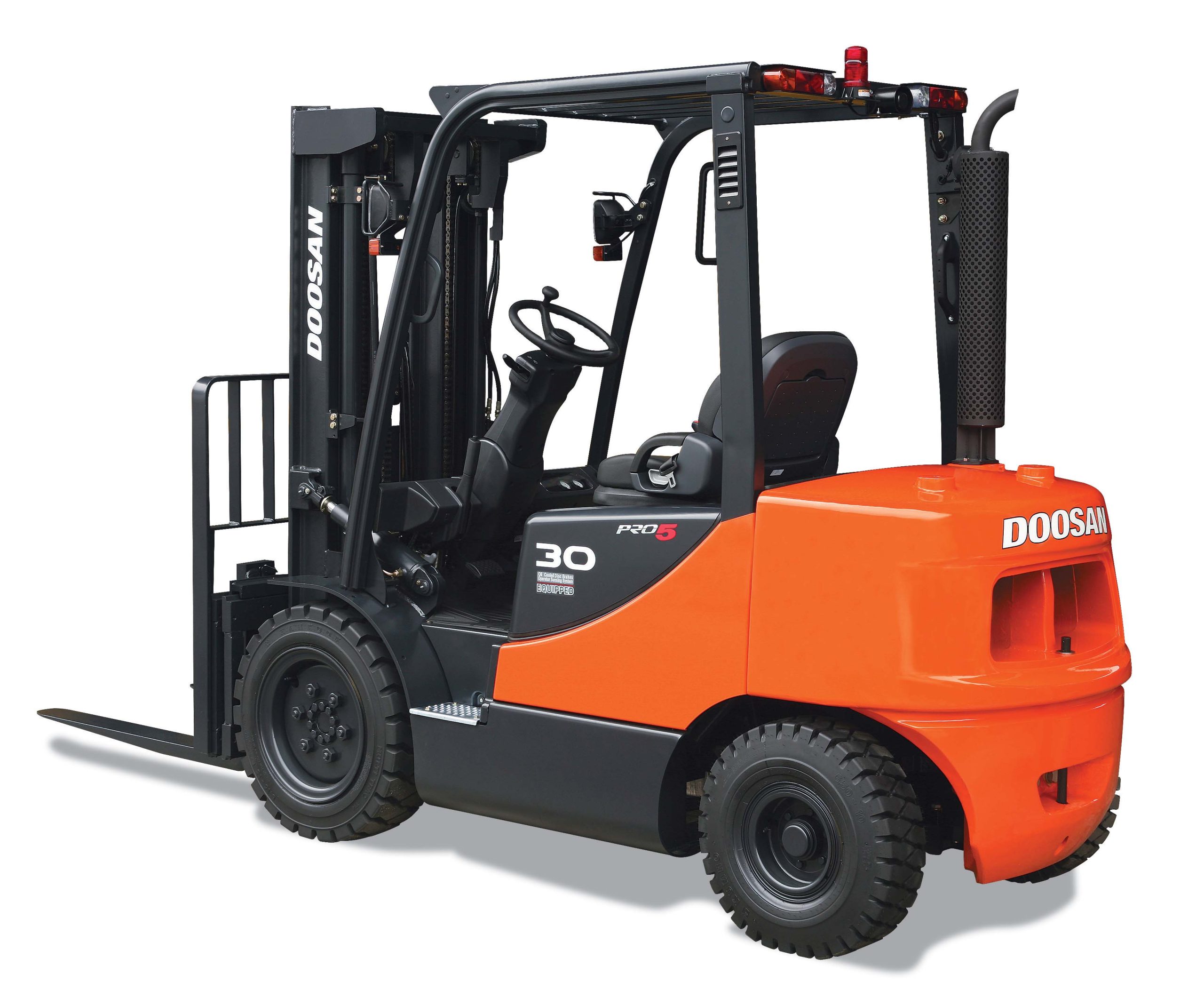
Guangzhou Forklift Manufacturing Factory
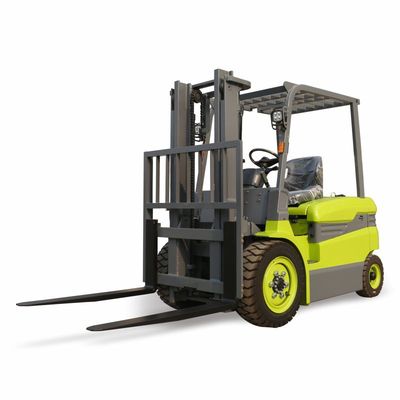
China has become the world’s largest forklift production base. In the first half of 2026 alone, Chinese manufacturers sold 861,934 forklifts, of which 318,085 units were exported—a 21% year-on-year increase in export volume . Brands like Heli, Hangcha, BYD, Lonking, and EP are now established internationally, and Chinese electric forklifts are typically 20–40% cheaper than Western equivalents while integrating advanced lithium battery technologies .
But “made in China” spans a vast spectrum—from A+H-listed giants with in-house R&D to trading companies reselling machines built by unknown third-party workshops. This guide gives procurement managers a practical, due-diligence framework to separate genuine manufacturers from intermediaries, and to verify quality and compliance before—not after—money changes hands.
1. Define Your Operational Requirements First
Before contacting any supplier, lock down your technical specifications:
-
Load capacity & lift height: Choose a model rated with a safety margin above your maximum load and stacking height.
-
Terrain & environment: Indoor operations favor electric forklifts; rugged terrain may require diesel or all-wheel-drive rough-terrain units.
-
Duty cycle: Heavy daily use may justify IC engines with fast refueling; intermittent indoor work benefits from electric models with lower emissions and maintenance.
-
Power source: Lithium-ion batteries cost more upfront but reduce charging time and downtime; lead-acid is cheaper initially but needs watering, ventilation, and longer charging .
💡 A clear spec sheet does two things: it forces the supplier to quote on the same basis, and it becomes the reference point for every quality and compliance check that follows.
2. Identify Genuine Manufacturers vs. Trading Companies
A trading company adds markup and offers zero control over production. To verify you’re dealing with a real factory:
-
Live video tour of the production floor—specifically the welding line, machining center, and assembly area .
-
Business license cross-check: Confirm the registered scope includes “manufacturing,” not just “sales” .
-
In-house capabilities: Look for CNC machining centers, robotic welding cells, and a dedicated QC lab with hydraulic test benches.
-
Engineering control: Ask whether the supplier can customize controller firmware, mast specifications, or hydraulic valve settings. Trading companies typically cannot .
-
Production evidence: Request the machine register, maintenance logs, and in-process quality checkpoint records .
China’s forklift manufacturing is concentrated in key hubs: Shandong (volume production, 60%+ of major suppliers), Jiangsu (electric and automated R&D), Anhui (Heli, the largest by output), and Zhejiang (Hangcha, Noblelift, EP). The leading tier includes Anhui Heli and Hangcha—both A+H listed, each selling roughly 200,000 units annually with electrification ratios above 80% . EP Equipment and Noblelift form a strong second tier focused on warehouse electric trucks, while BYD leads in lithium battery technology .
⚠️ A recognizable brand name is not the same as engineering depth. Mid-sized specialists often deliver better value for heavy-duty diesel or niche applications .
3. Certifications: What to Require & How to Verify
Mandatory certifications for export:
Market |
Required Certifications |
|---|---|
European Union |
CE marking (Machinery Directive 2006/42/EC), EN ISO 3691-1:2015+A1:2020, EN 1175:2020 (electrical power/systems) |
United States |
EPA Tier 4 Final for diesel engines (40 CFR Part 1039) |
Global quality baseline |
ISO 9001 (quality management), ISO 3834 (welding quality) |
Environmental |
ISO 14001 |
EN ISO 3691-1:2015+A1:2020 is the core harmonized safety standard for self-propelled industrial trucks—covering counterbalanced trucks, reach trucks, pallet stackers, rough-terrain units, and trucks powered by battery, diesel, gasoline, or LPG . It mandates six zero-tolerance safety red lines :
-
Stability: No tipping under full load, partial load, or maximum lift conditions
-
Braking: Service and parking brakes must hold on gradients without rollback
-
Emergency stop: Dual-sided e-stop, spacing ≤1200 mm, fast power cut-off
-
Operator protection: Compliant overhead guard and load backrest for masts >1800 mm
-
Electrical protection: Over-voltage, under-voltage, over-current, and over-temperature safeguards
-
Edge safety: All exposed edges rounded—no sharp burrs
How to verify authenticity (critical):
Certificate fraud does happen in the Chinese market . In 2025, China’s Certification and Accreditation Administration reported that ~12% of sampled ISO certificates issued to manufacturing SMEs contained irregularities—expired credentials, or certificates from unaccredited bodies .
Verification checklist:
-
Confirm ISO 9001 was issued by an International Accreditation Forum (IAF) member body, and cross-check the certificate number against the registrar’s public database .
-
For CE marking, confirm that the serial number range on the Declaration of Conformity matches the production units being ordered, and that the cited harmonized standards are current versions .
-
For EPA compliance, verify the engine EPA family name designation against the actual engine model—not a “compatible” domestic substitute .
-
Match the certificate’s scope explicitly to “design and manufacturing of forklifts” or “warehouse equipment.” Generic “machinery manufacturing” scopes are insufficient .
-
Insist on third-party test reports from accredited labs (TÜV, SGS, Bureau Veritas)—not self-declared documents .
📌 ISO 9001 alone does NOT guarantee product quality for complex machinery. It demonstrates a quality management system exists, but you still need product-specific inspection and technical verification .
4. Technical Deep-Dive: What to Inspect
4.1 Steel grade & welding
-
Chassis & mast steel: Premium manufacturers specify Q345B (yield strength ~20% higher than entry-level Q235B) for better performance under dynamic loading .
-
Welds: Continuous, uniform beads with no porosity, undercut, or slag inclusions at the mast mounting area, axle brackets, counterweight-frame connections, and overhead guard .
-
ISO 3834 (welding quality management) is a strong differentiator—ask for it .
4.2 Hydraulic system
-
Rated working pressure of the main pump and burst pressure of hoses (e.g., 17 MPa working / 48 MPa burst indicates a conservative safety margin).
-
Cylinder rod finish, hose routing protection (no rubbing points), valve block cleanliness.
-
Stronger factories run: hose leak check after pressure build → cylinder hold test → final loaded function test before packing .
4.3 Structural & load testing
-
Static and dynamic load testing at 1.25× rated capacity .
-
Fatigue analysis of mast and carriage assemblies.
-
Stability testing under tilt and bump conditions.
-
Lifting chain breaking load certificates from the chain supplier .
4.4 Engine supply chain (diesel models)
Ask directly: Is the quoted engine an original OEM unit (Cummins, Isuzu, Yanmar) with a traceable supply chain, or a domestic equivalent? A manufacturer that deflects, describes a domestic engine as “Cummins-compatible,” or cannot provide the OEM’s authorized dealer list for your market has answered the question without answering it .
5. The Documentation Verification Chain
A reliable manufacturer must demonstrate a complete, consistent paper trail. The following documents must all reference the same legal manufacturer name, the same forklift model, and matching technical specifications :
Document |
Key Check Points |
|---|---|
Business license |
Registered scope includes manufacturing |
Type-test certificate |
Covers the specific forklift model |
Engine nameplate & emission info |
Matches actual engine model and EPA/CE declarations |
Forklift nameplate |
Matches model, manufacturer, serial number |
Factory inspection report |
Individual machine—product model, serial number, inspection items & results |
Product certificate / CoC |
Matches model and serial number |
Product data sheet |
Matches technical specifications |
Spare parts list |
Part numbers with exploded diagrams |
If the manufacturer name, model, or specs are inconsistent across these documents, treat it as a critical red flag.
6. Red Flags: When to Walk Away
Be careful if a supplier :
-
❌ Cannot provide a production license or type-test documentation
-
❌ Provides certificates belonging to another company or a different forklift model
-
❌ Cannot provide an engine nameplate photo or environmental compliance information
-
❌ Only provides screenshots instead of verifiable documents
-
❌ Refuses to disclose the legal manufacturer entity
-
❌ Claims to be a manufacturer but cannot prove manufacturing qualification
-
❌ Offers an unusually low price without explaining the difference
-
❌ Demands 50% upfront payment or refuses escrow services
-
❌ Cannot provide a dedicated, model-specific production line or quantified monthly output
-
❌ Audit gaps >12 months or repeated non-conformities (e.g., “inadequate hydraulic testing”)
-
❌ ISO certificate scope is generic (“machinery manufacturing”) rather than forklift-specific
⚠️ A low price is not a good deal if the forklift cannot be properly registered, documented, or supported in your market.
7. After-Sales, Spare Parts & Total Cost of Ownership
The cheapest forklift is rarely the cheapest to own. TCO includes :
-
Upfront: Equipment, inland transport, sea freight, duties, installation
-
Operating: Fuel/electricity, parts, maintenance, battery replacement cycles
-
Downtime risk: Longer repair times increase costs exponentially
-
Depreciation: Used vs. new, and residual value
Spare parts strategy
For overseas buyers, a starter spare parts kit is highly recommended:
-
Filters (oil, fuel, air)
-
Belts, hoses, seal kits for common cylinders
-
Brake components
-
A few sensors and switches
-
Tire repair essentials
Request a published parts price list and lead time schedule for high-wear components. A manufacturer that cannot guarantee minimum stock levels for active production models will generate unplanned downtime . Brands like Hangcha and Heli maintain global dealer networks; platforms like TVH can assist with parts sourcing for others .
Warranty & support questions
-
Is there a local service partner in your region?
-
Can they supply critical spare parts (mast seals, hydraulic valves) within 72 hours?
-
Do they offer remote diagnostics?
-
Is warranty coverage validated by an international insurer?
-
Warranty period: insist on minimum 18 months with escrow protection
8. A Practical De-Risk Procurement Plan
Experienced importers follow this staged approach :
-
Factory audit (even a short video audit is better than none)
-
Pre-production spec lock (written configuration list)
-
Mid-production check (photos/videos of key assemblies)
-
Pre-shipment inspection (PSI) with a third-party inspector (SGS, TÜV, Bureau Veritas), using a checklist focused on:
-
Structural integrity (welds, frame, mast)
-
Hydraulics (leaks, pressure tests)
-
Safety devices (e-stop, OPS, guards)
-
Documentation match (all papers consistent)
-
-
Spare parts kit agreed before shipment
-
Clear warranty terms and response time expectations written into the contract
Contract protections
Structure payment terms tied to third-party pre-shipment inspection. Include:
-
Liquidated damages for non-compliance with ISO 9001 production logs
-
Escrow for warranty period (min. 18 months)
-
Certificate requirements as a condition of shipment—if compliance documents don’t match, shipment is withheld
9. Matching Manufacturer Tier to Your Needs
There is no single “best” Chinese forklift manufacturer—only the best fit for your profile:
-
Large-scale fleet standardization / strong brand recognition: Heli, Hangcha—broad product lines, global dealer networks, A+H listed, extensive production .
-
Electric warehouse & lithium innovation: EP Equipment, Noblelift, BYD—specialized in electric pallet trucks, stackers, and LiFePO4 battery technology .
-
Heavy-duty diesel / rough terrain: Mid-sized specialists often deliver better engineering depth than large brands for 16-hour/day demanding applications .
-
Budget / tailored customization: Niche brands (Nicosail, Meenyon, Maximal, UN) offer flexible service but require rigorous quality assurance verification .
Key Takeaways
Choosing a reliable Chinese forklift manufacturer is not about finding the lowest FOB price—it’s about de-risking the entire ownership lifecycle. The framework comes down to:
-
Verify the factory is real—live production floor, in-house engineering, valid manufacturing license.
-
Verify every certificate—cross-check with issuing bodies; ensure model numbers, serial ranges, and engine variants match your actual order.
-
Inspect what matters—steel grade, weld quality, hydraulic test data, load/stability test reports.
-
Demand documentation consistency—the verification chain must close across all papers.
-
Plan for the long term—spare parts strategy, local service partners, TCO analysis, and contract-protected warranty.
Chinese forklifts absolutely can be “decent working machines, suitable for most day-to-day jobs” —but only when the supplier is genuinely qualified, the compliance paperwork is authentic, and the procurement process includes independent verification at every stage. The extra effort in due diligence is what separates a strategic, profitable sourcing decision from a costly buyer’s remorse.
💡 If you can’t check most of the boxes in this framework, walk away. The Chinese forklift market has no shortage of suppliers—your task is to find the one that can prove its capabilities, not just claim them.


No reply content