When companies need precision components, choosing a reliable CNC machining parts supplier is one of the most important steps in the purchasing process. A wrong supplier can lead to problems such as inconsistent quality, delayed delivery, higher costs, and production risks.
For global buyers, China has become a popular sourcing destination for CNC machined parts because of its advanced manufacturing capabilities, skilled engineers, competitive pricing, and complete industrial supply chain.
This guide explains how to choose a professional CNC machining parts supplier in China and what factors buyers should consider before starting a custom machining project.
Why Do Businesses Choose CNC Machining Suppliers in China?
China’s manufacturing industry provides strong advantages for companies looking for customized parts.
1. Advanced CNC Manufacturing Capability
Professional Chinese CNC factories use modern equipment to produce precision components, including:
CNC milling machines
CNC turning machines
Multi-axis machining centers
Precision inspection equipment
These capabilities allow manufacturers to produce complex parts with high accuracy and stable quality.
2. Competitive Manufacturing Costs
Working directly with a CNC machining supplier in China can help companies reduce production expenses.
Cost advantages include:
Efficient supply chains
Professional manufacturing teams
Competitive material sourcing
Flexible production options
For businesses requiring large quantities, choosing the right factory can significantly improve cost efficiency.
Key Factors When Choosing a CNC Machining Parts Supplier
1. Check Manufacturing Experience
A reliable supplier should have experience producing similar CNC components.
Important factors include:
Years of machining experience
Industry knowledge
Engineering capability
Export experience
Experienced manufacturers can better understand technical requirements and avoid production problems.
2. Evaluate CNC Equipment and Technology
The supplier’s production capability directly affects product quality.
Check whether the factory has:
Modern CNC machines
Automated production equipment
Professional testing tools
Skilled operators
Advanced equipment helps achieve better precision and consistency.
3. Review Quality Control Processes
Quality is one of the most important concerns when purchasing custom CNC parts.
A professional manufacturer should have quality control procedures covering:
Material Inspection
Checking raw materials before production.
Production Inspection
Monitoring machining processes to ensure accuracy.
Final Inspection
Testing finished components before shipment.
Quality inspection may include:
Dimension measurement
Surface inspection
Performance testing
Custom CNC Machining Services Available
A professional CNC machining supplier can provide customized solutions based on customer requirements.
CNC Milling Services
Suitable for manufacturing:
Machine components
Aluminum parts
Complex structures
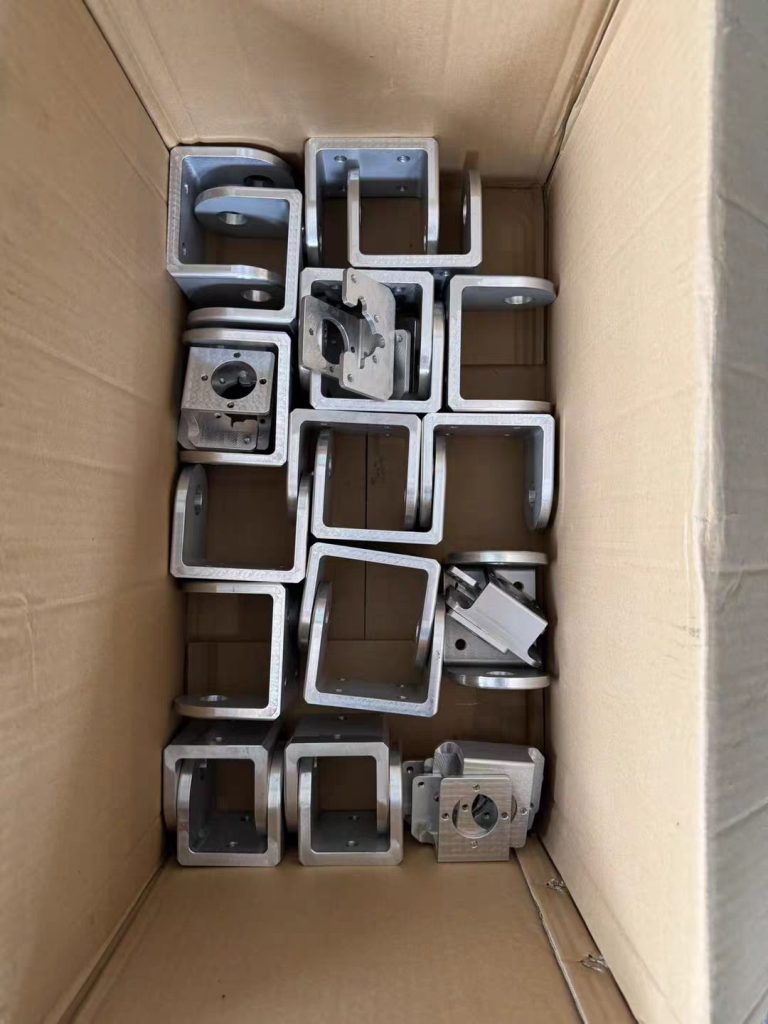
Precision brackets
CNC Turning Services
Commonly used for:
Shafts
Screws
Connectors
Cylindrical parts
Prototype CNC Machining
Ideal for companies developing new products.
Benefits include:
Fast sample production
Design verification
Reduced development risks
Mass Production CNC Machining
For large orders, factories can provide:
Stable production capacity
Consistent quality
Competitive pricing
What Information Should You Provide to a CNC Factory?
To receive accurate quotations, buyers should prepare:
Technical Drawings
Including:
Dimensions
Tolerances
Material requirements
3D Models
Common formats include:
STEP
IGES
CAD files
Production Requirements
Specify:
Quantity
Surface treatment
Delivery requirements
Application purpose
Complete information helps suppliers provide accurate solutions and pricing.
Materials Used for CNC Machined Parts
Chinese CNC manufacturers can process many different materials.
Metal Materials
Common options include:
Aluminum
Stainless steel
Steel
Brass
Copper
Titanium
Plastic Materials
Examples:
Nylon
POM
ABS
Acrylic
Material selection depends on:
Strength requirements
Environment conditions
Cost considerations
How Does a CNC Custom Project Work?
Step 1: Submit Your Requirements
Provide drawings, samples, or product specifications.
Step 2: Engineering Review
The factory analyzes the design and suggests improvements.
Step 3: Prototype Production
Samples are manufactured and tested.
Step 4: Customer Approval
After confirming the sample quality, production begins.
Step 5: Mass Manufacturing and Delivery
The supplier completes production and arranges shipment.
Common Problems When Choosing the Wrong CNC Supplier
Selecting an inexperienced supplier may cause:
Quality Problems
Incorrect dimensions
Poor surface finishing
Inconsistent products
Delivery Delays
Production issues can affect your project schedule.
Communication Issues
Poor technical communication may lead to incorrect manufacturing.
Choosing an experienced CNC machining supplier helps reduce these risks.
FAQ About CNC Machining Parts Suppliers in China
Q1: How can I find a reliable CNC machining supplier in China?
Look for manufacturers with production experience, quality control systems, modern equipment, and export experience.
Q2: Can CNC factories produce parts from samples?
Yes. Many CNC manufacturers can reverse engineer samples and create customized components.
Q3: Do Chinese CNC suppliers support small orders?
Yes. Many suppliers provide prototype machining and small-batch production services.
Q4: What industries use CNC machined parts?
CNC components are widely used in automotive, aerospace, electronics, automation, medical equipment, and industrial machinery.
Q5: Can CNC suppliers provide OEM manufacturing?
Yes. Many factories support OEM projects and long-term manufacturing partnerships.
Conclusion: Choose the Right CNC Machining Partner in China
Finding a reliable CNC machining parts supplier in China is essential for businesses that need high-quality customized components.
A professional supplier can provide precision machining, flexible production options, OEM support, and stable supply solutions.
By carefully evaluating manufacturing experience, equipment capability, quality control, and communication ability, global buyers can build successful long-term partnerships with Chinese CNC manufacturers.


No reply content