
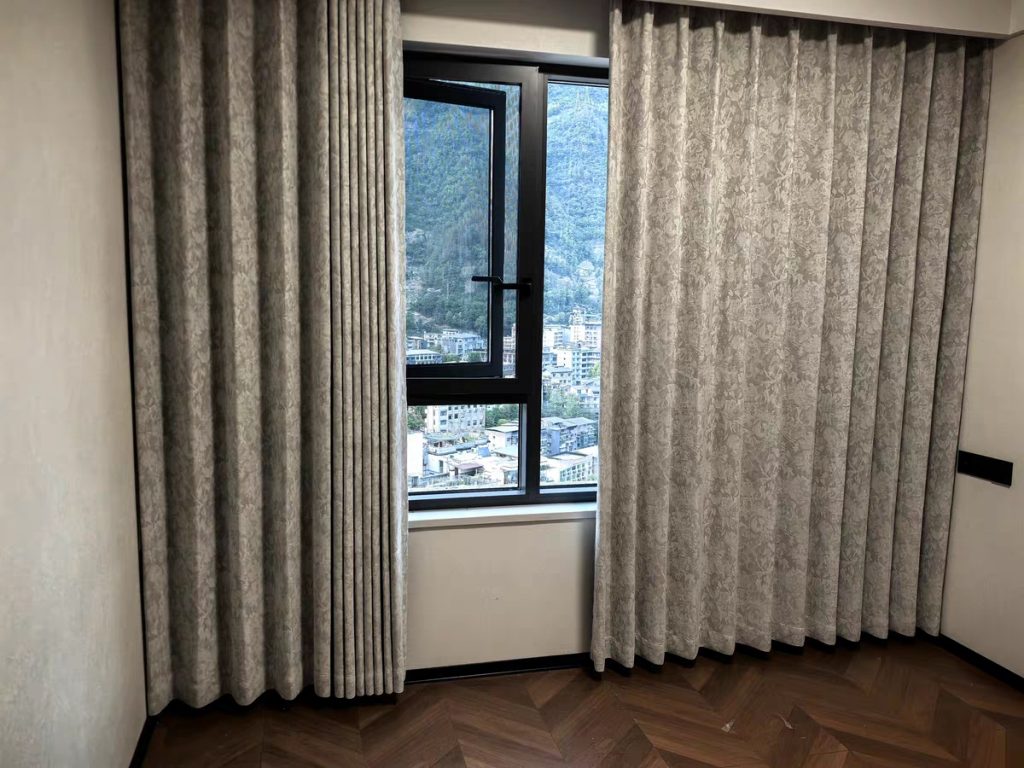
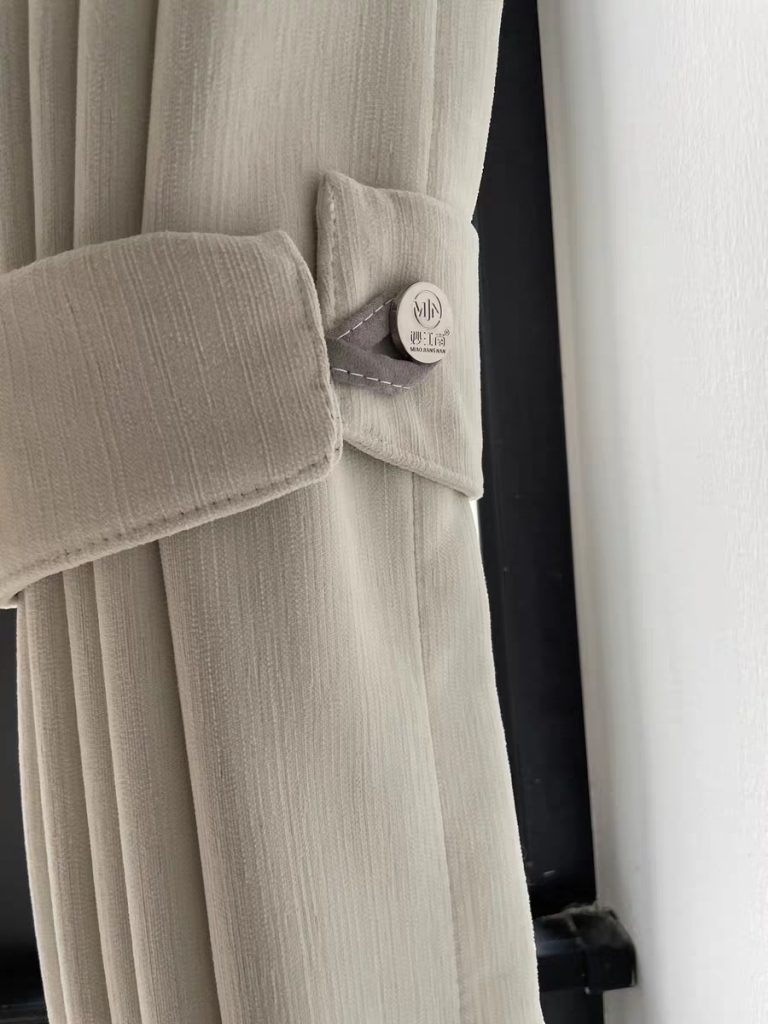

Finding the right curtain manufacturer can be challenging for importers, wholesalers, interior designers, hotels, retailers, and home-furnishing brands. A low price does not always mean a good supplier. Buyers also need to consider fabric quality, manufacturing capability, customization, quality control, packaging, and delivery.
This guide explains how to choose a curtain manufacturer and avoid common sourcing problems.
What Should You Consider When Buying Curtains?
Curtains are available in many different fabrics, styles, sizes, and functions. Before contacting a manufacturer, clearly define what you need.
Important specifications include:
- Curtain type
- Fabric material
- Width and length
- Color
- Pattern
- Curtain header
- Lining
- Light-blocking requirements
- Thermal insulation
- Logo or branding
- Packaging
- Quantity
For residential projects, appearance and fabric feel may be the priority. For hotels, offices, and commercial projects, durability, fire-safety requirements, and consistent specifications may be more important.
How to Choose a Reliable Curtain Manufacturer
1. Check Manufacturing Capability
A professional manufacturer should have suitable equipment and production processes for cutting, sewing, finishing, inspection, and packaging.
Ask the supplier about:
- Production capacity
- Factory equipment
- Product range
- Customization capability
- Quality-control procedures
- Sample production
- Export experience
If you need a large quantity, confirm that the manufacturer can maintain consistent quality throughout the entire order.
2. Select the Right Fabric
Fabric is one of the most important factors affecting curtain quality.
Depending on the application, buyers may consider:
- Polyester
- Cotton
- Linen
- Velvet
- Blended fabrics
- Sheer fabrics
- Blackout fabrics
Different fabrics provide different levels of softness, durability, light control, appearance, and maintenance requirements.
Before ordering in bulk, request fabric samples and compare them under actual lighting conditions.
3. Confirm Curtain Dimensions
Incorrect measurements are one of the most common problems when purchasing custom curtains.
The buyer should clearly confirm:
- Finished width
- Finished height
- Number of panels
- Header style
- Hem allowance
- Installation method
- Required fullness
For large projects, provide a detailed measurement sheet to the manufacturer instead of relying on verbal instructions.
Custom Curtain Manufacturing
Many curtain manufacturers provide customized production for brands, hotels, property developers, retailers, and interior-design companies.
Customization may include:
- Custom fabric
- Custom colors
- Custom dimensions
- Custom patterns
- Different header styles
- Blackout lining
- Thermal lining
- Embroidery
- Printed logos
- Private-label packaging
A professional supplier should confirm the specifications before starting mass production.
OEM and Private-Label Curtains
If you are developing your own home-furnishing brand, OEM manufacturing can allow you to create curtains under your own brand.
A typical process is:
Design → Fabric Selection → Sample → Sample Approval → Bulk Production → Quality Inspection → Packaging → Shipment
For new products, approving a sample before mass production is strongly recommended.
Quality Control
Quality control should cover both the fabric and finished curtain.
Important inspection points include:
| Inspection Area | What to Check |
|---|---|
| Fabric | Color, texture and defects |
| Dimensions | Width and length |
| Sewing | Stitching quality |
| Color | Consistency between panels |
| Pattern | Alignment |
| Header | Correct construction |
| Hem | Straight and clean |
| Accessories | Correct quantity |
| Packaging | Protection and labeling |
For large orders, buyers may also arrange a pre-shipment inspection.
Blackout and Thermal Curtains
If you are purchasing curtains for bedrooms, hotels, offices, or other spaces requiring light control, clearly specify the required performance.
Do not simply ask for “blackout curtains.” Confirm the actual construction, lining, fabric specifications, and performance requirements.
For thermal curtains, also discuss the intended insulation requirements with the manufacturer.
How to Reduce Curtain Purchasing Costs
The cheapest curtain is not necessarily the most economical option.
Consider the total cost:
Curtain Price + Customization + Packaging + Freight + Duties + Taxes + Other Import Costs
For international orders, curtain dimensions and packaging volume can significantly affect shipping costs.
Ask the manufacturer for carton dimensions, packing quantity, gross weight, and net weight before calculating the final landed cost.
How to Request a Curtain Quotation
Provide complete information when contacting a manufacturer:
Product: Curtains
Fabric: Required fabric
Size: Width × Height
Color: Required color
Quantity: Required quantity
Style: Required design
Lining: Standard / Blackout / Thermal
Logo: Required / Not required
Packaging: Standard / Customized
Destination: Country and city
Trade Terms: EXW / FOB / CIF / Other
The more detailed the specifications, the more accurate the quotation will be.
Questions to Ask Before Ordering
Before selecting a curtain manufacturer, ask:
- What fabrics do you offer?
- Can you provide fabric samples?
- Can you produce custom dimensions?
- Can you customize colors and patterns?
- Do you offer blackout or thermal curtains?
- Can you add our logo?
- What is the MOQ?
- Can you make samples?
- What is the production lead time?
- How do you control quality?
- Can you provide customized packaging?
- Do you have international export experience?
FAQ
Can I order curtains wholesale?
Yes. Curtain manufacturers can supply wholesalers, retailers, hotels, interior-design companies, property developers, and home-furnishing brands.
Can I customize curtain sizes?
Yes. Custom dimensions are commonly available for OEM and project orders.
Can I use my own fabric?
Depending on the manufacturer, you may be able to provide your own fabric or request a specific fabric specification.
Can I add my own logo?
Yes. Logo printing, embroidery, labels, and private-label packaging may be available.
Should I order samples?
Yes. Samples allow you to check fabric quality, color, sewing, dimensions, and overall appearance before placing a large order.
Conclusion
Choosing the right curtain manufacturer requires more than comparing prices. Buyers should evaluate fabric quality, production capability, customization services, dimensional accuracy, quality control, packaging, and international shipping experience.
A reliable sourcing process is:
Define Requirements → Compare Manufacturers → Request Samples → Confirm Specifications → Approve Sample → Start Production → Inspect Quality → Ship
Following this process can help buyers reduce sourcing risks and establish a stable long-term relationship with a professional curtain manufacturer.