
China Guangzhou custom curtains OEM
China
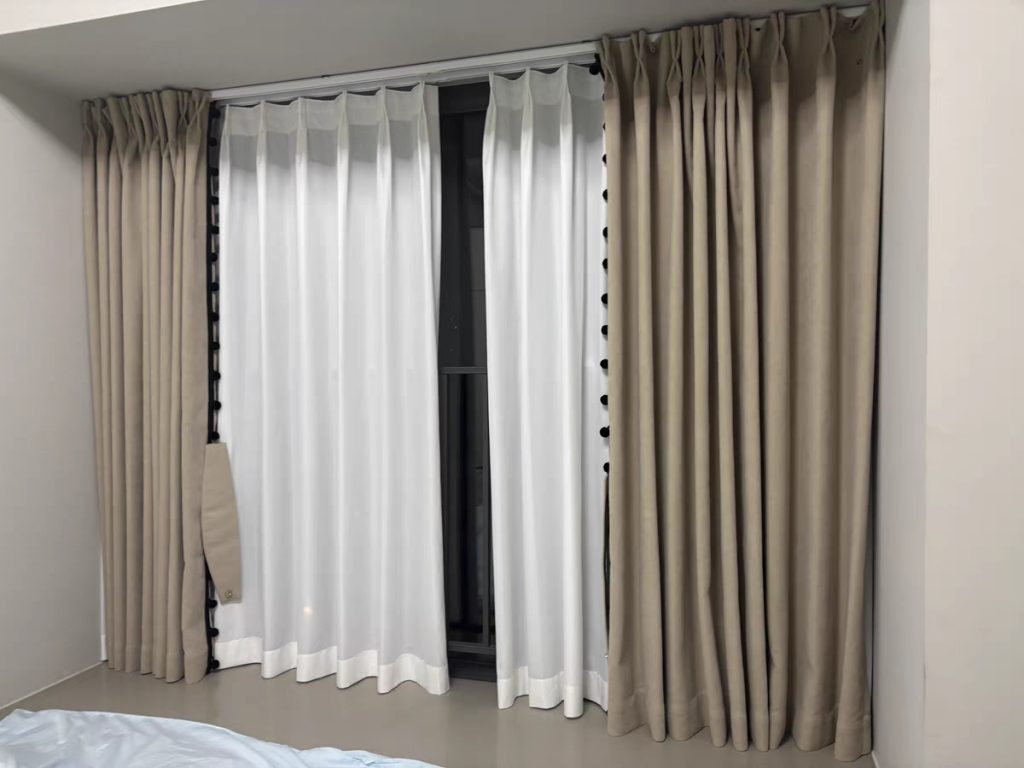
Choosing the right curtain manufacturer in China is important for importers, wholesalers, retailers, interior designers, hotels, and home furnishing brands. The right supplier can provide consistent quality, competitive pricing, customization, reliable production, and stable delivery.
However, comparing manufacturers only by price can lead to problems such as inconsistent fabric quality, inaccurate dimensions, poor stitching, color differences, and delayed shipments.
Here is a practical process for evaluating a reliable curtain manufacturer.
1. Check the Manufacturer’s Production Experience
Start by checking how long the company has been manufacturing curtains and related textile products.
Ask about:
-
Years of curtain manufacturing experience
-
Main curtain product categories
-
Factory production capacity
-
Export experience
-
Main overseas markets
-
OEM and ODM capabilities
-
Available production equipment
A manufacturer with experience in international orders is generally more familiar with specifications, packaging, labeling, quality inspection, and export requirements.
2. Review the Curtain Product Range
A professional curtain manufacturer should be able to clearly explain its product range.
Depending on your market, products may include:
-
Blackout curtains
-
Sheer curtains
-
Linen curtains
-
Velvet curtains
-
Polyester curtains
-
Thermal curtains
-
Hotel curtains
-
Bedroom curtains
-
Living room curtains
-
Custom-made curtains
-
Curtain panels
-
Curtain accessories
A broader product range can make it easier to source multiple related products from one supplier.
3. Check Fabric Quality
Fabric is one of the most important factors affecting curtain quality.
Ask the manufacturer for detailed fabric specifications, including:
-
Fiber composition
-
Fabric weight
-
Fabric width
-
Weave or construction
-
Shrinkage
-
Colorfastness
-
Light-blocking performance
-
Washing instructions
Do not rely only on terms such as “premium fabric” or “high quality.” Request specific technical information and samples.
4. Request Samples Before Bulk Ordering
A sample is one of the best ways to evaluate a curtain manufacturer.
Check the sample for:
-
Fabric appearance
-
Thickness
-
Weight
-
Color
-
Stitching
-
Hem quality
-
Seam consistency
-
Curtain dimensions
-
Hanging performance
-
Blackout performance if applicable
-
Wrinkling
-
Odor
For customized curtains, ask the manufacturer to provide a sample made according to your actual specifications whenever possible.
5. Evaluate Customization Capabilities
Many curtain buyers need products customized for their market or brand.
Ask whether the factory can customize:
-
Width
-
Length
-
Fabric
-
Color
-
Pattern
-
Header style
-
Eyelets
-
Hooks
-
Pleats
-
Lining
-
Logo
-
Packaging
If you require a specific design, provide drawings, measurements, photographs, or physical samples to reduce misunderstandings.
6. Check Sewing and Finishing Quality
Good fabric cannot compensate for poor workmanship.
Inspect:
-
Straight seams
-
Stitch density
-
Hem consistency
-
Thread quality
-
Loose threads
-
Corner construction
-
Pleat consistency
-
Header attachment
-
Lining attachment
For large orders, define acceptable quality standards before production begins.
7. Ask About MOQ
Minimum order quantities can vary significantly between manufacturers.
A factory may offer:
-
Low MOQ for standard products
-
Higher MOQ for custom colors
-
Higher MOQ for custom fabrics
-
Larger MOQ for customized patterns
-
Additional requirements for special packaging
Ask the supplier for the MOQ for each customization option instead of assuming one MOQ applies to every product.
8. Compare Production Capacity and Lead Time
Production capacity becomes especially important for wholesalers and large projects.
Ask:
-
What is the normal production lead time?
-
How many curtains can be produced per month?
-
Can the factory handle seasonal increases?
-
What happens if an order is urgent?
-
How long does custom production take?
Get the production schedule in writing before placing a large order.
9. Check Quality-Control Procedures
A reliable manufacturer should have quality checks during production rather than inspecting everything only after the order is finished.
A typical process can include:
Fabric inspection → Cutting → Sewing → Finishing → Measurement inspection → Final inspection → Packaging
For large commercial orders, buyers may also arrange independent pre-shipment inspection.
10. Compare the Total Cost, Not Just the Unit Price
When comparing curtain manufacturers, consider the complete purchasing cost.
This may include:
-
Curtain price
-
Customization
-
Packaging
-
Labels
-
Samples
-
Mold or tooling if applicable
-
Domestic transportation
-
International freight
-
Customs-related costs
-
Destination charges
A supplier with the lowest unit price may not have the lowest total landed cost.
11. Check Export Packaging
Curtains can be compressed or folded, but improper packaging can result in wrinkles, moisture damage, or contamination during transportation.
Ask the manufacturer about:
-
Individual packaging
-
Inner bags
-
Cartons
-
Moisture protection
-
Carton dimensions
-
Carton weight
-
Palletization
-
Product labels
Efficient packaging can also reduce international shipping costs.
12. Verify Communication and After-Sales Support
Communication is an important part of supplier evaluation.
Pay attention to whether the manufacturer:
-
Answers technical questions clearly
-
Provides complete quotations
-
Sends samples on time
-
Confirms specifications in writing
-
Reports production progress
-
Handles quality complaints professionally
A supplier that communicates clearly before the order is often easier to work with during mass production.
13. Start with a Small Trial Order
If you have never worked with the manufacturer before, consider starting with a smaller order.
A practical process is:
Supplier screening → Sample → Specification confirmation → Trial order → Quality inspection → Larger order
This allows you to evaluate actual production quality before committing to a long-term relationship.
Questions to Ask a Curtain Manufacturer
Before requesting a quotation, you can ask:
-
What types of curtains do you manufacture?
-
What fabrics are available?
-
What fabric compositions do you offer?
-
What is the MOQ?
-
Can you customize sizes and colors?
-
Can you provide samples?
-
Can you add custom labels or packaging?
-
What is your normal production lead time?
-
What is your monthly production capacity?
-
How do you inspect finished curtains?
-
What are your export packaging options?
-
Which international markets do you currently serve?
FAQ
Can Chinese curtain manufacturers produce custom sizes?
Yes. Many manufacturers can produce curtains according to specified width and length, although the available customization and MOQ depend on the factory.
Can I order curtains with my own brand?
Yes. Depending on the supplier, custom labels, packaging, printing, and other branding options may be available.
Should I request fabric samples?
Yes. Fabric samples allow you to evaluate color, texture, weight, thickness, and other characteristics before placing a bulk order.
How can I avoid receiving curtains with inconsistent dimensions?
Provide detailed measurements and tolerances before production, approve a sample, and include the agreed specifications in the purchase order.
Is the cheapest curtain manufacturer the best choice?
Not necessarily. Compare fabric quality, workmanship, customization, production capacity, packaging, lead time, and total landed cost together.
Conclusion
Finding a reliable curtain manufacturer in China requires more than comparing quotations. Buyers should evaluate fabric quality, sewing workmanship, customization capability, production capacity, quality control, packaging, export experience, and communication.
For first-time buyers, the safest approach is to compare several manufacturers, request samples, establish detailed specifications, place a trial order, and inspect the products before moving to larger-volume purchases.
Article Link:
How to Choose a Reliable Curtain Manufacturer in China?


No reply content