
China Guangzhou custom curtains OEM
China
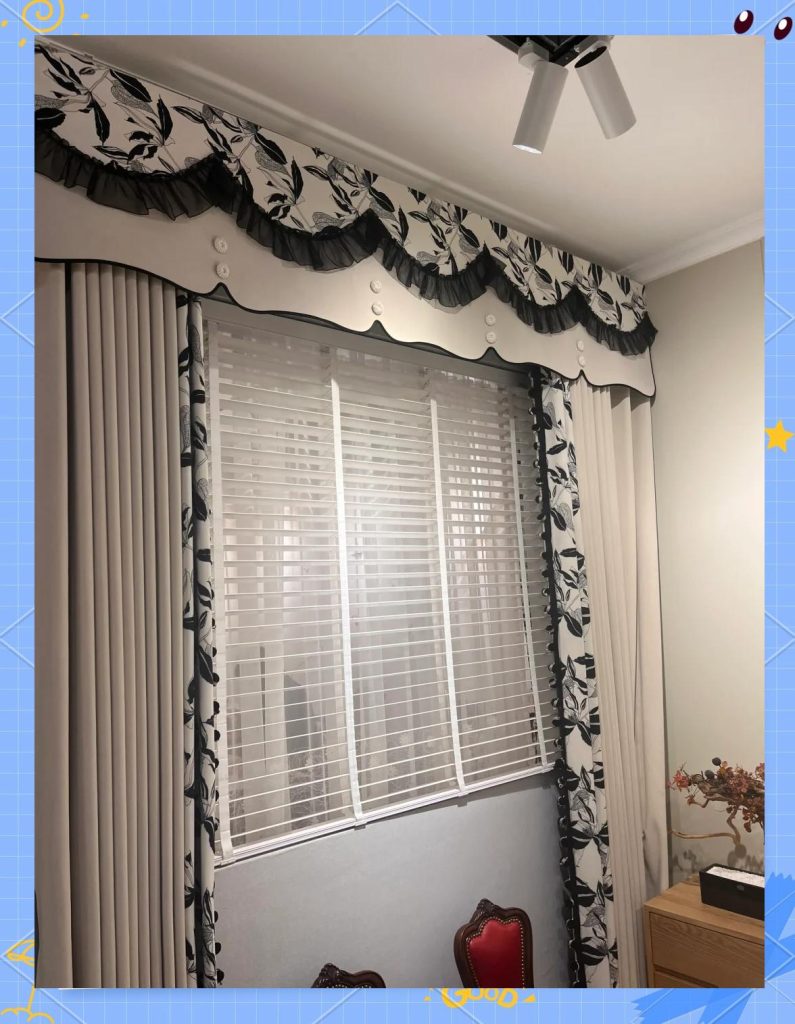
Choosing a reliable curtain manufacturer in China is more complicated than comparing a few product prices. For overseas buyers, the right supplier needs to provide consistent quality, clear specifications, realistic production lead times, dependable communication, and the ability to manufacture according to the agreed requirements.
China has a large curtain and home-textile manufacturing industry, ranging from small sewing workshops to specialized factories producing curtains for retailers, hotels, interior-design projects, and international brands. This gives buyers many sourcing options, but it also means that supplier capabilities can vary significantly.
A manufacturer that is suitable for a 100-piece standard curtain order may not be suitable for a 5,000-piece private-label project. Likewise, a factory that produces inexpensive polyester curtains may not have the equipment or experience required for premium linen, hotel blackout curtains, or complicated custom designs.
This guide explains what overseas buyers should check before selecting a reliable curtain manufacturer in China.
1. Define Your Curtain Requirements Before Searching
The first mistake many buyers make is contacting manufacturers before defining what they actually need.
A factory cannot provide a meaningful quotation if the buyer only says:
“I need 1,000 curtains. Please send me your best price.”
A professional RFQ should include as many specifications as possible.
Basic Product Information
Specify:
-
Curtain type
-
Finished dimensions
-
Quantity
-
Fabric composition
-
Fabric weight
-
Color
-
Pattern
-
Header style
-
Lining
-
Accessories
-
Packaging
-
Logo requirements
-
Destination market
For example:
Product: Blackout curtain
Size: 140 × 250 cm per panel
Fabric: 100% polyester
Color: Beige
Header: Grommet
Lining: Blackout
Quantity: 1,000 pieces
Packaging: Individual polybag + export carton
A detailed specification makes supplier comparisons much more accurate.
2. Determine Whether the Supplier Is Actually a Manufacturer
One of the most important questions is whether you are dealing with a factory or a trading company.
A trading company is not necessarily unreliable. In some cases, a professional trading company can provide useful sourcing and quality-control services. However, buyers should understand who is actually manufacturing the curtains.
Ask the supplier:
-
Where is your factory located?
-
What products do you manufacture?
-
How many production lines do you have?
-
How many workers are involved in curtain production?
-
Which processes are performed in-house?
-
Which processes are outsourced?
-
What is your approximate monthly production capacity?
-
Can you provide factory photos or a video tour?
-
Can you arrange a factory inspection?
The purpose is not simply to find a company that calls itself a “factory.”
The goal is to understand who controls production.
3. Check the Company’s Basic Information
Before sending a large payment, collect basic information about the supplier.
Depending on the supplier and transaction, useful information may include:
-
Legal company name
-
Registered business information
-
Factory address
-
Sales office address
-
Contact person
-
Company website
-
Business email
-
Export experience
-
Main product categories
-
Banking information
-
Relevant certifications
The name on your quotation, contract, invoice, and payment information should be consistent or clearly explained.
If the supplier gives you a company name that differs from the name receiving payment, ask why.
There may be legitimate reasons, but unexplained inconsistencies deserve additional verification.
4. Look at the Manufacturer’s Product Specialization
A manufacturer that claims to produce everything from curtains to machinery, electronics, furniture, and agricultural equipment deserves closer examination.
A specialized curtain manufacturer should normally be able to discuss curtain production in practical detail.
Ask about:
-
Fabric sourcing
-
Fabric inspection
-
Cutting equipment
-
Sewing machines
-
Overlock sewing
-
Hemming
-
Header production
-
Eyelet or grommet installation
-
Embroidery
-
Printing
-
Quality inspection
-
Packing
You do not need to become a textile engineer.
However, a genuine manufacturer should be able to answer basic production questions clearly.
5. Request Physical Samples
Samples are one of the most useful ways to evaluate a curtain manufacturer.
Product photographs cannot reliably show:
-
Fabric weight
-
Actual color
-
Hand feel
-
Opacity
-
Stitching quality
-
Drape
-
Hem construction
-
Lining quality
-
Header strength
Request a sample that closely matches your intended bulk order.
If you need custom curtains, the sample should use the same or equivalent:
-
Fabric
-
Color
-
Dimensions
-
Header
-
Lining
-
Sewing method
Do not approve mass production based only on a photograph.
6. Evaluate Curtain Fabric Quality
Fabric is often the largest component of curtain quality.
Two curtains can look similar in photographs while having very different material specifications.
Ask the manufacturer for:
-
Fiber composition
-
Fabric width
-
GSM
-
Fabric construction
-
Color specification
-
Shrinkage information
-
Colorfastness information
-
Functional performance where relevant
For example, “polyester curtain” is not a sufficient specification for a large commercial order.
One polyester fabric may be lightweight and inexpensive, while another may be much heavier, denser, and designed for blackout or hospitality applications.
Compare Samples Under the Same Conditions
When comparing factories, place samples side by side and evaluate:
-
Weight
-
Thickness
-
Texture
-
Color
-
Light transmission
-
Stitching
-
Shape
-
Finishing
This gives you a much better basis for comparing suppliers than unit price alone.
7. Check Blackout Performance Carefully
Blackout curtains are particularly important because the word “blackout” can describe different products.
Ask the supplier how the blackout effect is achieved.
Possible constructions include:
-
Blackout coating
-
Blackout lining
-
Multi-layer fabric
-
Dense woven construction
If your project requires a specific performance level, request appropriate testing documentation.
For hotels, bedrooms, offices, or other commercial applications, do not assume that a curtain marketed as “blackout” will automatically meet your required standard.
8. Examine Sewing and Finishing Quality
Curtains are relatively simple products, but poor sewing can cause problems during installation and use.
Check:
-
Straight seams
-
Even hems
-
Thread quality
-
Stitch density
-
Corner construction
-
Header attachment
-
Grommet installation
-
Label placement
-
Loose threads
-
Wrinkles
-
Dimensional accuracy
For larger orders, define acceptable tolerances before production.
For example, instead of simply saying “size 140 × 250 cm,” specify the acceptable dimensional tolerance in the purchase specification if exact dimensions are important.
9. Ask About MOQ
Minimum Order Quantity varies considerably between Chinese curtain manufacturers.
A factory may accept a small order for standard products but require a larger quantity for:
-
Custom fabric
-
Custom colors
-
Printing
-
Embroidery
-
Private labeling
-
Special packaging
-
Custom development
Indicative commercial ranges might be:
Product Type |
Possible MOQ |
|---|---|
Standard ready-made curtain |
50–200 pieces |
Custom-size curtain |
100–500 pieces |
Custom color/fabric |
300–1,000+ pieces |
Private-label project |
500–2,000+ pieces |
Large hotel/project order |
Negotiated |
These numbers are only general references. Every manufacturer has its own production requirements.
If your initial order is small, ask whether the factory can use an existing fabric and standard color rather than developing a completely new material.
10. Compare Prices Correctly
Price comparison is useful, but only when the specifications are equivalent.
Suppose three factories quote:
-
Factory A: US$3.20
-
Factory B: US$4.10
-
Factory C: US$5.00
The cheapest supplier is not necessarily the best choice.
Ask whether all three quotations use the same:
-
Fabric composition
-
GSM
-
Dimensions
-
Header
-
Lining
-
Accessories
-
Packaging
-
Quantity
-
Incoterm
A US$3.20 curtain made with a lighter fabric is not directly comparable with a US$5 curtain made with heavier blackout material.
A Practical Price Reference
For general sourcing purposes, standard curtain manufacturing prices may range roughly from:
US$2–8 per piece for basic products, while more customized or premium curtains may range from approximately US$8–30+ per piece.
These are broad reference ranges rather than fixed market prices. Fabric, size, order quantity, construction, customization, packaging, and material costs can change the actual quotation considerably.
11. Ask About OEM and Private Label Services
If you operate a retail brand, you may need more than a standard curtain.
Ask whether the manufacturer can provide:
-
Custom labels
-
Brand packaging
-
Custom colors
-
Custom designs
-
Printed packaging
-
Barcodes
-
Product inserts
-
Customized cartons
Clarify whether the factory is providing OEM manufacturing or simply adding your label to an existing product.
For a genuine private-label project, your specifications should be clearly documented.
12. Check the Factory’s Quality-Control Process
A reliable manufacturer should have some form of quality-control system.
A practical curtain production process may include:
Fabric inspection
↓
Cutting inspection
↓
Sewing inspection
↓
Finished-product inspection
↓
Packing inspection
Not every factory uses the same system, but the manufacturer should be able to explain how defective products are identified.
Ask:
How do you inspect the curtains before shipment?
A vague answer such as “Don’t worry, we always have good quality” is less useful than a specific explanation of what is inspected and when.
13. Consider Third-Party Inspection
For a small sample order, a formal inspection may not be necessary.
For a large commercial shipment, however, an independent inspection can reduce risk.
Depending on the project, inspection may cover:
-
Quantity
-
Dimensions
-
Fabric
-
Color
-
Stitching
-
Appearance
-
Packaging
-
Labels
-
Carton condition
The inspection criteria should be agreed before the inspection takes place.
This is important because an inspector needs objective specifications against which the products can be evaluated.
14. Check Relevant Certifications and Testing
Certification requirements depend on the destination country and application.
Depending on your product and market, you may need to investigate:
-
OEKO-TEX®
-
REACH-related requirements
-
Flame-retardant testing
-
Formaldehyde limits
-
Colorfastness
-
Fiber-content testing
-
Other destination-specific requirements
Do not simply ask:
“Do you have certificates?”
Ask for the actual certificate or test report and check:
-
Company name
-
Product/material covered
-
Testing standard
-
Issue date
-
Validity where applicable
A certificate for one fabric does not necessarily prove compliance for every curtain produced by the factory.
15. Check Production Capacity and Lead Time
A supplier may be able to produce 100 curtains quickly but struggle with a 10,000-piece order.
Ask:
-
What is your normal production lead time?
-
What is your monthly capacity?
-
How many production lines are available?
-
What happens during peak season?
-
How long will fabric procurement take?
-
How long will custom packaging take?
For custom products, sample approval and material preparation can add additional time.
Do not promise your customers a delivery date until the manufacturer’s production schedule has been confirmed.
16. Evaluate Communication
Communication is an underrated part of supplier selection.
A reliable supplier should be able to answer technical questions clearly.
Pay attention to whether the supplier:
-
Responds consistently
-
Understands specifications
-
Answers questions directly
-
Provides complete quotations
-
Confirms changes in writing
-
Communicates production problems early
-
Provides realistic delivery dates
If communication becomes difficult before you place an order, managing a large production project may become even harder later.
17. Pay Attention to Payment Details
Before making payment, make sure the commercial documents are clear.
Confirm:
-
Seller’s legal name
-
Buyer information
-
Product specifications
-
Quantity
-
Unit price
-
Total amount
-
Payment terms
-
Production lead time
-
Packaging requirements
-
Inspection requirements
-
Shipping terms
Be particularly careful if the beneficiary name on the bank account does not match the contracting company.
Do not send a large payment simply because a salesperson provides a bank account by message.
Verify the payment information through an appropriate company communication channel and make sure it matches the agreed commercial documents.
18. Understand Incoterms
When comparing curtain quotations from China, make sure you understand what the price includes.
Common terms include:
-
EXW
-
FOB
-
CIF
-
DAP
-
DDP
For example, an EXW price generally does not represent the same cost as a DDP price delivered to your warehouse.
When comparing suppliers, request quotations under the same trade term whenever possible.
For example:
Please quote FOB Shenzhen for 1,000 curtains.
This makes supplier prices easier to compare.
19. Watch for Common Supplier Warning Signs
Not every low-priced supplier is a problem, but certain situations deserve additional verification.
Be cautious when:
The supplier refuses to provide basic company information
A professional manufacturer should normally be able to explain its business identity and manufacturing capabilities.
The quotation is dramatically lower than everyone else
There may be a legitimate reason, but check whether the material or specification is different.
The supplier changes bank-account information unexpectedly
Verify any payment-account change independently.
The supplier refuses samples
This is particularly concerning for custom products.
The supplier promises everything
A company claiming to produce every type of curtain, fabric, accessory, and unrelated product may need closer evaluation.
The supplier avoids written specifications
Important agreements should not exist only in informal chat messages.
20. A Practical Supplier Evaluation Scorecard
Instead of choosing based on instinct, create a simple scoring system.
Evaluation Factor |
Suggested Weight |
|---|---|
Product Quality |
25% |
Manufacturing Capability |
15% |
Price |
15% |
Communication |
10% |
MOQ |
10% |
Lead Time |
10% |
Quality Control |
5% |
Certifications/Testing |
5% |
Export Experience |
5% |
You can adjust the weights according to your project.
For a hotel project, quality and compliance may be more important than price.
For an online retailer, packaging, customization, MOQ, and product cost may carry greater weight.
21. Questions to Ask Before Placing an Order
Before choosing a China curtain manufacturer, ask at least:
-
Are you the manufacturer or a trading company?
-
Where is your factory located?
-
What curtain products do you specialize in?
-
What fabrics can you supply?
-
What is the MOQ?
-
Can you produce custom dimensions?
-
Can you provide OEM/private-label production?
-
Can you make samples?
-
What is the sample cost?
-
What is the bulk production lead time?
-
How do you inspect fabric?
-
How do you inspect finished curtains?
-
Can you provide testing documentation?
-
What packaging options are available?
-
Can you support third-party inspection?
-
Which countries do you export to?
-
What payment terms do you offer?
-
Can you quote FOB or CIF?
-
What happens if products fail inspection?
-
Can all specifications be included in the purchase contract?
The purpose of these questions is not to make the purchasing process complicated. It is to reduce uncertainty before money and production capacity are committed.
22. The Best Way to Compare Three Curtain Manufacturers
Suppose you find three potential suppliers.
Instead of sending each company a different request, prepare one standardized RFQ.
For example:
Product: Blackout curtain
Material: 100% polyester
Size: 140 × 250 cm
Color: Beige
Header: Grommet
Quantity: 1,000 pieces
Packaging: Individual polybag + export carton
Destination: New York, USA
Send exactly the same specifications to all three manufacturers.
Then compare:
-
Product sample
-
Unit price
-
MOQ
-
Production lead time
-
Packaging
-
Quality-control process
-
Certifications
-
Payment terms
-
Shipping terms
-
Communication
This gives you a much more reliable supplier comparison.
23. What a Reliable Curtain Manufacturer Should Look Like
There is no single characteristic that proves a factory is reliable.
A stronger supplier usually demonstrates several positive signals at the same time:
Clear company identity
-
Relevant manufacturing experience
-
Consistent product specifications
-
Good samples
-
Transparent pricing
-
Reasonable MOQ
-
Documented quality control
-
Realistic lead times
-
Professional communication
-
Appropriate testing/certification
-
Willingness to accept reasonable inspections
The more of these characteristics a manufacturer can demonstrate, the easier it is to assess the supplier’s suitability.
Frequently Asked Questions
How do I find a reliable curtain manufacturer in China?
Start by defining your specifications, then identify several manufacturers and compare their factory capabilities, samples, pricing, MOQ, quality control, production capacity, and export experience. For larger orders, consider factory verification and third-party inspection.
How can I tell whether a Chinese curtain supplier is a factory?
Ask for the factory address, manufacturing process, production equipment, capacity information, factory photos or video, and relevant company documentation. A factory inspection provides stronger evidence than a website alone.
What is a reasonable MOQ for curtains?
MOQ varies by product. Standard curtains may be available from tens or hundreds of pieces, while custom fabrics, colors, private labels, and OEM projects often require higher quantities.
Should I order samples before a bulk order?
Yes. Samples are particularly important for custom curtains because fabric weight, color, construction, stitching, lining, and dimensions cannot be accurately evaluated from photographs alone.
How can I compare curtain factory prices?
Send identical specifications to multiple suppliers and compare equivalent products. Check fabric composition, GSM, dimensions, header, lining, packaging, quantity, and Incoterms before deciding which quotation is genuinely cheaper.
Can a Chinese curtain factory make custom sizes?
Many manufacturers can produce custom dimensions. However, confirm the factory’s minimum quantity, measurement tolerances, and production limitations before placing an order.
Can I put my own brand on curtains manufactured in China?
Many manufacturers provide OEM and private-label services, including labels, packaging, colors, and custom designs. Confirm the requirements and intellectual-property arrangements before production.
How long does it take to manufacture curtains in China?
Lead times depend on fabric availability, customization, quantity, packaging, and the factory’s production schedule. Standard orders can often be completed within several weeks, while custom projects may require longer development and production periods.
Should I use a third-party inspection company?
For significant orders, an independent inspection can provide an additional quality-control layer before shipment. The inspection should be based on clearly defined product specifications and acceptance criteria.
Final Checklist for Overseas Buyers
Before placing a curtain order with a Chinese manufacturer, make sure you have:
-
[ ] Confirmed the supplier’s company identity
-
[ ] Confirmed manufacturing capability
-
[ ] Defined the curtain specifications
-
[ ] Compared several suppliers
-
[ ] Received and evaluated samples
-
[ ] Confirmed fabric composition and weight
-
[ ] Confirmed MOQ
-
[ ] Confirmed production lead time
-
[ ] Confirmed packaging
-
[ ] Checked relevant testing requirements
-
[ ] Agreed on payment terms
-
[ ] Confirmed Incoterms
-
[ ] Documented quality requirements
-
[ ] Considered third-party inspection
-
[ ] Confirmed the final purchase specification
Conclusion
Choosing a reliable curtain manufacturer in China should be treated as a supplier-evaluation process rather than a simple price search.
The best manufacturer is not necessarily the factory offering the lowest quotation. A suitable supplier should be able to consistently manufacture the required curtain according to your specifications, provide appropriate samples, communicate clearly, maintain reasonable quality control, and meet your required production and delivery schedule.
For first-time buyers, a practical approach is to start with several potential manufacturers, send them the same RFQ, compare samples and complete quotations, verify the strongest candidates, and begin with a manageable order before expanding the relationship.
A careful supplier-selection process takes more time at the beginning, but it can prevent much larger problems with quality, delivery, and costs later.
Article Link:
How to Choose a Reliable Curtain Manufacturer in China


No reply content