China Professional Hair Clipper Manufacturing Co., Ltd.
Finding an electric hair clipper wholesaler in China is easy. Finding a supplier that can consistently provide reliable products, competitive wholesale pricing, stable quality, and on-time delivery is much more important.
For barbershop suppliers, distributors, online sellers, beauty equipment retailers, and private-label brands, choosing the wrong supplier can create problems with defective clippers, weak batteries, poor blades, inconsistent performance, delayed shipments, and customer complaints.
China has a large supply chain for electric hair clippers and personal grooming equipment. However, suppliers vary considerably in product quality, manufacturing capabilities, customization options, minimum order quantities, and after-sales support.
If you are planning to purchase electric hair clippers wholesale from China, the following points can help you evaluate suppliers before placing a large order.
1. Define Your Target Product First
Before contacting wholesalers, decide what type of electric hair clipper you actually need.
Different customers have different requirements.
You may be looking for:
-
Professional barber clippers
-
Cordless hair clippers
-
Rechargeable hair clippers
-
Heavy-duty professional clippers
-
Home-use hair clippers
-
Taper clippers
-
Beard and hair trimmers
-
Pet grooming clippers
-
Private-label hair clippers
-
OEM hair clippers
A supplier that is suitable for home-use products may not be the right partner for professional barber equipment.
Before requesting quotations, define your target market and product positioning.
2. Check Whether the Supplier Is a Manufacturer or Wholesaler
The word “wholesaler” can describe several different types of businesses.
Some suppliers manufacture their own products.
Others purchase products from factories and resell them.
Neither model is automatically better, but you need to know which type of supplier you are dealing with.
Ask:
-
Are you a manufacturer or trading company?
-
Where are the products manufactured?
-
Do you control production?
-
How long have you supplied hair clippers?
-
What models do you specialize in?
-
Can you provide product specifications?
-
Can you support OEM or private labeling?
-
Can you provide samples before bulk purchasing?
If you require custom products, working directly with a manufacturer can sometimes make communication and product development easier.
For standard models, however, an experienced wholesaler may offer a wider product selection and lower barriers for smaller orders.
3. Do Not Judge a Supplier Only by Price
Price is important for wholesale buyers, but it should not be the first and only selection criterion.
Two electric hair clippers may look similar but contain very different internal components.
Differences may include:
-
Motor quality
-
Battery capacity
-
Battery cell quality
-
Blade material
-
Blade machining
-
Charging system
-
Housing material
-
Gear construction
-
Noise and vibration
-
Heat management
-
Quality control
A supplier offering a very low price may be using a different specification from the product you actually need.
Always compare quotations based on the same specifications.
4. Check the Motor
The motor is one of the most important components of an electric hair clipper.
For professional users, motor performance can directly affect cutting efficiency and user experience.
Ask the supplier about:
-
Motor type
-
Motor speed
-
Operating stability
-
Heat generation
-
Noise
-
Vibration
-
Expected service life
-
Performance under continuous use
Do not rely only on marketing descriptions such as “high-speed motor.”
Ask for specific technical information where available.
If you are buying for professional barbers, testing the clipper under continuous working conditions can provide much more useful information than simply testing it for a few minutes.
5. Pay Close Attention to the Battery
For cordless hair clippers, battery performance is critical.
A clipper that works well when fully charged may perform differently as the battery level decreases.
Ask about:
-
Battery chemistry
-
Rated capacity
-
Charging time
-
Operating time
-
Battery protection
-
Charging method
-
Battery replacement options
-
Battery supplier and consistency
If the product uses lithium batteries, confirm that the supplier can provide the documentation required for your destination market and shipping method.
For international wholesale orders, battery transportation requirements should be discussed before shipment.
6. Test Real Battery Runtime
Do not rely entirely on the runtime printed on the product packaging.
Actual operating time can depend on:
-
Motor speed
-
Cutting resistance
-
Battery condition
-
Battery capacity
-
Operating temperature
-
Product design
If the supplier claims a particular runtime, test samples yourself.
For example, you can record:
Full charge → continuous operation → operating time until the clipper stops
For a professional product, you may also want to test several samples to determine whether battery performance is consistent.
7. Inspect the Blades
Blade quality has a direct impact on cutting performance.
Check:
-
Blade material
-
Blade sharpness
-
Blade alignment
-
Blade gap
-
Surface finishing
-
Corrosion resistance
-
Replaceability
-
Adjustment mechanism
The blade should move smoothly without excessive vibration or unusual noise.
If you are targeting professional barbers, blade performance may be more important than cosmetic appearance.
8. Test the Clipper With Different Hair Types
A proper product test should not be limited to one type of hair.
If possible, evaluate the clipper on:
-
Fine hair
-
Thick hair
-
Coarse hair
-
Short hair
-
Longer hair
Pay attention to:
-
Cutting speed
-
Pulling
-
Repeated passes
-
Motor heat
-
Battery performance
-
Vibration
-
Noise
A clipper that performs well on light hair may behave differently with dense or coarse hair.
This kind of practical testing is especially useful when selecting products for professional barber customers.
9. Check the Housing and Ergonomics
A hair clipper can have good internal components but still provide a poor user experience if the housing is uncomfortable.
Evaluate:
-
Weight
-
Grip
-
Button position
-
Balance
-
Surface texture
-
Charging port location
-
Adjustment lever
-
Overall size
Professional barbers may hold a clipper for many hours during a working day.
Therefore, ergonomics can influence whether customers continue using or recommending the product.
10. Ask About OEM and Private Label Services
If you are building your own brand, check whether the supplier supports private labeling.
Possible customization may include:
-
Brand logo
-
Housing color
-
Product packaging
-
User manual
-
Blade configuration
-
Accessories
-
Charging cable
-
Carrying case
-
Product labels
Some suppliers only add a logo to an existing product.
Others can modify the housing, components, packaging, and product specifications.
Clarify exactly what is included before agreeing on the price.
11. Request a Sample Before a Wholesale Order
A sample is one of the most important steps in supplier evaluation.
Before ordering hundreds or thousands of units, test the actual product.
Check:
-
Cutting performance
-
Motor operation
-
Battery runtime
-
Charging
-
Blade quality
-
Noise
-
Vibration
-
Heat
-
Housing quality
-
Accessories
-
Packaging
If the sample does not meet your expectations, ask the supplier to explain what can be changed.
Never assume that a bulk order will automatically be better than the sample.
12. Test Multiple Samples
One sample only tells you how one unit performs.
For wholesale purchasing, consistency matters.
If possible, obtain several samples and compare them.
Check whether they have similar:
-
Motor performance
-
Battery runtime
-
Blade alignment
-
Weight
-
Noise
-
Vibration
-
Charging performance
If five samples perform similarly, you have more confidence in production consistency.
If one performs very differently from the others, investigate the reason before placing a large order.
13. Understand MOQ
Minimum order quantity is particularly important for new distributors.
A supplier may offer a very competitive price but require a large order.
Ask whether MOQ applies to:
-
Each model
-
Each color
-
Each specification
-
Each logo
-
The total order
For example, a supplier might allow 500 units across several colors, while another may require 500 units for each color.
These two offers are not equivalent.
14. Request Tiered Wholesale Pricing
Instead of asking for only one quotation, request pricing at several quantities.
For example:
Quantity |
Unit Price |
|---|---|
50 pcs |
Quote |
100 pcs |
Quote |
300 pcs |
Quote |
500 pcs |
Quote |
1,000 pcs |
Quote |
The exact quantities should depend on your business.
Tiered pricing allows you to see how much the unit price changes as order volume increases.
You may discover that increasing the order from 100 to 300 units produces a meaningful saving, while increasing from 500 to 1,000 units provides only a small additional discount.
15. Calculate the Total Cost, Not Just Product Price
Your actual purchasing cost may include:
Product + packaging + accessories + inspection + domestic transportation + international freight + import-related costs
For products containing batteries, transportation requirements can also affect logistics costs.
Therefore, a supplier with a slightly higher product price may sometimes provide a lower overall cost.
Always compare suppliers using the same delivery terms and product specifications.
16. Check Packaging Before International Shipping
Electric hair clippers contain precision components and can be damaged during transportation.
Ask about:
-
Individual product boxes
-
Inner protection
-
Carton strength
-
Number of units per carton
-
Carton dimensions
-
Moisture protection
-
Drop protection
If you are importing large quantities, carton dimensions also matter because they affect transportation costs.
A well-designed package should protect the product without adding unnecessary volume.
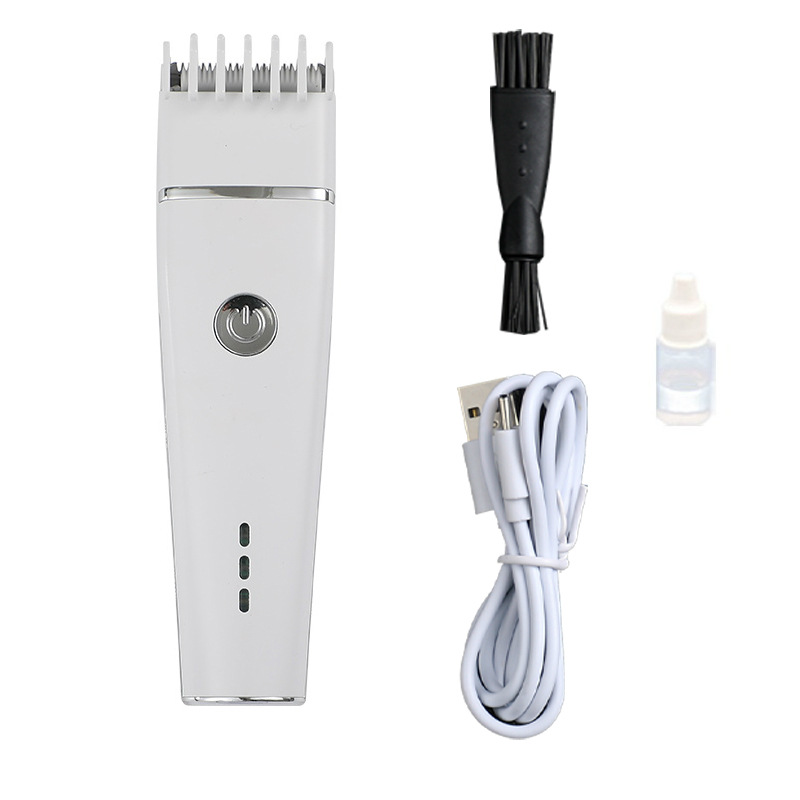
17. Confirm Accessories
Different suppliers may include different accessories at the same quoted price.
Possible accessories include:
-
Guide combs
-
Cleaning brush
-
Lubricating oil
-
Charging cable
-
Charging adapter
-
Protective cap
-
Storage case
-
Replacement blade
When comparing quotations, create a complete specification list.
Otherwise, a lower quotation may simply include fewer accessories.
18. Check Quality Control
Ask the supplier how products are inspected before shipment.
Quality-control procedures may include:
-
Incoming component inspection
-
Motor testing
-
Battery testing
-
Charging testing
-
Blade inspection
-
Assembly inspection
-
Appearance inspection
-
Functional testing
-
Final random inspection
For larger wholesale orders, consider arranging a pre-shipment inspection.
This can help identify problems before the products leave China.
19. Confirm Certifications for Your Target Market
Electrical and battery-powered products may be subject to different regulatory requirements depending on the destination country.
Before placing an order, tell the supplier where you intend to sell the products.
Then ask which documentation and certifications are available for your market.
Do not assume that a certificate for one country automatically satisfies another country’s requirements.
Your importer, customs broker, testing laboratory, or local regulatory authority can also help determine the exact requirements.
20. Pay Attention to After-Sales Support
Wholesale buyers should discuss defective products before placing an order.
Ask:
-
What happens if products arrive defective?
-
Is there a replacement policy?
-
How are warranty claims handled?
-
Who pays for replacement shipping?
-
What defect rate is considered acceptable?
-
How are repeated quality problems handled?
A clear agreement is better than negotiating these issues after a shipment has arrived.
21. Evaluate Communication During the Sample Stage
The sampling stage is also a test of the supplier.
Pay attention to how the supplier responds when you ask technical questions.
A reliable supplier should be able to explain:
-
Product specifications
-
Available modifications
-
Battery options
-
Blade options
-
MOQ
-
Lead time
-
Packaging
-
Quality control
-
Shipping documentation
If communication is unclear before the order, managing problems after the order may be even more difficult.
22. Watch for Common Warning Signs
Be careful if a supplier:
-
Cannot provide consistent specifications
-
Refuses to provide samples
-
Gives an unusually low quotation without details
-
Changes product specifications after quoting
-
Cannot explain battery information
-
Avoids reasonable quality inspections
-
Cannot clearly explain warranty terms
-
Uses misleading certification claims
-
Promises unrealistic production times
-
Cannot provide basic company information
One warning sign does not automatically mean the supplier is unreliable.
However, several warning signs together should lead to further verification.
23. Build a Supplier Comparison Table
Instead of selecting a wholesaler based on one conversation, compare several suppliers.
Category |
Supplier A |
Supplier B |
Supplier C |
|---|---|---|---|
Product quality |
|||
Motor |
|||
Battery |
|||
Blade |
|||
MOQ |
|||
Wholesale price |
|||
OEM support |
|||
Packaging |
|||
Lead time |
|||
QC |
|||
Certifications |
|||
Warranty |
|||
Communication |
This makes it easier to identify which supplier offers the best overall value.
24. What a Reliable Electric Hair Clipper Wholesaler Should Provide
A good supplier should be able to provide clear information about:
-
Product specifications
-
Wholesale pricing
-
MOQ
-
Sample availability
-
Battery specifications
-
Motor specifications
-
Blade specifications
-
Accessories
-
Packaging
-
Production lead time
-
Quality-control procedures
-
Available certifications
-
OEM/private-label options
-
Warranty and after-sales support


No reply content