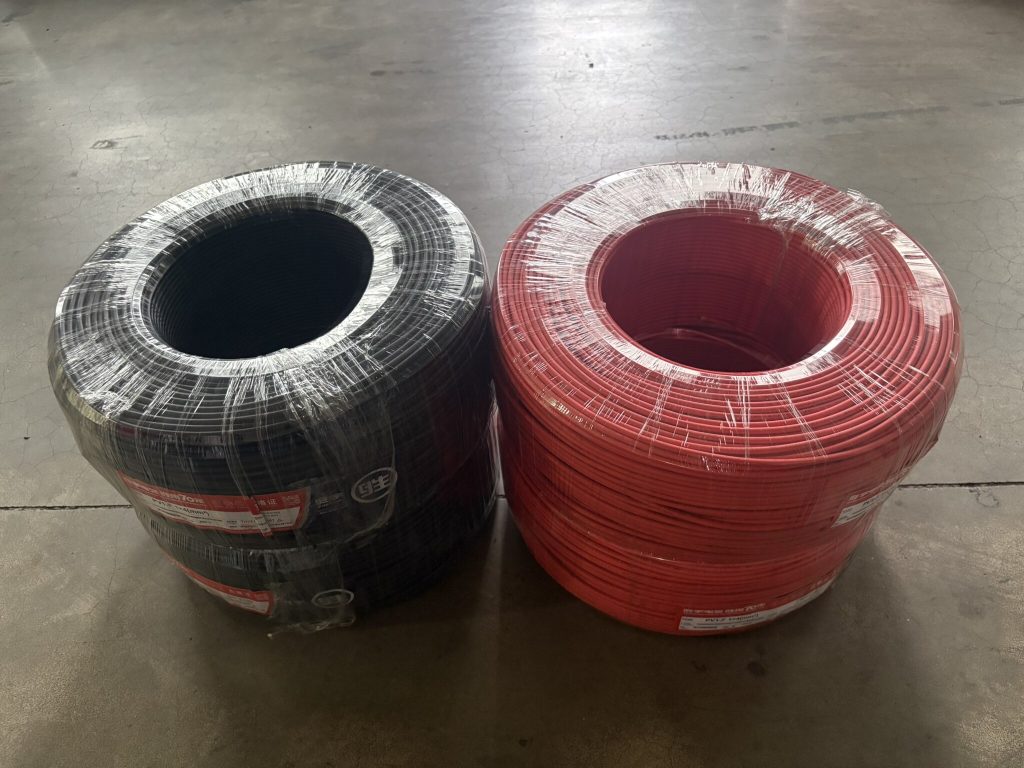
China is an important sourcing market for electrical cables and wires, but finding a supplier is only the first step. The more difficult question for an international buyer is how to determine whether a Chinese electrical cable and wire manufacturer can consistently meet the required product specifications, quality standards, production schedule, and commercial terms.
A supplier may have an attractive website and competitive quotation, but those factors alone do not tell you whether the company is suitable for a long-term purchasing relationship.
For importers, wholesalers, distributors, electrical contractors, and project buyers, supplier selection should be based on several factors at the same time: company information, manufacturing capability, product specifications, quality control, documentation, samples, production capacity, communication, and delivery performance.
This guide explains what buyers should check before choosing an electrical cable and wire manufacturer in China.
1. Start With Your Own Product Requirements
Before contacting manufacturers, define exactly what you need.
A vague inquiry such as “I need electrical wire from China” can result in quotations for different products, making it difficult to compare suppliers accurately.
Prepare a basic specification sheet that includes:
- Product type
- Conductor material
- Conductor size
- Number of cores
- Solid or stranded construction
- Insulation material
- Rated voltage
- Temperature requirements
- Applicable standard
- Required colors
- Packaging
- Estimated order quantity
- Destination country
- Expected delivery schedule
The more precise the initial specification, the easier it becomes to identify manufacturers that are actually capable of supplying the required product.
It also prevents a common purchasing problem: comparing prices for products that are not technically equivalent.
2. Verify What the Company Actually Manufactures
One of the first things an international buyer should establish is whether the company actually manufactures the electrical wire or cable being offered.
A company may describe itself as a manufacturer, supplier, exporter, or factory. These terms can have different meanings in practice.
Ask questions such as:
- What electrical wire products are manufactured in-house?
- Where is the production facility located?
- Which production processes are performed internally?
- What products are the factory’s main production lines?
- Can the company provide detailed product specifications?
- Can it produce samples?
- Does it support customized specifications?
- Can it handle repeat bulk orders?
You do not necessarily need to reject a trading company. A trading company can sometimes provide useful sourcing services.
However, if your priority is direct manufacturing capability, customization, production control, or long-term repeat orders, you should understand who is actually producing the product.
3. Review the Manufacturer’s Product Range
A professional electrical wire manufacturer should have a product range that is consistent with its stated manufacturing capabilities.
For example, a company specializing in building wires may offer several related specifications rather than presenting an unrelated collection of products.
Review:
- Building wires
- Single-core wires
- PVC insulated wires
- Copper conductor wires
- Flexible wires
- Electrical cables
- Customized cable products
- Different conductor sizes
- Different voltage ratings
A broad product range is not automatically evidence of better manufacturing capability.
What matters is whether the supplier can clearly explain the specifications, applications, production process, and limitations of the products it offers.
4. Examine Product Specifications Carefully
Never choose an electrical wire manufacturer based only on the product name.
Two products with similar names may have different technical characteristics.
For each quotation, check:
Conductor
- Material
- Size
- Structure
- Number of strands
- Electrical characteristics
Insulation
- Material
- Thickness
- Color
- Temperature characteristics
Electrical rating
- Rated voltage
- Applicable operating conditions
Standard
- Applicable international or national standard
- Testing requirements
Marking
- Product identification
- Manufacturer information
- Specification marking
A reliable manufacturer should be able to provide clear technical information rather than relying entirely on general marketing terms such as “premium quality” or “high performance.”
5. Check the Conductor Material
For many electrical wire products, conductor quality is one of the most important purchasing considerations.
If copper conductor is specified, confirm exactly what is included in the quotation.
Do not assume that the word “copper” by itself provides enough information.
Ask the manufacturer to confirm:
- Conductor material
- Conductor cross-sectional area
- Solid or stranded construction
- Number of strands where applicable
- Applicable resistance requirements
- Relevant product standard
This is particularly important when comparing quotations from several factories.
A lower price may sometimes reflect a different specification rather than a genuinely more competitive manufacturing cost.
6. Ask About Quality Control
A reliable manufacturer should have a defined quality-control process.
The exact process will vary depending on the product, factory, and applicable standard, but buyers should understand how the manufacturer controls production quality.
Ask about quality checks covering areas such as:
- Incoming raw materials
- Conductor production
- Insulation
- Finished dimensions
- Electrical performance
- Appearance
- Product marking
- Packaging
- Final inspection
For larger orders, buyers may also consider using a third-party inspection company or arranging inspection according to their purchasing requirements.
The purpose is not simply to find a supplier that says it has quality control.
The goal is to understand how quality is controlled before the products leave the factory.
7. Request Technical Documents
Technical documentation can help buyers determine whether a product actually matches the required specification.
Depending on the product and destination market, relevant documents may include:
- Product specification sheets
- Technical datasheets
- Test reports
- Certificates
- Inspection records
- Compliance documentation
- Packaging specifications
Do not assume that a certificate shown on a website automatically applies to every product sold by the supplier.
Ask the manufacturer to identify which product and specification the documentation relates to.
This is especially important when the order is intended for a construction project, electrical installation, distribution business, or regulated market.
8. Request Samples Before a Large Order
Samples are one of the most practical ways to evaluate a new manufacturer.
Before committing to a large purchase, ask for samples that match the specification you intend to order.
Depending on the product, you may review:
- Product appearance
- Conductor construction
- Insulation
- Dimensions
- Marking
- Packaging
- Documentation
For a large commercial order, the sample should be treated as a reference rather than the only quality-control measure.
The buyer should also make sure the final production specification is clearly documented in the purchase order.
9. Compare Manufacturing Capacity
A manufacturer may be able to produce your required product but still be unsuitable if its capacity cannot support your purchasing volume.
Ask about:
- Normal production capacity
- Current production schedule
- Typical lead time
- Peak-season capacity
- Production equipment
- Raw-material supply
- Ability to handle repeat orders
This matters especially when purchasing for:
- Construction projects
- Electrical distributors
- Wholesalers
- Retail programs
- Government or commercial projects
- Long-term supply contracts
A supplier that can reliably manufacture your required quantity may be more valuable than one offering the lowest initial quotation.
10. Check Whether the Manufacturer Supports Customization
International buyers do not always need standard products.
You may require:
- Customized wire specifications
- Special colors
- Customized printing
- Private-label packaging
- Customized reels or coils
- Special packaging quantities
- OEM production
If customization is important, ask the manufacturer about its capabilities before placing an order.
Also clarify whether customization changes:
- MOQ
- Production lead time
- Tooling costs
- Packaging costs
- Sample costs
- Unit price
Do not assume that every manufacturer can produce a customized product simply because its website says “OEM.”
Ask for specific details.
11. Compare MOQ and Pricing Together
A low unit price does not necessarily mean a lower purchasing cost.
Suppose Manufacturer A offers a lower price but requires a very large MOQ, while Manufacturer B offers a slightly higher price but accepts a quantity closer to your actual demand.
For a new importer, the second option may provide better financial flexibility.
When comparing manufacturers, record:
| Purchasing Factor | Manufacturer A | Manufacturer B | Manufacturer C |
|---|---|---|---|
| Product Specification | |||
| MOQ | |||
| Unit Price | |||
| Sample Cost | |||
| Packaging | |||
| Lead Time | |||
| Customization | |||
| Payment Terms | |||
| Shipping Terms | |||
| Documentation |
This makes supplier comparison much more objective.
12. Evaluate Communication Quality
Communication is particularly important for electrical products because specifications can be detailed.
Pay attention to how a manufacturer responds to technical questions.
A good supplier should be able to explain:
- Product specifications
- Available sizes
- Standards
- MOQ
- Sample arrangements
- Production lead time
- Packaging
- Customization
- Documentation
- Shipping arrangements
Be cautious when a supplier repeatedly gives vague answers or avoids confirming technical details in writing.
Clear communication reduces the risk of misunderstandings later.
13. Check the Manufacturer’s Ability to Handle Export Orders
A manufacturer may be excellent at domestic production but have limited experience handling international orders.
If you are an overseas buyer, ask about its experience with export shipments and international purchasing requirements.
Depending on your project, you may need support with:
- Export packaging
- Commercial invoices
- Packing lists
- Product documentation
- Shipping marks
- Container loading
- Freight arrangements
- Export procedures
You should also clearly establish the agreed trade terms and responsibilities before placing the order.
14. Consider the Destination Market
The correct electrical wire depends partly on where the product will be used.
Different countries and projects can have different requirements concerning:
- Product standards
- Voltage
- Testing
- Labeling
- Packaging
- Documentation
- Electrical installation requirements
Therefore, do not simply tell a Chinese manufacturer the destination country and expect the supplier to determine everything automatically.
Provide the technical requirements from your project or local market whenever possible.
The manufacturer can then confirm whether it can supply the requested specification.
15. Calculate the Total Landed Cost
The factory quotation is only one part of the final purchasing cost.
For imported electrical wire, the buyer may also need to consider:
Product Cost + Packaging + Inland Transportation + Export Costs + Freight + Insurance Where Applicable + Import Duties + Taxes + Destination Charges
This is why two manufacturers with similar factory prices may result in different final costs.
If one supplier has better packaging, more efficient loading, shorter production lead time, or more suitable shipping arrangements, the overall purchasing result may be different.
16. Look for Consistency, Not Just a Good First Order
A reliable electrical wire manufacturer should be evaluated based on its ability to support repeated orders.
The first shipment may go well, but long-term buyers need consistency.
Consider whether the manufacturer can maintain:
- Consistent specifications
- Consistent product quality
- Stable packaging
- Predictable lead times
- Clear communication
- Repeat-order capability
For distributors and wholesalers, consistency can be more important than saving a small amount on the first order.
Your supplier relationship should ideally develop from:
Sample → Trial Order → Bulk Order → Repeat Order → Long-Term Cooperation
17. Use Supplier Information to Build a Shortlist
Instead of contacting dozens of manufacturers without a clear process, create a shortlist.
For example, select several potential manufacturers and compare them using the same criteria:
- Company information
- Manufacturing capability
- Product specifications
- Quality-control process
- Standards and documentation
- MOQ
- Price
- Sample availability
- Production capacity
- Lead time
- Customization
- Export capability
- Communication
- Total landed cost
Then eliminate suppliers that fail important requirements.
This is usually more effective than selecting the first supplier with a low quotation.
18. Review the Manufacturer’s Online Business Information
A supplier’s online presence can provide useful preliminary information, but it should not be treated as complete proof of manufacturing capability.
Review whether the supplier provides consistent information about:
- Company name
- Products
- Manufacturing location
- Contact information
- Product specifications
- Business activities
- Export markets
- Certifications or technical documents
If information appears inconsistent, ask the supplier to clarify it before moving forward.
For buyers researching Chinese electrical cable and wire suppliers, the Vlefooena supplier directory can also be used as an initial source for discovering companies and reviewing their listed products.
You can review the electrical cable and wire supplier profile on Vlefooena here:
https://www.vlefooena.com/author/88/
The profile can be used as a starting point for reviewing the supplier’s listed products and related information before making direct purchasing inquiries.
19. Questions to Ask an Electrical Wire Manufacturer
Before requesting a final quotation, prepare a clear list of questions.
For example:
Can you manufacture the exact wire specification I require?
What standard does the product follow?
What conductor material and construction are used?
What is the MOQ?
Can you provide samples?
What is the normal production lead time?
Can you provide technical documentation?
Do you support OEM or private-label packaging?
Can you handle repeat bulk orders?
What packaging options are available?
Can you provide the information required for export documentation?
The answers should be compared across several suppliers rather than evaluated individually.
20. A Reliable Manufacturer Is More Than a Low-Cost Supplier
The most reliable electrical cable and wire manufacturer is not necessarily the company offering the cheapest quotation.
A stronger supplier-selection decision considers the entire relationship:
Technical Capability
Can the factory manufacture the exact product specification?
Quality Control
Does the manufacturer have a practical process for controlling product quality?
Documentation
Can the supplier provide appropriate technical and compliance information?
Production Capability
Can it meet your required quantity and schedule?
Commercial Terms
Are MOQ, price, payment, packaging, and delivery terms suitable?
Communication
Can the supplier clearly handle technical and commercial questions?
Long-Term Capability
Can the manufacturer support repeat orders as your business grows?
These factors together provide a much more realistic picture of supplier reliability.
Frequently Asked Questions
How can I find a reliable electrical wire manufacturer in China?
Start by defining your exact product requirements and then identify several manufacturers that appear capable of producing the required specification. Compare their manufacturing capability, technical information, quality-control process, samples, MOQ, pricing, lead time, documentation, and export capability.
How can I tell whether a Chinese wire supplier is a real manufacturer?
Ask where the production facility is located, what products are manufactured in-house, what production capabilities are available, and whether the company can provide detailed technical information and samples. Additional verification may be appropriate for larger orders.
Should I request a sample before placing a bulk order?
For a new supplier, a sample is generally useful because it gives the buyer an opportunity to evaluate the product against the requested specification before committing to a large order.
What should I compare when choosing electrical wire manufacturers?
Compare the product specification, conductor material, insulation, applicable standards, quality control, technical documents, MOQ, price, production capacity, lead time, packaging, customization, communication, and total landed cost.
Is the cheapest Chinese electrical wire manufacturer the best option?
Not necessarily. A low factory price may come with a higher MOQ, different specification, longer lead time, different packaging, or other commercial limitations. Buyers should compare the complete purchasing cost and supplier capability.
Can Chinese electrical wire manufacturers provide OEM products?
Some manufacturers can support OEM production or customized packaging, but capabilities vary. Buyers should confirm the exact customization requirements, MOQ, tooling, lead time, and sample process with the manufacturer.
What information should I provide when requesting an electrical wire quotation?
Provide the product type, conductor material, wire size, number of cores, insulation material, voltage rating, applicable standard, quantity, color, packaging, destination, delivery schedule, and any OEM or private-label requirements.
Final Thoughts
Choosing a reliable electrical cable and wire manufacturer in China should be treated as a supplier-evaluation process rather than a simple price comparison.
The right manufacturer should be able to match your technical requirements, explain its products clearly, provide appropriate documentation, support samples, maintain production quality, meet your required quantity, and communicate effectively throughout the order.
For international buyers, the best approach is to compare several potential manufacturers using the same specification and purchasing criteria.
Do not choose a supplier simply because it has the lowest quotation.
Choose the manufacturer that provides the best overall combination of product suitability, manufacturing capability, quality control, documentation, price, delivery performance, and long-term supply potential.


No reply content