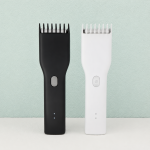
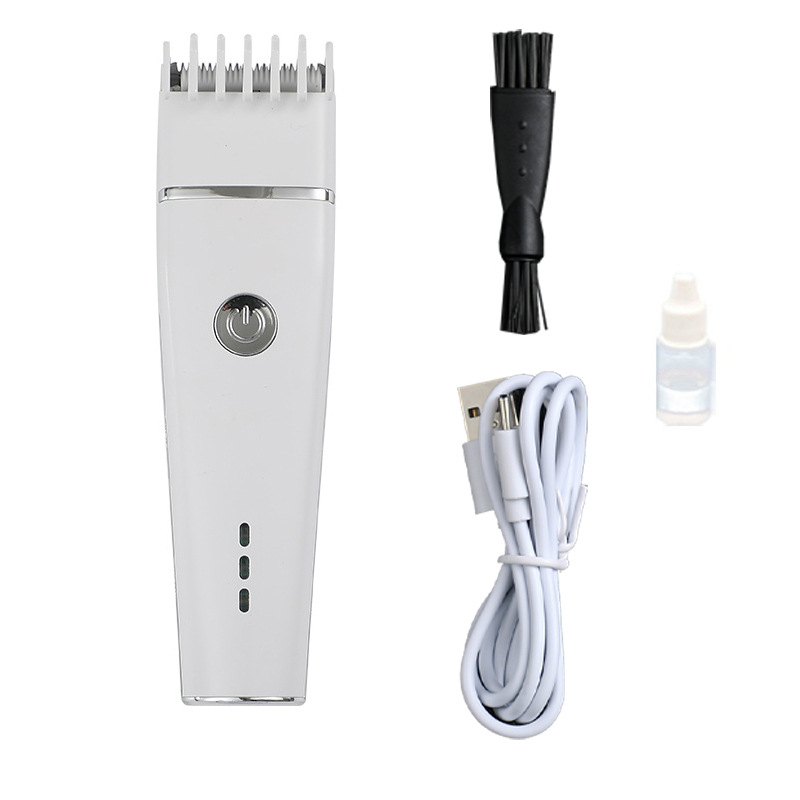
Finding a reliable hair clipper manufacturer in China can help importers reduce purchasing costs, develop private-label products, and build a stable long-term supply chain. However, choosing a factory based only on price can create problems such as inconsistent quality, delayed delivery, weak battery performance, poor packaging, or communication issues.
China has a large number of manufacturers producing professional barber clippers, cordless hair clippers, rechargeable trimmers, pet grooming clippers, and customized OEM products. The challenge for international buyers is identifying a factory that can consistently meet their technical, quality, packaging, and export requirements.
This guide explains what to check before selecting a Chinese hair clipper manufacturer and how to compare factories more professionally.
1. Start by Defining the Hair Clipper You Need
Before contacting manufacturers, clearly define your product requirements.
Hair clippers can differ significantly in design, motor, battery, blade system, charging method, accessories, and intended market.
Common categories include:
| Type | Typical Application |
|---|---|
| Cordless hair clipper | Home and professional use |
| Professional barber clipper | Barbershops and salons |
| Hair trimmer | Beard, neckline, and detail trimming |
| Rechargeable clipper | Portable personal grooming |
| T-blade trimmer | Hairline and precision work |
| Pet grooming clipper | Dogs, cats, and animal grooming |
| OEM hair clipper | Customized brands and specifications |
A manufacturer may be excellent at producing one type but unsuitable for another.
For example, if you are developing a professional barber clipper, you may need a high-torque motor, durable metal housing, high-quality blades, long battery life, and continuous-use testing.
If you are targeting the consumer market, appearance, packaging, price, ergonomics, and battery charging convenience may be more important.
Define the product before comparing factories.
2. Check Whether the Company Is a Real Manufacturer
One of the first questions to ask is whether you are dealing directly with a factory or with a trading company.
A trading company is not necessarily unreliable. In some cases, trading companies can provide useful sourcing and export services. However, buyers looking for OEM or large-volume production may prefer to work directly with a manufacturer.
Ask the supplier for basic company information, such as:
- Company name
- Factory location
- Main products
- Years of manufacturing experience
- Production capabilities
- Number of production lines
- Main export markets
- OEM/ODM capabilities
- Quality-control procedures
- Product certifications
- Factory photographs or video
- Sample availability
You can also ask for a live factory video call.
During a video call, ask the supplier to show:
- Production areas
- Assembly lines
- Blade processing or assembly
- Motor assembly
- Battery assembly or testing area
- Quality-control stations
- Packaging area
- Finished-product warehouse
A factory that is comfortable showing its production capabilities is generally easier to evaluate than a supplier that only provides product photographs.
3. Evaluate Manufacturing Experience
Experience matters because producing a reliable hair clipper involves more than simply assembling components.
A mature manufacturer may have established processes for:
- Motor installation
- Blade alignment
- Battery assembly
- Charging testing
- Noise testing
- Temperature testing
- Product assembly
- Packaging
- Final inspection
Ask how long the manufacturer has been producing hair clippers rather than only asking when the company was established.
A company may have existed for many years but only recently entered the hair clipper industry.
Useful questions include:
How many years have you manufactured hair clippers?
Which hair clipper models are your main products?
Do you manufacture the product yourself or outsource production?
How many units can you produce per month?
Which countries do you currently export to?
The answers can help you determine whether the factory is suitable for your purchasing volume.
4. Pay Close Attention to Motor Performance
The motor is one of the most important components of a hair clipper.
A low-quality motor may cause:
- Weak cutting performance
- Hair pulling
- Excessive vibration
- Excessive noise
- Overheating
- Short service life
When comparing manufacturers, do not only ask about the motor’s advertised RPM.
Ask for information about:
- Motor type
- Rated speed
- Torque
- Operating temperature
- Continuous operating time
- Motor lifespan
- Noise level
- Vibration
- Performance under heavy loads
For professional barber products, torque can be particularly important because the clipper may need to cut thick or dense hair repeatedly.
A manufacturer should be able to explain why its motor configuration is appropriate for the intended application.
5. Check Blade Quality
The blade directly affects cutting performance.
Common blade materials and configurations include stainless steel, carbon steel, ceramic components, and specialized alloy systems.
Important factors include:
- Blade material
- Blade hardness
- Blade sharpness
- Corrosion resistance
- Blade gap adjustment
- Fixed and moving blade design
- Self-sharpening claims
- Blade replacement availability
Do not evaluate blades only by looking at photographs.
Ask for samples and test them under realistic conditions.
For professional products, you can test:
- Cutting smoothness
- Hair pulling
- Cutting speed
- Blade temperature
- Vibration
- Noise
- Long-duration operation
A good sample should perform consistently rather than only working well for a few minutes.
6. Evaluate Battery Performance for Cordless Clippers
If you are buying rechargeable hair clippers, battery performance deserves special attention.
Important specifications include:
- Battery chemistry
- Battery capacity
- Operating time
- Charging time
- Charging interface
- Battery protection
- Charging cycles
- Low-battery protection
- Overcharge protection
- Over-discharge protection
Do not judge battery quality solely by the advertised capacity.
For example, two products may have similar battery capacities but very different actual operating times because of differences in motor efficiency and electronic design.
Ask the manufacturer to provide test data showing:
Full charge → continuous operating time → charging time
For products intended for professional barbers, long operating time can be a significant selling point.
7. Ask About Product Certifications
Certification requirements depend on the destination market.
Before placing an order, tell the manufacturer exactly where you plan to sell the product.
For example, requirements may differ between:
- European Union
- United States
- United Kingdom
- Australia
- Middle East
- Latin America
- Southeast Asia
Depending on the product and destination, buyers may need documentation related to electrical safety, electromagnetic compatibility, batteries, or environmental requirements.
Do not simply ask:
“Do you have CE?”
Instead, ask for the relevant test reports and declarations and verify whether they correspond to the exact model you intend to purchase.
For rechargeable products, battery-related documentation can also be important because batteries may be subject to transportation and regulatory requirements.
8. Compare OEM and Private-Label Capabilities
If you want to sell hair clippers under your own brand, choose a manufacturer with genuine OEM or ODM capabilities.
Possible customization options include:
- Logo
- Product color
- Housing design
- Blade configuration
- Battery capacity
- Display
- Buttons
- Packaging
- User manual
- Accessories
- Gift box
- Charging cable
- Carrying case
Ask the factory which parts can be customized.
For example:
Can you print our logo on the clipper?
Can you customize the packaging?
Can you modify the housing color?
Can you develop a new housing design?
Can you customize the user manual?
Can you provide product photography or packaging samples?
The answers will show whether the supplier is capable of supporting a real private-label project or simply adding a logo to an existing product.
9. Understand MOQ Before Ordering
MOQ means Minimum Order Quantity.
Chinese hair clipper manufacturers may have different MOQs depending on the level of customization.
For example:
| Order Type | Typical MOQ Situation |
|---|---|
| Standard model | Usually lower |
| Logo customization | Moderate |
| Custom packaging | Moderate |
| Custom color | May require higher quantity |
| New housing design | Usually higher |
| Fully customized product | Often significantly higher |
There is no universal MOQ for all Chinese manufacturers.
If you are a new brand, tell the factory your expected first order quantity instead of immediately accepting a large MOQ.
You can ask:
What is your MOQ for a standard model?
What is the MOQ with our logo?
What is the MOQ for customized packaging?
Can you offer a lower MOQ for the first trial order?
A manufacturer may provide different solutions depending on your purchasing plan.
10. Compare Prices Correctly
Price is important, but the cheapest quotation is not necessarily the best deal.
A hair clipper quotation can depend on:
- Motor
- Battery
- Blade material
- Housing material
- Display
- Accessories
- Packaging
- Logo printing
- Product certification
- Order quantity
- Shipping terms
For example, a low-priced clipper may use a smaller battery, cheaper motor, simpler packaging, and lower-cost components.
When comparing suppliers, create a specification table.
| Specification | Supplier A | Supplier B | Supplier C |
|---|---|---|---|
| Motor | — | — | — |
| Battery | — | — | — |
| Operating time | — | — | — |
| Charging time | — | — | — |
| Blade material | — | — | — |
| Weight | — | — | — |
| Accessories | — | — | — |
| MOQ | — | — | — |
| OEM | — | — | — |
| Packaging | — | — | — |
This makes price comparisons much more meaningful.
11. Always Order Samples
Never place a large first order based only on photographs and specifications.
A sample allows you to evaluate the actual product.
Test the following:
Cutting Performance
Check whether the clipper cuts smoothly without pulling hair.
Motor
Listen for unusual noise and check whether the motor becomes excessively hot.
Battery
Measure actual operating time after a full charge.
Blade
Check sharpness, alignment, adjustment, and temperature.
Ergonomics
Evaluate:
- Weight
- Grip
- Button position
- Balance
- Charging convenience
Packaging
Check whether the packaging protects the product during transportation.
If possible, test several samples from the same production batch rather than only one unit.
12. Evaluate Quality Control
A reliable hair clipper manufacturer should have a defined quality-control process.
Ask how the factory handles:
- Incoming component inspection
- Assembly inspection
- Battery testing
- Charging testing
- Motor testing
- Blade inspection
- Appearance inspection
- Function testing
- Final inspection
- Carton inspection
You can also ask whether the manufacturer provides a pre-shipment inspection.
For larger orders, buyers may use an independent inspection company to inspect products before shipment.
This can help identify problems before the goods leave China.
13. Check Production Capacity
A factory may be suitable for a 500-unit order but unable to handle a 20,000-unit order on your required schedule.
Ask about:
- Monthly production capacity
- Current production schedule
- Peak-season capacity
- Lead time
- Component availability
- Backup suppliers
- Packaging capacity
If you expect rapid growth, choose a manufacturer capable of scaling with your business.
A stable supply chain is often more valuable than a slightly lower unit price.
14. Ask About Lead Time
Lead time can vary depending on whether the product is standard or customized.
A standard product may require less preparation, while OEM products may require:
- Product confirmation
- Logo confirmation
- Packaging design
- Sample production
- Sample approval
- Material procurement
- Mass production
- Quality inspection
- Packaging
- Shipment
Ask the manufacturer to separate the timeline into these stages.
Do not accept an unclear answer such as “about 20 days” without knowing whether that includes packaging production and final inspection.
15. Check Export Experience
If you are an international buyer, export experience can make communication and documentation easier.
Ask whether the manufacturer has experience shipping to your target country.
Important areas include:
- Commercial invoice
- Packing list
- Product specifications
- Certificate of origin when applicable
- Battery documentation
- Export customs documents
- Shipping carton information
Manufacturers experienced with international buyers are usually more familiar with these requirements.
16. Be Careful With Extremely Low Prices
A very low quotation deserves further investigation.
It may indicate differences in:
- Motor quality
- Battery capacity
- Blade material
- Housing material
- Accessories
- Packaging
- Testing
- Certification
- Warranty
Instead of asking only:
“What is your lowest price?”
ask:
“What is included in this price?”
This simple question can reveal major differences between suppliers.
17. Evaluate Communication
Communication is an important part of supplier selection.
A manufacturer can have excellent products but still create problems if it cannot communicate clearly.
Pay attention to:
- Response speed
- Technical knowledge
- English communication
- Product understanding
- Quotation accuracy
- Willingness to provide samples
- Ability to explain problems
- After-sales support
A good supplier should be able to answer technical questions rather than simply replying with a price.
18. Ask About Warranty and After-Sales Support
Before placing an order, clarify the warranty policy.
Questions to ask include:
- What is the warranty period?
- What defects are covered?
- How are defective products handled?
- Are replacement parts available?
- Can spare blades be purchased?
- Can batteries be replaced?
- How are warranty claims processed?
For professional clippers, spare parts can be especially important because commercial users may operate the equipment frequently.
19. Calculate the Real Landed Cost
The factory price is not your final cost.
Your total landed cost may include:
Product cost + customization + packaging + inspection + domestic transportation + international freight + customs duties + taxes + destination charges
For example, a supplier offering a lower factory price may become more expensive after adding customized packaging, accessories, shipping, and other costs.
Therefore, compare suppliers based on the expected landed cost, not only the EXW or FOB price.
20. Build a Supplier Comparison Scorecard
A simple scoring system can make your decision more objective.
You could evaluate each manufacturer using:
| Category | Suggested Weight |
|---|---|
| Product quality | 25% |
| Manufacturing capability | 15% |
| Price | 15% |
| OEM/ODM capability | 10% |
| Certifications | 10% |
| MOQ | 5% |
| Production capacity | 5% |
| Lead time | 5% |
| Communication | 5% |
| After-sales service | 5% |
The exact weighting should depend on your business model.
If you are launching a premium barber brand, product quality should receive a higher weight.
If you are selling through a price-sensitive marketplace, cost and production efficiency may become more important.
21. Red Flags to Watch For
Before working with a Chinese hair clipper manufacturer, pay attention to warning signs.
Red Flag 1: Refuses to Provide Samples
A supplier unwilling to provide samples may be difficult to evaluate.
Red Flag 2: Cannot Explain Product Specifications
If the sales representative cannot explain the motor, battery, blade, or charging system, ask for technical support.
Red Flag 3: Extremely Low Price
A quotation far below the market level should be investigated carefully.
Red Flag 4: Unclear Company Information
The company should be able to provide basic business and manufacturing information.
Red Flag 5: Constantly Changing Specifications
If the product specifications change after you place the order, document every agreed requirement.
Red Flag 6: No Clear Quality-Control Process
For large orders, lack of quality control can create significant risks.
22. Questions to Ask a Chinese Hair Clipper Manufacturer
Before ordering, you can send the factory a checklist like this:
- Are you a manufacturer or trading company?
- How many years have you manufactured hair clippers?
- What are your main hair clipper models?
- What is the motor specification?
- What is the battery capacity?
- What is the actual operating time?
- What is the charging time?
- What material are the blades made from?
- What is the MOQ?
- What is the sample price?
- Can you customize our logo?
- Can you customize the packaging?
- Can you provide OEM or ODM development?
- What certifications and test reports are available?
- What is the mass-production lead time?
- What is your monthly production capacity?
- What is your warranty policy?
- Can you provide spare parts?
- What are your payment terms?
- What export markets do you currently serve?
A professional supplier should be able to provide clear answers to most of these questions.
23. What Makes a Reliable Chinese Hair Clipper Manufacturer?
The best manufacturer is not necessarily the factory with the lowest quotation.
A reliable supplier should ideally demonstrate:
- Consistent product quality
- Stable component sourcing
- Professional production processes
- Good quality control
- Transparent specifications
- Reasonable MOQ
- OEM/ODM capabilities
- Appropriate certifications
- Reliable production capacity
- Predictable lead times
- Good communication
- Responsive after-sales service
Most importantly, the supplier should be able to maintain the same quality when moving from samples to mass production.
Conclusion
Choosing a reliable hair clipper manufacturer in China requires more than comparing product photographs and prices.
International buyers should evaluate the complete supply chain, including manufacturing experience, motor performance, blade quality, battery safety, certifications, OEM capabilities, MOQ, production capacity, quality control, lead time, export experience, and after-sales service.
The safest approach is to shortlist several manufacturers, request detailed quotations, order samples, test the products, verify documentation, and compare suppliers using the same specifications.
If you are developing a private-label hair clipper brand, do not focus only on the lowest unit price. A manufacturer that provides stable quality, reliable production, responsive communication, and scalable OEM support can create much more value over the long term.
FAQ
How do I verify whether a hair clipper supplier in China is a real factory?
Ask for the company’s legal information, factory address, production photographs, manufacturing capabilities, and product samples. A live factory video call or third-party factory inspection can provide additional verification.
What is the typical MOQ for hair clippers in China?
There is no universal MOQ. Standard models may have lower MOQs, while customized colors, packaging, components, or completely new designs generally require higher quantities. Always ask for separate MOQs for the product, logo, and packaging.
Can Chinese hair clipper manufacturers provide OEM services?
Yes. Many manufacturers can offer different levels of OEM or ODM services, ranging from logo printing and packaging customization to product design and component modifications.
How should I test a hair clipper sample?
Test cutting performance, motor noise, vibration, operating temperature, battery life, charging time, blade performance, ergonomics, accessories, and packaging. For commercial products, longer-duration testing is recommended.
How long does it take to manufacture hair clippers in China?
The lead time depends on the model, order quantity, customization, component availability, and packaging. Standard products are generally faster than fully customized OEM products. Ask the factory for a production schedule covering sampling, material preparation, manufacturing, inspection, and packaging.
What should I prioritize when choosing a manufacturer?
For most importers, prioritize product quality, manufacturing capability, reliable communication, quality control, certifications, and stable delivery before focusing on the lowest possible price.
Is buying directly from a Chinese factory always cheaper?
Not necessarily. A direct manufacturer may offer competitive factory pricing, but the final landed cost also depends on customization, packaging, inspection, transportation, taxes, and international shipping. Compare the complete cost rather than only the unit price.
What is the best way to choose between several manufacturers?
Request the same specifications and quotation requirements from several suppliers, order samples from the strongest candidates, test the products, verify documentation, and compare quality, price, MOQ, lead time, OEM capability, and after-sales support using a supplier scorecard.


No reply content