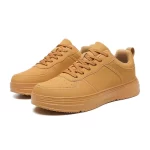
China Jinjiang shoe manufacturer in

China remains the world’s largest footwear manufacturing base, supplying millions of pairs of shoes every day to brands, wholesalers, retailers, Amazon sellers, and private label businesses worldwide. However, choosing the right shoe manufacturer is one of the most important decisions for any buyer. A reliable factory not only produces high-quality shoes but also helps reduce costs, shorten lead times, and avoid costly production mistakes.
This guide explains the ten most important factors every international buyer should evaluate before selecting a shoe manufacturer in China.
Why China Is Still the Best Place to Manufacture Shoes
Despite increasing labor costs, China continues to offer significant advantages:
-
Complete footwear supply chain
-
Skilled workers with years of manufacturing experience
-
Advanced production equipment
-
Strong OEM and ODM capabilities
-
Competitive pricing
-
Stable export logistics
-
Fast product development
-
High production capacity
Chinese manufacturers produce almost every type of footwear, including:
-
Sports shoes
-
Running shoes
-
Casual shoes
-
Leather shoes
-
Fashion sneakers
-
Safety shoes
-
Hiking boots
-
Sandals
-
Slippers
-
Children’s shoes
-
Women’s high heels
-
Work shoes
Different regions specialize in different products:
-
Fujian: Sports shoes and sneakers
-
Zhejiang: Casual shoes and fashion footwear
-
Guangdong: Premium leather shoes and OEM production
-
Wenzhou: Dress shoes and leather footwear
1. Verify Factory Experience
Experience matters.
Choose manufacturers with at least 5–10 years of footwear manufacturing experience.
Ask questions such as:
-
How many years have you produced shoes?
-
Which countries do you export to?
-
Which shoe categories do you specialize in?
-
Have you worked with well-known brands?
-
How many workers do you employ?
Experienced factories usually have better production planning, quality control, and communication.
2. Confirm OEM and ODM Capabilities
Every buyer has different needs.
OEM services allow you to manufacture shoes according to your own design.
ODM services allow you to customize existing factory designs with your logo, packaging, colors, or materials.
Reliable manufacturers should provide:
-
Logo printing
-
Custom outsole
-
Custom insole
-
Private label packaging
-
Custom shoe box
-
Hang tags
-
User manuals
-
Barcode labels
3. Evaluate Product Quality
Quality determines customer satisfaction and repeat orders.
Before placing bulk production, request samples.
Inspect:
-
Stitching
-
Glue bonding
-
Sole durability
-
Material consistency
-
Comfort
-
Weight
-
Color accuracy
-
Size consistency
-
Flexibility
-
Waterproof performance (if applicable)
Professional factories follow standardized inspection procedures throughout production.
4. Check Manufacturing Capacity
Production capacity affects delivery schedules.
Ask about:
-
Daily production output
-
Monthly capacity
-
Number of production lines
-
Number of employees
-
Peak season capability
A factory with sufficient capacity can better handle large or urgent orders.
5. Review Material Sourcing
High-quality shoes start with high-quality materials.
Ask suppliers about:
-
Leather
-
Mesh fabrics
-
EVA
-
PU
-
TPU
-
Rubber outsoles
-
Memory foam insoles
-
Recycled materials
Reliable factories work with stable material suppliers to ensure consistent quality.
6. Understand Minimum Order Quantity (MOQ)
MOQ varies depending on:
-
Shoe style
-
Materials
-
Color options
-
Logo customization
-
Packaging
Typical MOQs include:
-
Existing styles: 100–300 pairs
-
Custom designs: 500–1,000 pairs
-
Fully customized molds: 1,000+ pairs
Discuss MOQ early to avoid misunderstandings.
7. Inspect Quality Control System
A professional factory should have a complete quality management process.
Typical inspections include:
-
Incoming material inspection
-
In-process inspection
-
Assembly inspection
-
Finished product inspection
-
Packaging inspection
-
Pre-shipment inspection
Many factories follow AQL inspection standards to maintain product consistency.
8. Verify Export Experience
International shipping involves more than manufacturing.
Experienced exporters understand:
-
Export documentation
-
HS codes
-
Certificates of origin
-
Customs clearance
-
Packaging regulations
-
International labeling requirements
They can also coordinate with freight forwarders to ensure timely delivery.
9. Communication and Customer Service
Good communication reduces costly errors.
A reliable manufacturer should:
-
Respond quickly
-
Provide clear quotations
-
Update production progress regularly
-
Share photos and videos during production
-
Resolve issues professionally
Efficient communication builds long-term partnerships.
10. Request Factory Audits and Certifications
Before placing a large order, verify the factory’s credentials.
Common certifications include:
-
ISO 9001 Quality Management System
-
BSCI Social Compliance
-
Sedex (SMETA)
-
CE (for applicable products)
-
REACH compliance
-
CPSIA (for children’s footwear sold in the U.S.)
You can also request:
-
Factory audit reports
-
Production videos
-
Workshop photos
-
Business license
-
Export license
Questions to Ask Before Choosing a Shoe Manufacturer
Prepare these questions before making your final decision:
-
What is your MOQ?
-
Can you produce my custom design?
-
What materials do you recommend?
-
How long is sample production?
-
What is the mass production lead time?
-
What payment methods do you accept?
-
Can you provide quality inspection reports?
-
Do you offer private labeling?
-
What countries do you export to?
-
Can you arrange international shipping?
Common Mistakes Buyers Should Avoid
Many buyers focus only on price, which can lead to quality issues.
Avoid these mistakes:
-
Choosing the cheapest supplier
-
Skipping sample evaluation
-
Ignoring factory verification
-
Not signing a production agreement
-
Failing to inspect goods before shipment
-
Overlooking communication quality
-
Not confirming material specifications
A balanced evaluation of quality, price, and service leads to better long-term results.
Benefits of Working with a Professional Shoe Manufacturer
Partnering with an experienced factory provides:
-
Stable product quality
-
Competitive pricing
-
Reliable production schedules
-
Professional technical support
-
Faster product development
-
Flexible customization
-
Better supply chain management
-
Lower defect rates
-
Long-term business cooperation


No reply content