
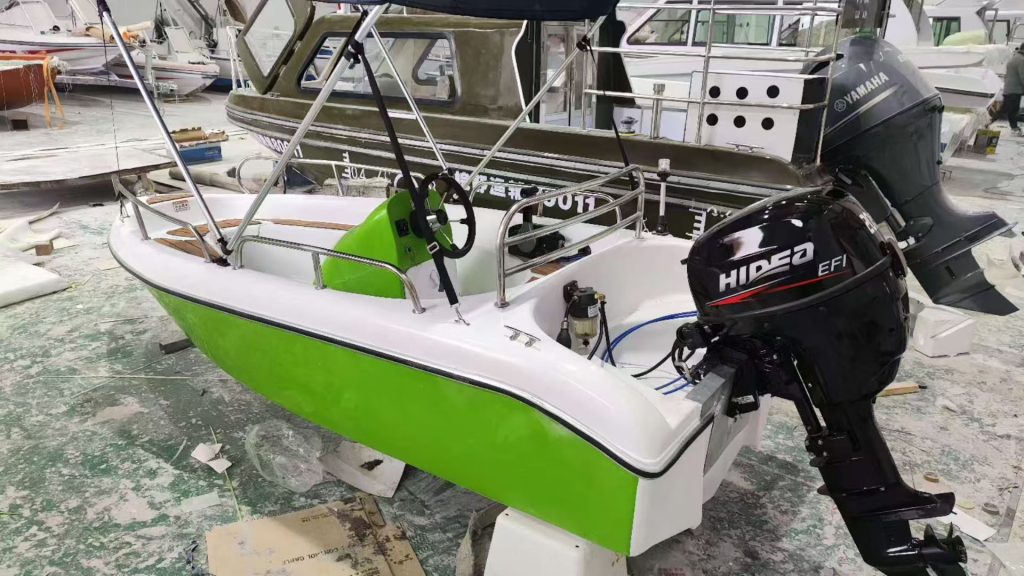
Choosing a reliable yacht manufacturer in China is an important decision for yacht dealers, importers, charter companies, marine businesses, and private buyers. A well-built yacht represents a significant investment, and the quality of the builder directly affects performance, safety, durability, resale value, and long-term ownership costs.
China has become an important sourcing destination for custom and semi-custom yachts, offering competitive pricing, flexible design options, and growing manufacturing capabilities. However, not every factory delivers the same level of engineering, materials, quality control, or project management. Buyers who only compare price often face delays, quality issues, or vessels that do not meet their market requirements.
This guide explains what international buyers should evaluate when selecting a yacht manufacturer in China and how to reduce risk during the sourcing process.
### Why Source a Yacht from a Chinese Manufacturer?
Chinese yacht builders have expanded their capabilities in recent years, particularly in fiberglass, aluminum, and composite construction. Many factories now support:
– Custom and semi-custom designs
– OEM and private-label projects
– Flexible interior layouts and exterior styling
– Competitive pricing compared with traditional yacht-building regions
– Export experience to international markets
– Integration of modern systems (engines, electronics, electrical, and lithium battery solutions for electric models)
For dealers and importers, working directly with a manufacturer can provide better control over specifications, branding, and cost. For private buyers, it can offer access to customized vessels at more accessible price points. Success depends on selecting the right partner.
### Key Factors to Evaluate When Choosing a Yacht Manufacturer
#### 1. Manufacturing Experience and Specialization
Not all factories that build boats are equally experienced with yachts. Ask:
– How many years has the factory been building yachts or similar vessels?
– What size range and types of yachts do they specialize in?
– Do they have completed projects similar to the one you need?
– Can they provide references or case studies of exported yachts?
A manufacturer with proven experience in your target size and style (motor yacht, sailing yacht, catamaran, electric surfboard support vessels, etc.) is generally lower risk than a general boat builder expanding into yachts.
#### 2. Design and Engineering Capability
Custom yachts require solid design and engineering support. Evaluate:
– Whether the factory has in-house designers or works with external naval architects
– Ability to modify existing designs or develop new ones based on your requirements
– Experience with stability calculations, structural engineering, and systems integration
– Support for classification society rules if required (e.g., CE, RINA, BV, or other standards)
Clear communication during the design phase is essential. The manufacturer should be able to discuss layout, performance targets, weight distribution, and system choices in detail.
#### 3. Materials and Construction Methods
The choice of materials and construction method has a major impact on weight, strength, maintenance, and cost. Common options include:
– Fiberglass (GRP) – widely used, cost-effective, good for production and semi-custom yachts
– Aluminum – lighter, corrosion-resistant, suitable for certain performance or expedition yachts
– Steel – strong and durable, often used for larger or long-range vessels
– Composite or advanced materials – for higher-performance or specialized applications
Ask the manufacturer to explain:
– Which materials they recommend for your intended use
– How the hull and deck are built (hand lay-up, vacuum infusion, etc.)
– Quality control procedures during lamination or welding
– Anti-corrosion and finishing processes
Request material specifications and, where possible, samples or documentation.
#### 4. Quality Control and Inspection Process
Yacht quality cannot be judged only by photos or a finished exterior. A reliable manufacturer should have a structured quality control system covering:
– Incoming material inspection
– Structural construction checkpoints
– Systems installation (engines, electrical, plumbing, HVAC)
– Interior fit-out and finishing
– Pre-launch and sea trial procedures
Ask whether the factory allows buyer or third-party inspections at key stages, and whether they support pre-shipment surveys. For higher-value projects, independent inspection is strongly recommended.
#### 5. Production Capacity and Project Management
Delays are one of the most common frustrations in yacht building. Clarify:
– Current production capacity and workload
– Typical build time for a yacht of your size and complexity
– How the factory manages project schedules and milestones
– Communication process during construction (progress reports, photos, video updates)
A manufacturer that provides a clear production timeline and regular updates is usually more reliable than one that only promises a delivery date.
#### 6. Certifications, Standards, and Export Experience
Depending on your target market, the yacht may need to comply with specific regulations. Discuss:
– Applicable standards (CE, ISO, classification society rules, local maritime requirements)
– Whether the factory has experience exporting to your region
– Documentation provided (builder’s certificate, technical files, manuals, spare parts lists)
Confirm that the manufacturer understands the compliance requirements of your market before signing a contract.
#### 7. After-Sales Support and Spare Parts
Long-term ownership depends on support after delivery. Ask about:
– Warranty terms and what they cover
– Availability of spare parts
– Technical support for systems and equipment
– Whether the factory can assist with local service partners in your region
### How to Compare Yacht Manufacturers Effectively
When evaluating several factories, use a consistent set of criteria rather than focusing only on price. A practical comparison can include:
| Evaluation Point | Manufacturer A | Manufacturer B | Manufacturer C |
|——————————-|—————-|—————-|—————-|
| Relevant experience | | | |
| Design & engineering support | | | |
| Materials & construction | | | |
| Quality control process | | | |
| Build time & project management | | | |
| Certifications & export experience | | | |
| Communication quality | | | |
| After-sales support | | | |
| Price & payment terms | | | |
This structured approach makes differences clearer and reduces the risk of choosing based on incomplete information.
### Preparing a Clear Request for Quotation (RFQ)
A detailed RFQ helps manufacturers provide accurate proposals and reduces misunderstandings. Include:
– Yacht type and approximate size (length overall, beam, draft if known)
– Intended use (private, charter, commercial, performance, etc.)
– Preferred materials and construction method
– Layout and accommodation requirements
– Performance targets (speed, range, fuel efficiency if relevant)
– Engine or propulsion preferences
– Required certifications or standards
– Target delivery timeline
– Destination and shipping requirements
– Any branding or OEM needs
The more precise the brief, the more useful the quotations will be.
### Common Red Flags to Watch For
– Extremely low prices with little explanation of materials or systems
– Reluctance to provide detailed specifications or references
– Vague answers about quality control or inspection access
– Unrealistic delivery promises
– Poor or inconsistent communication
– Pressure for large deposits without clear contracts and milestones
These signs often indicate higher risk.
### Conclusion
Selecting a reliable yacht manufacturer in China requires careful evaluation of experience, design capability, materials, quality control, project management, certifications, and after-sales support. Price is important, but it should never be the only deciding factor.
Buyers who prepare a clear specification, ask detailed questions, compare factories systematically, and plan for inspection and documentation are far more likely to receive a yacht that meets their expectations.
If you are planning to source a custom or semi-custom yacht, start by defining your technical and commercial requirements, then contact manufacturers who can demonstrate relevant experience and transparent processes.


No reply content