
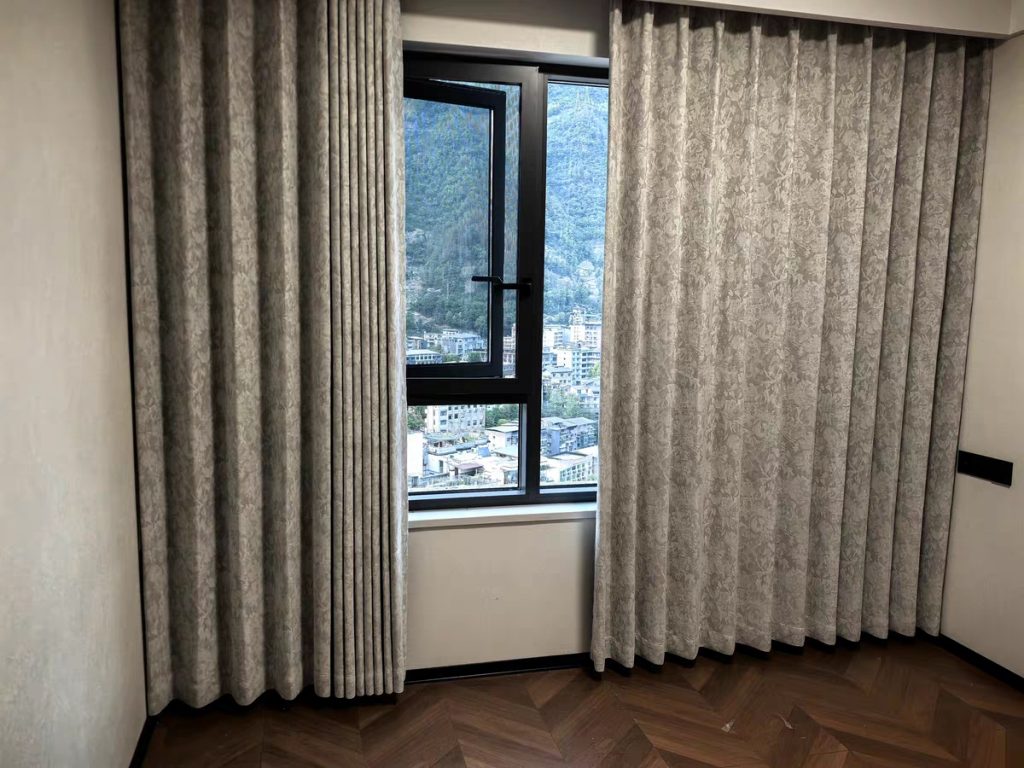
Choosing curtain fabric is one of the most important decisions when ordering custom curtains for a hotel, apartment, villa, or other property.
The same fabric that works well in a hotel bedroom may not be the right choice for a villa living room. A fabric that looks attractive in a showroom may also perform differently when exposed to sunlight every day.
For buyers sourcing custom curtains from China, fabric selection should therefore be based on the actual project requirements rather than appearance alone.
This guide explains the main factors to consider before selecting curtain fabric for a commercial or residential project.
1. Start With the Purpose of the Room
The first question should be:
Where will the curtain be installed?
Different rooms have different requirements.
Hotel Bedrooms
Hotel bedrooms often require privacy and good light control.
Common choices include:
- Blackout curtains
- Dimout curtains
- Blackout curtains with decorative outer fabric
- Sheer curtains combined with blackout curtains
The priority is usually a combination of appearance, privacy, durability, and light control.
Hotel Lobby
A lobby curtain is often selected as part of the overall interior design.
Appearance may be more important than complete blackout performance.
Designers may choose:
- Decorative woven fabrics
- Linen-look fabrics
- Textured fabrics
- Premium polyester fabrics
- Custom-colored fabrics
Apartments
Apartment projects can have very different requirements depending on whether the property is intended for rental, sale, or long-term residential use.
For rental apartments, durability and easy maintenance may be particularly important.
For premium apartments, buyers may place more emphasis on texture, appearance, and coordination with the interior design.
Villas
Villa projects often contain several different spaces, including bedrooms, living rooms, dining areas, and large glass windows.
The same property may therefore require several curtain fabric specifications.
2. Blackout vs Dimout Fabric
One of the most common decisions is whether to use blackout or dimout fabric.
Blackout Curtains
Blackout curtains are designed to significantly reduce the amount of light entering a room.
They are commonly considered for:
- Hotel bedrooms
- Guest rooms
- Home theaters
- Bedrooms
- Rooms with strong direct sunlight
The actual blackout performance depends on the fabric construction, lining, installation, and surrounding light gaps.
Dimout Curtains
Dimout curtains reduce incoming light but generally allow more light through than a high-blackout solution.
They can be suitable when the buyer wants:
- A softer appearance
- Partial light control
- Natural daylight
- A decorative curtain without complete darkness
The choice should be based on the actual room requirements rather than simply choosing the darkest-looking fabric.
3. Consider the Amount of Sunlight
A room facing strong sunlight can place greater demands on the curtain fabric.
Before selecting fabric, consider:
- Window direction
- Local climate
- Direct sunlight
- Window size
- Glass type
- Curtain operating hours
Large south- or west-facing windows may receive strong sunlight depending on the property’s location.
For these areas, buyers may want to discuss light-control and color-stability requirements with the supplier.
4. Think About Fabric Weight
Curtain fabric weight affects both appearance and installation.
Lightweight fabrics can create a softer and more flowing appearance.
Heavier fabrics may provide a fuller visual effect and can work well with certain hotel and luxury interior designs.
However, heavy fabric also means:
- Higher fabric consumption cost
- Greater curtain weight
- More demanding hardware requirements
- Potentially different installation requirements
If the project includes motorized curtain tracks, the curtain weight should be considered when selecting the motor and track system.
5. Polyester Curtain Fabric
Polyester is widely used in commercial and residential curtain applications.
Potential advantages include:
- Consistent production
- Wide range of colors
- Multiple textures
- Relatively easy maintenance
- Suitable for large-volume production
For hotel projects, polyester can also be used in different constructions and finishes.
However, not all polyester fabrics have the same quality or appearance.
When comparing suppliers, request samples rather than comparing fabric names alone.
6. Linen and Linen-Look Fabrics
Linen has a distinctive natural appearance and is often associated with relaxed or premium interior styles.
However, natural linen and linen-look synthetic fabrics are not identical.
Linen-look polyester fabrics may provide a similar visual effect while offering different maintenance and production characteristics.
For hotels and large apartment projects, buyers should compare:
- Appearance
- Fabric weight
- Shrinkage
- Maintenance requirements
- Color options
- Cost
- Production consistency
A physical sample can help the buyer make a more accurate comparison.
7. Choose the Color Carefully
Curtain color can significantly affect the appearance of an interior.
Popular project colors often include:
- Beige
- Cream
- Gray
- Taupe
- White
- Dark gray
- Brown
But there is no single color that works for every project.
For a hotel project, the curtain color should normally be coordinated with:
- Wall color
- Flooring
- Furniture
- Bed textiles
- Decorative elements
- Lighting
If the project has a specific interior design, provide the supplier with the approved color reference.
For important projects, request a physical color sample before bulk production.
8. Consider Fabric Texture
Two fabrics can have the same color but look completely different because of their texture.
For example:
- Smooth fabric creates a cleaner appearance.
- Woven texture can create a more natural appearance.
- Jacquard patterns can add visual detail.
- Embossed textures can create a more decorative finish.
When selecting fabric for a hotel or villa, consider how the fabric will look under the actual room lighting.
A photograph taken in a factory showroom may not accurately represent the final appearance in the finished room.
9. Check Shrinkage and Finished Dimensions
Custom curtains are made to specific dimensions, so fabric behavior is important.
Ask the supplier whether the selected fabric has relevant information regarding:
- Shrinkage
- Washing
- Dry cleaning
- Fabric stability
- Finished width
This is especially important when the curtains will be washed or maintained regularly.
For hotel projects, maintenance requirements should be discussed before production rather than after installation.
10. Consider Flame-Retardant Requirements
Some commercial and hospitality projects may have specific fire-safety requirements.
Depending on the destination market and building regulations, the project may require fabrics or finished curtains meeting specific flame-retardant standards.
If flame-retardant fabric is required, tell the supplier before requesting the final quotation.
You can also ask for the relevant test reports or certificates applicable to the selected product.
The exact requirements vary by country, building type, and project, so buyers should confirm the applicable standard with the project’s architect, consultant, or local authority.
11. Think About Cleaning and Maintenance
Hotel curtains may need regular cleaning.
Therefore, fabric selection should consider the expected maintenance process.
Ask:
- Can the fabric be machine washed?
- Is dry cleaning required?
- Does the fabric shrink?
- Is the color stable?
- Is ironing required?
- How should the fabric be stored?
A fabric that looks excellent but is difficult to maintain may not be suitable for a high-traffic hotel environment.
12. Consider Curtain Fullness When Choosing Fabric
Fabric selection and curtain fullness are connected.
A thin fabric with a high fullness ratio can create a different appearance from a heavy fabric using the same ratio.
For example, a project may specify:
2× fullness
But the final appearance can still vary considerably depending on:
- Fabric weight
- Fabric stiffness
- Weave
- Curtain heading
- Finished height
This is why buyers should evaluate the fabric sample together with the proposed curtain construction.
13. Ask for a Fabric Sample
For a large project, do not approve fabric based only on an online photograph.
Request samples and check:
- Color
- Texture
- Weight
- Thickness
- Light transmission
- Blackout performance
- Stitching compatibility
- Overall appearance
If possible, compare the sample under natural daylight and the actual interior lighting.
For hotel projects, it can also be useful to create a finished curtain sample rather than approving fabric alone.
14. What Information Should You Send a Chinese Curtain Supplier?
When asking a supplier to recommend fabrics, provide as much project information as possible.
For example:
Project type: 4-star hotel
Estimated quantity: 300 sets
Curtain application: Guest bedrooms
Required: Blackout + sheer
Preferred color: Warm beige
Style: Modern
Approximate size: 280 × 250 cm
Destination: [Country / City]
Required delivery date: [Date]
Then ask the supplier to recommend suitable fabric options at different price levels.
This is often more useful than asking:
“What curtain fabric do you have?”
15. Compare Samples, Not Just Prices
When comparing two curtain suppliers, the cheapest quotation does not necessarily represent the same product.
Make sure the samples being compared have the same:
- Fabric composition
- Weight
- Width
- Blackout performance
- Color
- Finished size
- Fullness
- Lining
- Heading
Otherwise, you may be comparing different products.
A low price may simply reflect a different specification.
FAQ
What is the best fabric for hotel curtains?
There is no single fabric that is best for every hotel. The appropriate choice depends on the room, interior design, light-control requirements, maintenance schedule, budget, and applicable project standards.
Is polyester suitable for hotel curtains?
Polyester is widely used for hotel curtains and can be produced in many colors, textures, and constructions. The specific fabric quality and performance should be evaluated through samples and specifications.
What is better for a hotel bedroom, blackout or dimout?
It depends on the hotel’s desired level of light control. If stronger light blocking is required, a blackout solution may be considered. If some natural light is preferred, dimout may be suitable.
Should I choose natural linen or linen-look fabric?
Both can be considered depending on the project’s design and performance requirements. Linen-look synthetic fabrics may offer different maintenance and production characteristics compared with natural linen.
How can I check curtain fabric quality?
Request a physical sample and check its texture, weight, color, construction, light transmission, and other project-specific requirements. For larger projects, testing the finished curtain sample can provide additional information.
Do hotel curtains need flame-retardant fabric?
Some hotel or commercial projects may have specific fire-safety requirements. The applicable standard depends on the project location, building regulations, and contract requirements.
Can a Chinese curtain manufacturer provide custom fabric colors?
Many manufacturers can offer a range of standard colors and may also provide custom color options. Custom colors can have different MOQ and production requirements, so confirm these before placing an order.
Final Thoughts
Choosing curtain fabric should start with the purpose of the room, not simply the appearance of the material.
For hotels, apartments, and villas, consider light control, fabric weight, color, texture, durability, maintenance, dimensions, and project-specific requirements.
If you are sourcing custom curtains from China, providing the supplier with your project type, estimated quantity, dimensions, preferred colors, and performance requirements will make it easier to identify suitable fabric options and prepare a more accurate quotation.
Before mass production, request samples and confirm the final specifications in writing. This simple step can help reduce differences between the approved design and the finished curtains.


No reply content