China solar power generation and energy storage manufacturing
A Complete Buyer’s Guide for Residential and Commercial Energy Storage Systems
Introduction
As solar energy adoption continues to grow worldwide, home energy storage batteries have become an essential component of modern renewable energy systems. Whether you are a solar installer, distributor, project contractor, wholesaler, or homeowner, selecting the right home energy storage battery manufacturer is one of the most important decisions for ensuring system performance, reliability, and long-term return on investment.
A high-quality energy storage battery stores excess electricity generated by photovoltaic (PV) systems during the day and supplies power when solar generation is unavailable, such as at night or during power outages. Modern lithium iron phosphate (LiFePO4) batteries offer higher safety, longer service life, faster charging, and lower maintenance compared to traditional lead-acid batteries.
However, not all manufacturers provide the same level of product quality, engineering expertise, or after-sales support. This guide explains the key factors to consider when choosing a reliable home energy storage battery manufacturer.
Why Choosing the Right Manufacturer Matters
An energy storage battery is expected to operate safely and efficiently for many years. Choosing an experienced manufacturer helps ensure:
-
Stable battery performance
-
Long cycle life
-
High energy efficiency
-
Reliable Battery Management System (BMS)
-
International safety certifications
-
Consistent product quality
-
Strong technical support
-
Reliable warranty service
Poor-quality batteries may suffer from reduced capacity, overheating, communication failures, or shortened service life, increasing maintenance costs and reducing customer satisfaction.
Understand Your Energy Storage Requirements
Before selecting a manufacturer, clearly define your project requirements.
Important considerations include:
-
Residential or commercial application
-
On-grid, off-grid, or hybrid solar system
-
Daily electricity consumption
-
Backup power duration
-
Installation environment
-
Expansion requirements
-
Local certification standards
The more detailed your requirements, the easier it is to select the most suitable battery solution.
Choose the Right Battery Capacity
Battery capacity should match the customer’s electricity demand.
Common capacities include:
-
5.12 kWh
-
10.24 kWh
-
15 kWh
-
20 kWh
-
30 kWh
-
50 kWh
-
100 kWh+
Residential users generally install 5–20 kWh systems, while commercial and industrial projects often require larger modular battery banks.
Choose a manufacturer capable of offering scalable solutions that allow future capacity expansion.
Verify Battery Cell Quality
Battery cells are the core of every energy storage system.
High-quality manufacturers usually use Grade A LiFePO4 cells from reputable suppliers.
Advantages of LiFePO4 cells include:
-
Excellent thermal stability
-
Long cycle life
-
High safety
-
Low maintenance
-
Fast charging capability
-
High charge and discharge efficiency
Ask manufacturers about:
-
Cell brand
-
Cell grade
-
Manufacturing date
-
Capacity consistency
-
Internal resistance matching
Consistent cell quality directly affects battery lifespan and performance.
Evaluate the Battery Management System (BMS)
The Battery Management System is the “brain” of the battery.
A professional BMS provides:
-
Cell voltage balancing
-
Overcharge protection
-
Over-discharge protection
-
Over-current protection
-
Short-circuit protection
-
Temperature monitoring
-
Communication functions
-
Fault diagnosis
Advanced BMS systems improve battery safety while extending service life.
Check Compatibility with Inverters
Battery compatibility is essential for smooth system integration.
Professional manufacturers typically support communication protocols such as:
-
CAN Bus
-
RS485
-
RS232
Many batteries are compatible with leading inverter brands, making installation easier and improving overall system performance.
Always confirm compatibility before placing an order.
Review Manufacturing Capabilities
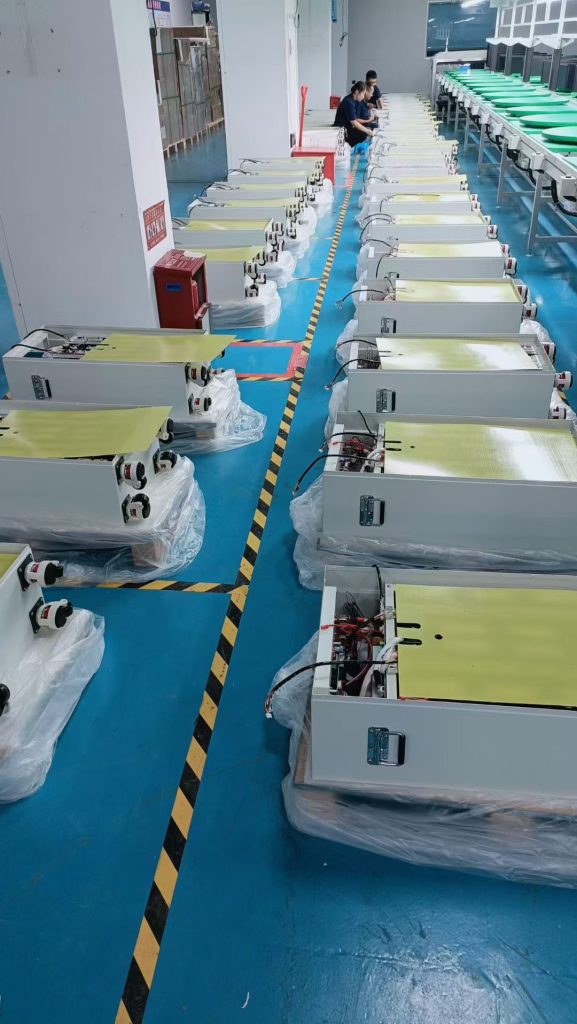
An experienced manufacturer should have modern production facilities.
Key production capabilities include:
-
Automated cell sorting
-
Laser welding
-
Module assembly
-
Battery pack integration
-
Aging tests
-
Functional testing
-
Final inspection
Automation improves consistency and reduces production errors.
Examine Quality Control Procedures
Quality inspection should occur throughout production.
Professional manufacturers usually perform:
Incoming Material Inspection
Checking battery cells, BMS boards, wiring, connectors, and metal enclosures.
Production Inspection
Monitoring welding quality, assembly accuracy, electrical connections, and system integration.
Functional Testing
Testing communication, charging, discharging, balancing, and protection functions.
Aging Test
Running batteries through charging and discharging cycles before shipment to verify stability.
Final Inspection
Checking:
-
Appearance
-
Capacity
-
Voltage
-
Communication
-
Packaging
-
Labels
-
Accessories
Strict quality control minimizes product defects.
Verify International Certifications
Reliable manufacturers should provide internationally recognized certifications.
Common certifications include:
-
CE
-
IEC 62619
-
IEC 62133
-
UN38.3
-
MSDS
-
UL (for specific markets)
-
RoHS
-
ISO 9001
For European, North American, Australian, and Middle Eastern markets, certification compliance is often mandatory.
Evaluate OEM and ODM Services
Many buyers require customized energy storage products.
Professional manufacturers may offer:
-
Private labeling
-
Custom logo printing
-
Customized battery housing
-
Custom software interface
-
Custom communication protocols
-
Personalized packaging
-
Product manuals
-
Multi-language labels
OEM and ODM services help distributors build their own brands while meeting local market needs.
Production Capacity and Delivery Time
Manufacturing capability directly affects delivery schedules.
Ask about:
-
Monthly production capacity
-
Standard lead time
-
Peak-season capacity
-
Emergency production support
For large projects, reliable delivery is just as important as product quality.
Warranty and Technical Support
A dependable manufacturer should provide comprehensive after-sales service.
Support may include:
-
Installation guidance
-
Technical documentation
-
Online troubleshooting
-
Firmware updates
-
Warranty replacement
-
Spare parts supply
Many high-quality LiFePO4 batteries come with warranties ranging from 5 to 10 years.
Questions to Ask Before Choosing a Manufacturer
Before making a purchasing decision, ask:
-
How many years have you manufactured energy storage batteries?
-
What battery cells do you use?
-
Are your products certified for my market?
-
Can the batteries work with my inverter brand?
-
What is the expected cycle life?
-
What testing procedures are performed?
-
Do you provide OEM and ODM services?
-
What warranty do you offer?
-
What is your production capacity?
-
Can you provide technical support after delivery?
The answers will help you compare suppliers objectively.
Common Mistakes Buyers Should Avoid
Many buyers focus only on the lowest price.
Other common mistakes include:
-
Ignoring battery certifications
-
Choosing incompatible batteries
-
Overlooking BMS quality
-
Skipping factory audits
-
Not testing samples
-
Failing to verify production capacity
-
Ignoring after-sales support


No reply content