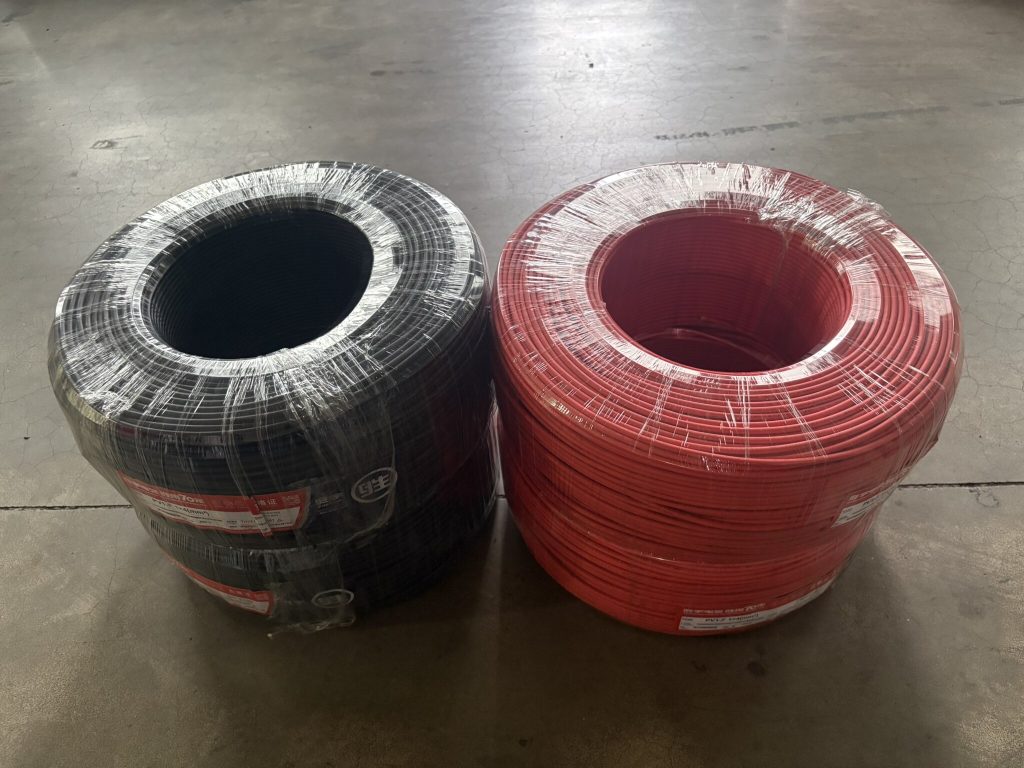
In modern commercial, residential, and industrial construction, electrical wiring serves as the critical nervous system of any structure. Selecting the appropriate building wires is far more than a routine procurement task—it directly impacts project safety, long-term operational costs, regulatory compliance, and overall circuit reliability.
With thousands of wire configurations, insulation grades, and price points available on the market, international project engineers, EPC contractors, and procurement managers often face a complex balancing act: How do you ensure rigid safety standards without over-budgeting on raw materials?
This comprehensive guide breaks down the essential criteria for choosing the right building wires for your engineering projects, evaluating international standards, safety benchmarks, and cost-optimization strategies.
1. Classifying Building Wires: Types, Standards, and Application Scenarios
Before selecting wire specifications, it is crucial to match the electrical characteristics of the cable to the physical and environmental demands of the installation environment.
+---------------------------------------------------------------------------------------+
|                            BUILDING WIRE SELECTION MATRIX                             |
+-------------------+-----------------------------+-------------------------------------+
| Wire Type         | Core Characteristics        | Ideal Applications                  |
+-------------------+-----------------------------+-------------------------------------+
| BV (60227 IEC 01) | Solid Copper, Rigid PVC     | Fixed indoor conduits, trunking     |
| BVR (60227 IEC 02)| Stranded Copper, Flexible   | Complex bends, control cabinets     |
| LSHF / H07Z-K     | Low Smoke, Zero Halogen     | High-density public buildings       |
| NYM / Twin & Earth| Sheathed Multi-Core         | Surface mounted, dry/wet spaces     |
+-------------------+-----------------------------+-------------------------------------+
Single-Core Solid Wires (BV Series / 60227 IEC 01)
- Design: A single, solid copper conductor wrapped in high-grade PVC insulation.
- Best Used For: Permanent power installations inside walls, embedded conduits, and distribution boards where the wire will remain stationary.
- Advantage: Exceptional electrical continuity, higher mechanical rigidity, and lower long-term oxidation risks at junction connection points.
Flexible Stranded Wires (BVR Series)
- Design: Multiple thin copper wires twisted together to form a flexible core.
- Best Used For: Applications requiring tight bending radii, flexible conduit connections, or machinery wiring subject to vibration.
- Advantage: Easy to pull through complex conduit runs during construction, significantly reducing installation labor time.
Low Smoke Halogen-Free Wires (LSHF)
- Design: Thermoplastic or cross-linked insulation that releases minimal smoke and no corrosive halogen gases when burned.
- Best Used For: High-occupancy structures such as airports, hospitals, high-rise residential towers, and subways.
2. Safety First: Critical Compliance & Quality Benchmarks
Substandard electrical wiring is a leading cause of electrical fires and voltage drops in commercial buildings. When reviewing supplier datasheets and factory test reports, enforce compliance against four primary safety pillars:
Conductor Material & Resistance Standard (IEC 60228)
Electrical safety starts with conductor purity. High-grade wires must utilize 99.9% Oxygen-Free Copper (OFC) to ensure minimal electrical resistance (R). High resistance generates excessive heat under load (P = I^2R), increasing the risk of thermal degradation and insulation breakdown over time.
- Procurement Warning: Always audit against Copper-Clad Aluminum (CCA). CCA has higher electrical resistance and lower tensile strength, making it unsafe for standard architectural power wiring.
Insulation Thickness and Concentricity
Uneven insulation wall thickness creates dangerous “weak spots” susceptible to dielectric breakdown under voltage surges. Professional wire manufacturing requires real-time online laser monitoring to maintain high insulation concentricity.
Thermal Rating & Voltage Class
Ensure the wire rating matches the system requirements:
- Voltage Class: Standard building wires operate at 300/500V or 450/750V.
- Temperature Rating: Standard PVC handles up to 70°C, while heat-resistant variants (e.g., XLPE or 90°C/105°C rated PVC) should be specified for high-temperature ambient environments or densely packed cable trays.
3. Balancing Quality and Cost Efficiency in B2B Procurement
Achieving cost efficiency does not mean compromising on safety. Smart procurement strategies focus on Total Cost of Ownership (TCO) rather than simply selecting the lowest unit price per roll.
[ Step 1: Standardize Specifications ] ──► Reduces custom manufacturing premiums
                  │
                  ▼
[ Step 2: Direct Factory Sourcing ]   ──► Eliminates middleman markup fees
                  │
                  ▼
[ Step 3: Container Load Optimization]──► Minimizes freight cost per meter
Avoid Over-Specifying
Do not mandate 90°C LSHF multi-sheathed cables for standard low-load residential lighting circuits where 70°C BV solid wires are fully compliant. Over-specifying material grades inflates procurement budgets unnecessarily.
Partner Direct with Qualified Manufacturers
Working directly with audited wire factories guarantees full material traceability and lower cost structures. For instance, direct factory profiles like the China Cable and Wire Manufacturing Co., Ltd. Hub provide transparent technical parameters, factory certifications, and direct-from-manufacturer order terms.
Bulk Packaging & Ocean Logistics Optimization
Electrical wires are heavy, high-density products. Plan your order volumes in Full Container Loads (FCL) to minimize freight costs per meter, and specify durable packaging (such as 100-meter film-wrapped rolls or heavy-duty wooden spools) to prevent transit damage.
4. Step-by-Step Sourcing Workflow for Project Managers
<Sequence>
  <Step title="Step 1: Map Project Electrical Codes" subtitle="Review national standards and local grid compliance">
    Identify required voltage levels, local fire safety mandates, and color-coding rules (e.g., IEC vs. NEC standards) before requesting quotations.
  </Step>
  <Step title="Step 2: Request Detailed Technical Datasheets" subtitle="Do not rely on verbal assurances">
    Require potential suppliers to submit full specification sheets detailing conductor DC resistance, insulation tensile strength, and flame propagation compliance (IEC 60332-1).
  </Step>
  <Step title="Step 3: Sample Verification & Resistance Testing" subtitle="Perform lab audits prior to mass production">
    Obtain pre-production samples to verify actual outer diameter, gross weight, and electrical conductivity through certified third-party testing laboratories.
  </Step>
  <Step title="Step 4: Conduct Pre-Shipment Inspection (PSI)" subtitle="Verify before shipping">
    Audit production batch numbers, meter-mark precision, roll weight uniformity, and export packaging integrity prior to final dispatch.
  </Step>
</Sequence>
5. Recommended B2B Sourcing & Logistics Resources
Navigating international supply chains requires reliable directory tools, freight partners, and platform guides. Explore the following resources to streamline your procurement pipeline:
- Manufacturer Profile & Catalog: Access certified product specifications and direct supply capabilities on the China Cable and Wire Manufacturing Co., Ltd. Profile.
- Global Trade Network: Connect with verified global suppliers across diverse product sectors via the Global Trade Markets Overview.
- Verified Suppliers Directory: Find compliant OEM/ODM factories for large-scale building materials through the Verified Suppliers Forum.
- Freight & Shipping Management: Optimize ocean freight routes, custom clearances, and shipping schedules using the
- Sourcing Best Practices: Master factory audit techniques and vendor verification using our updated
Frequently Asked Questions (FAQ)
Q1: What is the main difference between BV and BVR building wires?
A: BV wire consists of a single solid copper conductor, making it more rigid and ideal for fixed, straight conduit installations inside walls. BVR wire consists of multiple twisted copper strands, making it flexible and easier to pull through complex conduit systems with multiple tight turns.
Q2: Why is 99.9% Oxygen-Free Copper (OFC) so important for building wires?
A: High copper purity guarantees lower electrical resistance, which reduces energy loss and heat generation during current transmission. Impure copper or copper-clad alternatives generate excess thermal energy, leading to insulation degradation, higher electricity bills, and serious fire risks.
Q3: How can overseas buyers spot fake or substandard building wires?
A: Check for three key indicators:
- Roll Weight: Substandard wires often reduce copper diameter; if a 100m roll is noticeably lighter than official datasheet specs, the conductor cross-section may be undersized.
- Conductor Resistance: Perform a DC resistance test; undersized or impure copper will fail IEC 60228 resistance thresholds.
- Insulation Concentricity: Cut a cross-section of the wire to check if the conductor is perfectly centered in the insulation. Off-center copper risks short-circuiting at thin insulation points.
Q4: Which international standard applies to standard PVC insulated building wires?
A: The most widely recognized global benchmark is IEC 60227 (specifically IEC 60227-3 for single-core non-sheathed cables). Regional equivalents include BS 6004 in Europe/UK and DIN EN 50525.
Q5: Can standard PVC building wires be installed outdoors exposed to sunlight?
A: Standard interior PVC building wires are generally not UV-stabilized or waterproof. For outdoor or direct-burial installations, specify UV-resistant outer sheathing (such as XLPE or armored cables) to prevent insulation degradation caused by sunlight and moisture.



No reply content