
China Custom Clothing Manufacturer
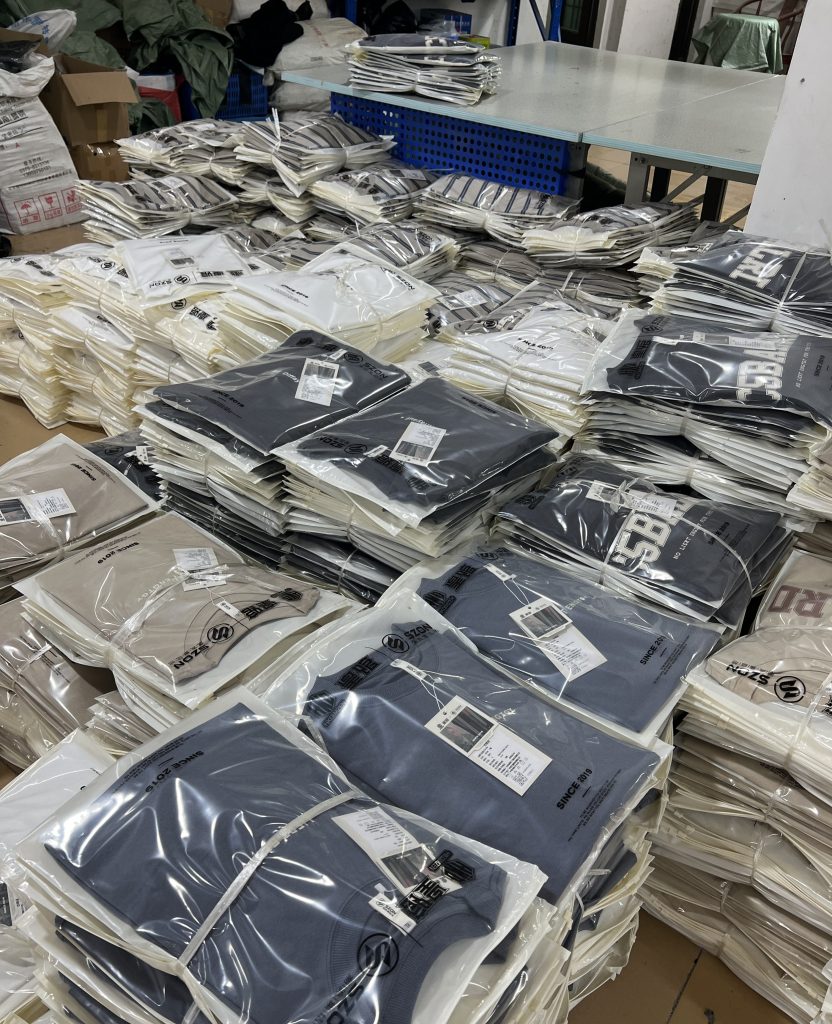
Finding the right clothing manufacturer in China is one of the most important decisions for a fashion brand, clothing importer, retailer, or startup. The right factory can help you achieve consistent quality, competitive pricing, flexible customization, and reliable delivery. The wrong supplier can lead to poor-quality garments, production delays, unexpected costs, and difficult communication.
China remains one of the world’s major apparel manufacturing centers, with factories offering capabilities ranging from basic cut-and-sew production to highly customized OEM and ODM services. However, not every clothing manufacturer is suitable for every project.
This guide explains how international buyers can evaluate Chinese clothing manufacturers and choose a supplier that matches their products, order volume, quality requirements, and target market.
1. Define Your Clothing Requirements Before Contacting Manufacturers
Before searching for a manufacturer, prepare clear product specifications.
Important information includes:
-
Clothing category
-
Fabric type and composition
-
Garment sizes
-
Colors
-
Measurements
-
Design drawings
-
Logo requirements
-
Labels and packaging
-
Expected order quantity
-
Target price
-
Delivery destination
-
Required delivery date
-
Testing or certification requirements
For example, a buyer looking for custom T-shirts should specify whether the product is 100% cotton, cotton-polyester, heavyweight or lightweight, regular fit or oversized, screen printed or embroidered, and whether custom neck labels and packaging are required.
The more precise your requirements are, the easier it is for a manufacturer to provide an accurate quotation.
2. Choose a Manufacturer That Specializes in Your Product
One of the biggest mistakes buyers make is choosing a factory simply because it offers a low price.
A manufacturer may produce clothing, but that does not necessarily mean it has experience with your specific product.
Different garments require different equipment, materials, production techniques, and quality-control processes.
For example:
-
T-shirt factories may specialize in knitted fabrics.
-
Jacket factories may have experience with waterproof and technical fabrics.
-
Sportswear manufacturers may specialize in stretch fabrics and performance materials.
-
Children’s clothing factories may have experience with specific safety requirements.
-
Denim manufacturers require specialized washing and finishing equipment.
-
Workwear factories may focus on durability and reinforced construction.
When evaluating a supplier, ask what types of products they manufacture regularly.
A factory that already produces similar garments is usually easier to work with because its production team understands the construction methods, materials, and common quality problems associated with that product.
3. Check Whether the Factory Provides OEM or ODM Services
International clothing buyers generally work with manufacturers through OEM, ODM, or ready-made production models.
OEM Clothing Manufacturing
With OEM production, you provide your own designs, specifications, measurements, fabrics, colors, labels, and other requirements.
The factory manufactures the garments according to your specifications.
OEM is suitable for brands that already have their own product designs and want the manufacturer to produce them.
ODM Clothing Manufacturing
ODM manufacturers may provide existing designs, patterns, materials, and production solutions that buyers can customize.
This can be useful for startups or retailers that want to develop clothing products without creating every component from scratch.
When contacting a Chinese clothing manufacturer, ask clearly:
-
Do you provide OEM manufacturing?
-
Do you provide ODM services?
-
Can you develop samples from sketches?
-
Can you create patterns?
-
Can you source fabrics?
-
Can you customize labels?
-
Can you customize packaging?
These questions can quickly determine whether the factory matches your project.
4. Evaluate the Manufacturer’s Production Capacity
Production capacity is particularly important when your order volume increases.
A factory may be able to produce 500 pieces but struggle with an order of 20,000 pieces. Another factory may be equipped for large-scale production but may not be interested in small startup orders.
Ask about:
-
Monthly production capacity
-
Number of production lines
-
Number of workers
-
Sewing equipment
-
Cutting equipment
-
Printing and embroidery capabilities
-
Fabric sourcing
-
Sample development capacity
-
Quality-control procedures
-
Production lead time
However, do not judge a manufacturer only by the number of employees or machines.
Production capacity should be considered together with current orders, production efficiency, quality-control systems, and your required delivery schedule.
5. Ask About MOQ
MOQ means Minimum Order Quantity.
Different Chinese clothing manufacturers have different MOQ requirements.
For example, one factory may accept 100 pieces per style, while another may require 500 or 1,000 pieces.
MOQ can also vary depending on:
-
Fabric
-
Color
-
Size ratio
-
Printing
-
Embroidery
-
Custom labels
-
Custom packaging
-
Special materials
If you are a new brand, look for manufacturers that are willing to work with smaller initial quantities.
A lower MOQ can reduce your inventory risk while allowing you to test the market before placing larger orders.
However, smaller orders may have a higher unit cost because the factory has to spread sampling, setup, cutting, and production costs over fewer garments.
6. Request Samples Before Placing a Large Order
Never rely only on product photographs when evaluating a clothing manufacturer.
A sample allows you to physically check the manufacturer’s production capabilities.
When evaluating a sample, inspect:
-
Fabric quality
-
Fabric weight
-
Color accuracy
-
Stitching
-
Seam strength
-
Size measurements
-
Pattern accuracy
-
Printing quality
-
Embroidery
-
Zippers
-
Buttons
-
Labels
-
Thread quality
-
Finishing
-
Packaging
You should also compare the sample with your original specifications.
For example, if your specification requires a 240 GSM cotton T-shirt, check whether the actual fabric meets the required specification rather than simply judging whether the fabric feels good.
7. Check Quality-Control Procedures
Quality control is one of the most important factors when selecting a clothing manufacturer.
A professional manufacturer should have a process for checking garments during different stages of production.
Typical quality-control stages include:
Fabric Inspection
Fabric should be checked for defects, color differences, stains, holes, and other problems before cutting.
Cutting Inspection
Incorrect cutting can cause differences in garment dimensions and affect the final fit.
Sewing Inspection
Workers or quality-control staff should inspect stitching, seams, loose threads, and construction problems during production.
Finished Garment Inspection
Completed garments should be checked for appearance, measurements, defects, labels, printing, and packaging.
For larger international orders, buyers may also arrange third-party inspection before shipment.
8. Compare More Than One Manufacturer
Do not immediately choose the first factory that responds.
It is usually better to compare several suitable manufacturers.
For example, you can contact 5–10 potential suppliers and compare:
Factor |
Manufacturer A |
Manufacturer B |
Manufacturer C |
|---|---|---|---|
MOQ |
Low |
Medium |
High |
Sample Cost |
— |
— |
— |
Unit Price |
— |
— |
— |
Production Time |
— |
— |
— |
OEM |
Yes/No |
Yes/No |
Yes/No |
ODM |
Yes/No |
Yes/No |
Yes/No |
Fabric Options |
— |
— |
— |
Quality Control |
— |
— |
— |
Packaging |
— |
— |
— |
Price should be only one part of the comparison.
A slightly more expensive manufacturer may offer better quality, faster communication, more reliable production, and fewer defects. In the long term, this may be more economical than choosing the cheapest supplier.
9. Verify Communication and Responsiveness
Communication problems can create serious production mistakes.
Pay attention to how the manufacturer responds to your questions.
A reliable supplier should be able to clearly explain:
-
Fabric options
-
MOQ
-
Sample process
-
Production time
-
Payment terms
-
Packaging
-
Shipping arrangements
-
Quality control
-
Customization options
If a supplier avoids technical questions or repeatedly gives unclear answers, be cautious.
Good communication is especially important when producing customized clothing because small misunderstandings can affect the entire order.
10. Confirm Pricing in Detail
A clothing quotation should be clear about what is included.
Ask whether the price includes:
-
Fabric
-
Cutting
-
Sewing
-
Printing
-
Embroidery
-
Labels
-
Hangtags
-
Packaging
-
Individual polybags
-
Cartons
-
Sampling
-
Special treatments
A low initial quotation may not represent the final cost if many customization charges are added later.
Before confirming an order, request a detailed quotation based on your final specifications.
11. Understand Production Lead Time
Production time can vary depending on the product and order quantity.
A typical custom clothing project may include:
-
Design confirmation
-
Fabric selection
-
Pattern development
-
Sample production
-
Sample approval
-
Material purchasing
-
Cutting
-
Sewing
-
Printing or embroidery
-
Quality inspection
-
Packing
-
Shipment
Do not calculate your delivery schedule based only on sewing time.
Fabric sourcing and sample approval can also take significant time.
If you have a fixed launch date or seasonal sales deadline, communicate the deadline before placing the order.
12. Check Fabric and Material Sourcing
Fabric quality has a major influence on the final garment.
Ask the manufacturer what fabric suppliers they work with and whether they can provide fabric samples.
Depending on your product, you may need:
-
Cotton
-
Organic cotton
-
Polyester
-
Nylon
-
Linen
-
Rayon
-
Modal
-
Spandex
-
Wool
-
Blended fabrics
-
Recycled materials
If your brand has strict material requirements, ask the manufacturer to provide documentation or test reports where appropriate.
Do not assume that two fabrics with the same general description will have identical performance.
Fabric weight, composition, finishing, shrinkage, colorfastness, and construction can all affect the final product.
13. Pay Attention to Intellectual Property Protection
If you provide original clothing designs, patterns, logos, or brand information, consider how your intellectual property will be protected.
Before sharing sensitive designs with a new supplier, you can establish appropriate confidentiality and intellectual-property terms.
You should also clearly identify:
-
Who owns the designs
-
Who owns custom patterns
-
Who owns molds or special tooling, if applicable
-
Whether the factory can reproduce your designs for other customers
-
Whether your brand information can be used publicly
These issues are particularly important for brands developing unique products.
14. Check Packaging and Private Label Services
Many international clothing brands need more than garment manufacturing.
They may also require:
-
Custom woven labels
-
Printed labels
-
Hangtags
-
Barcode stickers
-
Size stickers
-
Custom polybags
-
Branded cartons
-
Folding methods
-
Individual packaging
Ask the manufacturer whether these services are available in-house or through partner suppliers.
Using one manufacturer for both production and packaging can simplify the supply chain.
15. Consider Shipping and Export Experience
For international buyers, manufacturing is only one part of the supply chain.
The manufacturer should understand the requirements for exporting clothing to your market.
Ask whether they have experience shipping to:
-
United States
-
Canada
-
United Kingdom
-
European Union
-
Australia
-
Middle East
-
Southeast Asia
-
Latin America
-
Africa
You should also clarify whether the factory provides export documentation or whether you will use your own freight forwarder.
For larger orders, coordinate the production schedule with your shipping schedule to avoid unnecessary storage and transportation delays.
16. Warning Signs to Watch For
When evaluating Chinese clothing manufacturers, be careful with suppliers that:
-
Refuse to provide samples
-
Cannot explain their production process
-
Give extremely low prices without clear specifications
-
Change prices repeatedly
-
Avoid written specifications
-
Cannot provide basic company information
-
Promise unrealistically short production times
-
Pressure you to place a large order immediately
-
Cannot clearly explain quality-control procedures
One warning sign alone does not necessarily mean a supplier is unreliable, but several warning signs together should encourage additional verification.
17. The Best Manufacturer Is Not Always the Cheapest
For clothing manufacturing, the lowest unit price does not necessarily produce the lowest total cost.
Suppose Manufacturer A offers a lower price but has a higher defect rate, slower production, and poor communication.
Manufacturer B may charge slightly more but provide better quality and more reliable delivery.
If defective garments result in returns, rework, missed sales, or additional shipping costs, the cheaper quotation may actually become more expensive.
Therefore, evaluate the total supply-chain cost rather than focusing only on the factory price.
18. Questions to Ask a Chinese Clothing Manufacturer
Before placing an order, consider asking:
-
What types of clothing do you specialize in?
-
What is your MOQ?
-
Can you provide OEM and ODM services?
-
Can you develop samples from drawings?
-
What fabrics can you provide?
-
What is the sample lead time?
-
What is the bulk production lead time?
-
What quality-control procedures do you use?
-
Can you customize labels and packaging?
-
What payment terms do you offer?
-
Do you have experience exporting to my country?
-
Can you provide production photos or inspection information?
-
What happens if the finished garments do not meet the approved specifications?


No reply content