
Custom CNC Machining Parts Manufacturer in Dongguan China
China
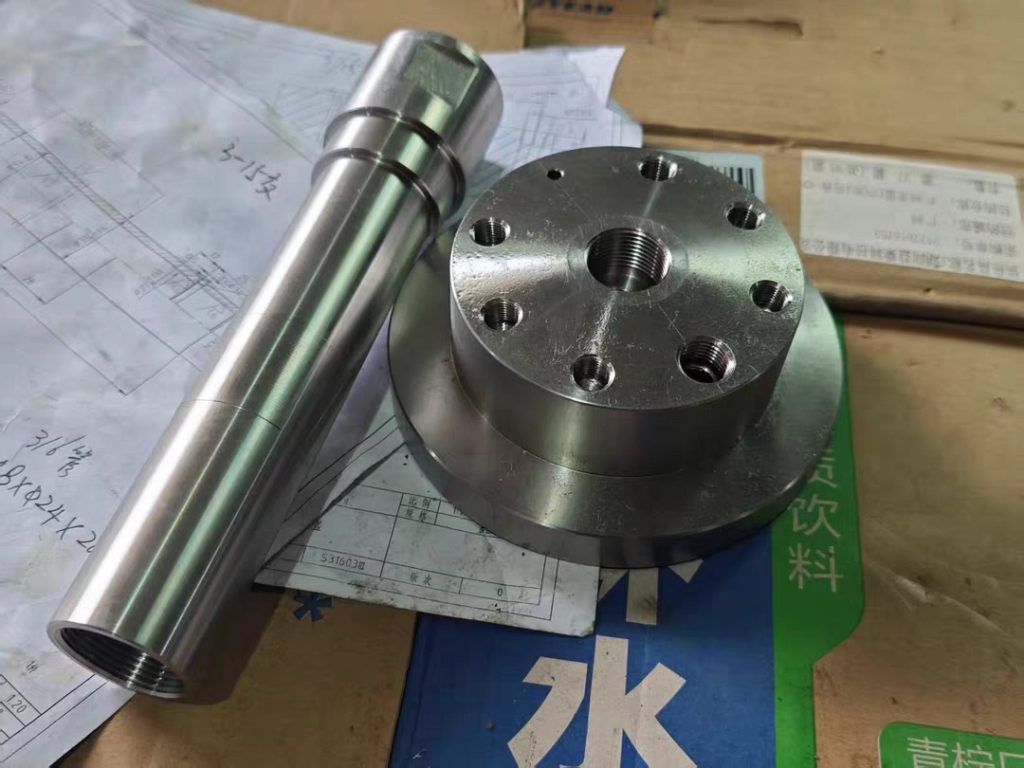
Choosing the right CNC parts manufacturer in China is an important decision for companies that need precision components, prototypes, replacement parts, or large-volume production. The right manufacturer can provide consistent quality, competitive pricing, reliable delivery, and technical support. The wrong supplier can lead to dimensional errors, material problems, delays, and unnecessary production costs.
China has a large and well-developed CNC machining industry, but manufacturers have different equipment, capabilities, quality standards, and areas of specialization. Therefore, buyers should evaluate suppliers based on their actual project requirements rather than choosing only by price.
1. Define Your CNC Parts Requirements
Before contacting manufacturers, prepare clear technical information about your parts.
Important information may include:
-
2D engineering drawings
-
3D CAD files
-
Material
-
Dimensions
-
Tolerances
-
Surface finish
-
Quantity
-
Thread specifications
-
Heat-treatment requirements
-
Surface-treatment requirements
-
Packaging requirements
-
Delivery destination
Common file formats include STEP, STP, IGES, DXF, DWG, and PDF.
The more complete your technical information is, the easier it is for the manufacturer to evaluate the machining process and provide an accurate quotation.
2. Choose a Manufacturer With the Right CNC Capabilities
Not every CNC factory can manufacture every type of component.
Depending on your parts, you may need:
-
CNC milling
-
CNC turning
-
3-axis machining
-
4-axis machining
-
5-axis machining
-
Swiss-type machining
-
CNC drilling
-
CNC grinding
-
Wire EDM
-
EDM machining
For relatively simple components, 3-axis machining may be sufficient.
For complex parts with multiple surfaces, angled features, or tight positional requirements, 4-axis or 5-axis machining may be more appropriate.
When evaluating a manufacturer, ask which machines are available and what types of parts they regularly produce.
3. Check the Manufacturer’s Experience With Your Industry
Industry experience can be valuable because different applications have different requirements.
A CNC manufacturer may specialize in components for:
-
Automotive
-
Industrial machinery
-
Robotics
-
Electronics
-
Medical equipment
-
Aerospace
-
Automation
-
Energy equipment
-
Consumer products
-
Optical equipment
For example, a manufacturer producing industrial machine components may not necessarily have experience with the documentation and quality requirements expected for highly regulated applications.
Ask whether the factory has previously manufactured parts similar to yours.
4. Evaluate CNC Machine Equipment
The manufacturer’s equipment can have a direct impact on production capability.
Ask about:
-
CNC machine brands
-
Number of machines
-
Machine types
-
Machine travel
-
Spindle speed
-
Automatic tool changers
-
4-axis capability
-
5-axis capability
-
Turning capacity
-
Inspection equipment
However, having expensive machines does not automatically mean a factory will produce high-quality parts.
Machine maintenance, programming ability, tooling, operators, process control, and inspection systems are equally important.
5. Check Material Capabilities
CNC parts can be manufactured from many different materials.
Common options include:
Metals
-
Aluminum
-
Stainless steel
-
Carbon steel
-
Brass
-
Copper
-
Titanium
-
Tool steel
Plastics
-
ABS
-
Nylon
-
POM
-
PTFE
-
PEEK
-
Polycarbonate
-
PVC
Make sure the manufacturer has experience machining the material required for your project.
Different materials require different cutting parameters, tooling, cooling methods, and finishing processes.
6. Ask About CNC Machining Tolerances
Tolerance is one of the most important technical considerations when choosing a CNC manufacturer.
Your drawing should specify the required tolerances for critical dimensions.
For example, different features may have different tolerance requirements depending on their function.
Ask the manufacturer:
-
What general tolerances can you achieve?
-
What tighter tolerances can you reliably maintain?
-
Can you measure critical dimensions?
-
How do you control dimensional variation during production?
Do not simply accept a statement such as “we can achieve high precision.”
Ask for specific information based on your actual drawings.
7. Check Quality-Control Equipment
A professional CNC manufacturer should have appropriate inspection equipment.
Depending on your requirements, equipment may include:
-
Vernier calipers
-
Micrometers
-
Height gauges
-
Thread gauges
-
Pin gauges
-
Gauge blocks
-
Surface roughness testers
-
CMM machines
-
Optical measuring equipment
For high-precision components, coordinate measuring machines can be particularly useful for measuring complex geometries and dimensional relationships.
The factory should also maintain inspection records where appropriate.
8. Request a Sample or Prototype
Before placing a large production order, consider ordering a prototype.
A sample allows you to evaluate:
-
Dimensional accuracy
-
Material
-
Surface finish
-
Machining quality
-
Threads
-
Assembly fit
-
Functional performance
If the prototype does not meet your requirements, you can make corrections before moving into mass production.
This is especially important for newly developed products.
9. Review Surface Finishing Capabilities
CNC machining is often only one part of the manufacturing process.
Your parts may require additional finishing such as:
-
Anodizing
-
Electroless nickel plating
-
Zinc plating
-
Powder coating
-
Polishing
-
Brushing
-
Sandblasting
-
Black oxide
-
Passivation
-
Heat treatment
Ask whether the manufacturer provides these processes internally or works with qualified subcontractors.
You should also specify the required surface finish and appearance in your technical documentation.
10. Evaluate Production Capacity
Your supplier should be able to handle your expected order volume.
Ask about:
-
Monthly production capacity
-
Number of CNC machines
-
Available production shifts
-
Current production workload
-
Prototype capacity
-
Small-batch capability
-
Mass-production capability
A manufacturer that is excellent at prototypes may not necessarily be the best choice for high-volume production.
Similarly, a large factory may not be interested in very small orders.
Choose a manufacturer whose production model matches your requirements.
11. Check Small-Batch and Prototype Capabilities
If you are a startup or developing a new product, you may need only a small number of CNC parts.
Look for manufacturers that support:
-
Prototypes
-
Low-volume production
-
Engineering samples
-
Small batch orders
-
Rapid machining
This can reduce your initial investment and allow you to test the design before ordering larger quantities.
12. Compare CNC Machining Quotations Carefully
Price is important, but quotations should be compared based on identical specifications.
A CNC quotation may depend on:
-
Material
-
Part size
-
Geometry
-
Machining time
-
Tooling
-
Quantity
-
Tolerance
-
Surface finish
-
Heat treatment
-
Secondary processing
-
Inspection requirements
For example, a quotation that excludes anodizing cannot be directly compared with one that includes anodizing.
Make sure you understand exactly what each supplier includes.
13. Ask About Tooling and Fixtures
Some CNC projects require special fixtures or tooling.
Ask:
-
Is custom tooling required?
-
Is fixture development included?
-
Who owns the fixture?
-
Is there a separate tooling charge?
-
Can the fixture be reused for future orders?
For repeated production, a well-designed fixture can improve consistency and reduce production time.
14. Check Engineering Support
A good CNC manufacturer should not simply accept a drawing and start cutting metal.
Experienced manufacturers can often identify potential manufacturing problems before production.
They may recommend:
-
Changing a difficult feature
-
Adjusting wall thickness
-
Modifying corner radii
-
Changing material
-
Improving machining access
-
Reducing unnecessary tolerances
-
Changing the machining sequence
This is known as design for manufacturability, or DFM.
A useful manufacturer can help you reduce cost while maintaining the required functionality.
15. Evaluate Communication
Communication is particularly important for custom CNC parts.
Your project may involve technical details that need clarification.
Pay attention to whether the manufacturer can clearly discuss:
-
Drawings
-
Materials
-
Tolerances
-
Machining methods
-
Surface finishing
-
Inspection
-
Production schedules
-
Packaging
If the supplier frequently misunderstands technical requirements before the order, production problems may become more serious later.
16. Check Production Lead Time
Ask the manufacturer to provide a realistic timeline.
The production schedule may include:
-
Drawing review
-
DFM analysis
-
Quotation
-
Order confirmation
-
Material purchasing
-
Programming
-
Tool preparation
-
Fixture preparation
-
CNC machining
-
Secondary finishing
-
Quality inspection
-
Packaging
-
Shipment
If you have a strict deadline, tell the manufacturer before confirming the order.
17. Verify Quality-Control Procedures
Ask how the factory controls quality during production.
A typical process may include:
Incoming material inspection → First article inspection → In-process inspection → Final inspection
The manufacturer may inspect critical dimensions during machining instead of waiting until all parts are completed.
This can help identify problems earlier and reduce the risk of producing a large quantity of defective components.
18. Consider Material Certification
For applications requiring traceability, you may need material documentation.
Depending on your project, this could include:
-
Material certificates
-
Test reports
-
Heat-treatment records
-
Plating certificates
-
Inspection reports
Discuss documentation requirements before production rather than after the parts have been completed.
19. Consider Your Target Market
If your CNC parts will be sold or used in a regulated industry, the quality and documentation requirements may be higher.
For example, components used in medical, automotive, aerospace, or industrial applications may require specific documentation, traceability, testing, or quality systems.
Tell the manufacturer where and how the parts will be used so they can determine whether they can meet your requirements.
20. Protect Your Drawings and Designs
CNC parts often involve proprietary engineering designs.
Before sharing sensitive files, consider appropriate confidentiality and intellectual-property protections.
Clearly define:
-
Ownership of CAD files
-
Ownership of drawings
-
Confidentiality requirements
-
Use of your designs
-
Restrictions on reproducing the parts
This is especially important for unique or commercially valuable components.
21. Ask for a Production Sample Before Mass Production
For larger orders, a first article or production sample can be useful.
The first completed production part can be inspected against the approved drawing.
Check:
-
Dimensions
-
Tolerances
-
Material
-
Surface finish
-
Threads
-
Holes
-
Assembly
-
Functional requirements
Once the first article has been approved, the manufacturer can proceed with the remaining production according to the approved specifications.
22. Check Packaging Before Shipment
CNC parts can be scratched, dented, or damaged during transportation if they are not packaged correctly.
Depending on the component, packaging may include:
-
Plastic bags
-
Foam
-
Bubble wrap
-
Individual compartments
-
Protective film
-
Custom inserts
-
Export cartons
-
Wooden cases
Precision components should be packaged in a way that protects critical surfaces and prevents parts from contacting each other unnecessarily.
23. Arrange Pre-Shipment Inspection
Before the parts leave China, consider performing a final inspection.
The inspection can verify:
-
Quantity
-
Dimensions
-
Material
-
Surface finish
-
Threads
-
Appearance
-
Packaging
-
Documentation
For large or high-value orders, an independent third-party inspection may provide additional assurance.
24. Common Mistakes When Choosing a CNC Manufacturer
Choosing Only by Price
The cheapest supplier may not provide the required precision or consistency.
Providing Incomplete Drawings
Missing tolerances, materials, or finishing requirements can cause misunderstandings.
Skipping Prototypes
A prototype can reveal design or machining problems before mass production.
Not Checking Inspection Equipment
A manufacturer cannot reliably control dimensions that it cannot properly measure.
Ignoring Communication
Technical misunderstandings can result in expensive production errors.
Ordering Large Quantities Too Early
It is usually safer to validate the supplier and production process before committing to a major order.
Questions to Ask a Chinese CNC Parts Manufacturer
Before selecting a supplier, consider asking:
-
What CNC machining services do you provide?
-
What materials can you machine?
-
What are your typical machining tolerances?
-
Do you provide CNC milling and turning?
-
Do you have 4-axis or 5-axis machines?
-
Can you manufacture prototypes?
-
What is your MOQ?
-
What surface treatments can you provide?
-
What inspection equipment do you have?
-
Can you provide material certificates?
-
Can you perform first article inspection?
-
What is the normal production lead time?
-
Can you provide DFM recommendations?
-
How do you protect customer drawings and designs?
-
Can you arrange export packaging and shipment?


No reply content