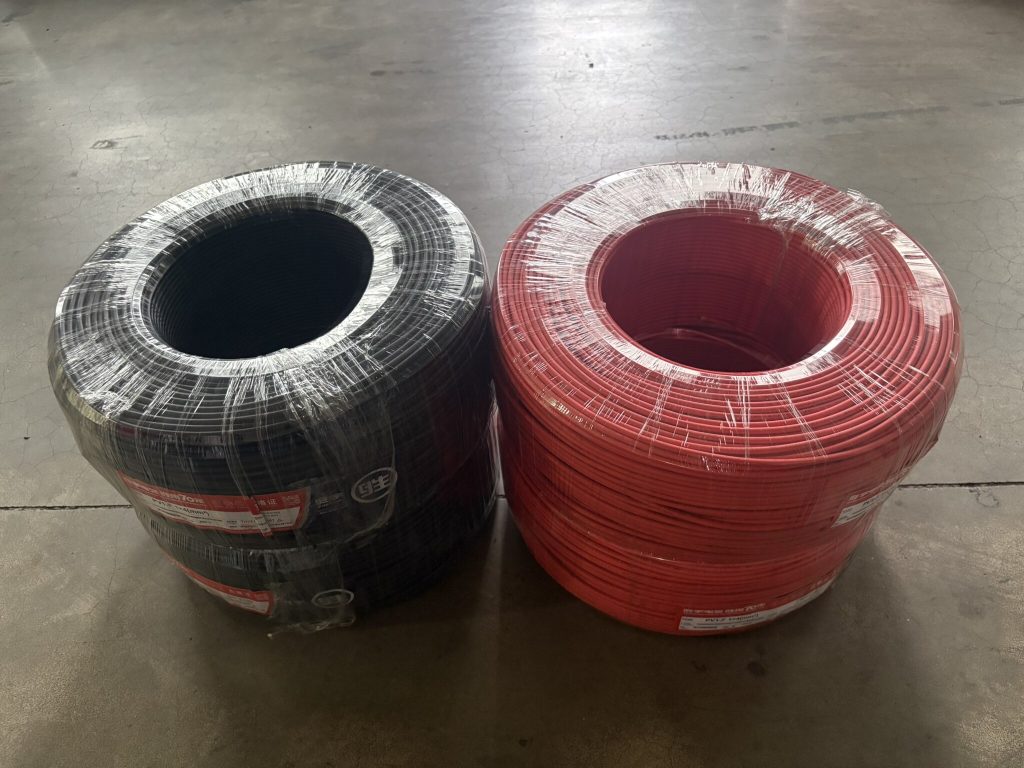
How to Choose the Right Copper Wire Size for Building Electrical Projects
Choosing the right copper wire size is one of the most important decisions in a building electrical project. A wire that is too small can create excessive voltage drop, overheating and unnecessary installation problems, while choosing a much larger conductor than necessary can increase material and installation costs.
For contractors, electrical distributors, importers and project buyers sourcing building wire from China, the decision should not be based on wire size alone. Conductor material, insulation type, installation method, circuit load, cable length, ambient temperature, grouping and local electrical requirements all need to be considered.
This guide explains how to approach copper wire size selection for common building applications and what buyers should confirm with a manufacturer before placing an order.
1. Start With the Electrical Load
The first step is to determine the expected electrical load of the circuit.
A larger electrical load generally requires a conductor with a greater cross-sectional area. Common copper building-wire sizes include:
- 1.5 mm²
- 2.5 mm²
- 4 mm²
- 6 mm²
- 10 mm²
- 16 mm²
- 25 mm²
- 35 mm²
These sizes should not be treated as universal recommendations for every country or installation. The permitted current-carrying capacity depends on the local electrical code and installation conditions.
For example, the same 2.5 mm² copper conductor may have different allowable ampacity depending on whether it is installed in conduit, grouped with other conductors, exposed to high ambient temperatures or installed under different environmental conditions.
This is why a professional wire selection should begin with the actual project requirements rather than simply choosing a wire based on a familiar size.
2. Understand What mm² Means
Copper wire size is normally expressed by the conductor’s cross-sectional area in square millimeters.
A 1.5 mm² conductor has a smaller cross-sectional area than a 2.5 mm² conductor, while a 10 mm² conductor has substantially more copper.
As the cross-sectional area increases:
- The conductor can generally carry more current under the same installation conditions.
- Electrical resistance decreases.
- Voltage drop can be reduced over a given distance.
- The amount of copper and overall material cost increases.
- Larger conductors can become more difficult to bend and install.
For buyers purchasing electrical wire in bulk, this relationship is important because the conductor size directly affects both electrical performance and the final quotation.
3. Typical Building-Wire Sizes and Applications
There is no single wire size that is correct for every building. However, different sizes are commonly considered for different types of circuits.
1.5 mm² Copper Wire
1.5 mm² wire is commonly associated with lighting and smaller electrical circuits.
For example, a project specification may use 1.5 mm² single-core copper wire for lighting circuits, switches or smaller control applications.
The final selection still needs to follow the electrical requirements of the destination market.
2.5 mm² Copper Wire
2.5 mm² is widely used for general-purpose building circuits.
Typical applications can include socket circuits and ordinary power outlets where permitted by the applicable electrical code.
For importers, 2.5 mm² is also a common size to request when discussing residential and commercial building-wire requirements with a Chinese manufacturer.
4 mm² Copper Wire
4 mm² can be considered when a circuit has a higher electrical load than a typical 2.5 mm² circuit.
Depending on the project, it may be specified for larger appliances, kitchen circuits, air-conditioning equipment or other dedicated loads.
The actual requirement should be calculated according to the project’s load, installation method and local code.
6 mm² Copper Wire
6 mm² is commonly considered for higher-load circuits and certain sub-circuit applications.
It can be relevant to larger air-conditioning systems, water-heating equipment and other electrical loads where a smaller conductor would not satisfy the project’s requirements.
10 mm² and Larger
10 mm² and larger conductors are more commonly associated with high-load circuits, sub-feeds, panel connections and distribution applications.
As the conductor becomes larger, installation flexibility becomes increasingly important. Solid conductors can become difficult to handle at larger sizes, so some projects may specify stranded rigid or flexible conductors instead.
4. Don’t Select Wire Size From Ampacity Alone
One of the most common mistakes when sourcing electrical wire is to select a conductor only from a simple ampacity table.
Ampacity depends on installation conditions.
Important factors include:
- Installation method
- Ambient temperature
- Number of conductors installed together
- Conduit or trunking conditions
- Cable spacing
- Length of the circuit
- Permitted conductor temperature
- Local electrical code
- Protective-device rating
The product information supplied by Author 88, for example, gives reference ampacity ranges for several 450/750V PVC-insulated copper building-wire sizes but specifically notes that actual current capacity changes with installation method, conduit fill, ambient temperature and grouping.
Therefore, a manufacturer quotation should not be treated as a substitute for electrical engineering calculations.
5. Check Voltage Drop for Long Circuits
Current capacity is not the only consideration.
Voltage drop can become important when the electrical circuit is relatively long.
Suppose a project has a distribution panel located a considerable distance from the final load. Even when the conductor appears sufficient from an ampacity perspective, excessive voltage drop may affect equipment performance.
For this reason, buyers should provide the manufacturer or electrical engineer with:
- Operating voltage
- Estimated load
- Circuit length
- Single-phase or three-phase system
- Installation method
- Required conductor size
- Destination-market electrical requirements
The manufacturer can then quote the requested specification rather than simply recommending a larger cable based on guesswork.
6. Solid Copper vs. Stranded Copper Wire
Conductor construction is another important consideration.
Author 88’s current PVC building-wire product information distinguishes between solid Class 1 conductors and stranded Class 2 options. Its listed product range includes BV / 60227 IEC 01, H07V-U, H07V-R and BVR / H07V-K, with different conductor constructions and intended applications.
Solid Copper Wire
Solid wire consists of a single conductor.
Advantages can include:
- Simple construction
- Consistent conductor geometry
- Suitable for many fixed installations
- Generally straightforward to manufacture
However, larger solid conductors can become relatively stiff.
Stranded Copper Wire
Stranded wire contains multiple copper strands.
It can provide greater flexibility, which can be useful where installation involves bends, longer conduit runs or more complicated routing.
The appropriate conductor construction depends on the project specification rather than simply being a matter of price.
For buyers comparing options, see the existing [Wholesale Single Core Copper Wire Factory | BV H07V-U China] article on Vlefooena for more information about the available single-core copper-wire range.
7. Choose the Insulation for the Actual Application
Copper is only one part of the wire specification.
The insulation material and voltage rating also need to match the intended application.
Author 88 currently supplies PVC-insulated building wire including BV / 60227 IEC 01 and H07V-U products rated at 450/750V. The product information describes these as single-core wires intended for fixed installations such as conduit, trunking and building wiring.
Buyers should confirm:
- Rated voltage
- Insulation material
- Conductor class
- Insulation thickness
- Operating temperature
- Flame-performance requirements
- Required standards
- Color requirements
- Printing and marking requirements
If a project requires special flame-retardant, low-smoke or halogen-free performance, that requirement should be stated before quotation rather than added after production has started.
8. Match the Wire Standard to the Destination Market
International buyers should never assume that a wire specification used in one country will automatically satisfy another country’s requirements.
A quotation should clearly state the applicable standard and product designation.
For example, Author 88’s current product information references IEC 60227-3, IEC 60228, HD 21/EN 50525-2-31, GB/T 5023.3 and related conductor requirements for different product configurations.
Before placing a bulk order, buyers should send the manufacturer:
- Required standard
- Conductor size
- Conductor class
- Rated voltage
- Insulation type
- Required colors
- Packing requirements
- Required certificates or test reports
- Destination country
- Quantity per size
This greatly reduces the risk of receiving a technically different product that cannot be used for the intended project.
9. Ask for a Detailed Quotation Instead of Only a Price per Meter
For B2B electrical-wire purchasing, asking only “What is your price per meter?” usually does not provide enough information.
A professional RFQ should specify the complete product configuration.
For example:
Product: Single-core copper PVC building wire
Conductor: Copper
Size: 2.5 mm²
Voltage: 450/750V
Construction: Solid or stranded
Insulation: PVC
Color: Blue
Packing: 100m coils
Quantity: 50,000 meters
Destination: [Country / Port]
Required documents: [Specify]
This gives the manufacturer enough information to calculate a meaningful quotation.
It also makes supplier comparisons more accurate because different manufacturers are quoting the same specification.
10. Consider Packaging and Order Quantity
Wire is frequently purchased by meter, but the packaging method can have a noticeable effect on the final purchasing cost.
Depending on the project, suppliers may offer:
- Small coils
- Standard coils
- Larger coils
- Plastic reels
- Wooden drums
- Customized packaging
Author 88’s current product information indicates that its building-wire supply can include wholesale coils, drums and OEM printing, with MOQ and delivery depending on the specification and order configuration.
For a distributor, 100m coils may be convenient for resale.
For a construction project, larger drums may reduce handling and packaging requirements.
Therefore, the buyer should specify the intended sales or installation method before comparing quotations.
11. What International Buyers Should Ask a Chinese Wire Manufacturer
Before confirming an order, ask the supplier for clear answers to these questions:
Product Specification
- What conductor size is being supplied?
- Is the conductor solid or stranded?
- What copper standard is used?
- What is the rated voltage?
- What insulation material is used?
Quality
- What tests are performed during production?
- Can the supplier provide test reports?
- What conductor resistance is guaranteed?
- What insulation thickness is specified?
Compliance
- Which standard does the product comply with?
- Are certificates required for the destination market?
- Can the supplier provide the required technical documents?
Production
- What is the MOQ?
- What is the production lead time?
- Can multiple sizes and colors be combined?
- Is OEM printing available?
Export
- What packing options are available?
- What Incoterms can be quoted?
- Which port will be used?
- Can the supplier provide export documentation?
A detailed discussion before the purchase is often more useful than comparing two suppliers based only on their initial unit prices.
12. A Practical Copper Wire Selection Checklist
Before sending an RFQ, prepare the following information:
| Item | What to Confirm |
|---|---|
| Application | Lighting, socket, equipment, distribution, etc. |
| Conductor | Copper |
| Cross-section | 1.5 / 2.5 / 4 / 6 / 10 mm² or project specification |
| Construction | Solid or stranded |
| Voltage | Required rated voltage |
| Insulation | PVC or specified alternative |
| Standard | IEC, GB, HD, EN or destination-market requirement |
| Color | Required conductor colors |
| Quantity | Total meters by size |
| Packing | Coil, reel or drum |
| Certification | Required documents |
| Destination | Country and port |
| Delivery | Required production schedule |
Having this information ready can significantly improve the quality of supplier quotations.
FAQ
What copper wire size is commonly used for house wiring?
Common building-wire sizes include 1.5 mm², 2.5 mm², 4 mm², 6 mm² and 10 mm², but the correct size depends on the circuit load, installation method, voltage drop and local electrical requirements.
Is 2.5 mm² copper wire suitable for building projects?
2.5 mm² copper wire is commonly used for general building circuits, including certain socket and power-outlet applications. However, the permitted application and current rating must be confirmed against the applicable local electrical code.
Is larger copper wire always better?
Not necessarily. A larger conductor can reduce resistance and voltage drop, but it also costs more and can be more difficult to install. The correct conductor should be selected according to the actual electrical and installation requirements.
What is the difference between BV and H07V-U?
Both can refer to single-core copper PVC-insulated building wire, but the applicable product designation, standards and market requirements can differ. Buyers should specify the exact standard and technical requirements instead of treating the names as automatically interchangeable. Author 88 currently supplies both BV / 60227 IEC 01 and H07V-U products.
Can Chinese manufacturers produce customized electrical wire?
Customization can include conductor size, color, printing, packing and certain technical requirements. However, MOQ, testing, certification and production lead time should be confirmed before placing an OEM order.
What information should I provide when requesting a wire quotation?
At minimum, provide the conductor size, conductor construction, voltage rating, insulation type, standard, color, quantity, packing method and destination market. This allows the manufacturer to prepare a more accurate quotation.
Request a Copper Wire Quotation
If you are sourcing copper building wire for a residential, commercial, distribution or wholesale project, prepare your required sizes and specifications before requesting a quotation.
China Electrical Cable and Wire Manufacturing Co., Ltd. currently supplies PVC-insulated building wire including BV / 60227 IEC 01 and H07V-U products in 450/750V configurations. Buyers can review the supplier’s [PVC Insulated Building Wire Supplier China | BV, H07V-U, 450/750V] product information and the [Wholesale Single Core Copper Wire Factory | BV H07V-U China] product page before sending an inquiry.
For a project quotation, provide the required wire size, quantity, color, standard, packing method and destination country. The more complete the specification, the easier it is for the manufacturer to provide a useful B2B quotation.


No reply content