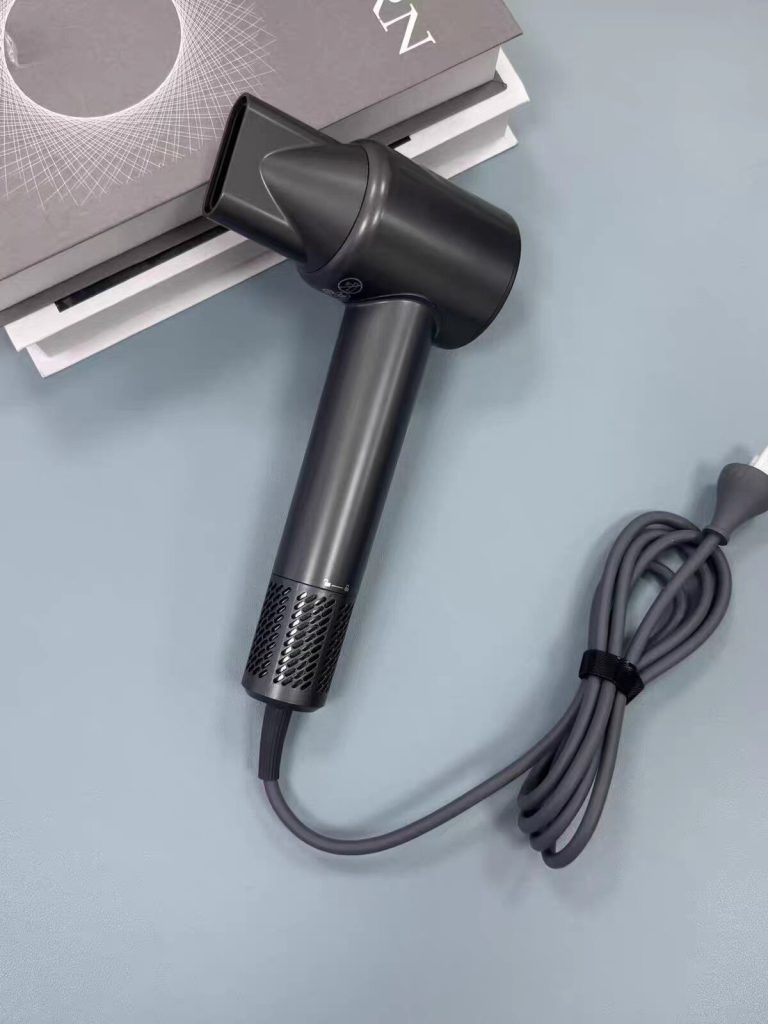
Choosing a hair dryer factory for OEM production is different from simply buying an existing product from a supplier.
For a private-label brand, distributor, retailer, salon supplier, hotel supplier, or e-commerce business, the factory needs to do more than provide a competitive quotation. It should be able to understand your product requirements, support customization, maintain consistent quality, manage production, and deliver products according to your agreed specifications.
The wrong factory can create problems with product quality, packaging, delivery schedules, compliance, and future reorders. The right manufacturing partner can make it easier to build a consistent product line and develop a long-term supply relationship.
This guide explains what buyers should evaluate when choosing a hair dryer factory for OEM production in China.
1. Understand What You Need From the Factory
Before contacting a factory, define your OEM requirements.
Your product specification may include:
- Hair dryer type
- Motor type
- Motor speed
- Rated power
- Voltage
- Frequency
- Airflow
- Temperature settings
- Speed settings
- Ionic function
- Noise requirements
- Product weight
- Housing material
- Cable length
- Plug type
- Accessories
- Product color
- Logo
- Retail packaging
- User manual
- Target market
The more clearly you define these requirements, the easier it becomes to compare factories.
For example, a buyer looking for a professional salon hair dryer may have completely different requirements from a hotel supplier looking for a compact and durable model.
If you are still researching manufacturers, you can start with the China Hair Dryer Manufacturer profile and review the available manufacturer-related information and products.
2. Determine Whether You Need OEM or ODM
OEM and ODM are often used together, but they are not exactly the same.
OEM Hair Dryer Production
With OEM production, the buyer generally provides product requirements and branding specifications while the manufacturer produces the product according to the agreed design or configuration.
OEM customization may include:
- Brand logo
- Product color
- Packaging
- Labels
- Accessories
- Product specifications
- User manuals
ODM Hair Dryer Production
With ODM production, the manufacturer may provide an existing product design or technical platform that can be adapted for the buyer.
This can be useful when a company wants to launch a branded product without developing an entirely new hair dryer from the beginning.
If you are comparing these two approaches, review the available China Hair Dryer OEM/ODM sourcing information before deciding which model is appropriate for your project.
3. Check Whether the Factory Actually Manufactures Hair Dryers
One of the first questions to ask is whether the company is actually a manufacturer or primarily a trading company.
This distinction matters because OEM production often requires direct control over:
- Production
- Assembly
- Quality control
- Product customization
- Packaging
- Testing
- Production scheduling
Ask the factory about its production facilities and manufacturing experience.
Useful questions include:
- How long has the factory produced hair dryers?
- What types of hair dryers are manufactured?
- What production equipment is available?
- What is the approximate production capacity?
- Which parts are produced in-house?
- Which components are sourced externally?
- What quality-control procedures are used?
A company that understands your product and manufacturing requirements will usually provide more useful answers than a supplier that only focuses on price.
4. Evaluate the Factory’s Product Range
A factory with a broad and relevant product range may be more suitable for buyers planning to develop multiple products.
For example, a hair dryer manufacturer may produce:
- High-speed hair dryers
- Professional salon hair dryers
- Ionic hair dryers
- Hotel hair dryers
- Compact travel hair dryers
- Brushless motor hair dryers
- Household hair dryers
- Private-label hair dryers
However, a large product catalog does not automatically mean better manufacturing capability.
The important question is whether the products are actually relevant to your target market.
If your brand focuses on high-speed hair dryers, for example, the factory should be able to demonstrate experience with the required motor technology, airflow performance, thermal management, and product configuration.
5. Request Samples Before Mass Production
A sample is one of the most important steps in an OEM project.
Do not approve a large production order based only on photographs or a digital catalog.
A physical sample allows you to evaluate:
- Appearance
- Materials
- Weight
- Motor performance
- Airflow
- Heat distribution
- Noise
- Controls
- Cable quality
- Plug
- Accessories
- Packaging
- Overall user experience
If you require customization, request a sample that is as close as possible to the final production version.
For example, if your final product will have a customized logo and packaging, check those elements before approving mass production.
6. Compare MOQ With Your Business Model
Minimum order quantity is particularly important for new brands.
A factory may offer a low MOQ for standard products but require a higher MOQ for customized production.
MOQ can depend on:
- Product model
- Product color
- Logo customization
- Packaging
- Accessories
- Tooling
- Special materials
- Custom components
- Production planning
For example, ordering a standard hair dryer with a printed logo may have different requirements from developing a completely customized housing.
Before comparing factories, ask for the MOQ for your actual configuration.
You can also review What MOQ Should You Expect When Buying Hair Dryers from a Chinese Supplier? for additional sourcing considerations.
7. Evaluate OEM Customization Capabilities
A good OEM factory should be able to clearly explain what can and cannot be customized.
Potential customization areas include:
Product
- Housing color
- Logo
- Button design
- Product configuration
- Accessories
- Cord
- Plug
- Motor configuration
Packaging
- Retail box
- Color box
- Shipping carton
- Inserts
- User manual
- Labels
- Barcodes
Branding
- Logo
- Brand name
- Product model
- Packaging design
- Marketing materials
Before starting production, ask the factory to provide a complete customization list and confirm additional costs.
This prevents misunderstandings after the order has been placed.
8. Check Production Capacity
Production capacity becomes particularly important when your business grows.
A factory may be suitable for an initial order of several hundred units but struggle when you need several thousand units.
Ask about:
- Daily production capacity
- Monthly production capacity
- Peak-season capacity
- Production lead time
- Assembly lines
- Quality inspection
- Packaging capacity
- Ability to handle repeat orders
You should also ask how the factory manages production when demand suddenly increases.
A long-term OEM partner needs to support not only the first order but also future growth.
9. Examine Quality Control Procedures
Quality control should be discussed before production rather than after problems appear.
Ask the factory how it controls:
- Incoming materials
- Components
- Assembly
- Motor performance
- Electrical performance
- Temperature
- Airflow
- Noise
- Finished products
- Packaging
For electrical products, buyers should also pay close attention to safety-related testing and market-specific requirements.
If your target market has specific certification or compliance requirements, discuss them with the manufacturer before production begins.
Do not assume that a certificate automatically applies to every product manufactured by the same company.
10. Consider the Target Market Before Finalizing the Product
A hair dryer designed for one market may require changes for another.
Before approving production, confirm:
- Voltage
- Frequency
- Plug type
- Labeling
- Packaging language
- User manual
- Product markings
- Applicable testing requirements
- Import requirements
Tell the manufacturer where you intend to sell the product.
This is especially important for brands planning to sell across multiple countries.
A factory should understand your target market before finalizing the production specification.
11. Compare the Total OEM Cost
Do not compare factories using only the unit price.
Your total OEM cost may include:
- Product price
- Logo customization
- Packaging
- Tooling
- Sample development
- Testing
- Certification
- Accessories
- Inspection
- Shipping
- Other applicable costs
A factory offering the lowest product price may not provide the lowest total cost.
For example, Factory A may offer a lower unit price but charge more for packaging and customization. Factory B may have a slightly higher unit price but include more customization.
Always compare quotations using the same specifications.
For buyers evaluating the total sourcing budget, you can also review How Much Does It Cost to Import Hair Dryers from China?.
12. Check Communication Before Placing a Large Order
Communication is an underrated part of OEM sourcing.
Pay attention to how the factory handles technical questions.
A good manufacturing partner should be able to clearly explain:
- Product specifications
- MOQ
- Sample process
- Production schedule
- Customization
- Packaging
- Testing
- Payment terms
- Lead time
If the factory cannot clearly answer basic questions before receiving an order, communication may become even more difficult during production.
Good communication is especially important when you are developing a new product.
13. Ask About Lead Time
Lead time should be confirmed before placing the order.
Ask separately about:
- Sample lead time
- Packaging design time
- Product development time
- Production lead time
- Inspection time
- Shipping preparation
Do not rely only on a general statement such as “fast delivery.”
Ask for a realistic schedule based on your exact order quantity and customization requirements.
If you have a launch date, promotional campaign, or seasonal sales period, give the factory enough time to plan production.
14. Check Whether the Factory Can Support Repeat Orders
The first order is only part of an OEM relationship.
If your product performs well, you may need repeat orders with the same:
- Product specification
- Motor
- Materials
- Color
- Packaging
- Accessories
- Quality standard
Ask how the factory manages product specifications between production batches.
Consistency is important because customers expect the second order to perform like the first.
15. Review the Manufacturer’s Existing Products
Before contacting a factory, review its existing product range.
Look for evidence that the manufacturer understands your market and product category.
For example, if you want to develop a high-speed hair dryer, examine whether the manufacturer already produces relevant high-speed models.
The China Hair Dryer Manufacturer profile on Vlefooena provides a starting point for reviewing hair dryer products and related manufacturer content.
You can then compare individual products with your own requirements instead of evaluating the factory only from its company description.
16. Verify Important Business Information
Before placing a large OEM order, verify the information that matters to your transaction.
Depending on the size and nature of your project, this may include:
- Company identity
- Business registration
- Factory location
- Production capability
- Product information
- Certifications
- Export experience
- Bank/payment information
- Contract details
For larger orders, buyers may also consider independent inspection or other verification measures.
The goal is not to make the sourcing process unnecessarily complicated. The goal is to reduce avoidable risk before money and production capacity are committed.
17. Create a Factory Comparison Sheet
When you have several potential factories, use the same criteria for each one.
| Evaluation Factor | Factory A | Factory B | Factory C |
|---|---|---|---|
| OEM | |||
| ODM | |||
| MOQ | |||
| Sample | |||
| Unit Price | |||
| Packaging | |||
| Customization | |||
| Production Capacity | |||
| Lead Time | |||
| Quality Control | |||
| Certifications | |||
| Communication | |||
| Repeat Order Capability |
This makes it easier to identify the strongest candidate.
Do not choose a factory based on one factor.
A slightly higher quotation may be reasonable if the factory offers better quality control, stronger customization, better communication, and more reliable production.
18. Avoid Choosing a Factory Only Because It Has the Lowest Price
Low prices can be attractive, particularly when you are trying to protect your margins.
However, a very low quotation may reflect differences in:
- Motor quality
- Materials
- Components
- Packaging
- Testing
- Accessories
- Product configuration
- Quality control
If two quotations are very different, ask why.
Make sure you are comparing equivalent products.
The goal of OEM sourcing is not simply to find the cheapest factory. It is to find a factory that can produce the required product at a commercially viable cost while maintaining the required quality.
19. Prepare an OEM Specification Sheet
Before requesting a final quotation, prepare a specification sheet.
It can include:
Product Name: Hair Dryer
Application: Salon / Hotel / Retail / E-commerce
Motor: Required configuration
Power: Required specification
Voltage: Target market specification
Frequency: Target market specification
Plug: Target market
Color: Required color
Logo: Required
Packaging: Custom retail packaging
Accessories: Required accessories
MOQ: Target quantity
Target Market: Country or region
Expected Order Quantity: Initial and potential repeat quantity
This makes factory quotations much easier to compare.
20. Final Checklist
Before selecting an OEM hair dryer factory, ask yourself:
- Does the factory manufacture the product I need?
- Does it have relevant hair dryer production experience?
- Can it provide samples?
- Can it support OEM?
- Can it support ODM if required?
- Is the MOQ suitable?
- Can it customize the product?
- Can it customize packaging?
- Can it meet my target-market requirements?
- Can it provide appropriate product documentation?
- Is the production capacity sufficient?
- Is the lead time realistic?
- Is the quality-control process clear?
- Can it support repeat orders?
- Have important company and product information been verified?
If the answer to most of these questions is yes, the factory may be a suitable candidate for further evaluation.
Conclusion
Choosing the right hair dryer factory for OEM production requires more than comparing unit prices.
A suitable manufacturing partner should be able to support your product specifications, customization, quality requirements, packaging, production schedule, target market, and future orders.
The best approach is to define your requirements first, compare several factories using the same criteria, request samples, evaluate production and quality capabilities, and verify important information before committing to a large order.
If you are looking for a China hair dryer manufacturer for OEM or ODM production, you can start by reviewing the China Hair Dryer Manufacturer profile on Vlefooena and examining the related hair dryer products and manufacturer information available there.
A careful OEM selection process can reduce sourcing risks and give your brand a stronger foundation for long-term product development and repeat purchasing.


No reply content