
China Umbrella Customization Factory
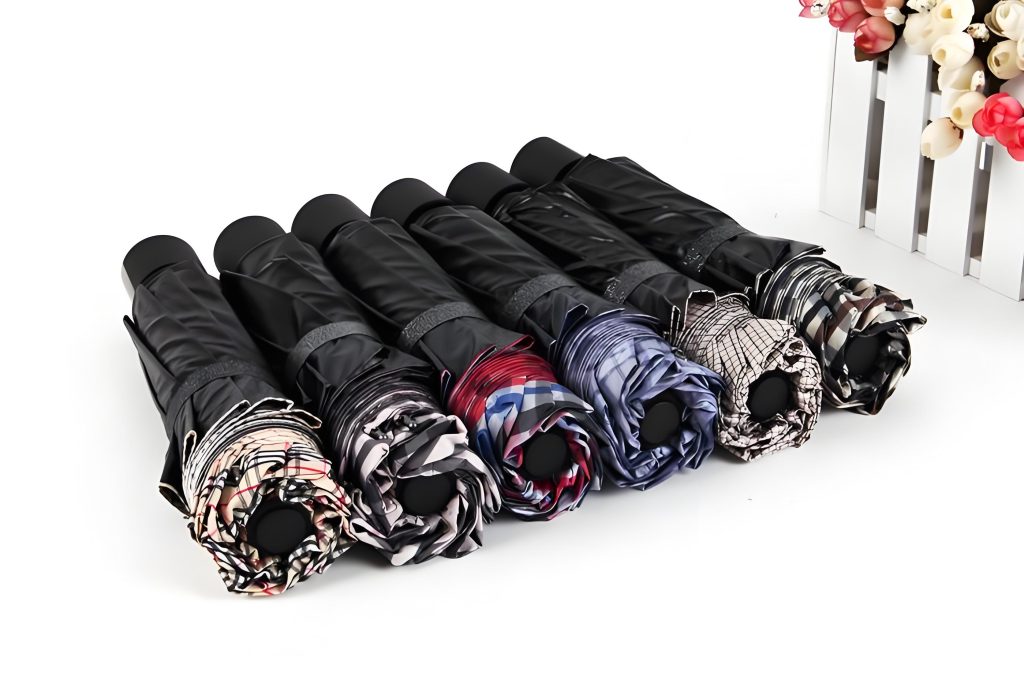
Choosing the right umbrella manufacturer is an important decision for importers, wholesalers, retailers, promotional product companies, distributors, and private-label brands.
A reliable manufacturer should provide more than a competitive factory price. Product quality, customization capabilities, production capacity, materials, quality control, minimum order quantity, lead time, packaging, and export experience can all affect the success of an umbrella purchasing project.
Whether you are sourcing folding umbrellas, golf umbrellas, automatic umbrellas, children’s umbrellas, promotional umbrellas, or customized umbrellas, evaluating the manufacturer carefully before placing an order can help reduce quality problems, delays, and unexpected costs.
This guide explains the most important factors to consider when selecting an umbrella manufacturer.
1. Determine What Type of Umbrella You Need
Before contacting manufacturers, define the product category you want to purchase.
Common umbrella types include:
-
Folding umbrellas
-
Automatic folding umbrellas
-
Manual folding umbrellas
-
Straight umbrellas
-
Golf umbrellas
-
Beach umbrellas
-
Children’s umbrellas
-
Transparent umbrellas
-
Promotional umbrellas
-
Travel umbrellas
-
Windproof umbrellas
-
UV-protection umbrellas
-
Premium umbrellas
-
Custom logo umbrellas
Different products require different materials, production processes, molds, components, and quality-control standards.
For example, a golf umbrella normally requires a larger canopy and stronger frame than a compact travel umbrella.
Clearly defining the product type will help manufacturers provide more accurate quotations.
2. Identify Your Target Market
The right umbrella specification depends on where and how you intend to sell the product.
A supermarket may focus on affordable everyday umbrellas.
A fashion brand may prioritize appearance, fabric quality, colors, handles, and packaging.
A corporate promotional business may prioritize logo printing, large quantities, and competitive pricing.
A premium retailer may require stronger frames, higher-quality fabrics, customized handles, and branded packaging.
Before choosing a supplier, explain your target market and expected retail positioning.
3. Check the Manufacturer’s Product Range
A manufacturer with a broad product range may be able to provide several umbrella designs from one factory.
Ask whether the manufacturer produces:
-
Folding umbrellas
-
Golf umbrellas
-
Straight umbrellas
-
Automatic umbrellas
-
Promotional umbrellas
-
Children’s umbrellas
-
Custom-designed umbrellas
A broader product range can be useful if you plan to develop several product lines.
However, product range alone does not prove manufacturing capability. Buyers should also verify actual production facilities and relevant experience.
4. Verify That the Supplier Is Actually a Manufacturer
One of the most important questions is whether you are dealing directly with a factory or with a trading company.
A trading company is not necessarily a bad supplier. Some trading companies can provide useful sourcing and export services.
However, if you specifically need an umbrella manufacturer, verify:
-
Factory location
-
Production facilities
-
Production equipment
-
Number of production lines
-
Main manufacturing processes
-
Quality-control department
-
Product range
-
Production capacity
-
Factory photographs or videos
-
Previous manufacturing experience
For larger orders, a factory audit or third-party inspection can provide additional confidence.
5. Evaluate Manufacturing Experience
Experience matters because umbrella production involves many components and assembly processes.
A typical umbrella may contain:
-
Canopy fabric
-
Frame
-
Ribs
-
Stretchers
-
Shaft
-
Runner
-
Handle
-
Tips
-
Ferrule
-
Opening mechanism
-
Closing mechanism
-
Fasteners
Manufacturing problems with any of these components can affect the final product.
Ask the manufacturer how long they have produced umbrellas and whether they have experience manufacturing products similar to your requirements.
6. Examine the Umbrella Frame
The frame is one of the most important components of an umbrella.
Common frame materials may include:
-
Steel
-
Aluminum
-
Fiberglass
-
Other composite materials
Steel can provide good strength but may add weight.
Aluminum can reduce weight while providing useful structural performance.
Fiberglass is commonly used in some wind-resistant designs because of its flexibility and resistance to certain forms of deformation.
The appropriate material depends on the umbrella design and target price.
Do not judge frame quality solely by material name. Ask about the actual component specification and construction.
7. Check the Canopy Fabric
The canopy is another major quality factor.
Common umbrella fabrics include:
-
Polyester
-
Pongee
-
Nylon
-
Recycled polyester
-
Other synthetic fabrics
Different fabrics can vary in:
-
Thickness
-
Weave
-
Water resistance
-
Color performance
-
UV performance
-
Appearance
-
Durability
For promotional umbrellas, printing quality is also important.
For premium umbrellas, buyers may require higher-grade fabrics and more refined finishing.
Ask the manufacturer for the exact fabric specification rather than simply accepting descriptions such as “high-quality polyester.”
8. Evaluate Waterproof Performance
An umbrella should effectively shed rainwater from the canopy.
Water-repellent performance can depend on:
-
Fabric type
-
Fabric treatment
-
Coating
-
Seam construction
-
Canopy design
-
Manufacturing quality
When sourcing umbrellas, ask whether the supplier conducts water-repellency or related quality testing.
For larger commercial orders, buyers can request samples and evaluate performance before mass production.
9. Consider Wind Resistance
Wind resistance is particularly important for golf umbrellas, outdoor umbrellas, and premium products.
A wind-resistant design may use:
-
Flexible ribs
-
Fiberglass components
-
Reinforced joints
-
Stronger frame structures
-
Improved canopy construction
However, “windproof” should not be treated as an absolute guarantee.
Ask the manufacturer what testing method or specification supports the wind-resistance claim.
If the product is intended for markets with frequent strong winds, product testing should be part of the sourcing process.
10. Check the Opening Mechanism
Umbrellas can use different opening systems.
Common options include:
-
Manual opening
-
Automatic opening
-
Automatic open-and-close
-
Push-button systems
-
Other specialized mechanisms
Automatic mechanisms provide convenience but contain additional moving components.
When evaluating an automatic umbrella, check:
-
Opening operation
-
Closing operation
-
Button durability
-
Spring mechanism
-
Shaft stability
-
Repeated-use performance
For large orders, sample testing can help identify mechanical problems before mass production.
11. Evaluate the Handle
The handle affects both comfort and product appearance.
Possible handle materials include:
-
Plastic
-
Rubber
-
EVA
-
Wood
-
Aluminum
-
ABS
-
Other customized materials
Handle designs can also be customized in:
-
Shape
-
Color
-
Texture
-
Size
-
Logo
-
Finish
For a premium umbrella brand, the handle can become an important part of the product’s identity.
12. Ask About Logo and Customization Options
If you are building a private-label brand, ask what can be customized.
Possible customization includes:
-
Logo
-
Canopy color
-
Canopy printing
-
Handle
-
Frame color
-
Shaft
-
Packaging
-
Sleeve
-
Carrying case
-
Hang tag
-
Product label
Some manufacturers can also develop custom umbrella designs based on buyer-provided drawings or samples.
Before ordering, confirm which customization options are included in the standard quotation and which require additional tooling or setup fees.
13. Understand the Printing Process
Custom umbrellas often require logos, patterns, or artwork printed on the canopy.
Possible printing methods depend on the fabric, artwork, quantity, and required appearance.
Ask the manufacturer about:
-
Printing method
-
Color accuracy
-
Printing position
-
Printing size
-
Artwork requirements
-
Sample approval
-
Production consistency
For multi-color designs, request a pre-production sample or digital proof where appropriate.
14. Check the Minimum Order Quantity
MOQ can vary significantly between manufacturers.
A supplier may have different MOQs for:
-
Standard umbrellas
-
Custom colors
-
Custom logos
-
Custom fabrics
-
Custom handles
-
Custom molds
-
Private-label packaging
Before requesting a formal quotation, tell the supplier your expected order quantity.
If you are testing a new product, ask whether the manufacturer can support a smaller trial order.
15. Compare Production Capacity
Production capacity becomes especially important for wholesalers and large retailers.
Ask the manufacturer:
-
How many umbrellas can be produced per month?
-
How many production lines are available?
-
What is the normal production schedule?
-
Can production capacity increase during peak seasons?
-
How are large orders scheduled?
A manufacturer may offer an attractive price but struggle to deliver a large order on time.
Capacity should therefore be evaluated together with quality and lead time.
16. Understand Production Lead Time
Production time depends on:
-
Product type
-
Quantity
-
Customization
-
Material availability
-
Packaging requirements
-
Season
-
Factory workload
Standard products can generally be easier to produce than completely customized designs.
For seasonal products, such as umbrellas sold heavily during rainy seasons, buyers should plan orders well in advance.
Do not wait until peak demand begins before placing large orders.
17. Request Product Samples
Samples are one of the best ways to evaluate a manufacturer.
A sample allows you to check:
-
Canopy material
-
Frame strength
-
Opening mechanism
-
Handle quality
-
Stitching
-
Printing
-
Color
-
Overall appearance
-
Packaging
If possible, test the sample under realistic conditions.
For example, open and close an automatic umbrella repeatedly, inspect the frame, test the canopy’s water repellency, and examine the stitching.
18. Evaluate Quality Control
A reliable manufacturer should have a clear quality-control process.
Quality checks may cover:
-
Raw materials
-
Fabric
-
Frame components
-
Printing
-
Sewing
-
Assembly
-
Opening mechanism
-
Appearance
-
Packaging
-
Finished products
Ask whether the manufacturer performs inspections during production or only at the end.
For large orders, buyers can also consider third-party pre-shipment inspection.
19. Check Packaging Options
Packaging is particularly important for retail products.
Possible packaging includes:
-
Individual plastic packaging
-
Paper sleeves
-
Fabric sleeves
-
Gift boxes
-
Retail boxes
-
Customized cartons
-
Branded packaging
If you sell through retail stores or e-commerce channels, packaging should protect the umbrella while also matching your brand positioning.
Confirm carton dimensions and packing quantity because these factors can affect international shipping costs.
20. Compare Prices Correctly
Do not compare umbrella quotations based only on unit price.
Compare the complete specification.
For example:
Item |
Supplier A |
Supplier B |
Supplier C |
|---|---|---|---|
Canopy fabric |
Compare |
Compare |
Compare |
Frame |
Compare |
Compare |
Compare |
Handle |
Compare |
Compare |
Compare |
Opening system |
Compare |
Compare |
Compare |
Logo printing |
Compare |
Compare |
Compare |
Packaging |
Compare |
Compare |
Compare |
MOQ |
Compare |
Compare |
Compare |
Production time |
Compare |
Compare |
Compare |
Warranty |
Compare |
Compare |
Compare |
A cheaper quotation may use different materials or exclude packaging and customization.
Always compare equivalent specifications.
21. Ask About Export Experience
If you are importing umbrellas internationally, export experience can simplify the purchasing process.
Ask whether the manufacturer has experience shipping to your target market.
Important areas include:
-
Export documentation
-
Commercial invoices
-
Packing lists
-
Shipping documents
-
Carton labeling
-
Product packaging
-
International logistics
-
Customs requirements
The supplier does not necessarily need experience in every country, but relevant export experience can reduce communication problems.
22. Check Compliance Requirements
Different markets can have different requirements for consumer products.
Depending on the destination and product type, buyers may need to consider:
-
Product safety requirements
-
Labeling requirements
-
Packaging requirements
-
Chemical restrictions
-
Children’s product requirements
-
Environmental requirements
-
Retailer-specific standards
The exact requirements should be confirmed for the destination market before mass production.
For children’s umbrellas in particular, buyers should pay close attention to applicable safety requirements.
23. Review Warranty and After-Sales Support
Before placing a large order, ask about the manufacturer’s policy for defective products.
Clarify:
-
Warranty period
-
Defect definition
-
Replacement policy
-
Compensation process
-
Spare parts availability
-
Quality claim procedure


No reply content