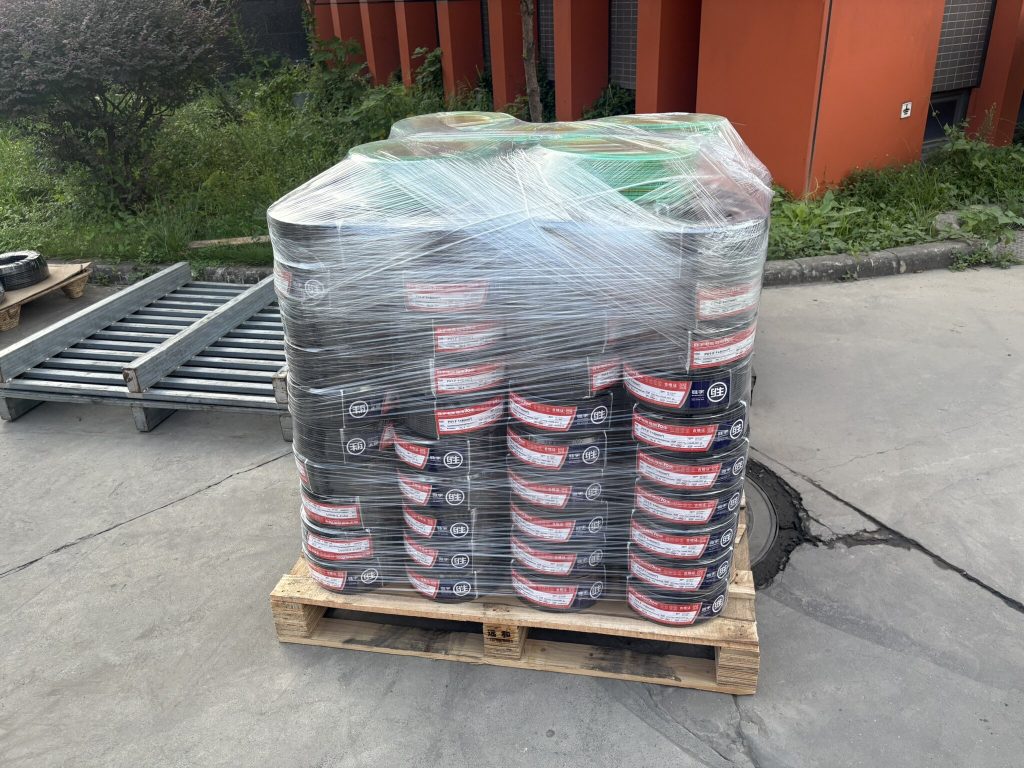
Finding electrical wire suppliers in China is relatively easy. The harder part is deciding which supplier is actually suitable for a long-term bulk order.
A buyer may receive several quotations that appear similar at first glance. However, the products behind those quotations may differ in conductor material, wire size, insulation, standards, packaging, minimum order quantity, production capability, testing, and delivery terms.
For this reason, comparing electrical wire suppliers only by unit price can lead to the wrong purchasing decision.
A better approach is to compare the supplier, product specification, quality requirements, commercial terms, and total landed cost together.
This guide explains what international buyers should check before choosing an electrical wire supplier in China.
1. Start by Comparing the Exact Wire Specification
Before comparing prices, make sure every supplier is quoting the same product.
For electrical wire, small specification differences can have a significant effect on the final price and suitability for a project.
Ask each supplier to confirm:
- Conductor material
- Conductor structure
- Cross-sectional area
- Number of cores
- Insulation material
- Rated voltage
- Temperature rating
- Applicable standard
- Wire color
- Packaging method
- Intended application
For example, a buyer requesting single-core copper building wire should not compare a quotation for one specification against another supplier’s quotation for a different conductor size or construction.
The first rule of supplier comparison is simple:
Compare equivalent products before comparing prices.
If the specifications are different, the prices are not directly comparable.
2. Check Whether the Supplier Matches Your Purchasing Requirements
Not every electrical wire supplier is suitable for every buyer.
A distributor purchasing finished products for local resale may have different requirements from a construction company, electrical contractor, wholesaler, or importer.
Before requesting a quotation, define what you actually need.
Consider:
- Product type
- Estimated order quantity
- Required delivery schedule
- Destination country
- Packaging requirements
- Required standards
- Private-label requirements
- OEM requirements
- Sample requirements
- Documentation requirements
A supplier that is suitable for small wholesale orders may not necessarily be the best choice for a large project.
Likewise, a manufacturer specializing in standardized building wire may not be the right supplier for a highly customized cable specification.
3. Compare Manufacturers and Trading Suppliers Carefully
One of the most important questions is whether you are dealing directly with a manufacturer or with a trading company.
A trading company may be useful in some situations, particularly when a buyer wants to source several types of products from one supplier.
However, buyers looking for long-term electrical wire production should understand who actually manufactures the product.
Ask the supplier:
- Where is the production facility located?
- What types of wire are produced?
- What production equipment is available?
- Can the company provide product specifications?
- Can it support samples?
- Can it handle repeat orders?
- Does it support OEM or customized packaging?
- What quality-control procedures are used?
This does not mean that every trading company is unreliable or every manufacturer is automatically better.
The important point is to understand the actual supply chain before placing a large order.
4. Compare the Copper Conductor and Wire Construction
For copper electrical wire, the conductor is one of the most important parts of the product.
Buyers should not compare wire only by its outside appearance.
The comparison should include the conductor specification and construction.
Depending on the product, buyers may need to confirm:
- Copper conductor material
- Conductor size
- Number of strands
- Solid or stranded construction
- Conductor resistance requirements
- Insulation thickness
- Overall dimensions
A quotation that is significantly cheaper than competing offers deserves further investigation.
The difference may come from product specifications rather than simply from a lower supplier margin.
For this reason, ask suppliers to provide clear technical specifications rather than accepting a product name alone.
5. Compare Applicable Standards and Technical Documents
Electrical wire is not a product category where a generic description is always sufficient.
Buyers should identify the standard applicable to their market and project.
Depending on the product and destination, specifications may reference standards such as IEC requirements or national and regional requirements.
Ask the supplier to clearly state:
Which standard does the quoted product follow?
Also ask whether the supplier can provide the relevant technical documentation and test information for the product being quoted.
Do not assume that two products with similar names automatically have identical technical characteristics.
For example, product names such as BV, H07V-U, or 60227 IEC 01 may appear in supplier listings, but the buyer should still verify the actual construction, rating, standard, and intended application.
6. Do Not Compare Suppliers by Unit Price Alone
Price is important, but it should be only one part of the comparison.
Suppose three suppliers provide different quotations:
| Item | Supplier A | Supplier B | Supplier C |
|---|---|---|---|
| Unit Price | Low | Medium | Higher |
| MOQ | High | Medium | Low |
| Packaging | Standard | Customized | Customized |
| Lead Time | Long | Medium | Short |
| Sample | Available | Available | Available |
| Documentation | Basic | Complete | Complete |
| Customization | Limited | Available | Available |
Supplier A may have the lowest unit price, but that does not necessarily mean Supplier A offers the lowest overall purchasing cost.
The buyer should consider the complete commercial package.
A slightly higher unit price may be reasonable if the supplier provides better packaging, lower MOQ, more suitable specifications, better documentation, or a production schedule that matches the project.
7. Compare MOQ Before Placing a Bulk Order
Minimum order quantity can make a major difference to the actual purchasing cost.
Ask every supplier:
- What is the MOQ?
- Is the MOQ calculated by model, size, color, or total order?
- Can different specifications be combined?
- Is a mixed container possible?
- Does customized packaging require a higher MOQ?
- Is the MOQ different for repeat orders?
For example, a buyer may need several wire sizes rather than a single specification.
A supplier offering a flexible mixed order may therefore be more useful than a supplier with a lower unit price but a very high MOQ for every individual specification.
8. Ask About Samples Before a Large Order
Samples are particularly useful when a buyer is working with a new electrical wire supplier.
A sample allows the buyer to evaluate whether the product matches the requested specification before committing to a large shipment.
Depending on the purchasing requirement, the buyer may evaluate:
- Wire appearance
- Conductor construction
- Insulation quality
- Dimensions
- Marking
- Packaging
- Product documentation
For larger commercial projects, buyers may also need independent testing or inspection according to the project’s requirements.
The important principle is:
Do not let a large order become the first time you properly evaluate the product.
9. Compare Production Capacity and Lead Time
A supplier may provide an attractive quotation but still be unsuitable if it cannot meet your delivery schedule.
Ask about:
- Normal production lead time
- Current production schedule
- Monthly capacity
- Peak-season production
- Raw-material availability
- Packaging preparation time
- Shipping preparation
If you are purchasing for a construction project, distribution business, or scheduled retail program, delivery reliability can be just as important as the purchase price.
A supplier that consistently delivers on schedule can be more valuable than one offering a slightly lower quotation.
10. Look at Packaging and Shipping Requirements
Electrical wire can be supplied in different packaging formats depending on the product and buyer requirements.
Before placing an order, confirm:
- Coil or drum packaging
- Carton requirements
- Labeling
- Product identification
- Quantity per package
- Export packaging
- Shipping marks
- Customized labels
- Private-label packaging
Packaging also affects logistics costs.
A buyer importing electrical wire should therefore calculate the product cost together with packaging, inland transportation, freight, insurance where applicable, import duties, taxes, and other destination charges.
This gives a more realistic picture of the total landed cost.
11. Check Communication Before Choosing a Long-Term Supplier
Communication is often overlooked during the supplier selection process.
However, electrical wire orders can involve many technical details.
A reliable supplier should be able to clearly answer questions about:
- Product specifications
- Standards
- MOQ
- Samples
- Packaging
- Lead time
- Customization
- Documentation
- Shipping arrangements
Pay attention to whether the supplier provides precise answers or simply responds with generic statements such as “high quality” or “competitive price.”
Professional communication does not guarantee product quality, but poor communication can create unnecessary risks during production and shipment.
12. Check Whether the Supplier Can Support Your Future Orders
The best supplier is not necessarily the one that wins the first quotation.
For many B2B buyers, the more important question is whether the supplier can support repeat business.
Think about your expected purchasing plan:
First order → Sample → Trial order → Bulk order → Repeat order
A supplier should ideally be able to maintain consistent specifications across repeat orders.
This becomes particularly important for wholesalers, distributors, construction companies, electrical contractors, and importers that need the same products over an extended period.
13. Create a Supplier Comparison Sheet
Before making the final decision, put all suppliers into one comparison table.
A practical comparison sheet can include:
| Category | Supplier A | Supplier B | Supplier C |
|---|---|---|---|
| Company Type | |||
| Main Products | |||
| Manufacturer or Trader | |||
| Wire Specification | |||
| Conductor Material | |||
| Standard | |||
| MOQ | |||
| Unit Price | |||
| Sample | |||
| Lead Time | |||
| Packaging | |||
| OEM/ODM | |||
| Technical Documents | |||
| Production Capacity | |||
| Payment Terms | |||
| Shipping Terms | |||
| Communication | |||
| Total Landed Cost |
This makes it much easier to identify the real differences between suppliers.
It also prevents the purchasing decision from being based entirely on the first price received.
14. Where to Find Electrical Wire Suppliers in China
International buyers can search for electrical wire manufacturers through B2B platforms, industry directories, trade exhibitions, supplier websites, and direct business contacts.
When using an online B2B platform, do not stop at the product listing.
Review the supplier’s company profile, product range, business information, manufacturing claims, available documentation, and communication details.
For buyers looking for electrical cable and wire suppliers in China, Vlefooena provides supplier and product pages that can be used as part of the initial sourcing process.
You can review the China Electrical Cable and Wire Manufacturing Co., Ltd. supplier profile to see its listed products and electrical wire-related information.
15. What Should You Ask Before Sending a Purchase Order?
Before placing a bulk order, send the supplier a clear specification sheet or purchasing request.
At minimum, include:
- Product name
- Wire type
- Conductor material
- Cross-sectional area
- Voltage rating
- Standard
- Quantity
- Color
- Packaging
- Destination
- Required delivery date
- OEM or private-label requirements
- Required documents
Then ask the supplier to confirm the quotation against the same specification.
This creates a much more reliable comparison between different suppliers.
16. The Cheapest Electrical Wire Supplier Is Not Always the Best Choice
For international B2B purchasing, the lowest quotation can be attractive, but price should never be the only selection criterion.
A better purchasing decision considers:
Specification + Quality + Supplier Capability + MOQ + Lead Time + Documentation + Packaging + Logistics + Total Cost
A supplier that can consistently provide the required product specification, communicate clearly, maintain production quality, and support repeat orders may provide greater value than a supplier offering the lowest initial quotation.
The goal is not simply to find the cheapest electrical wire.
The goal is to find a supplier whose product, price, production capability, and commercial terms match your actual purchasing requirements.
Frequently Asked Questions
How do I compare electrical wire suppliers in China?
Start by comparing the exact product specification, conductor material, applicable standard, MOQ, price, lead time, packaging, technical documents, production capability, and total landed cost.
Should I choose a manufacturer or trading company?
It depends on your purchasing requirements. A manufacturer may be useful for direct production, customization, and long-term orders, while a trading company may offer broader sourcing capabilities. Buyers should verify the actual supply chain before making a decision.
Should I request samples before a bulk order?
For a new supplier, requesting samples is a practical way to evaluate the product before committing to a large purchase. The exact testing requirements depend on the product and project.
Why are electrical wire quotations from China different?
Prices can differ because of conductor size, copper material, insulation, specifications, standards, order quantity, packaging, customization, raw-material costs, and commercial terms.
What information should I provide when requesting an electrical wire quotation?
Provide the wire type, conductor material, size, voltage rating, standard, quantity, color, packaging, destination, delivery requirements, and any OEM or private-label requirements.
How can I reduce the risk of choosing the wrong supplier?
Compare several suppliers using the same specification sheet, request samples where appropriate, verify company and product information, review technical documentation, and evaluate the supplier’s ability to meet your production and delivery requirements.
Conclusion
Comparing electrical wire suppliers in China requires more than collecting the lowest quotation.
A professional buyer should compare the complete supply proposition: product specifications, conductor construction, applicable standards, quality requirements, MOQ, samples, production capacity, lead time, packaging, documentation, logistics, and total landed cost.
The right supplier is the one that can consistently meet the requirements of your project or distribution business—not simply the supplier with the lowest number on the quotation.
If you are currently sourcing electrical cable or wire from China, start by defining your exact specification and then compare suppliers using the same requirements. This makes the purchasing process more transparent and gives you a much better basis for choosing a long-term supply partner.


No reply content