
How to Compare Fishing Rod Manufacturers in China: A Buyer’s Guide
China is an important sourcing destination for fishing tackle buyers looking for fishing rods, OEM manufacturing, private-label products, and wholesale supply. However, choosing the right supplier requires more than comparing prices or browsing product photographs.
For importers, wholesalers, distributors, and fishing tackle brands, a reliable sourcing process should consider product specifications, manufacturing capabilities, sample quality, quality control, communication, and shipping arrangements.
This guide explains how to compare fishing rod manufacturers in China and what international buyers should verify before placing a bulk order.
1. Define Your Fishing Rod Product Requirements
Before contacting suppliers, identify the products you intend to purchase and the customers you want to serve.
Your sourcing brief should include:
- Fishing rod type, such as spinning, casting, surf, travel, or telescopic rods.
- Intended fishing application and target market.
- Material requirements, including carbon fiber, fiberglass, or composite construction.
- Rod length, power, action, and other relevant specifications.
- Required guides, reel seats, handles, and accessories.
- Branding, colors, labels, and packaging.
- Estimated order quantity and target delivery schedule.
Clear requirements make supplier quotations easier to compare and reduce misunderstandings during sample development.
If you have not finalized the specifications, ask potential manufacturers which details they need to prepare a technically meaningful quotation.
2. Verify the Supplier’s Business Identity
Before discussing a substantial order, establish who you are dealing with.
Ask the supplier for its registered business name, business registration details where appropriate, business address, and contact information.
Check whether the information is consistent across available company records, official websites, quotations, and commercial documents.
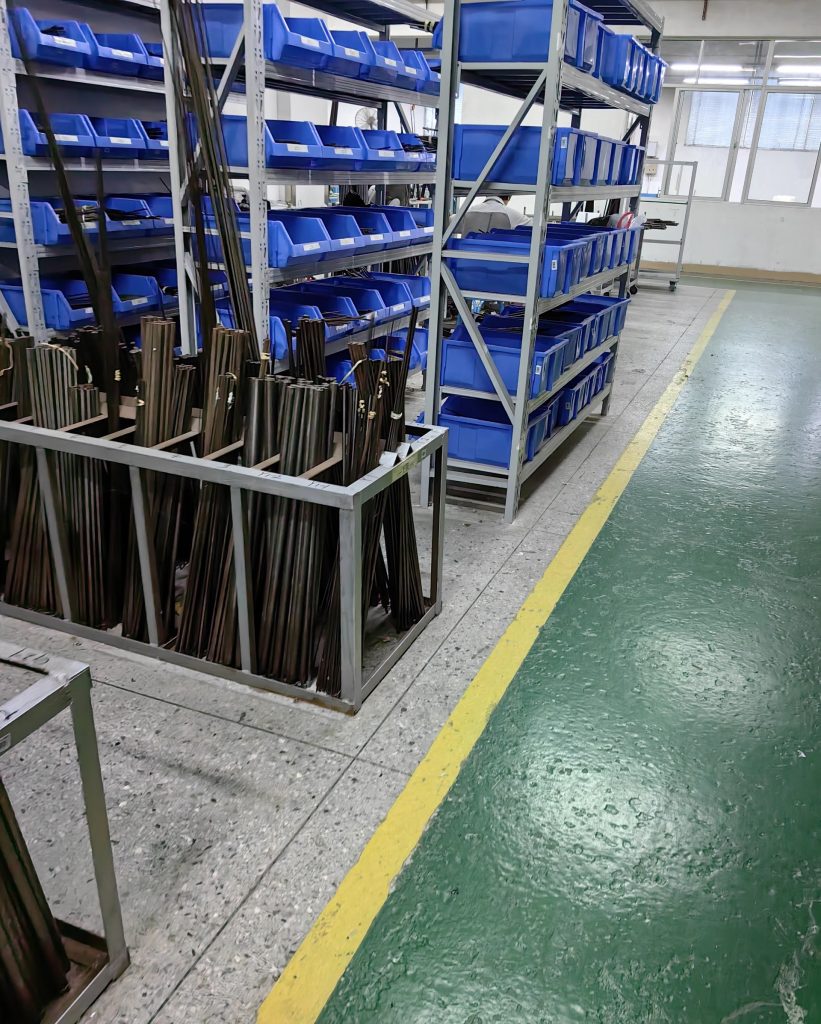
If the supplier claims to operate a factory, ask for evidence supporting that claim. Depending on the circumstances, this may include factory photographs, a live video tour, production-area details, or an independent factory inspection.
Remember that a trading company is not automatically an unsuitable supplier. A trading company may provide useful product selection, communication, and order coordination services. The important point is to understand its role and verify that the overall supply arrangement meets your requirements.
3. Compare Manufacturing and Customization Capabilities
Fishing rod suppliers may specialize in different products and production arrangements.
One supplier may focus on standard wholesale models, while another may offer custom branding, component changes, or more extensive OEM development.
Ask each supplier about:
Product range: Which fishing rod types and applications does it regularly supply?
Material options: Can it explain the available blank constructions and component specifications?
OEM and ODM services: Can it support custom logos, colors, packaging, and design modifications?
Production arrangements: Which operations are completed in-house, and which are outsourced?
Development support: Can it produce samples and manage revisions before mass production?
Order management: How does it handle specifications, production schedules, and communication during an order?
Compare actual capabilities rather than relying on broad descriptions such as professional manufacturer or leading factory.
4. Request Comparable Quotations
A low unit price does not necessarily mean a lower total sourcing cost.
To compare offers fairly, send the same product specifications and order requirements to each supplier.
Ask for a quotation that identifies:
- Product model and material specifications.
- Components and included accessories.
- Unit price and quoted currency.
- Minimum order quantity.
- Sample and development costs.
- Custom logo and packaging charges.
- Tooling costs, if applicable.
- Production lead time.
- Payment terms.
- Inspection arrangements.
- Shipping terms and excluded costs.
If possible, request quotations at more than one order quantity. This helps you understand how the unit price may change with production volume.
Do not assume that all suppliers include the same components, packaging, inspection services, or shipping expenses in their prices.
5. Evaluate Minimum Order Quantity and Production Flexibility
Minimum order quantity, or MOQ, varies by supplier and product.
A standard fishing rod with simple branding may have different order requirements from a model requiring special components, custom tooling, or a new design.
When evaluating MOQ, consider:
- Whether the supplier offers standard models suitable for initial testing.
- Whether custom colors require separate production quantities.
- Whether logo printing has a minimum order requirement.
- Whether packaging can be customized at smaller volumes.
- Whether different rod models can be combined within one order.
- Whether sample costs or development fees apply.
For a new brand, a smaller initial order may reduce inventory exposure, but it may also increase the unit cost. Compare these trade-offs before making a decision.
Never assume that an advertised MOQ applies to every model or customization option.
6. Test Samples Before Approving Bulk Production
A representative sample provides practical evidence of whether a supplier understands your product requirements.
Evaluate the sample against a written specification.
Important checks include:
- Rod length, weight, and section configuration.
- Blank material and surface finish.
- Guide alignment and attachment.
- Reel seat stability and handle quality.
- Joint fit and assembly.
- Power, action, and other agreed performance characteristics.
- Logo quality and packaging.
If you are comparing multiple suppliers, use the same evaluation criteria for each sample.
Document any differences and ask the suppliers to explain how they would address problems before production.
Visual inspection alone cannot confirm every structural or performance characteristic. Agree on appropriate testing where strength, durability, or other technical requirements are important.
For a detailed inspection process, see our related guide, How to Check Fishing Rod Quality Before Bulk Production.
7. Review Quality Control Procedures
A supplier should be able to explain how it maintains product consistency throughout an order.
Discuss the following quality control stages.
Incoming inspection: How are materials and components checked against the agreed requirements?
In-process inspection: Which production stages are checked, and how are defects identified?
Final inspection: How are dimensions, appearance, components, and product specifications verified?
Pre-shipment inspection: Can the supplier support an agreed inspection before the goods leave the factory or warehouse?
Corrective action: What happens when products fail the agreed acceptance criteria?
For larger orders or new supplier relationships, consider an independent inspection service.
The inspection scope and acceptance criteria should be established before production. Do not rely solely on a supplier’s general statement that all products undergo strict quality control.
8. Check Communication and Project Management
Communication quality can affect the entire sourcing process, particularly when a product involves custom specifications or multiple revisions.
Evaluate whether the supplier:
- Answers technical questions clearly.
- Identifies missing specifications instead of making assumptions.
- Provides written confirmation of important requirements.
- Communicates sample revisions and production milestones.
- Explains delays or material changes promptly.
- Provides consistent information across quotations and order documents.
Good communication does not guarantee good product quality, but it helps reduce preventable misunderstandings.
For OEM projects, appoint a clear contact person and maintain a written record of approved specifications, artwork, samples, and changes.
9. Compare Packaging and Shipping Arrangements
Fishing rods can require special packaging because of their length and relatively delicate components.
Ask suppliers to provide the proposed packaging method, carton dimensions, gross weight, carton quantity, and total shipment volume.
Confirm that the packing arrangement is suitable for your intended transportation method.
When comparing shipping offers, distinguish between product price and logistics costs. Depending on the agreement, the total cost may include origin handling, international freight, destination charges, customs clearance, duties, taxes, and final delivery.
Clarify the agreed Incoterm and named place or port. Confirm which party is responsible for each cost and task.
For additional information, read our related guide, Fishing Rod Packaging and Shipping: A Guide for Importers.
10. Review Certifications and Product Claims Carefully
Certification and compliance requirements depend on the product, destination market, and any applicable regulations.
Do not assume that every fishing rod requires the same certificates or that a supplier’s general claim of international certification proves compliance for your specific order.
If a supplier mentions a certification, request the relevant document and check its scope, issuing organization, validity where applicable, and connection to the actual product or company.
Similarly, distinguish between documented test results, voluntary quality systems, and general marketing statements.
If your destination market has particular labeling, chemical, packaging, or import requirements, verify those requirements independently before placing the order.
11. Use a Supplier Comparison Scorecard
A structured scorecard helps buyers compare manufacturers using consistent criteria rather than relying on price alone.
The following is an illustrative evaluation framework. Adjust the weights to reflect your business priorities.
| Evaluation criterion | Suggested weight |
|---|---|
| Product and sample quality | 25% |
| Manufacturing and customization capabilities | 20% |
| Quality control and documentation | 15% |
| Price and overall sourcing cost | 15% |
| Communication and project management | 10% |
| Production schedule and flexibility | 10% |
| Packaging and shipping coordination | 5% |
| Total | 100% |
Score each supplier against the same criteria and keep supporting evidence for important ratings.
A high score should not override a serious concern involving supplier identity, product safety, payment risk, or failure to meet essential specifications.
12. Prepare a Clear Request for Quotation
Before contacting a fishing rod manufacturer, prepare an RFQ containing the key information needed for a meaningful quotation.
Include:
- Product type and intended application.
- Material and technical specifications.
- Required components and accessories.
- Estimated order quantity.
- OEM branding and packaging requirements.
- Sample requirements.
- Target delivery schedule.
- Destination country and shipping requirements.
- Quality inspection expectations.
- Any open technical questions.
If you do not know a specification, mark it as undecided and ask the supplier to recommend suitable options. This is better than providing inaccurate information.
For additional sourcing information, visit the Guangzhou Fishing Tackle supplier profile on VLEFOOENA. Review the available company information and confirm actual manufacturing capabilities, product specifications, and commercial terms directly with the supplier.
Frequently Asked Questions
1. How do I find a reliable fishing rod manufacturer in China?
Define your requirements, identify relevant suppliers, verify their business information, request comparable quotations, evaluate samples, and review their quality control procedures before placing a bulk order.
2. How can I tell whether a fishing rod supplier is a factory or a trading company?
Ask about its registered business identity, production arrangements, facilities, and role in your transaction. Supporting evidence may include a factory visit, live video tour, or independent inspection. Verify the information rather than relying on labels alone.
3. What should I compare when requesting fishing rod quotations?
Compare equivalent specifications, components, order quantities, MOQ, customization costs, sample fees, production lead time, inspection arrangements, packaging, payment terms, and shipping responsibilities.
4. Should I order samples from several manufacturers?
When the budget allows, comparing samples from multiple suppliers can help identify differences in quality, design, and communication. Use consistent specifications and evaluation criteria to make the comparison meaningful.
5. How can I reduce risks when ordering fishing rods wholesale?
Verify supplier information, document specifications, approve a sample, agree on quality criteria, confirm payment and delivery terms, and consider independent inspection for larger or higher-risk orders.
6. Can fishing rod manufacturers in China provide OEM services?
Some suppliers offer OEM services such as custom branding, colors, components, and packaging. Confirm the specific services, MOQ, sample requirements, development costs, and production capabilities with each supplier.
Conclusion
Comparing fishing rod manufacturers in China requires a structured approach that considers product quality, manufacturing capabilities, pricing, communication, quality control, and logistics.
For international buyers, the most reliable decision comes from verifying supplier information, comparing equivalent quotations, approving representative samples, and documenting the requirements before mass production.
Looking for fishing rod suppliers in China? Visit VLEFOOENA to explore supplier information and begin your sourcing process.


No reply content