
China Guangzhou custom curtains OEM
China
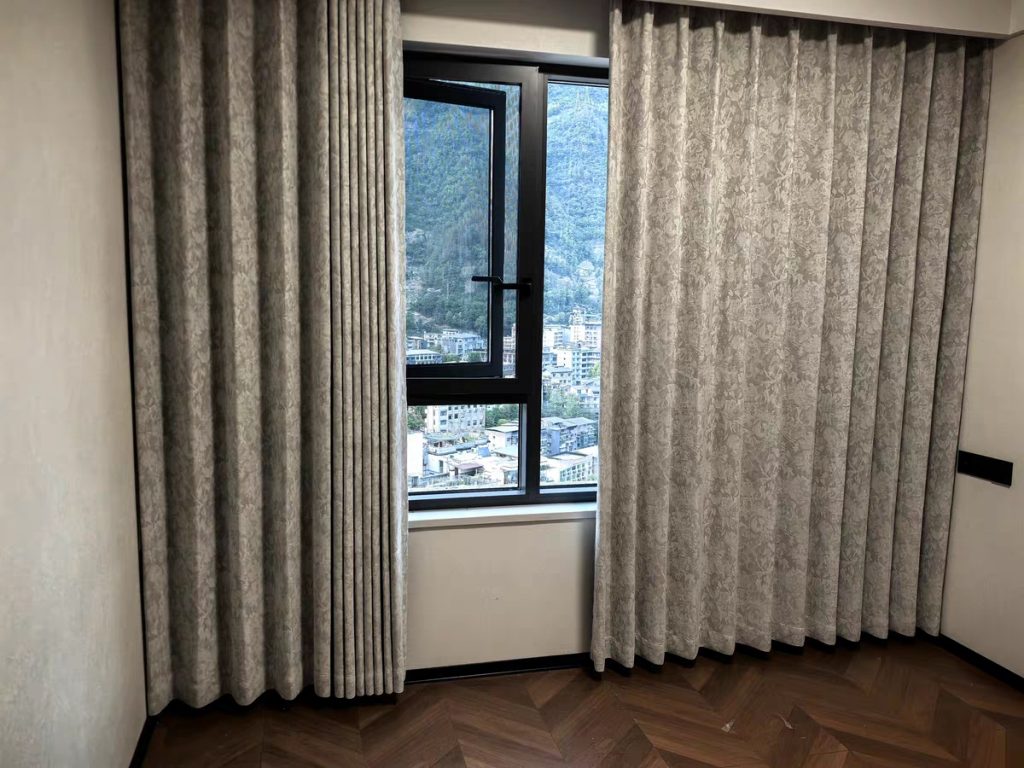
Custom curtainsimporters, wholesalers, retailers, hotels, interior designers, and home furnishing brands to create products that match specific room dimensions, design requirements, and brand identities.
A professional curtain manufacturer can often customize the size, fabric, color, pattern, header style, lining, logo, and packaging. However, every customization can affect MOQ, price, production time, and quality requirements.
1. Start with the Curtain Dimensions
The first step is to determine the exact curtain dimensions.
Provide the manufacturer with:
-
Finished width
-
Finished length
-
Window width
-
Window height
-
Curtain fullness
-
Number of panels
-
Required tolerances
Be clear about whether the dimensions refer to the finished curtain size or the size of the window.
For large orders, provide a detailed measurement specification to prevent production errors.
2. Choose the Fabric
The fabric affects the appearance, weight, durability, and performance of the finished curtain.
Common options include:
-
Polyester
-
Linen
-
Linen blends
-
Cotton blends
-
Velvet
-
Sheer fabrics
-
Blackout fabrics
-
Thermal curtain fabrics
Tell the manufacturer what performance you need rather than selecting a fabric only by appearance.
For example, a hotel project may prioritize durability and easy maintenance, while a premium home décor brand may prioritize texture and appearance.
3. Customize the Color
Custom colors can help retailers and brands match their product lines or interior design requirements.
You can provide:
-
Pantone reference
-
Physical fabric sample
-
Color card
-
Approved production sample
For large orders, request a color sample before mass production.
This is especially important because colors displayed on computer and phone screens may differ from the actual fabric.
4. Customize Patterns and Designs
Depending on the manufacturer’s capabilities, curtains can be customized with:
-
Solid colors
-
Printed patterns
-
Geometric designs
-
Floral patterns
-
Stripes
-
Brand graphics
-
Custom artwork
For custom printing, provide a high-resolution artwork file and confirm the final print dimensions before production.
If the design is complex, request a pre-production sample to verify the actual appearance.
5. Choose the Curtain Header Style
The header affects both appearance and installation.
Common styles include:
-
Rod pocket
-
Grommet/eyelet
-
Pinch pleat
-
Back tab
-
S-fold/wave style
-
Hook-style headers
Different markets may prefer different hanging systems, so confirm the required curtain rod or track before selecting the header.
6. Customize the Lining
Lining can improve privacy, light control, insulation, and the overall drape of the curtain.
Possible options include:
-
Standard lining
-
Blackout lining
-
Thermal lining
-
Decorative lining
If blackout performance is important, ask the manufacturer for actual performance information rather than relying only on the word “blackout.”
7. Add Your Logo or Brand Label
For private-label products, the manufacturer may be able to add:
-
Woven labels
-
Printed labels
-
Care labels
-
Brand logos
-
Packaging labels
-
Hang tags
Provide the exact artwork and specify the position of the label.
Before mass production, approve a sample to confirm the size, position, and appearance.
8. Customize Packaging
Retail buyers may require packaging designed for direct sale.
Possible options include:
-
Individual polybags
-
Printed bags
-
Custom boxes
-
Hang tags
-
Barcode labels
-
Care instructions
-
Brand packaging
For export orders, packaging should also protect the curtains from moisture, dust, and damage during transportation.
9. Understand MOQ Requirements
Customization usually affects MOQ.
For example:
Standard curtain + standard color: may have a lower MOQ.
Custom color: may require a higher MOQ.
Custom printed fabric: may require a larger production quantity.
New fabric or special design: may require additional development or setup costs.
Ask the manufacturer for the MOQ associated with each customization.
10. Ask About Custom Mold or Tooling Requirements
Most textile curtain customization does not require a mold in the same way that plastic products do.
However, specialized accessories, hardware, or unique components may require additional tooling or development.
Ask the manufacturer whether your design requires:
-
New tooling
-
Special sewing equipment
-
Custom hardware
-
Custom fabric development
-
Special printing setup
Clarifying this before ordering can prevent unexpected charges.
11. Request a Pre-Production Sample
A pre-production sample is particularly important for customized curtains.
Check:
-
Finished dimensions
-
Fabric
-
Color
-
Pattern
-
Header style
-
Stitching
-
Lining
-
Logo
-
Label
-
Packaging
Once approved, keep the sample or a detailed specification as the production reference.
12. Define Quality Tolerances
Curtains are textile products, so some dimensional variation can occur during manufacturing.
Before production, agree on acceptable tolerances for:
-
Width
-
Length
-
Color
-
Stitching
-
Pattern position
-
Fabric defects
Clear acceptance criteria make final inspection much easier.
13. Consider Shipping and Packaging Efficiency
Customized curtains can vary significantly in size and weight.
Ask the manufacturer for:
-
Carton dimensions
-
Gross weight
-
Net weight
-
Pieces per carton
-
Cartons per pallet
-
Estimated container loading quantity


No reply content