
Dongguan Plastic Manufacturing Plant
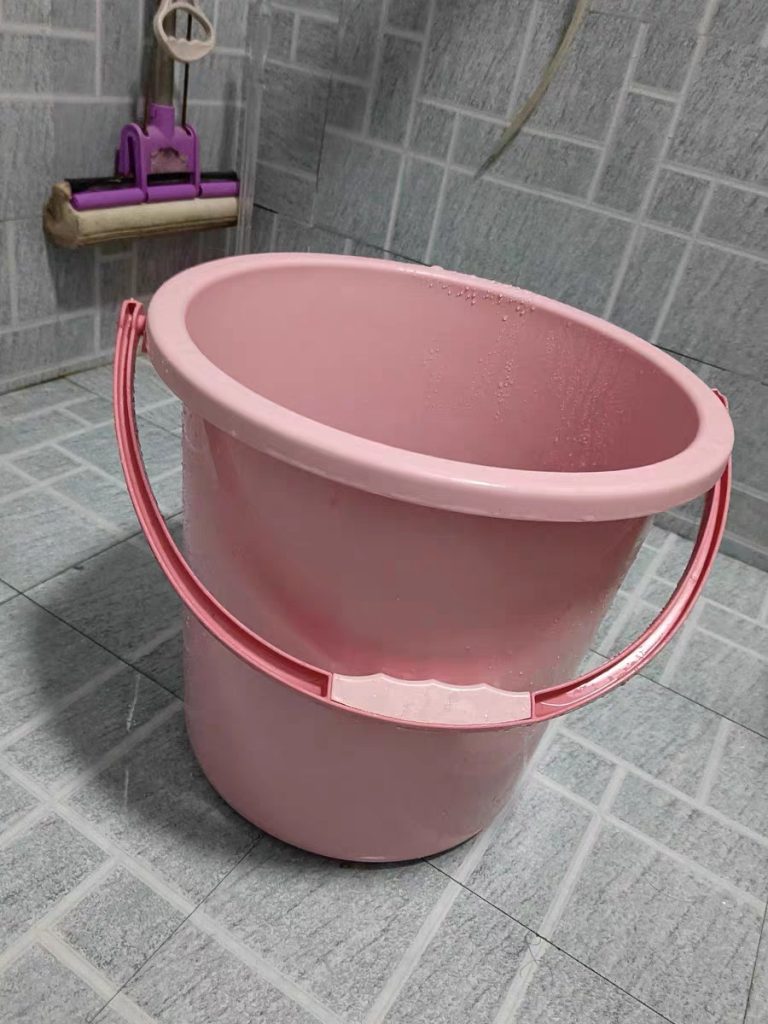
Custom household water buckets can help importers, wholesalers, supermarkets, cleaning-product brands, and retailers create products that match their own brand and market requirements.
A professional manufacturer can usually customize the bucket size, color, logo, handle, packaging, and sometimes the entire bucket shape. However, customization requirements should be confirmed before production because different options can affect MOQ, tooling costs, production time, and unit price.
1. Choose the Bucket Size and Capacity
The first step is to determine the required capacity.
Common household bucket sizes may include:
-
5 L
-
8 L
-
10 L
-
12 L
-
15 L
-
20 L
The exact size should be confirmed by technical specifications rather than simply using the nominal capacity.
Tell the manufacturer your target:
-
Capacity
-
Height
-
Top diameter
-
Bottom diameter
-
Wall thickness
-
Approximate product weight
-
Handle type
If you already have a bucket design, providing a drawing or sample can make communication much easier.
2. Select the Plastic Material
The manufacturer should confirm the exact material specification before quoting.
For household buckets, PP and PE are common choices.
Your material decision should consider:
-
Required rigidity
-
Impact resistance
-
Product weight
-
Intended application
-
Temperature conditions
-
Chemical exposure
-
Target price
If the bucket is intended for drinking water or food contact, specify this clearly before production so the manufacturer can select appropriate materials and documentation.
3. Customize the Bucket Color
Color customization is one of the simplest ways to create a branded product.
You can normally provide:
-
A Pantone color reference
-
A physical color sample
-
A previous product sample
-
A digital color reference
For large orders, ask the manufacturer to produce a color sample or pre-production sample before mass production.
This helps prevent differences between your expected color and the final production color.
4. Add Your Logo
Several logo customization methods may be available.
Screen printing
Suitable for relatively simple logos and text.
Heat transfer printing
Can provide more detailed graphics depending on the production process.
In-mold labeling
The label is incorporated into the molded product and can provide a durable appearance.
Embossed or debossed logo
The brand is integrated directly into the bucket surface through the mold.
The best method depends on your design, order quantity, budget, and required durability.
5. Consider Custom Molds
If you want a completely different bucket shape, a standard factory mold may not be sufficient.
A custom mold can be used to create:
-
Unique bucket shapes
-
Special handles
-
Custom logos
-
Different rim designs
-
Special stacking structures
-
Brand-specific product designs
However, custom molds require additional tooling investment and usually make sense for larger or long-term orders.
Before paying for a mold, confirm:
-
Mold ownership
-
Mold storage
-
Mold maintenance
-
Modification costs
-
Whether the manufacturer can use the mold for other customers
A written agreement can help avoid misunderstandings.
6. Customize the Handle
The handle is an important part of a household water bucket.
You can potentially customize:
-
Handle material
-
Handle color
-
Handle length
-
Handle shape
-
Grip design
-
Connection structure
When evaluating a sample, test whether the handle remains comfortable and secure when the bucket is filled with water.
7. Customize Packaging
Packaging can also be customized to strengthen your brand.
Possible options include:
-
Printed cartons
-
Individual polybags
-
Custom labels
-
Product stickers
-
Instruction sheets
-
Barcode labels
-
Retail packaging
For export orders, packaging should also be designed to reduce damage during transportation and optimize container space.
8. Understand MOQ Requirements
Customization normally increases the minimum order quantity.
A manufacturer may offer:
Standard bucket + standard color: lower MOQ
Custom color: medium MOQ
Custom logo: potentially higher MOQ
Custom mold + customized packaging: generally requires a larger investment
Ask the supplier for the MOQ for each customization option separately.
9. Request a Pre-Production Sample
Do not approve mass production based only on a digital design.
For customized orders, request a sample showing:
-
Actual bucket color
-
Logo position
-
Logo size
-
Printing quality
-
Handle design
-
Product dimensions
-
Packaging


No reply content